
When I first saw the western face of Mount Civetta while standing on the terrace of Rifugio Lagazuoi, I thought its summit was only attainable by professional climbers. A few months later, I learned about the Via Ferrata Degli Alleghesi to its peak and immediately added it to my list.
Everything to know about Via Ferrata Degli Alleghesi
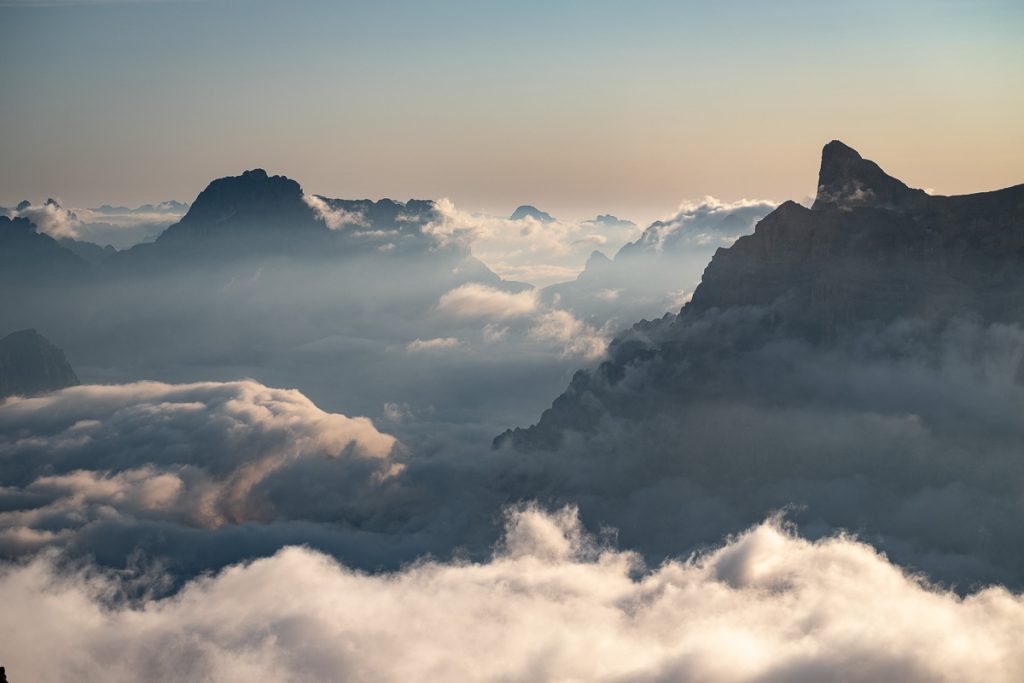
Via ferrata Degli Alleghesi is one of the most demanding ferratas I have done. It requires experience and organizational skills. It also involves an overnight hut stay, and the route is tied to gondola times, but I will get there in a minute.
Whilst the scrambling isn’t overly technical or demanding, the sheer length and elevation gain along this route make this an exciting excursion for serious adventurers.
1. Map of the Via ferrata Degli Alleghesi
- Blue: approach from the top of Col Dei Baldi gondola to Rifugio Coldai
- Red: approach from Rifugio Palafavera to Rifugio Coldai
- Yellow: Rifugio Coldai to Civetta Summit along Via Ferrata Degli Alleghesi
- Purple: Descend from Civetta Summit to Rifugio Coldai along Via Ferrata Normale
TIP: Click on individual paths on the map, and a window with key distances will open up
2. Via ferrata Degli Alleghesi: Total distance & elevation gain
From Col Dei Baldi Gondola in Alleghe
- Distance: 15.5 km / 9.6 mi
- Elevation Gain: 1700 m / 5580 ft
- Time required: 8-10 hours
Hotel recommendations in Alleghe
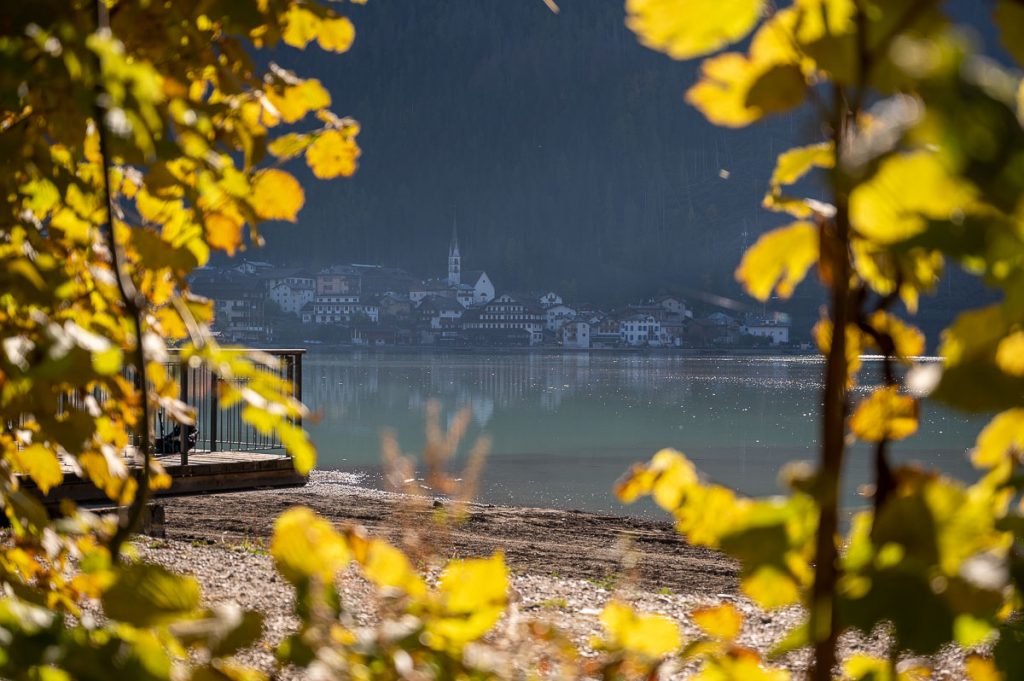
Best Value
Very convenient beachfront location with access to town cafes and restaurants. The Gondola is only a 10-minute walk away.
Top Rated
A great hotel with hard-to-beat views overlooking the turquoise lake Alleghe and Monte Civetta.
From Rifugio Palafavera near Mareson
- Distance: 19.1 km / 11.7 mi
- Elevation Gain: 1870 m / 6135 ft
- Time required: 10-12 hours
Hotel recommendations near Mareson in Val Di Zoldo
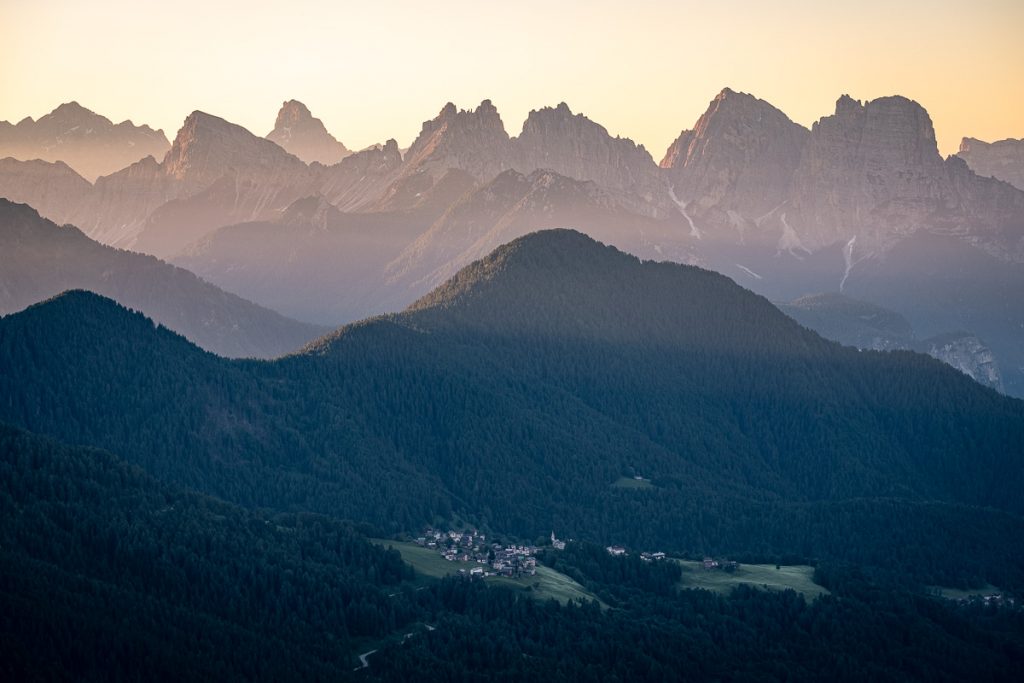
Best Value
Stay right near the trailhead to the Lake & Rifugio Coldai hike. The hut is conveniently located; you can drive right up to it.
Top Rated
Great value for money & family-run hotel with local cuisine. A local bus stops only a short walk away from the hotel.
3. How difficult is Via Ferrata Degli Alleghesi, and when is it accessible?
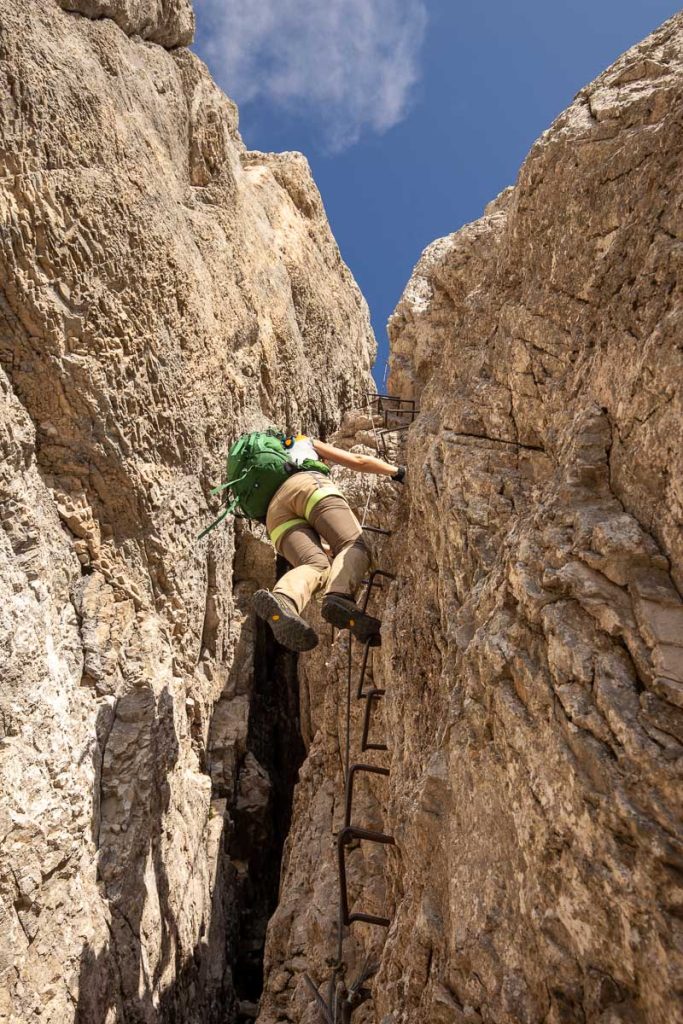
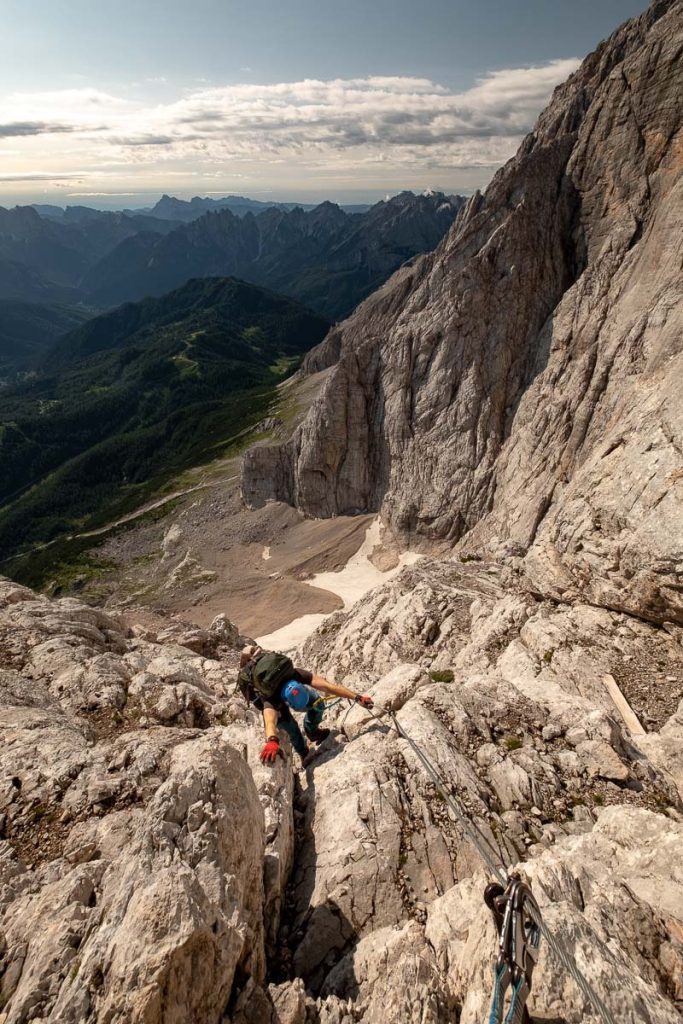
When researching this ferrata, all the material I found described the route as unprotected, requiring path-finding skills. However, recent improvements changed all this. Today, the route is well protected in all situations, and the path is clear with apparent markings.
That said, this route is considered advanced (C/D rating), and there is plenty of time spent scrambling. Given the significant elevation gain, you should only tackle it if you are fit.
The summit is only accessible between the beginning of July and the end of September. This also corresponds with the openings for Rifugio Torrani.
4. How do you reach the start of the via ferrata Degli Alleghesi?
This article describes the loop from Rifugio Coldai. There are several ways to reach it, but I will include the main two to avoid overcomplicating the article.
Option 1: Gondola from Alleghe, then hike
- Distance: 2.9 km
- Elevation gain: 350 m
- Elevation loss: 110 m
- Time required: 60-90 min
- Colour on the map: blue
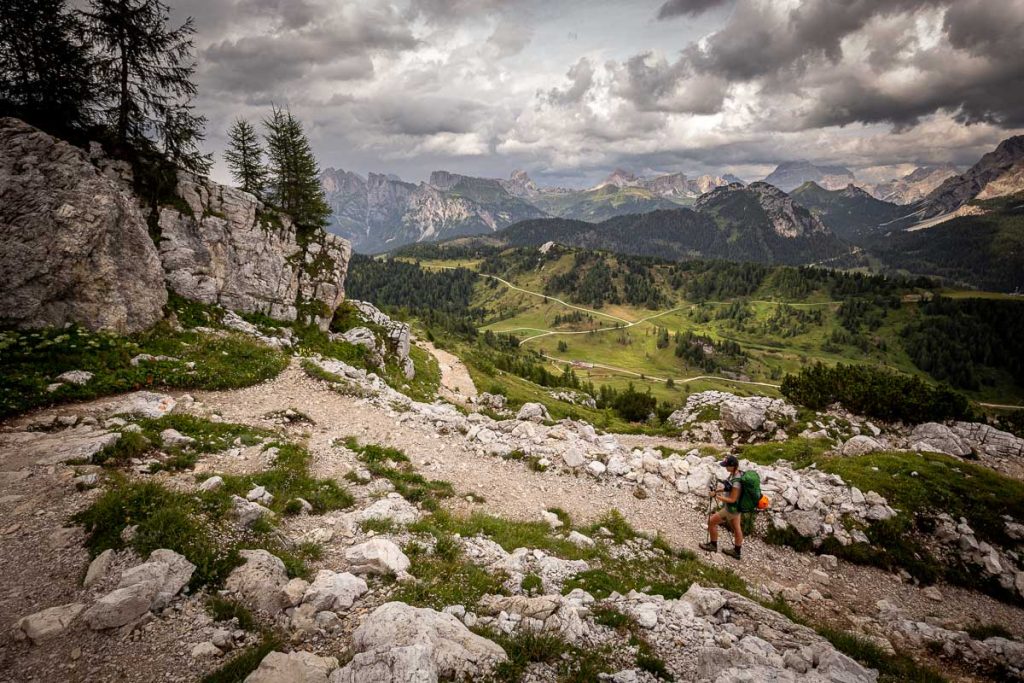
Take the two-tiered gondola Pian di Pezzè—Col Dei Baldi from Alleghe, one of my favourite Dolomite towns. Then follow the signs for Rifugio Coldai. The hike starts downhill on the access road, turning onto path 561 and then switching back uphill on path 556. You will reach the hut after 60-90 minutes.
TIP: Both gondolas operate from 8:30 AM to 5:30 PM. This 9-hour gap generally does not leave enough time to complete this route unless you are incredibly fast. Even if you hike at lightning speed, this allows for no contingency. I strongly recommend an overnight stay along the route in Rifugio Coldai or Torrani (or both).
Option 2: Hike from Rifugio Palafavera
- Distance: 4.8 km / 2.9 mi
- Elevation gain: 624 m / 2050 ft
- Time required: 1.5-2 hours
- Colour on the map: red
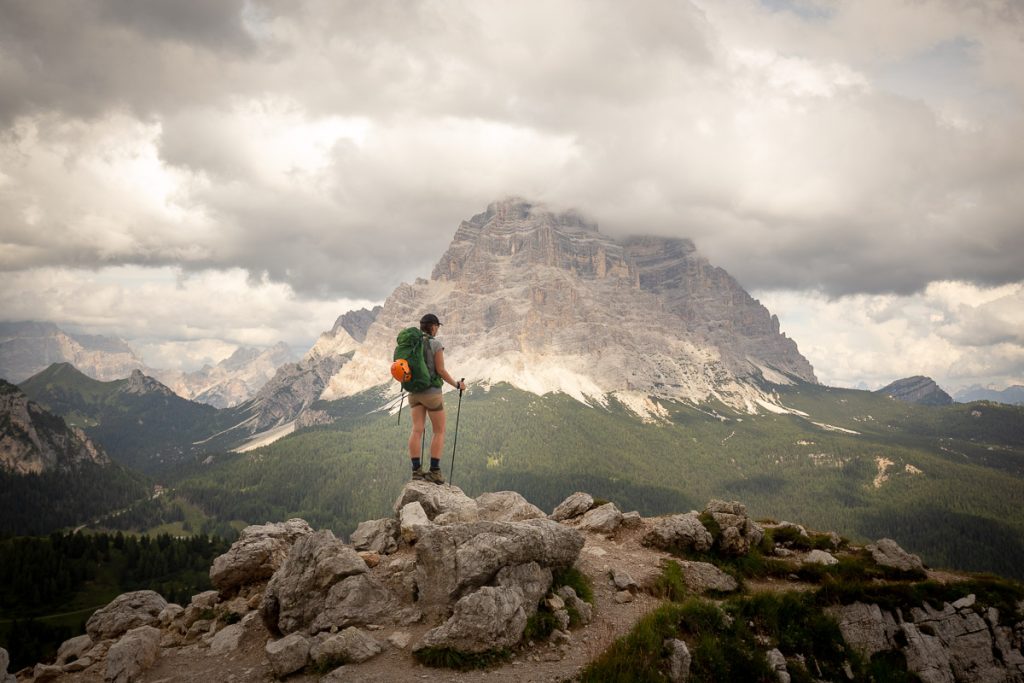
The second option is to park your car near Palafavera Refuge near Mareson in the Zoldo Valley and hike the gravel road to Rifugio Coldai. This approach takes around 1.5-2 hours, and its main advantage is that it isn’t limited to gondola times.
5. Via ferrata Degli Alleghesi – route description
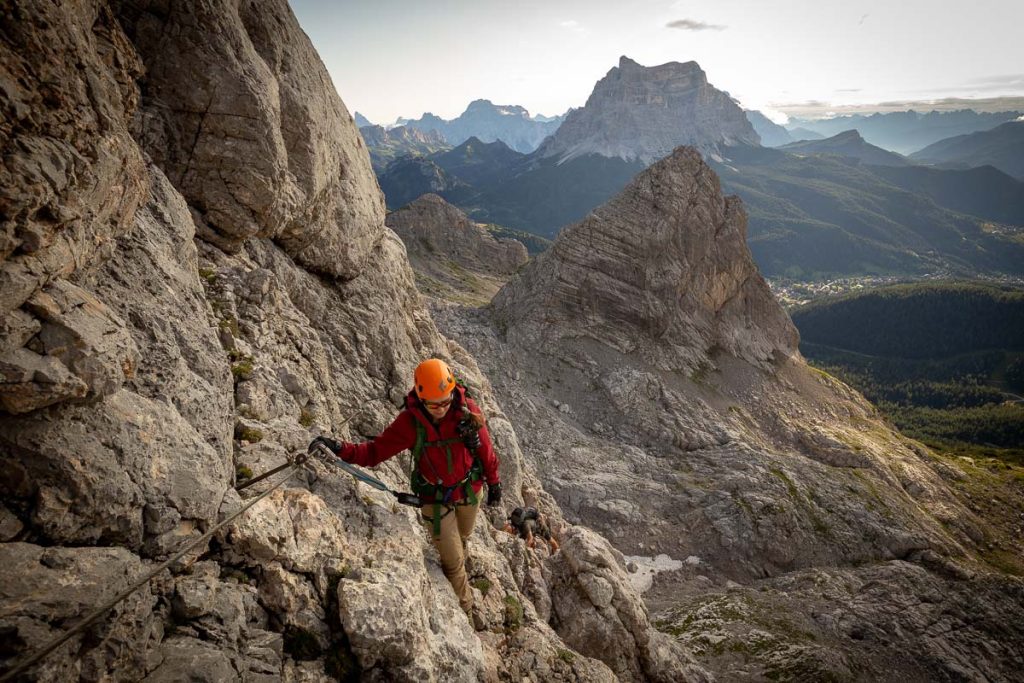
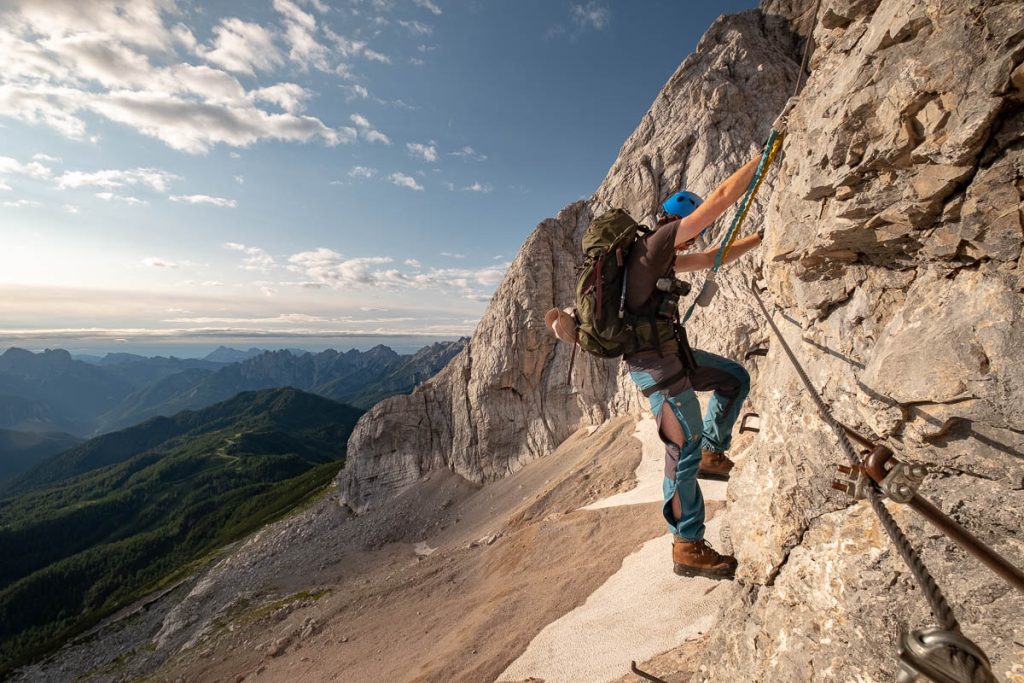
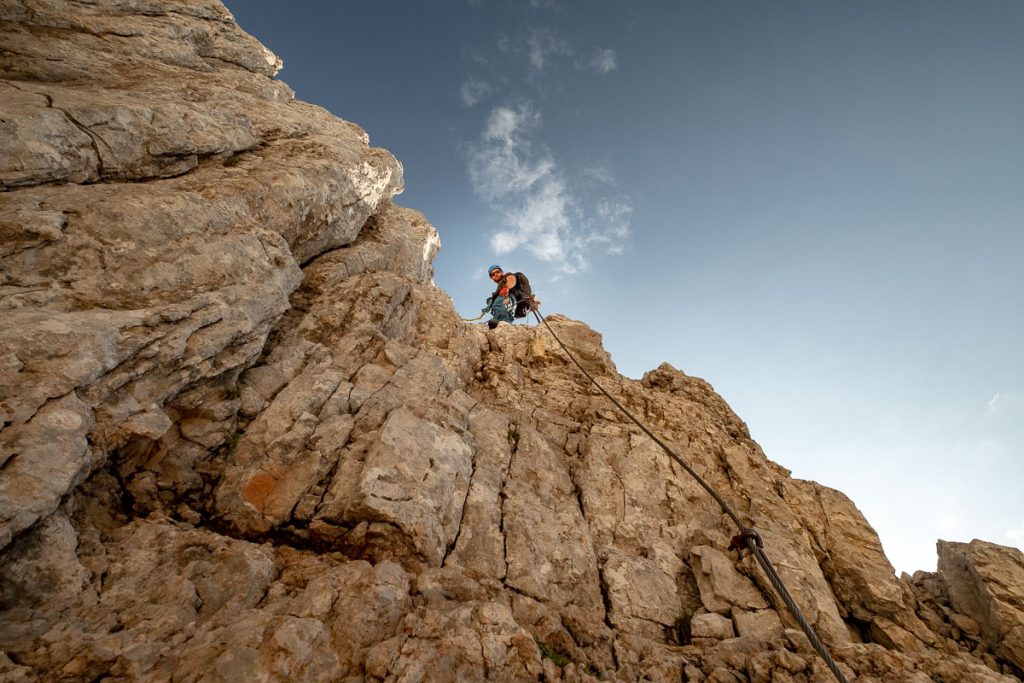
From Rifugio Coldai, the path to the start Via Ferrata Degli Alleghesi is well signposted. It begins just behind the refuge. First, you must follow path number 557, also called Sentiero Tivan.
For the first 30 minutes, it undulates, showing off the striking faces of Monte Pelmo and other dramatic peaks to the southeast. Not before long, the route steepens and crosses a few short sections protected with cables before gradually easing again.
Gearing up for these small sections isn’t necessary, but you have the equipment, so you might as well use it. I am always a big advocate for being safe rather than sorry. Things can go wrong quickly in the mountains.
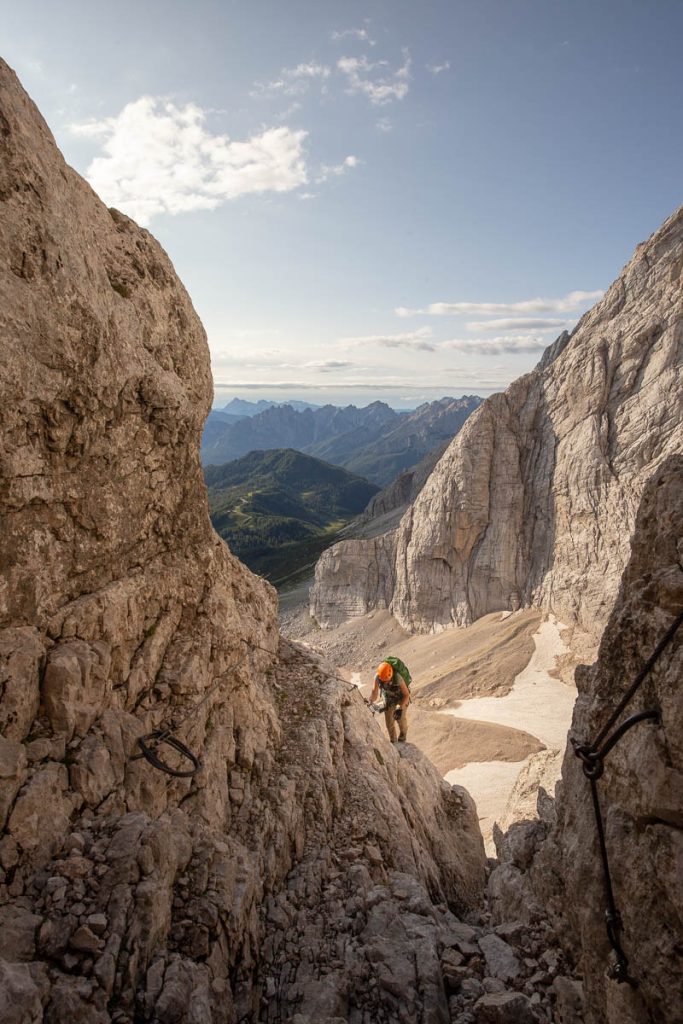
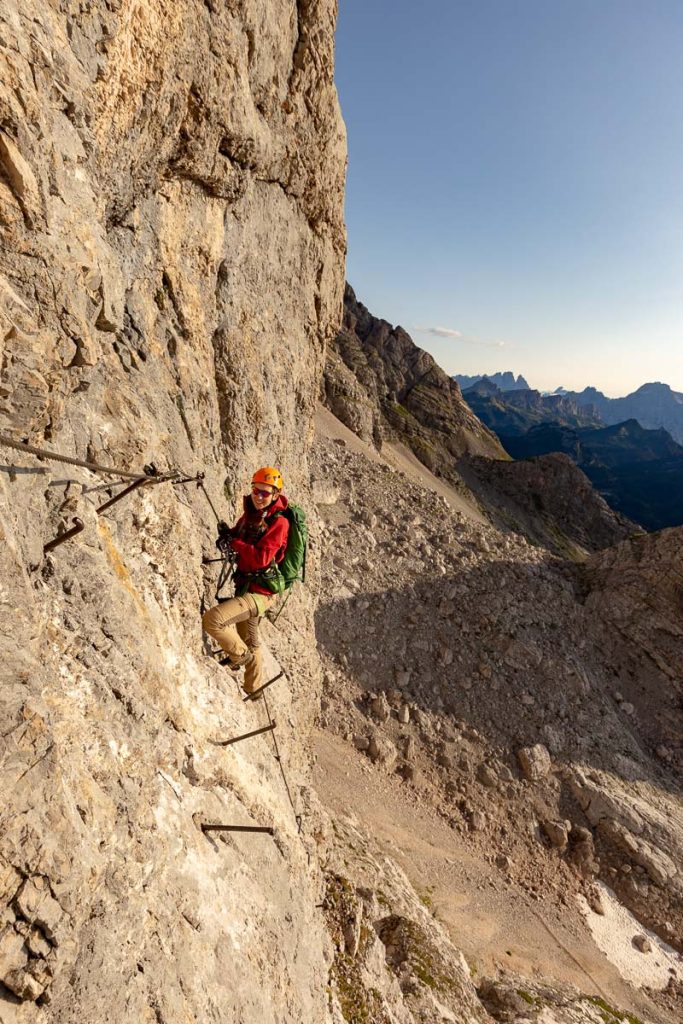
About one hour after leaving Rifugio Coldai, the path branches off from Sentiero Tivan and a spray-painted sign on rock points toward Via Ferrata Degli Alleghesi.
After another 15-20 minutes, you will reach the cables and ladders, where the fun begins. If you haven’t done it, it’s time to gear up now. Now, climbing is tougher and steeper, but introducing iron rods and ladders makes it uncomplicated and enjoyable.
The route rises quickly between intermittent sections of cable-secured scrambling and hiking along narrow ledges. The red spray-painted route markers are found close together, making it almost impossible to lose the route (unless you are not paying attention to where you are going).

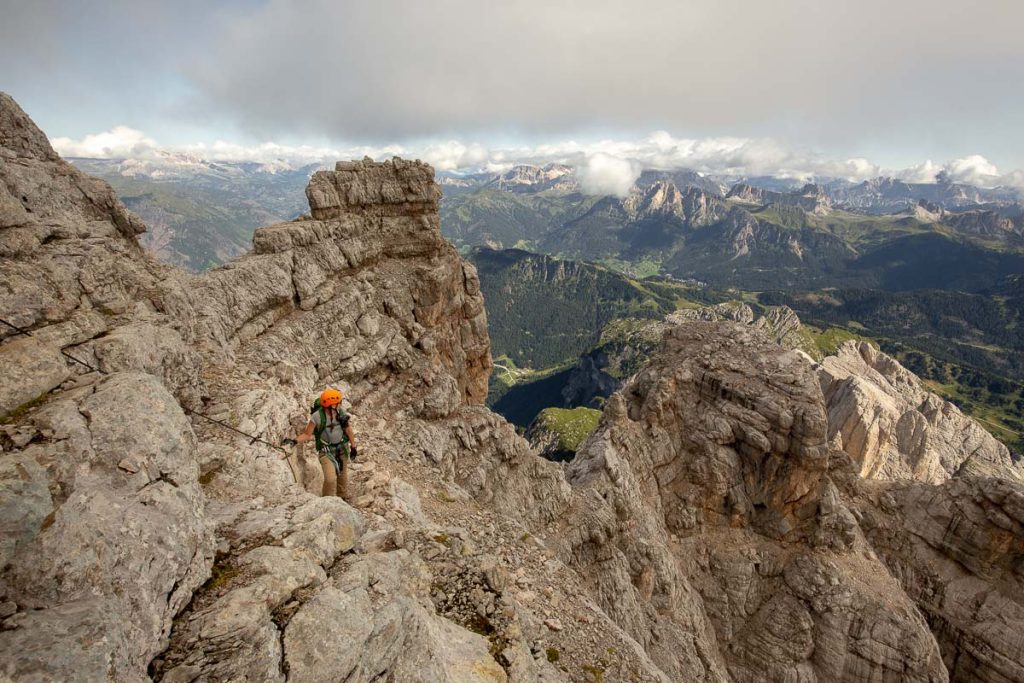
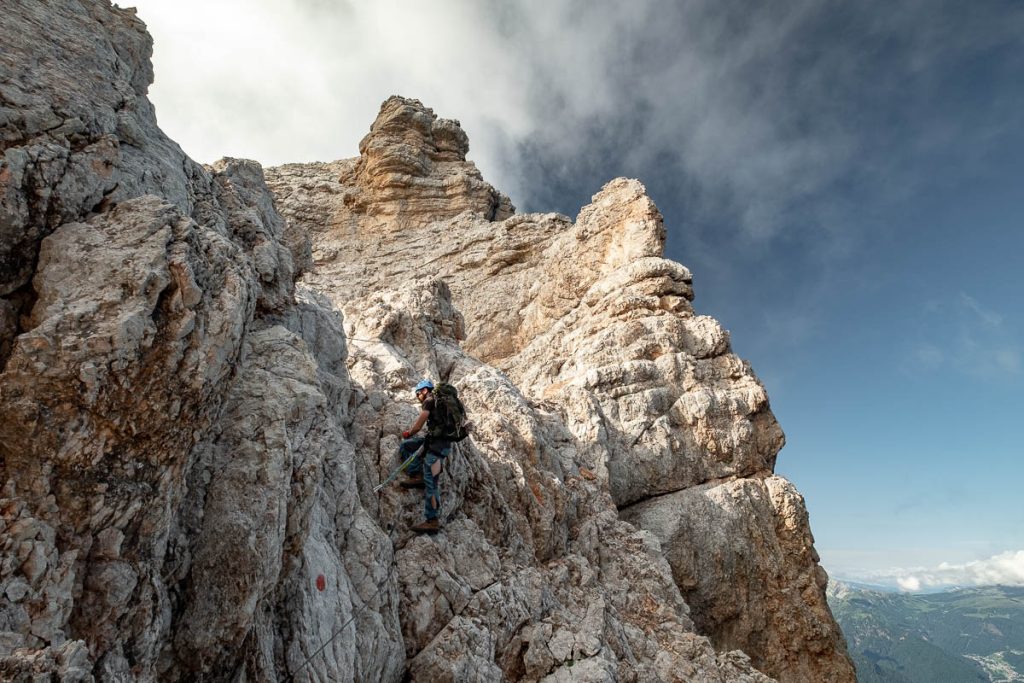
After around 2.5 hours from the start of the climbing, the view westward becomes visible for the first time. Once you reach this viewpoint, the rest of the way to the summit follows the eastern side of the ridgeline. You can reach the top ca. 4 hours from Rifugio Coldai at an average speed.
The summit is wide and open, making it a great place for a snack. If you have good views, take photos immediately because clouds can build up rapidly at this elevation.
Try to locate Lake Alleghe from the top. It’s almost 2000 meters (or 6500 feet) lower and looks minuscule from the summit; I honestly couldn’t believe it was the same lake.
6. The descent from the summit across Via Ferrata Normale
- Distance: 5.3 km
- Elevation gain: 134 m
- Elevation loss: 1134 m
- Time required: 4-4.5 hours
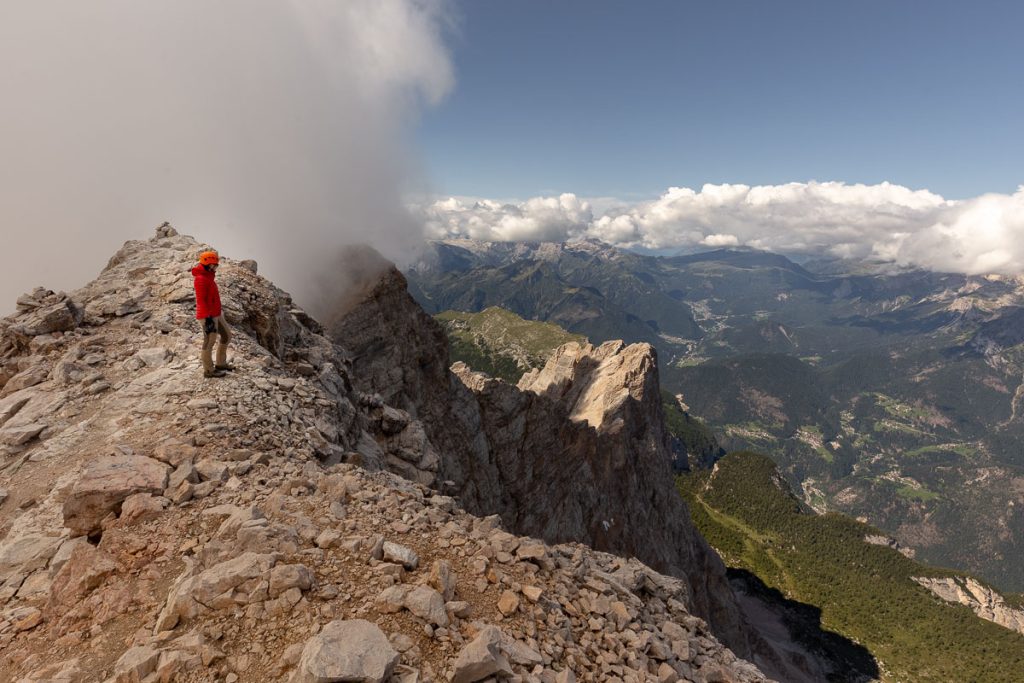
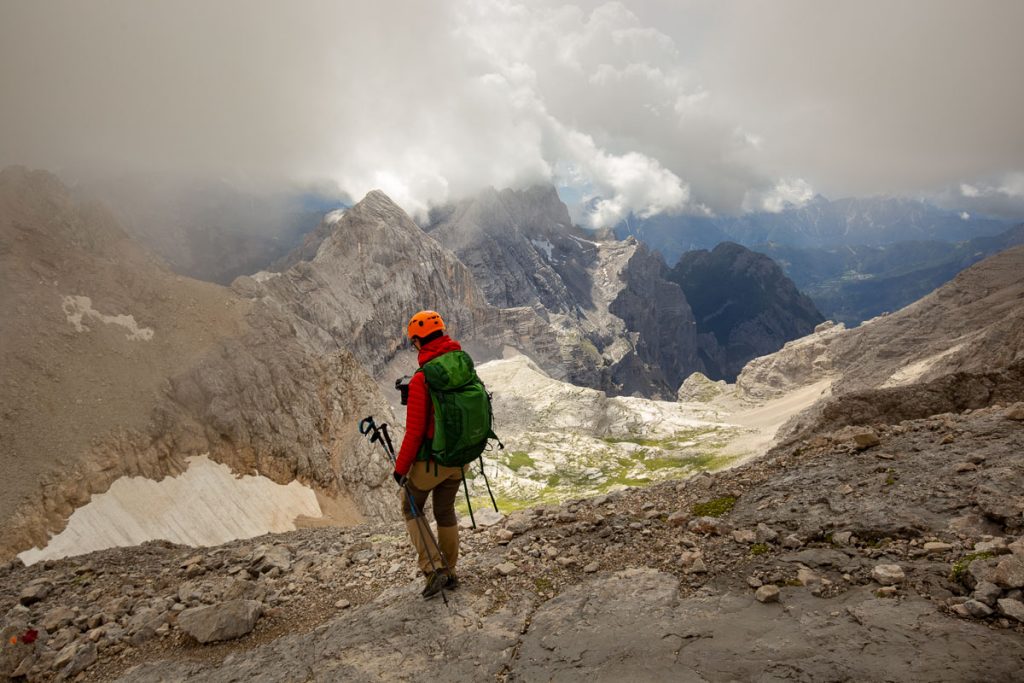
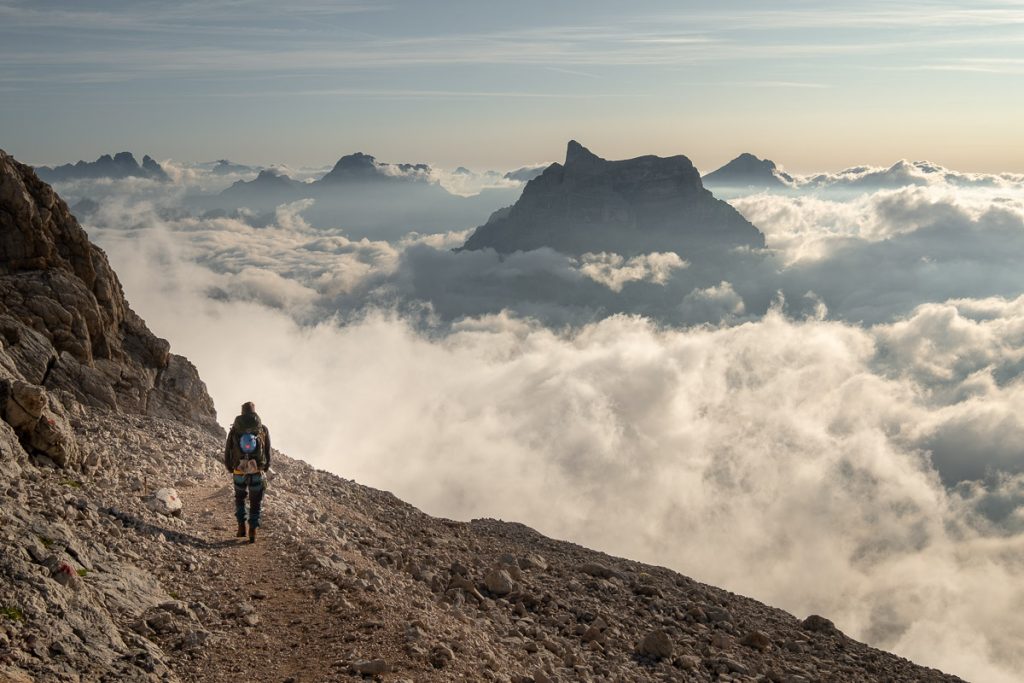
The descent follows a different route, beginning with a well-marked scree slope to Rifugio Torrani. It’s not a pleasant gradient; your tired knees will notice it. After around 30 minutes, you’ll veer leftward and will be able to spot the refuge. You will probably hear its loud generator first!
To continue your descent from rifugio Torrani, follow the markings for Via Normale, which is a via ferrata in its own right. Firstly, it heads down a steep slope before more complicated down-climbing sections become apparent.
The down-climbing here is arguably the most challenging part of the entire circuit, but again, the insertion of pegs and iron rods makes it achievable.
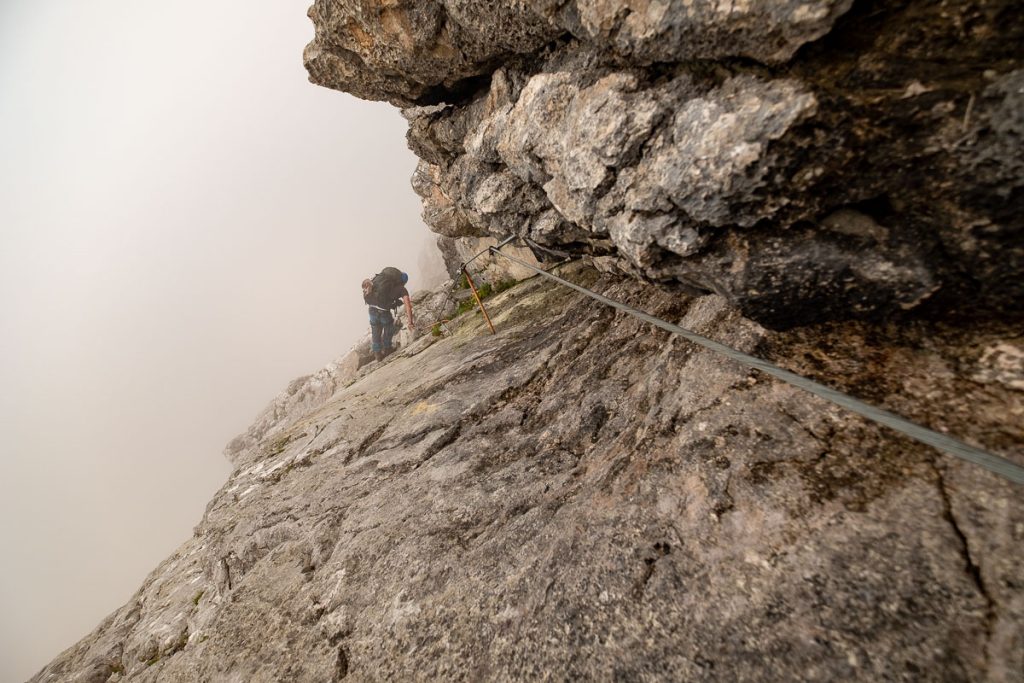
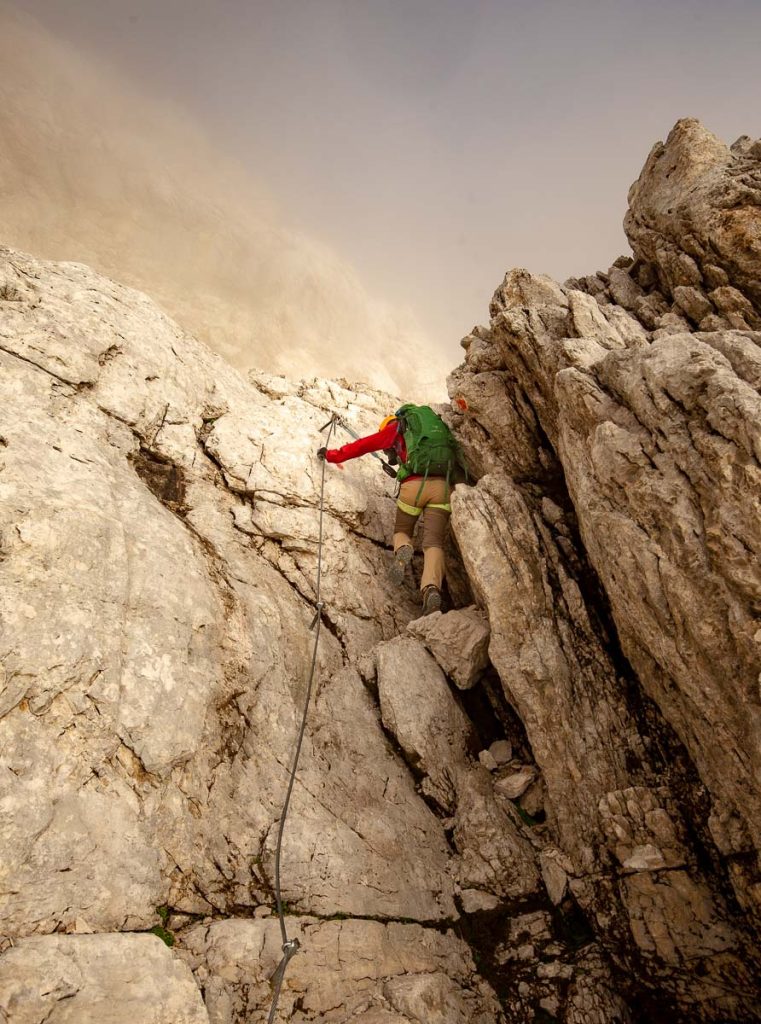
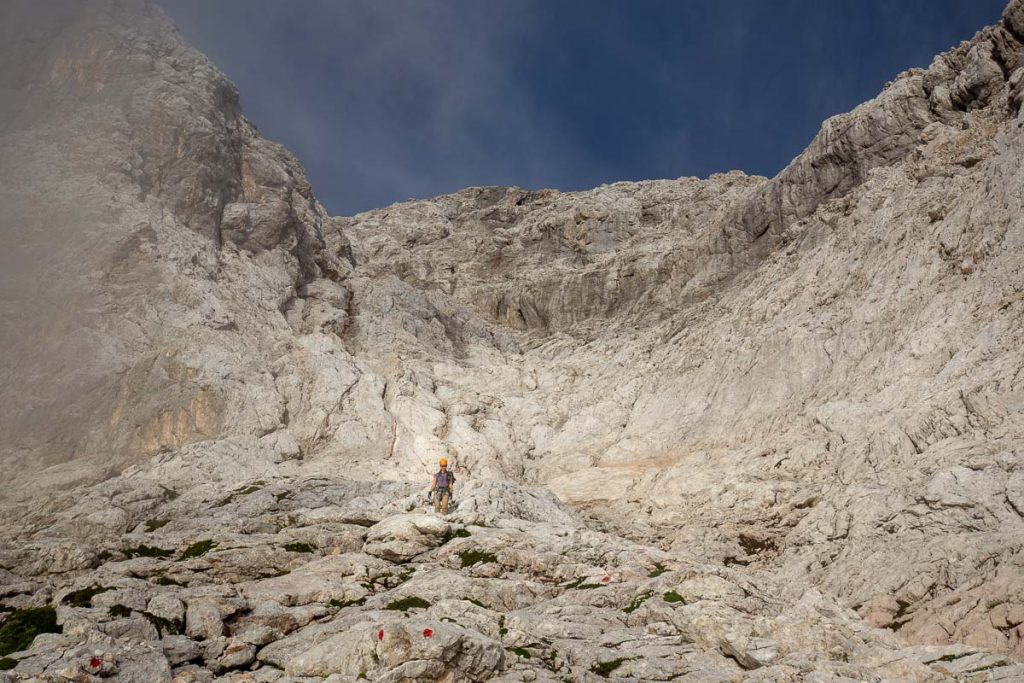
After about 2 hours and a short crossing of a snowfield, the route rejoins Sentiero Tivan (path 557) and undulates back to Rifugio Coldai. The total descent time from the summit to Rifugio Coldai takes around 4 to 4.5 hours, and it doesn’t include stopping for a cake.
From Rifugio Coldai, reaching the gondola or Rifugio Palafavera (depending on where you start) will take another hour.
7. Staying overnight at Rifugio Torrani
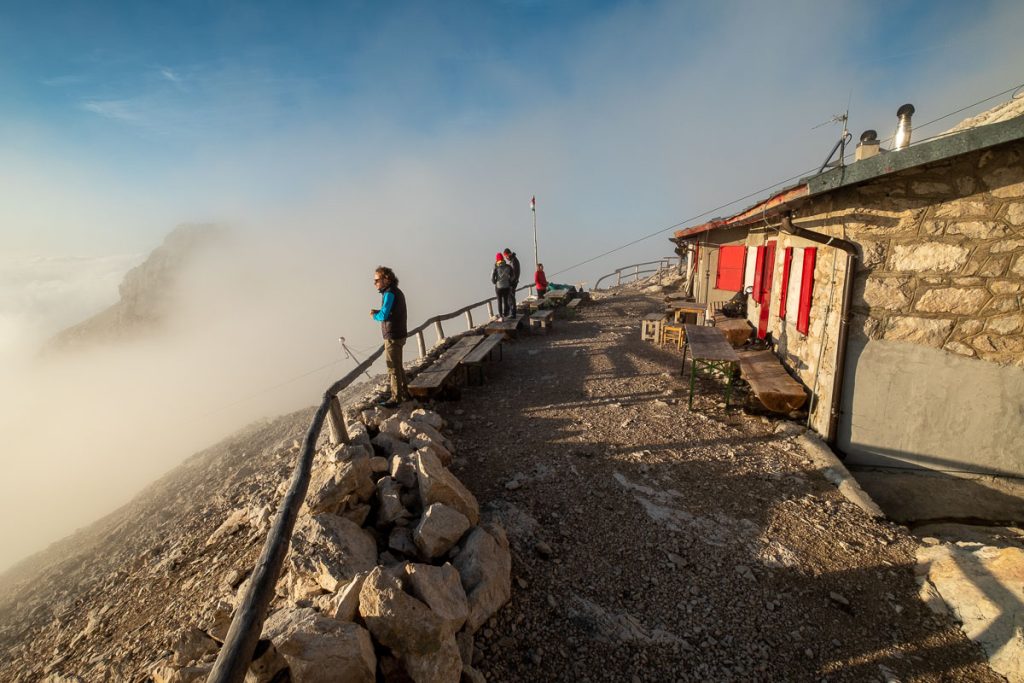
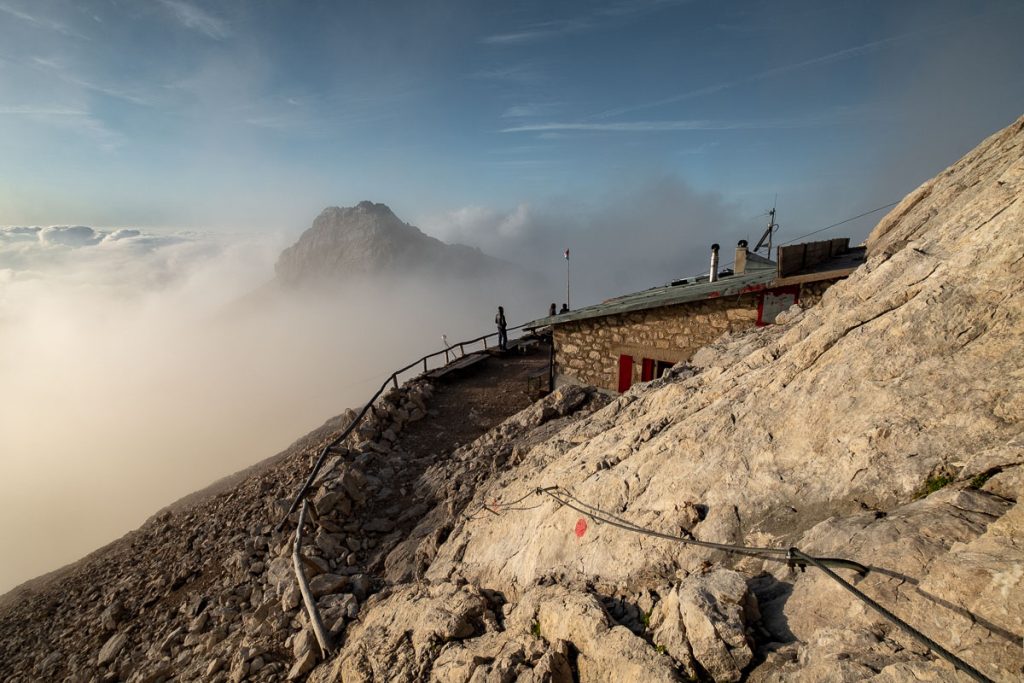
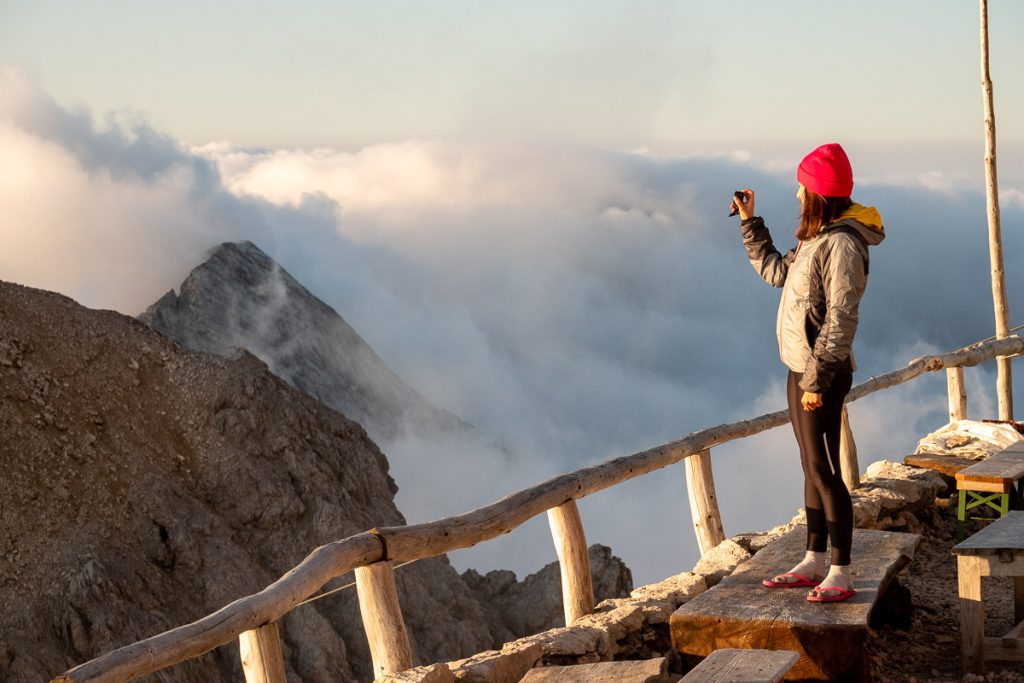
As I already said, considering this route’s length and elevation gain, tackling Via Ferrata Degli Alleghesi in one day is only recommended to those who are super fit and can crush average times. Otherwise, returning to the gondola in time for the last lift is a challenge, even if you stay at either of the huts the night before.
The Torrani mountain hut, located at 2984 meters, is not only one of the highest mountain huts in the Dolomites, but it’s also one of the quirkiest! It stays open for only three months of the year, usually between July and September when the route is clear of snow.
It’s run by a music-loving Italian man who does everything from cooking to cleaning, maintenance, and entertaining his guests. I must say his cake-baking skills aren’t too bad either, considering the limited resources he has at this altitude.
Be it for better or for worse, it’s not like any other refuge I’ve stayed in, and although I thoroughly enjoyed my experience, I understand that it’s not to everyone’s taste. Seemingly very unorganized, quintessentially Italian.
TIP: Rifugio Torrani belongs to the Veneto section of the Italian Alpine Club. You can e-mail the warden to book the hut, but it is better to call once it is open.
If you have the luxury of time, stay in both huts and experience what the Italian huts are all about! I have also compiled an article about everything you need to know before staying in a mountain hut in the Dolomites.
Shop my via ferrata gear essentials
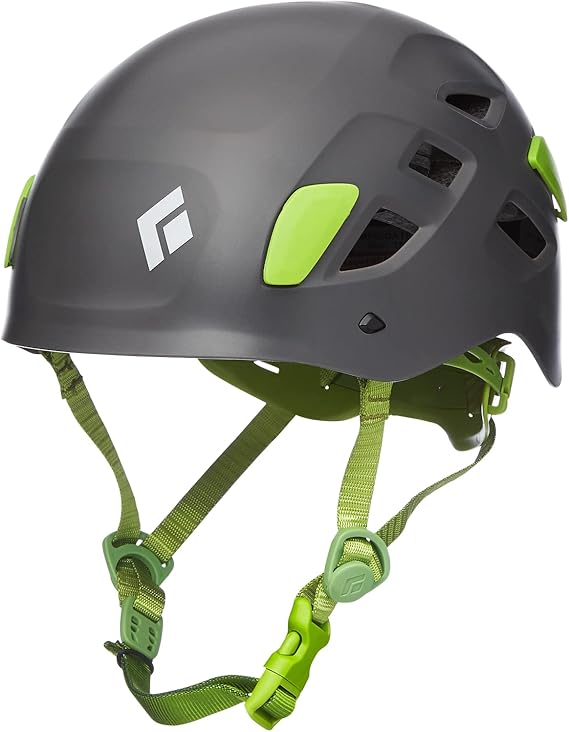
Black Diamond Helmet
Rockfall is a significant concern on via ferrata routes. Unbeknownst to you, other climbing groups above you may accidentally dislodge a small rock and send it down the mountain. If it hits you on the head, it could have serious consequences. A helmet on your head (not inside your backpack) is necessary.
Shop on: Amazon (Worldwide) / Backcountry (US)
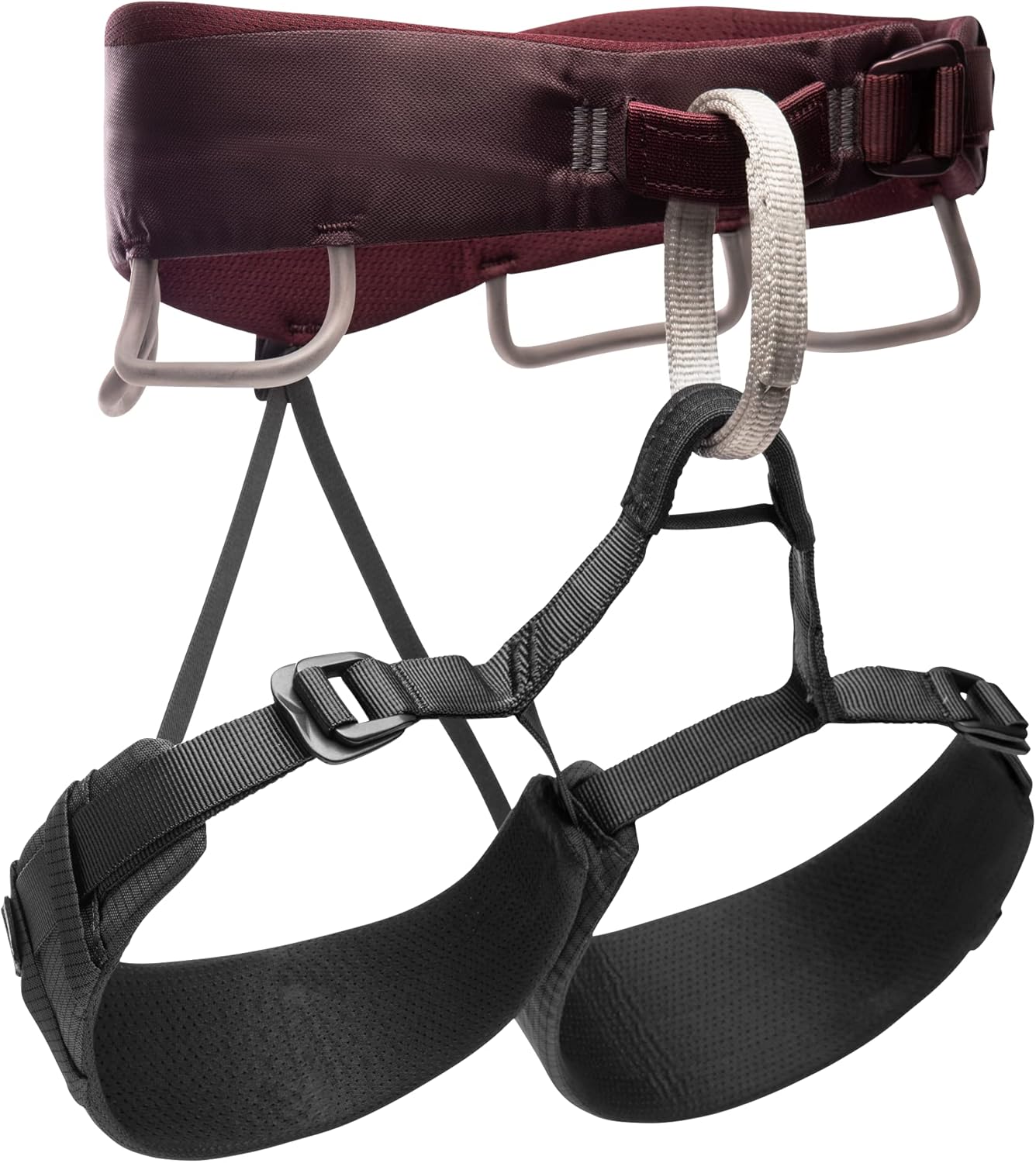
Black Diamond Momentum Harness
Another must-have on a via ferrata route is a climbing harness. A harness works as an anchor point for your via ferrata lanyard. Try it before your trip to ensure it fits snugly without limiting your movements. Aim for a lightweight harness that will be comfortable to wear between the cable-protected sections when hiking.
- Shop Women’s on Amazon (Worldwide) / Backcountry (US)
- Shop Men’s on Amazon (Worldwide) / Backcountry (US)
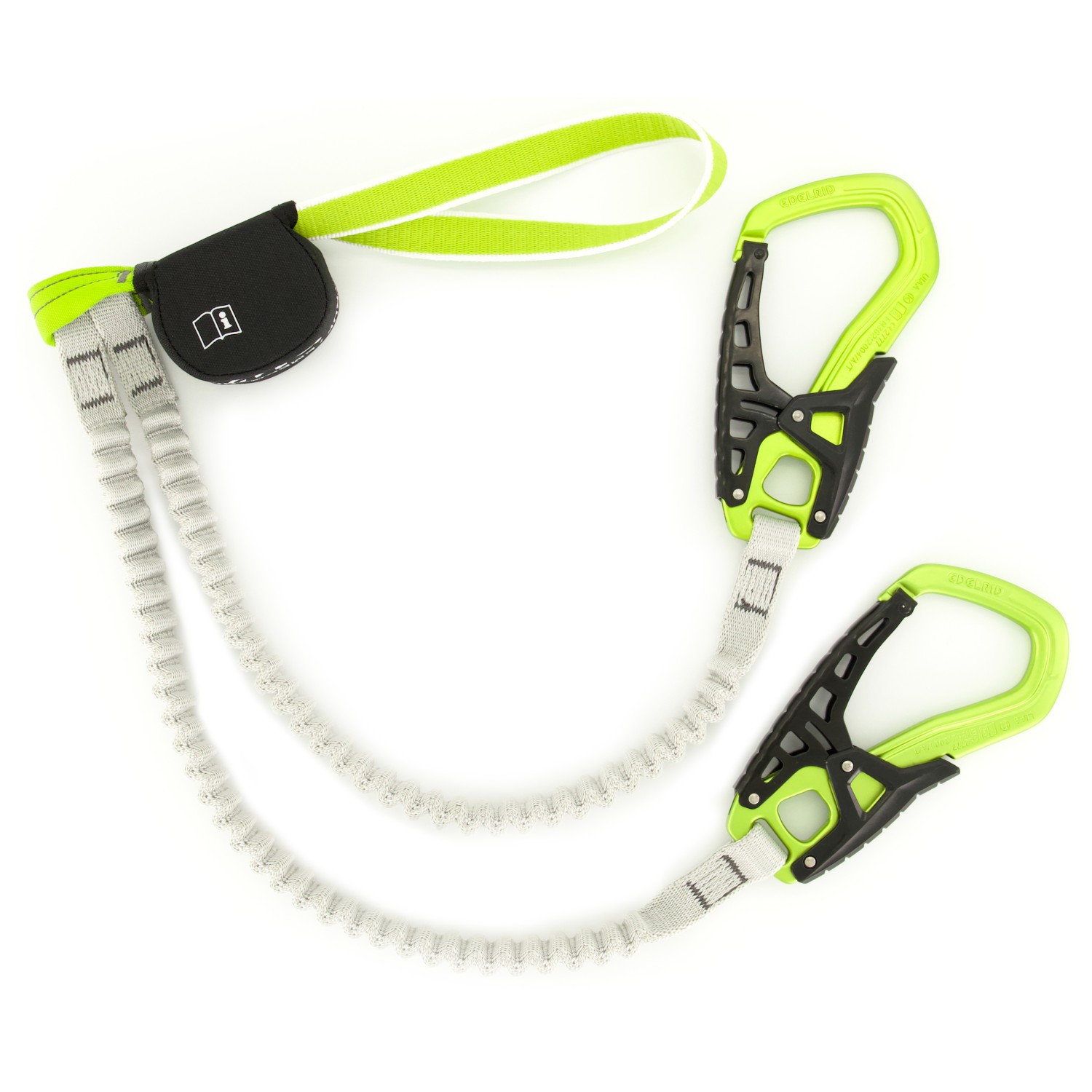
Edelrid, Camp or Black Diamond Via Ferrata Lanyard
A via ferrata lanyard connects the climber and their harness to the cables along the route. Its two arms and a hidden extra coil work as an energy absorption system in case of a fall. The two carabiners at the end of the lanyard clip into the cable. Make sure the carabiners are equipped with the palm squeeze mechanism. It’s the safest and most comfortable.
Shop on Amazon (Worldwide) / Backcountry (US)
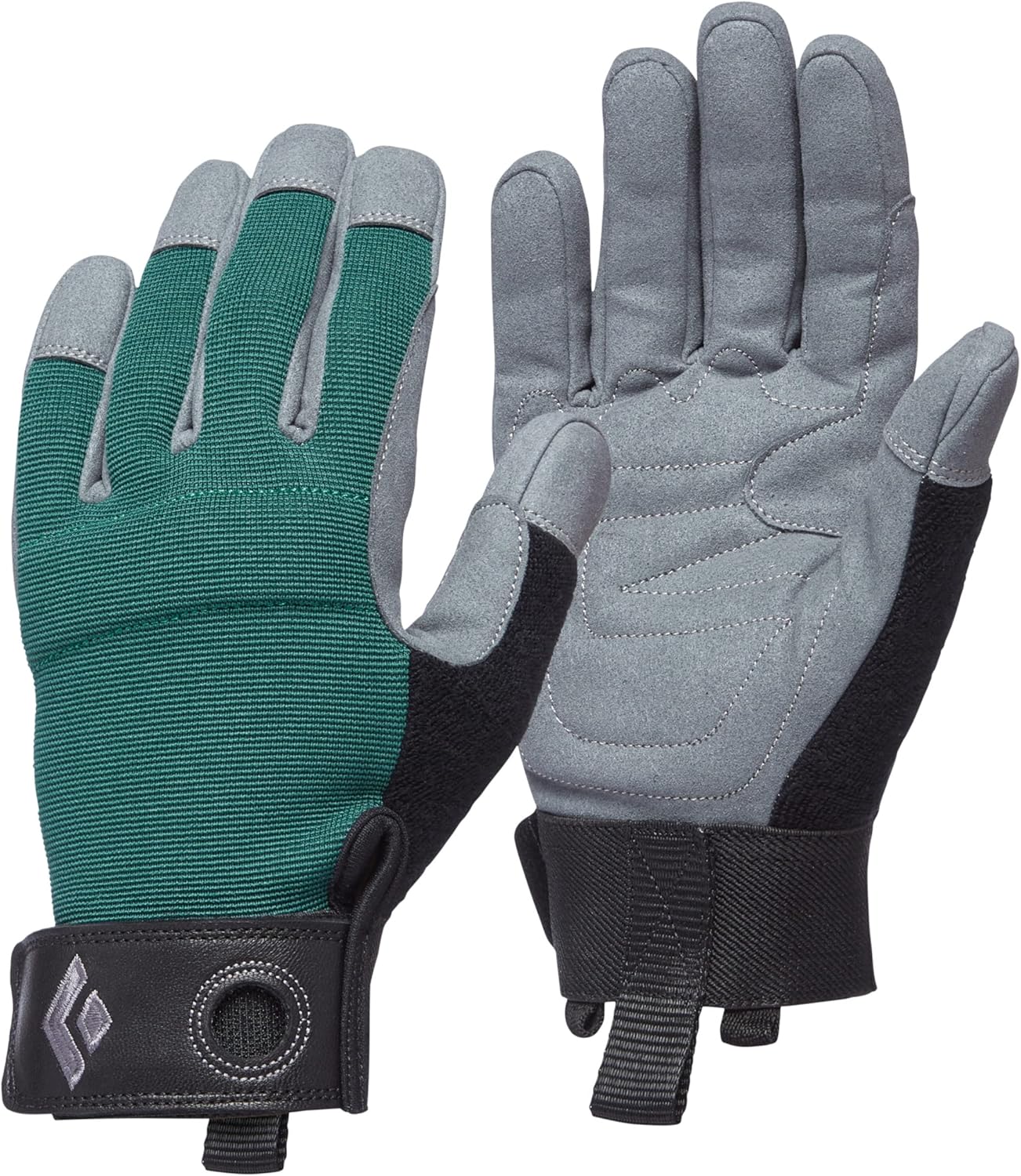
Black Diamond Crag Gloves
The gloves protect your hands from cuts and scratches you may otherwise get if you haul yourself on the cable without them. I prefer full-finger gloves for extra protection against blisters. If your hands sweat quickly, go for the fingerless version.
Shop on: Amazon (Worldwide) / Backcountry (US)
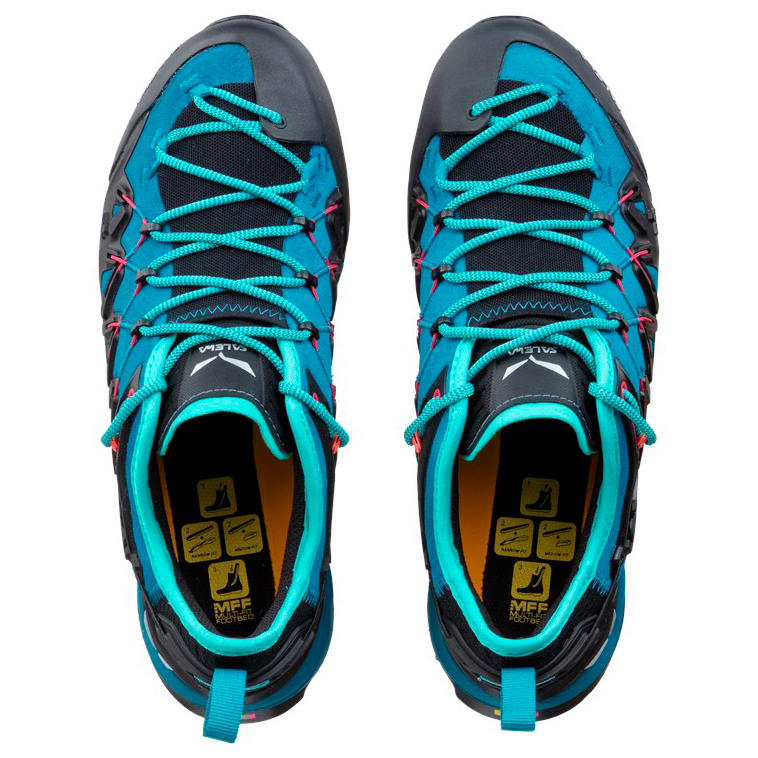
Salewa Wildfire Edge Approach Shoes
This is my go-to pair of hiking shoes for more accessible trails or via ferrata, where I don’t need extra ankle support. They provide excellent grip on the rock and are very durable.
Shop on: Amazon (Worldwide) / Backcountry (US)
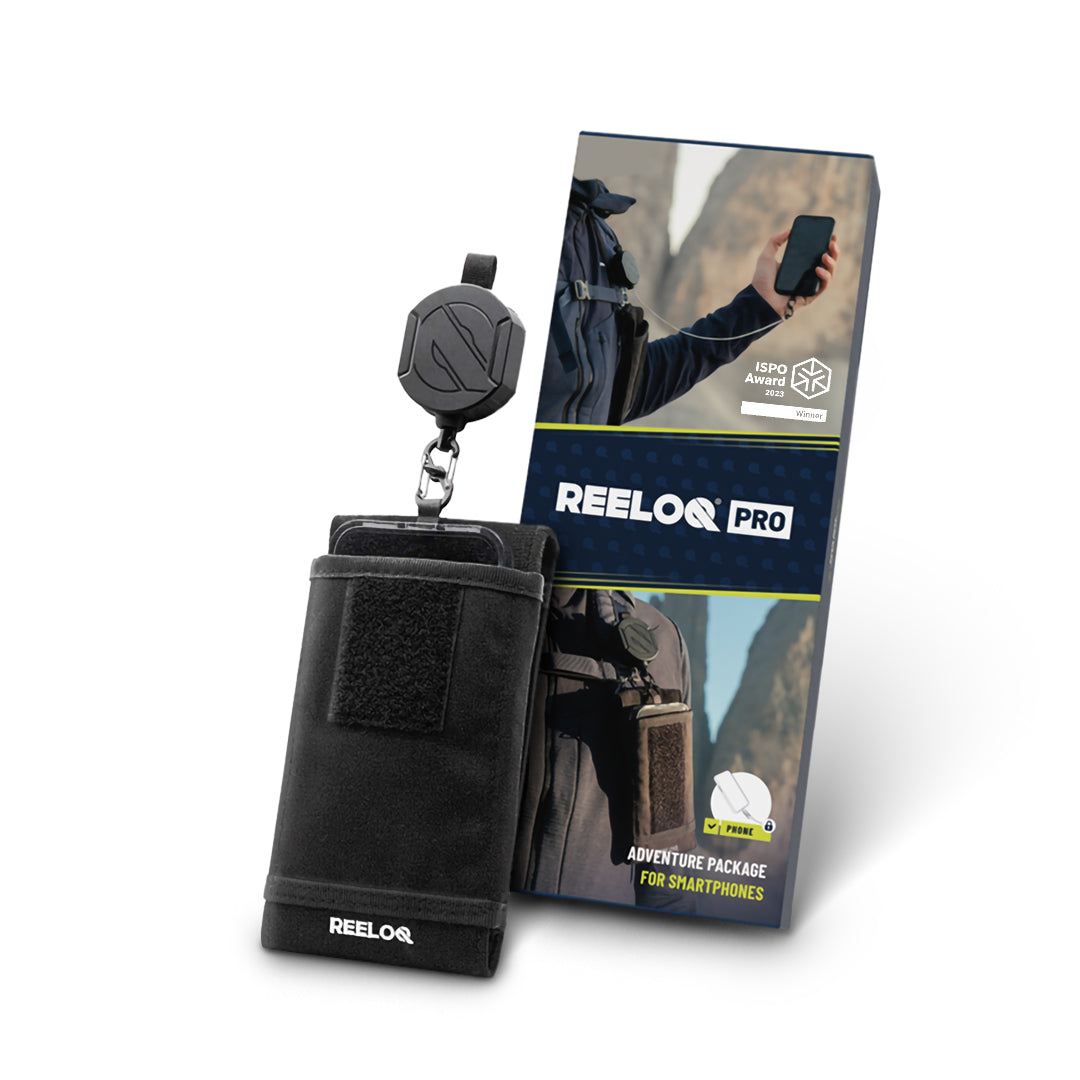
Reeloq Smartphone Securing System
If you want to take great photos on a via ferrata without worrying about losing your phone, Reeloq is the best tool for it. It’s a smartphone-securing system that allows you to use your phone on any adventure. This has been a great addition to my tool arsenal.
Shop on: REELOQ
More travel and hiking resources in the Dolomites
- Photography spots in the Italian Dolomites
- Regions in the Italian Dolomites
- Itineraries for the Italian Dolomites
- Via ferratas in the Italian Dolomites
- Day hikes in the Italian Dolomites
- Hut-to-hut treks in the Italian Dolomites
Support my website!
Hi Reader! If you found any of my articles about the Dolomites useful please consider using the affiliate links below (at no extra cost) when booking your holiday. Thank you
- Reserve your hotel with Booking.com
- Book your rental car with Discover Cars
- Buy your outdoor gear with Backcountry.com (US readers)
If you have any questions, leave them in the comments below!
Good morning, I read your article very carefully. Me and my husband want to do exactly the same route in August with the difference that we will start it from Pecol/Mareson following the path 587 and then 557 until the beginning of the Via Ferrata Alleghesi. We hope to reach the Vittorio Torrani refuge in 10 hours. We have mountaineering experience, we just haven’t done via ferrata before. I wanted to ask you if it is more difficult than the via ferrata normale that they will do on the way down.
And have you made a reservation for the shelter yet, in what way? I try to call but no one answers
Thank you for your time,
Korina
Hi Korina. Thanks for visiting. Yes, I would definitely recommend going up degli alleghesi route and using the VF normale to get down. The first one is harder and it wouldn’t be fun downclimbing it.
You are looking at around 1700 meters of elevation gain from rif. Palafavera near Mareson (I presume that’s where you start) to the summit of Civetta. That’s around 5-6 hours going up). I think you could reach torrani quicker. As for reservations, have you tried emailing? the refuge opens on July 1st so I would email first. (vdebona@libero.it). That’s the email from CAI website. Check your spam folder for any replies. I hope that helps!
Thank you Marta for the information you have given me and especially for the communication with the Torrani shelter.
We will not start from Palfavera, we will start from Mareson – Pecol and we will have about 6 km to the point where VF Alleghesi starts. So we estimate 2-2.30 hours to where VF Alleghesi starts. From there to the top how long can it take us??
Hi Korina. I have not walked the route from Mareson. It looks like you will have a total of 2000 meters of elevation gain to reach the summit which is a lot. If I was to estimate this kind of elevation doing it myself it would probably take me ca. 6 hours (not including breaks). That is just a very rough estimate though. I cannot tell you how much it will take you because I simply don’t know how fast you are 🙂
Hello Marta. Your post about Alta via 4 was the thing that got me started on hiking in the Dolomites and what an adventure! So thank you so much your work here, it is so inspirational and helpful.
Me and my partner are planing to walk the Alta via 3 with a small detour to Civetta. My only problem is that i cant seem to figure out how exposed this route really is. I have a fear of heights,(which i hate and i am really working on it) But as long as i do not climb vertically i am okay. This is also why i didn’t take the ferrata Vandelli on Alta via 4 because you look straight down for many meters, and that’s where my anxiety hits. Would you say this is just as exposed? Hope you can help me:) really want to visist this mountain but also be conscious about what i am doing. Thanks again for everything – Louise
Hi Louise. Thanks for stopping by and sorry for the late reply. Mount Civetta lies along the Alta Via 1. Alta Via 3 actually intersects with Alta Via 4 from the Vandelli refuge onwards.
Degli Alleghesi is an advanced ferrata and definitely not for the faint hearted. Not only you need to climb up the mountain but also downclimbing is involved which in a way is harder. I would say it is harder than Vandelli. An amazing via ferrata that I would recommend looking into that might be able to help you with heights is Via Ferrata Strada Degli Alpini. It is beginner, but it does walk along ledges with huge drop on the side. The ledges are wide though so your feet are always sturdy.
Hey Marta. Thank you so much for your reply. i am in pretty good shape, dont mind that it is hard, all the webistes say that its not hard technically though. But for me its the huge drops where i can look far with narrow ledges i’m scared of. So this Civetta ferrata is not for me you would say?
Hi Louise. Just a quick question (Don’t get me wrong) Did you study the images of this via ferratas in my article to give yourself an idea on how many vertical drops there are in this route? I think that will give you a pretty clear answer.
Hi Marta,
Thank you so much for creating the above blog! It really got us inspired to go via feratta in Dolomites. Just have one question – any idea how busy it gets in Dolomites (Cortina area) in the middle of July? Someone has mentioned it gets unbearable in the summer. We’re looking mainly at intermediate and possibly one or two advanced ferattas. What is your experience? Many thanks. Radka
Hi Radka. Thanks for visiting. It is busy but not unberable. If you decide to hike a trail like Lake Sorapiss or Lagazuoi in the middle of July then yes you won’t find solitude that people search for in the mountains, but via ferratas are significantly quieter than hiking trails.
Well of course, but it is always hard to tel how far the drop is on pictures, same goes ffor the youtube videoes, some look more dramatic then the actual ferratas i did. i will rather take your word and experience:)
Gotcha. I don’t know what ferratas you have done before. Technically this isn’t tough (but via ferratas are not climbing routes, they are not technical) There are however moment when you are standing on an iron rod with a long drop down below. I really cannot tell a stranger on the internet what they are capable of, this is something you only know yourself.
Not really sure if you read my messages or just misunderstood. I really like your blog and it seems like you put a lot of care and effort into it. But this was a somehow unpleasant convo. Take care
Hi Louise. I took time, have read and responded every single of your comments. I thought I responded the first one extensively, yet in the following comment you asked exactly the same question. In the following answer I even put in the brackets “please don’t get this the wrong way”. In the end I really can’t tell someone what they are capable of. If I tell you sure, go and then you get stuck in the middle of a ferrata I will be the one to blame. I’ve had a terrible accident in the mountains myself and would never ever push someone above their limits. I am not sure why you thought I was unpleasant. Written words can be read differently than spoken words can be heard. I hope you have a great trip and stay within your limits.
Thanks for the great write up – your photos inspired us and the description was excellent. We completed the route walking in from Malga Vescova at 06.50 and returned back to the car at 5pm – exhausted but accomplished. We allowed time for a snack on the ascent and a long break for lunch at the summit.
It is certainly a big day and a good weather window is essential. The route Ferrata was also quite busy with other people, there are some points to safely pass but I can imagine elsewhere it could be difficult. I think it would be helpful to factor in additional time to safeguard against being potentially caught behind another group(s).
Thanks again for your write up. It wasn’t in our guide book so without seeing your post we would have missed out on an excellent adventure.
Jacki
Hi Jacki. Thanks so much for taking the time to write a feedback. I am sure it will be helpful for others. 10 hours is a very good time for going up and back. It’s a heck of an elevation gain. I was happy to have a night in the hut in between. I am glad my website contributed to another great adventure. I hope this was not your last time in the Dolomites.
Hi Marta,
Thanks for the write up and all the nice photos.
Another option for starting and finishing is the campground at Palafavera. This was my first via ferrata in Italy, and it took 9h15m from the campground and back using the same route you took (plus the walk up and down from Coldai — the gondolas weren’t running (maybe they start in July?)). Two other more experienced via ferrata climbers went up the same day I did, and they were faster — 8h30m.
It’s a long day but no so long, and you don’t need to worry about reservations since you’re not using the huts. Maybe that helps someone.
A warning for bicyclists: there’s a 5km section of road between Igne and Mezzocanale that is closed to cyclists. We had to ride illegally to reach Palafavera from Longarone. 🙁
Bryan
Hi Bryan! Thanks for visiting. Yes, I hiked from Palafavera to Coldai when doing the AV1 traverse. It’s definitely more elevation gain comparing to taking the gondola, but as you said, one isn’t pressed for time with the gondola schedule. Leaving very early is essential though! 9h15 min is a fantastic time! Well done! Thanks for your input. I am sure it will come in handy for others.