
Finding a region in the Dolomites where you would like to spend your holidays is difficult. The choice isn’t easy, with many different valleys offering unique hikes via ferratas and photography spots. In this article, I will introduce you to one of my favourite Dolomiti regions, the Puster Valley, and show you the many great outdoor trails you can find here.
About Val Pusteria (Puster Valley)
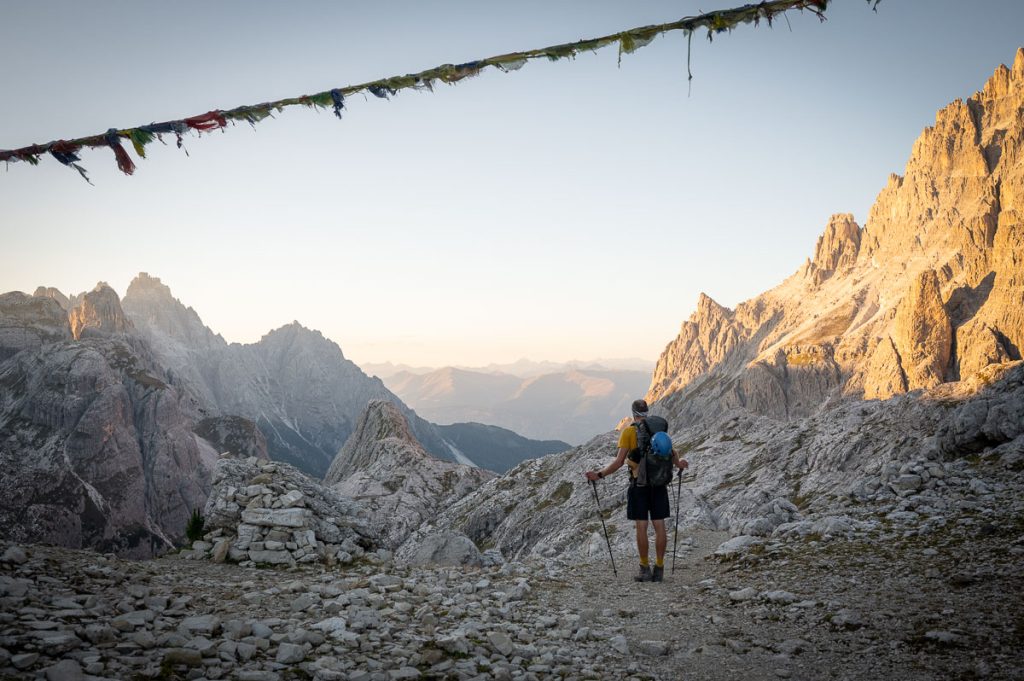
Puster Valley runs along the northern border of the Dolomites and separates them from the Central Eastern Alps. The whole area belongs to the South Tyrol region of Italy. The valley stretches almost 100 kilometres from Lienz (Austria) in the East to Mühlbach (Italy) in the West.
One of the interesting facts I read about the Puster Valley relates to its streams and rivers. Namely, those that begin in the mountains surrounding the valley eventually empty into the Adriatic Sea and the Black Sea (Source: Wikipedia).
Although after the First World War and the dissolution of the Austro-Hungarian Empire, Puster Valley was annexed to Italy, and even today, over 100 years later, 80% of the local population continues to speak German.
Many Austrian traditions and cuisines are highly prevalent in the Puster Valley. When you visit, you might think you are actually in Austria instead of Italy.
Best towns to stay in around Val Pusteria / Pustertal
If you plan to stay a few days in Val Pusteria and explore its hiking trails or via ferratas consider staying in one of these towns. They are all located within a few miles of one another.
1. Dobbiaco (Toblach)
Toblach lies at the entry of the dramatic Val Di Landro (Höhlensteintal), which branches off Puster Valley. The Landro Valley separates two famous Dolomiti Nature Parks: Tre Cime and Fannes-Sennes-Braies.
I am pretty sure you have at least heard of Tre Cime. Dobbiaco’s location makes it an excellent spot to visit the parks’ highlights.
Toblach is also well known for its culture and many important events throughout the year, like the Gustav Mahler Musik Weeks. He was a famous Austrian composer who often visited the area and found inspiration in the sounds of the mountains and rivers.
Check for hotel prices in Dobbiaco (Toblach)
2. Sesto (Sexten)
Sesto is a small commune of only 2000 inhabitants in the Sexten Valley, which branches directly from Pustertal.
Sesto should be on your radar if you plan on exploring the famous Tre Cime Nature Park but without the usual crowds. Val Fiscalina, in my opinion, is one of the most beautiful valleys in the Dolomites, and it lies only a stone’s throw away from Sesto. With plenty of trails and via ferratas at its doorstep, you won’t be bored in Sesto.
Check for hotel prices in Sesto (Sexten)
3. San Candido (Inninchen)
San Candido is a true mountain paradise with plenty of small cafes, restaurants, and shops and access to endless outdoor opportunities, from mountain biking in the summer to cross-country skiing in the winter.
San Candido is known for its historic village, particularly the Inninchen Abbey. It is also home to the local natural history museum, “Dolomythos,” which includes exhibits of dinosaur fossils found in the area.
Check for hotel prices in San Candido (Inninchen)
4. Monguelfo
Monguelfo is a great town to stay in if you want to focus on exploring the Fannes-Sennes-Braies National Park. It offers easy access to Lake Braies (Pragser Wildsee), its main attraction.
Each year, in the last week of August, Monguelfo hosts a chocolate festival. If, like me, you are a chocolate junkie, then you can’t miss that one!
Check for hotel prices in Monguelfo
How to get to Puster Valley
Val Pusteria can be easily reached by train or car from any major city in Italy, Austria, or Germany. Below are the approximate travel times by either train or car to Dobiacco in Puster Valley.
From Munich (via Innsbruck)
- By train: approximately 4.5 hours
- By car: ca. 4 hours
- Distance: 295 km / 182 miles
From Milan
- By train: approximately 5.5 hours
- By car: ca. 4 hours 50 mins
- Distance: 374 km / 234 mi
TIP: If you are flying to Milan, it’s better to fly into Bergamo airport
From Venice
- By train: approximately 5 hours 20 mins
- By car: ca. 2 hours 45 mins
- Distance: 189 km / 117 mi
My favourite hikes around Val Pusteria / Puster Valley
1. Croda Fiscalina Circuit
- Total distance: 19.2 km / 11.9 mi
- Time required: 8-10 h
- Elevation gain: 1180 m / 3870 ft
- Colour on the map: green
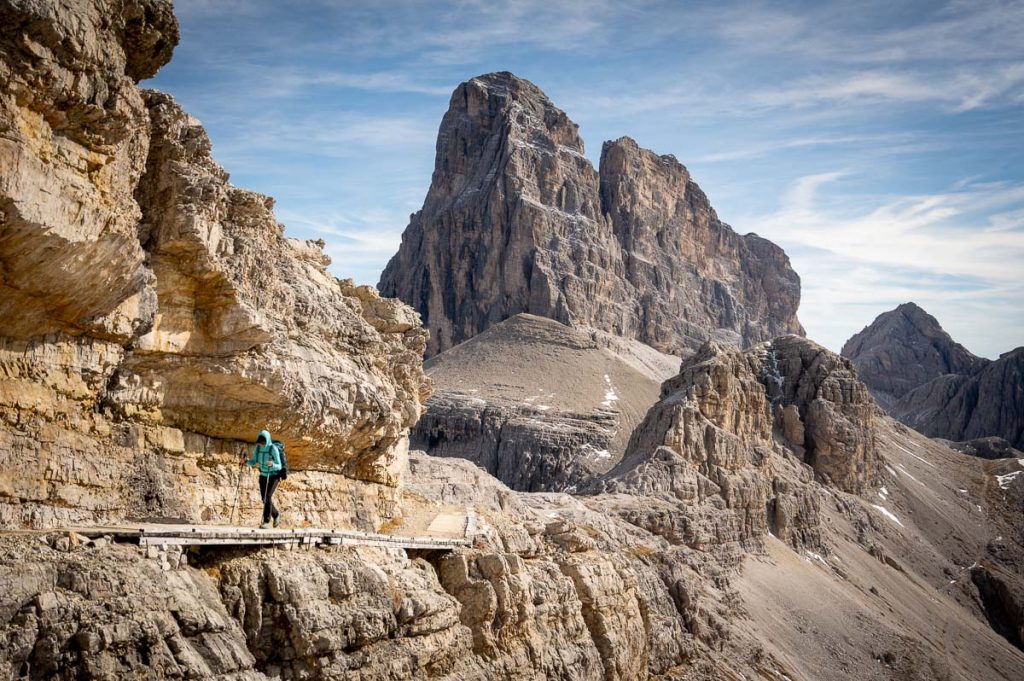
If you asked me for my favourite hike in the Puster Valley region, my answer would be the Croda Fiscalina Circuit. The hike is also known as the ‘tour of the rifugios’ because it takes you through 4 different mountain huts, giving you plenty of opportunities to have a meal in stunning mountain scenery. You won’t be hungry on this hike.
However, food is not the only reason to tackle this hike. It offers a variety of views from the lush green valley, moon-like landscapes, and, of course, the iconic Three Peaks (Tre Cime), the most famous landmark in the Dolomites.
Read more: Hiking Guide To Croda Fiscalina Circuit Trail.
2. Dürrenstein Summit (Pico Di Vallandro)
- Total distance: 10.2 km / 6.34 miles
- Time required: 5-7 hours
- Elevation gain: 873 meters / 2582 feet
- Colour on the map: purple
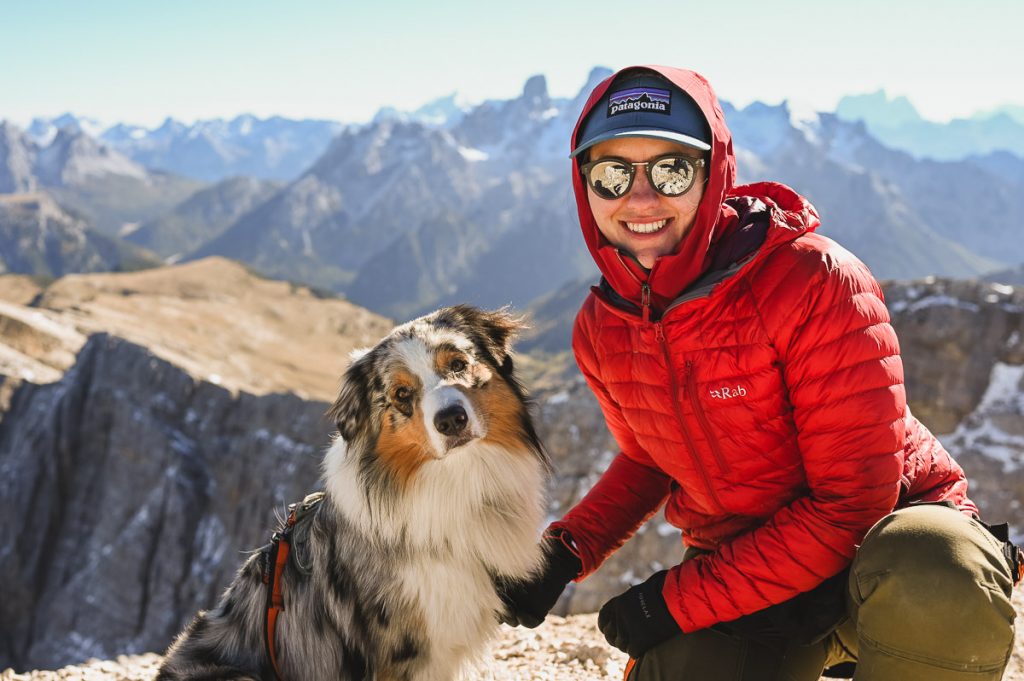
The summit of Dürrenstein (Pico Di Vallandro) is a classic route in the Puster Valley region. The hike comes to life in late autumn when the larches filling the surrounding valleys turn yellow. If you are looking for a summit experience, this is the hike you should choose.
Read more: Guide to Dürrenstein summit hike.
3. Monte Specie (Strudelkopf)
- Total distance: 10.5 km / 6.5 mi
- Time required: 3-3.5 h
- Elevation gain: 390 m / 1280 ft
- Colour on the map: black
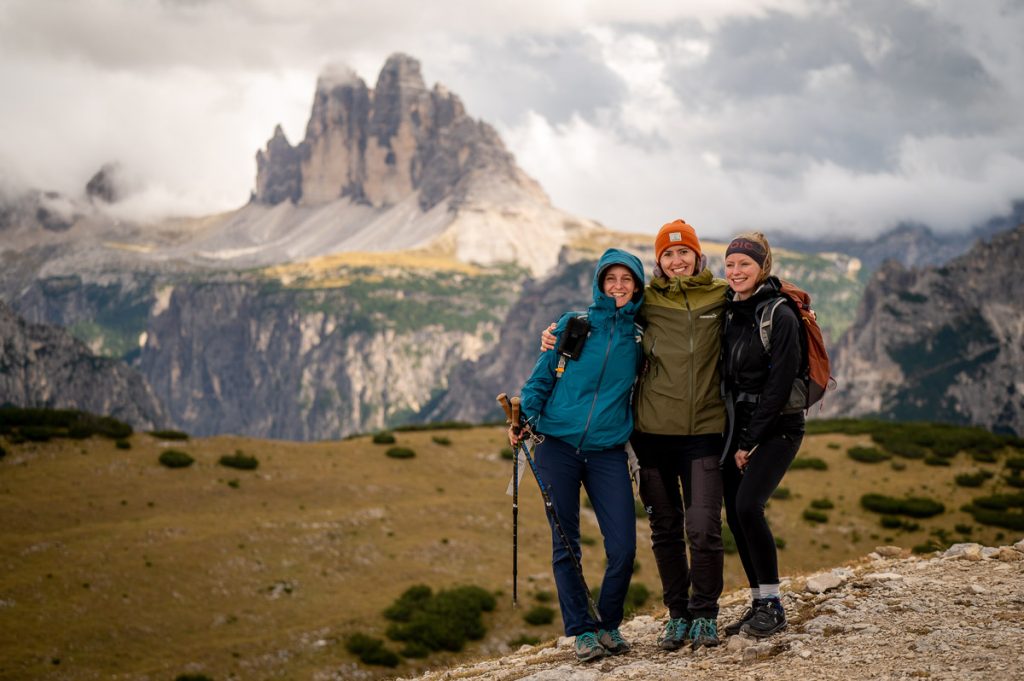
The hike to Monte Specie shares the same trailhead as the previously mentioned Dürrenstein. Monte Specie is its smaller sister. Distance-wise, they are the same, but to reach the summit of Monte Specie, you must do less than half of the elevation gain.
Though the views won’t be as elevated, they are still fantastic. The most prominent view is that of the Three Peaks (pictured above).
4. Lago Di Braies Circuit
- Total distance: 4km / 2.5 mi
- Time required: 1-2 h
- Elevation gain: 50 m / 165 feet
- Colour on the map: yellow
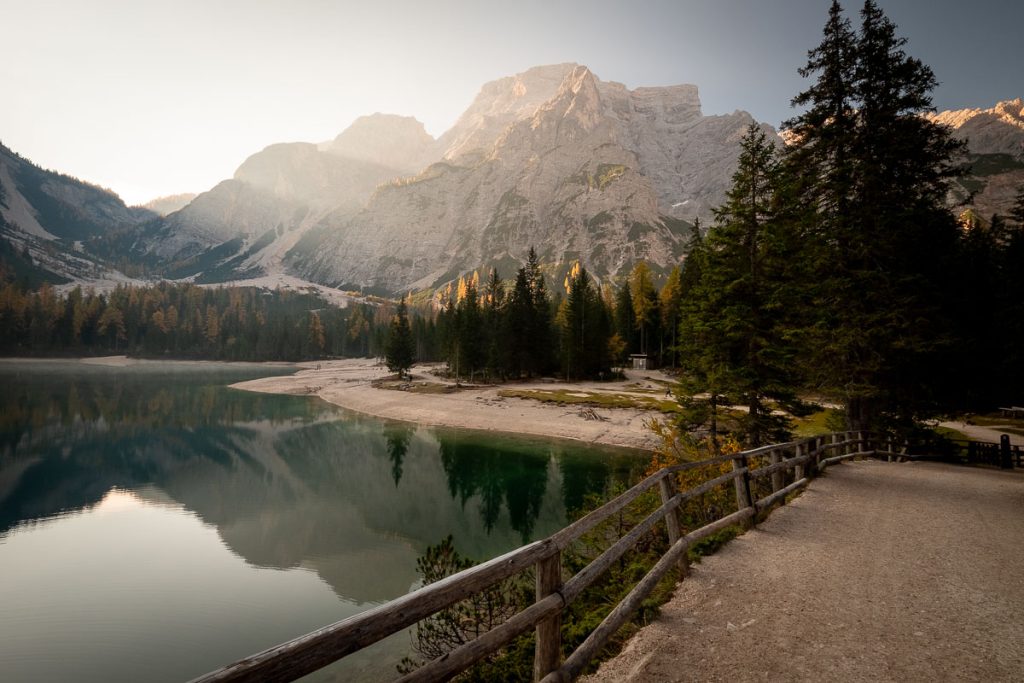
Many photographers visit the Dolomites, and Lago di Braies is a must-visit spot for venturing into the backcountry. Many hiking trails start at Lago di Braies, including the 11-day north-to-south traverse of the entire Dolomites known as Alta Via 1.
If you are not an avid hiker, Lago di Braies Circuit might be the trail that changes that. It is an easy hike with one of the best effort-to-view ratios in the Dolomites.
Read more: How to visit Lago di Braies
5. Seekofel Summit
- Total distance: 18 km / 11.2 mi
- Time required: 7-8 hours
- Elevation gain: ca. 1400 m (ca. 4600 ft)
- Colour on the map: blue
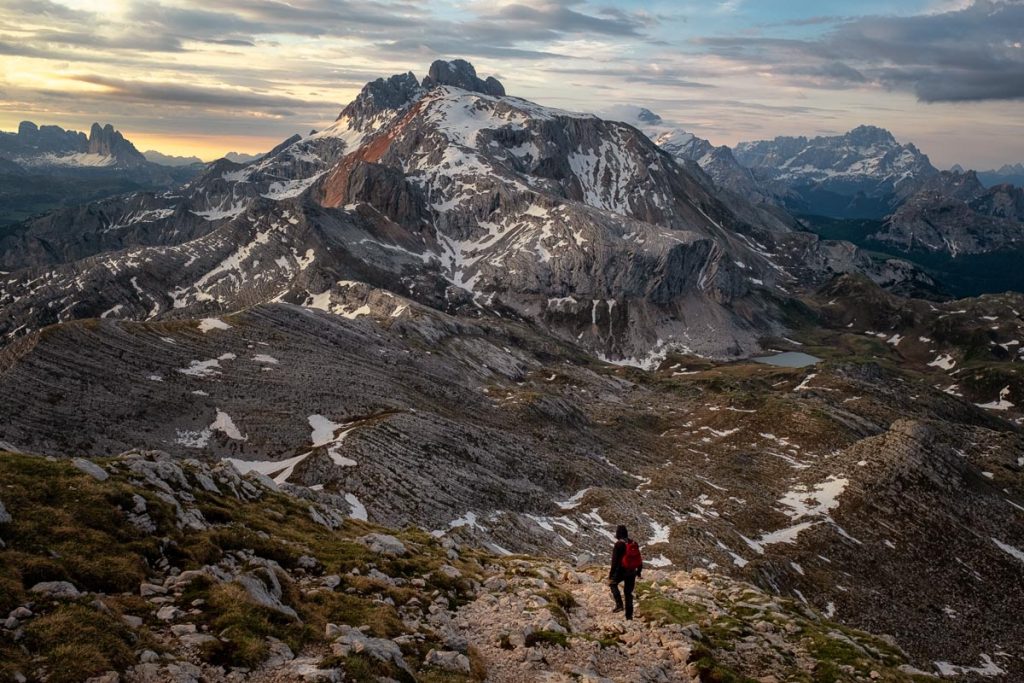
Seekofel is the mountain that stands above Lago di Braies, despite being one of the most photographed summits in the Dolomites, not many who visit the lake venture onto the trail that leads to the summit of Seekofel.
It is a challenging hike, with almost 1400 meters of elevation gain. It is also exposed in some places. You can break it into two stages and overnight in the Biella mountain hut; the refuge is located a few hundred vertical meters below its summit.
6. Val Campo Di Dentro
- Total distance: 10.8 km / 6.6 mi
- Time required: 3-4 hours
- Elevation gain: 381 m / 1250 ft
- Colour on the map: pink
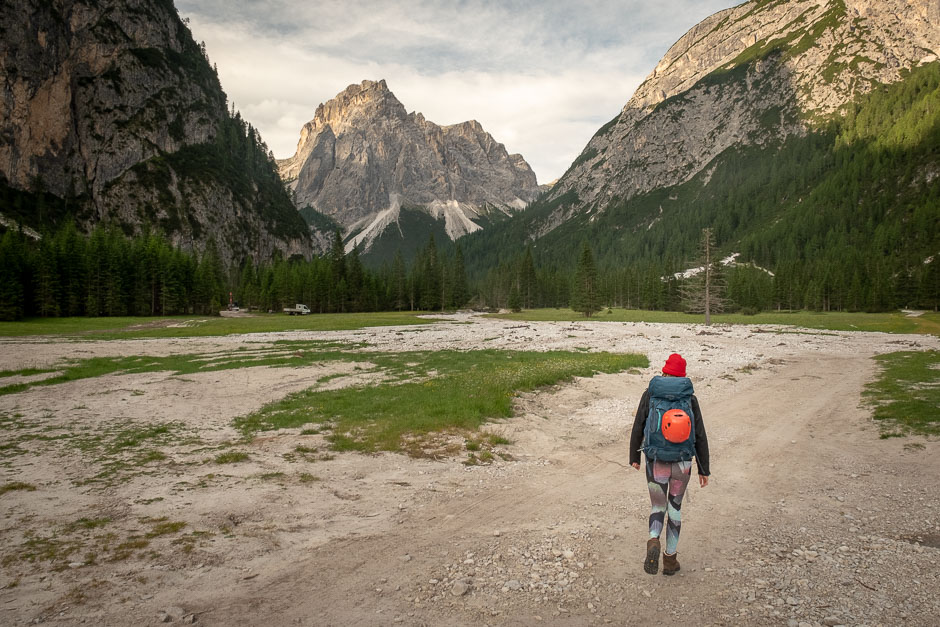
If you want another beginner-friendly hike in the Puster Valley region, consider hiking through Val Campo Di Dentro to Rifugio Tre Scarperi and back.
This is the first and easiest stage of Alta Via 4, another multiday traverse across the Dolomites. The first stage can be done independently, as a day hike. It’s a pleasant walk with minimal elevation gain that won’t leave you breathless.
7. Croda Rossa (Rotwand)
- Total distance: 12.1 km / 7.5 mi
- Time required: 4-5 hours
- Elevation gain: 825 m / 2700 ft
- Colour on the map: red
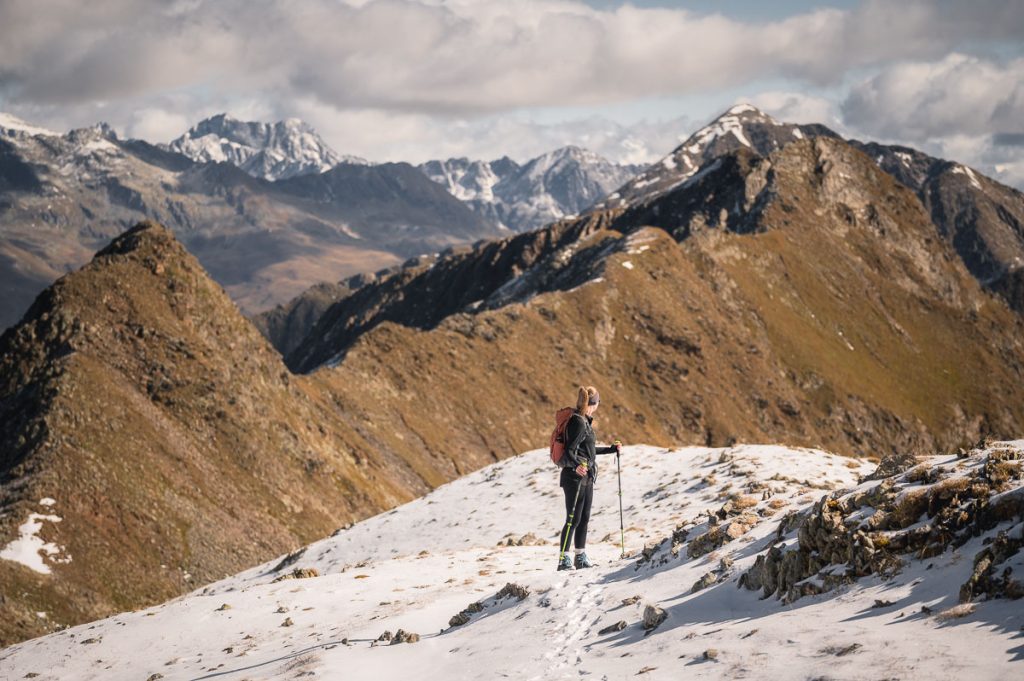
Croda Rossa lies right on the Austro-Italian border above the turquoise Antholz Lake. The hike starts at Passo Stalle, 2000 meters above sea level, and always runs above the treeline. You can expect fantastic views from start to finish.
The trailhead lies at the North end of the Anterselva (Antholz) valley, one of the smaller valleys that branch off the Pustertal. Even though the hike takes you to an altitude of 2817 meters (9242 ft) above sea level, the elevation gain is gradual and doesn´t feel strenuous. The only challenging part is near the top, but it will be over before you notice.
Top Via Ferratas Around Val Pusteria / Pustertal
1. Croda Rossa (Rotwandspitze)

One of my most recent excursions in the Dolomites took me to the summit of Croda Rossa in the Tre Cime Nature Park. Please don’t mistake it for the previously mentioned hike. They are two different mountains within a 1-hour drive from one another and bear the same name.
Filled with World War I History, this is a great beginner Ferrata, with straightforward scrambling. From the summit, you can see peaks of not only the Italian but also the Austrian and Slovenian Alps, including Mount Triglav – Slovenia’s highest peak.
Read More: Guide to Via Ferrata Croda Rossa & Zandonella
2. Via Ferrata Zandonella
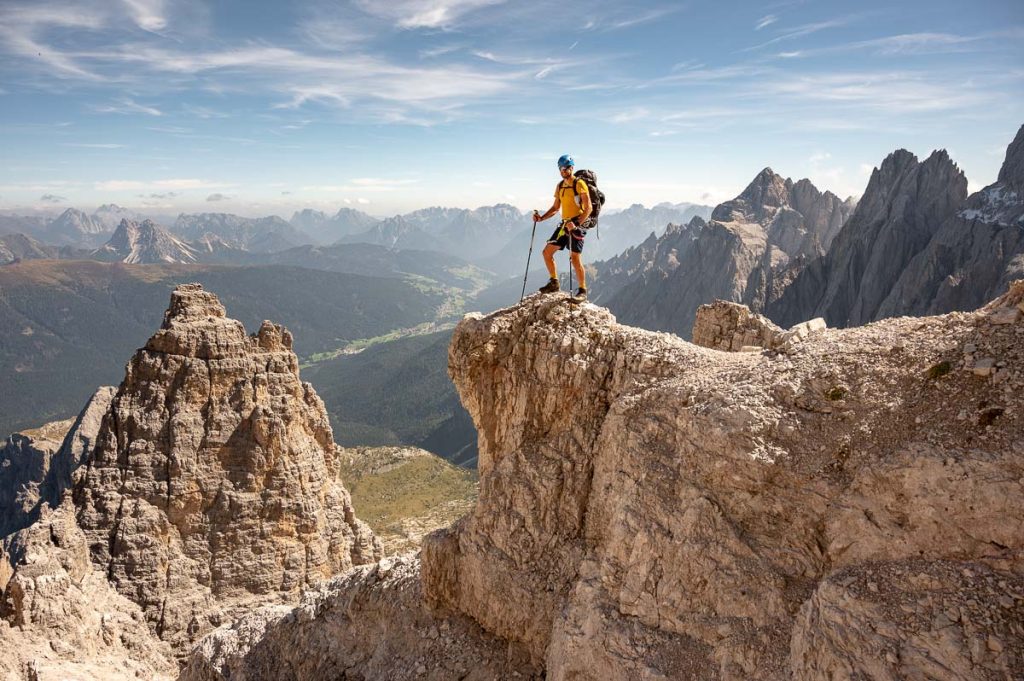
Via Ferrata Zandonella also takes you to the summit of Croda Rossa, but it follows a different route on the south side of the mountain. It offers glimpses into the beautiful Popera Valley and is slightly more challenging.
For a full day of climbing adventure in the Tre Cime Nature Park, you can combine Via Ferrata Zandonella with the Via Ferrata Croda Rossa.
Read More: Guide to Via Ferrata Zandonella & Croda Rossa
2. Strada Degli Alpini (Alpinisteig)
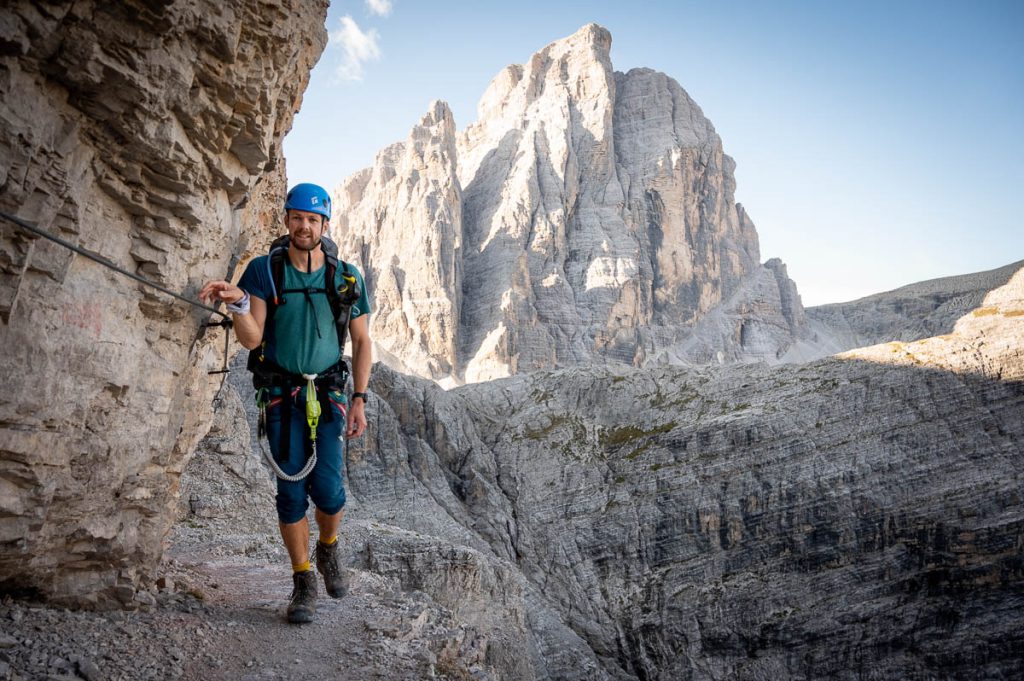
Via Ferrata Strada Degli Alpini, known as the Alpinisteig, is one of my favourite iron paths in the Dolomites.
This is all thanks to the stunning views you get when traversing along the western flanks of Cima Undici. I am mainly talking about the views of the dramatic Croda dei Toni (Zwölferkofel) pictured above.
Read more: Guide to Via Ferrata Strada Degli Alpini
3. Severino Casara
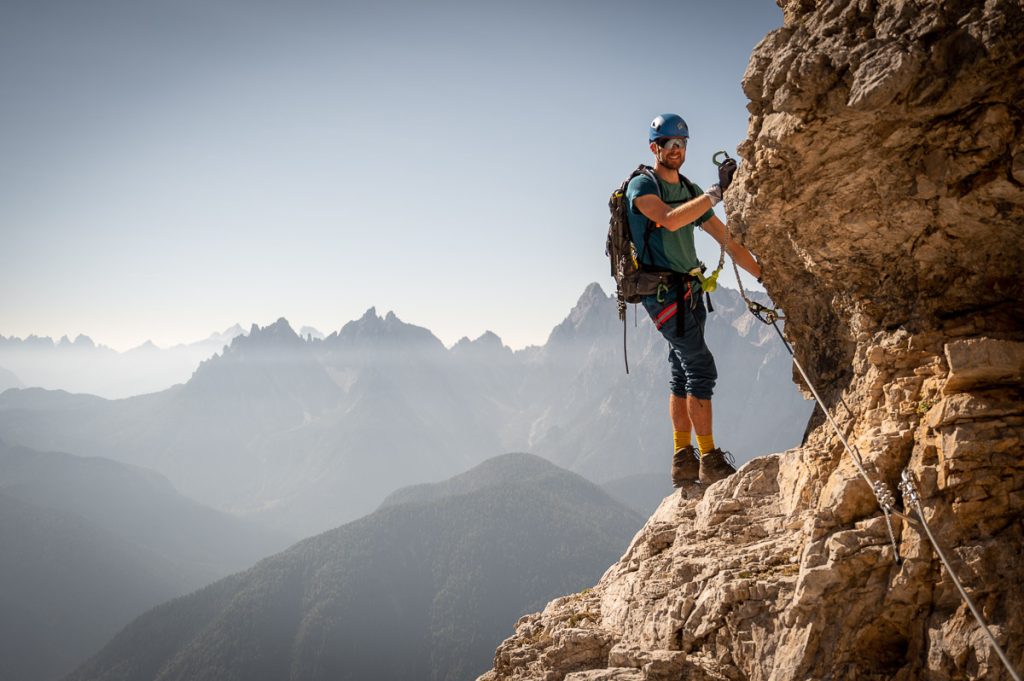
Via Ferrata Severino Casara circles the previously mentioned Croda Dei Toni (Zwölferkofel) and offers spectacular views over Lake Auronzo and the Marmarole mountain group.
It’s a fantastic full-day excursion that will allow you to visit, dine, or even stay overnight in some of my favourite mountain huts in Tre Cime Nature Park.
Read More: Guide to Via Ferrata Severino Casara
My Favorite Photography Spots Near Val Pusteria
1. Lago Di Braies (Pragser Wildsee)
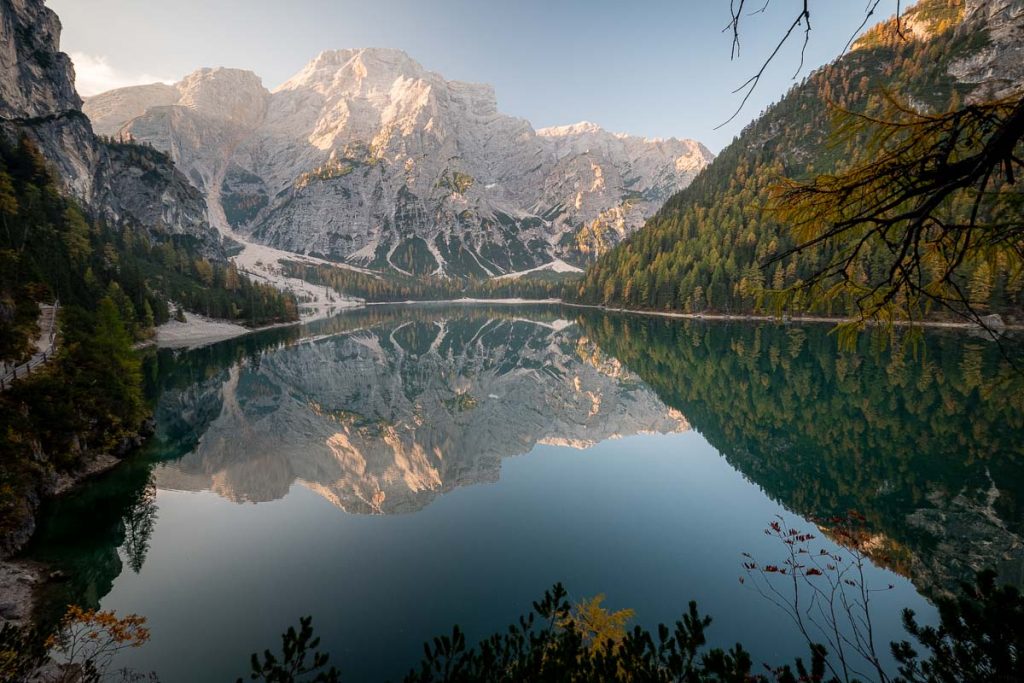
Far from being a hidden gem. Quite the opposite, Lago di Braies is the most visited spot in the Dolomites. Don’t let the serenity in the photo above fool you.
Only a few hundred meters away, there is a vast car park, a hotel, tourist stands, and hundreds of people trying to photograph the lake while simultaneously fighting for a spot along the shoreline.
Is it off-putting enough to make me want to skip it? No, I still think Lago di Braies is beautiful. You can still find solitude there as long as you walk away from the main boat jetty and venture onto the previously mentioned circuit trail around the lake.
2. Lago Dobiacco (Toblacher See)
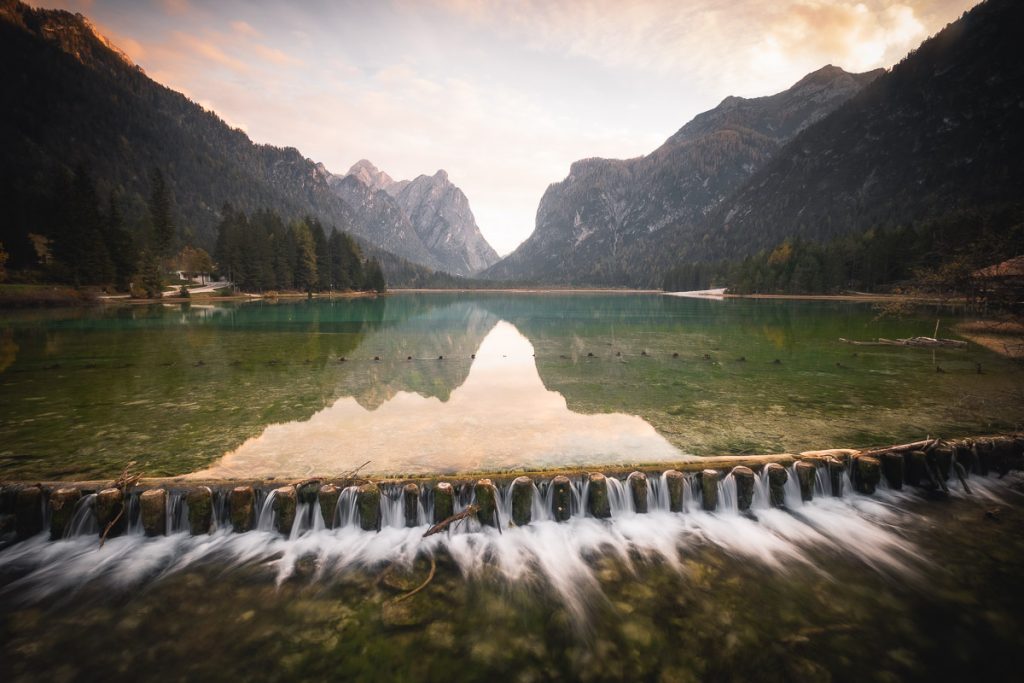
Lake Dobiacco (Toblacher See) is a shallow alpine lake with a maximum depth of only 3.5 meters.
This and the fact that it lies in a deep, sheltered Landro valley often mean that the photography conditions are perfect. The surrounding peaks usually reflect in its shallow waters.
3. Lago Di Landro (Dürrensee)
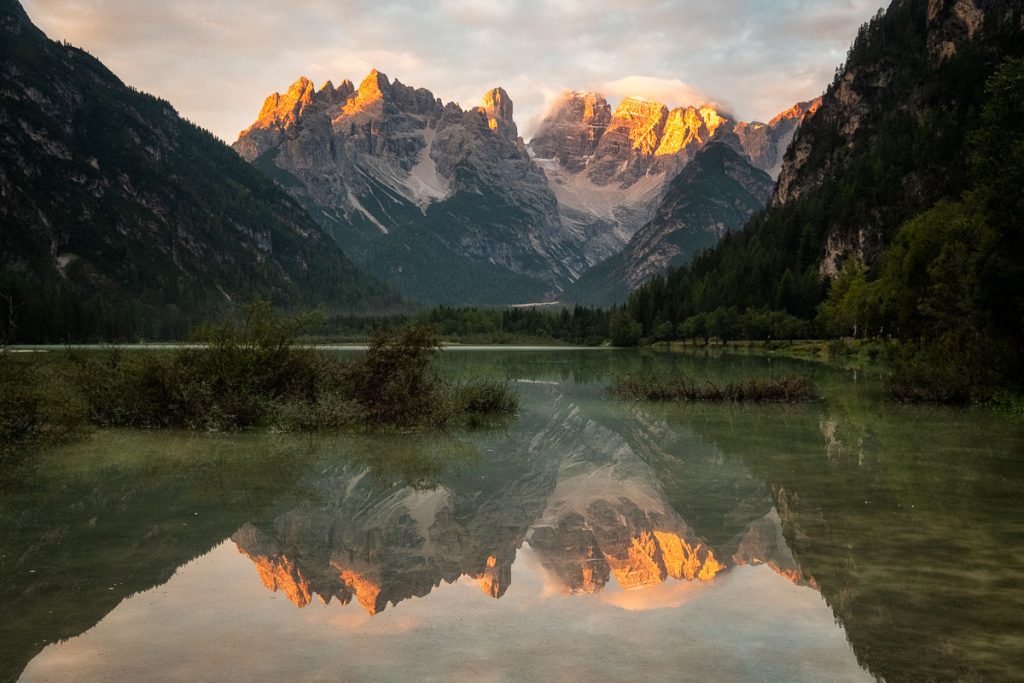
Only a few kilometres from Lake Dobiacco into the Landro Valley lies another lake – Lago di Landro. The lake is known for its beautiful turquoise colour, particularly on a sunny day with blue skies and when the water level is at its highest. During autumn, the lake diminishes to the size of a bigger pond.
Sunrise, when the peaks light up bright orange, is an excellent time to visit the lake and photograph the reflections of Monte Cristallo.
4. Val Fiscalina (Fiscalina Valley)
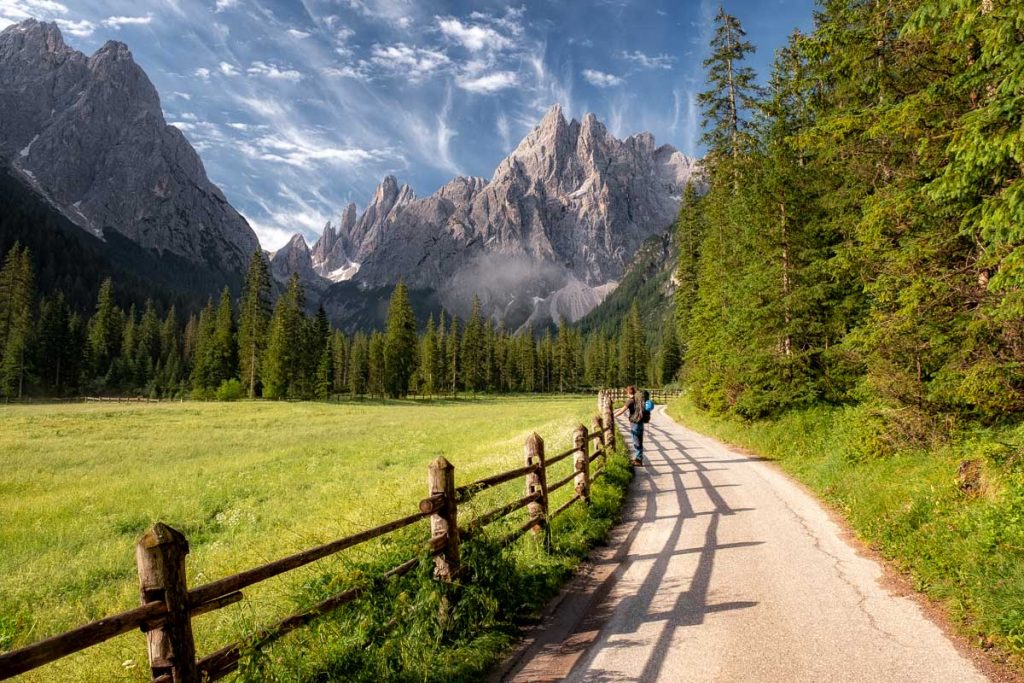
My favourite photography spot in the Val Pusteria region is Val Fiscalina. I love the dramatic look of Croda Fiscalina and Croda Dei Toni contrasting against the serene green fields at the bottom of the valley.
The valley is also filled with larch trees, making it an excellent spot for autumn photography, when the whole valley turns from green to yellow to bright orange.
Other regions in the Dolomites worth visiting
- Fassa Valley (Val Di Fassa)
- Gardena Valley (Val Gardena)
- Funes Valley (Val Di Funes)
- Primero Valley (Val Primero)
- Badia Valley (Val Badia / Alta Badia)
- Cortina D’Ampezzo & Central Dolomites
- Tre Cime Nature Park
More travel and hiking resources in the Dolomites
- Photography spots in the Italian Dolomites
- Regions in the Italian Dolomites
- Itineraries for the Italian Dolomites
- Via ferratas in the Italian Dolomites
- Day hikes in the Italian Dolomites
- Hut-to-hut treks in the Italian Dolomites
Support my website!
Hi Reader! If you found any of my articles about the Dolomites useful please consider using the affiliate links below (at no extra cost) when booking your holiday. Thank you
- Reserve your hotel with Booking.com
- Book your rental car with Discover Cars
- Buy your outdoor gear with Backcountry.com (US readers)
If you have any questions, leave them in the comments below!