
Via ferrata Giro del Sorapiss will test your endurance and the ability to navigate on not always apparent paths. Good planning ahead is essential for an enjoyable full-day excursion. The reward will come in solitude, wildlife viewing possibilities, and some of the best views in the Dolomites.
Via Ferrata Giro Del Sorapiss – A Step By Step Guide
Giro Del Sorapiss – The Stats
- Distance: 26 km / 16.2 mi (including hut approach)
- Elevation gain: 1910 m / 6266 ft
- Elevation loss: 1956 m / 6417 ft
- Time required: 13-16 hours (overnight hut stay recommended)
- Via ferrata difficulty: intermediate
- When to go: July to September
- Map required: Tabacco Map no. 03 Dolomiti Ampezzane
The map of the Via Ferrata Giro Del Sorapiss
Below, you can view the trail visualization. Bear in mind that this map should not be used for navigation. The blue line marks the approach to Rifugio Vandelli. The Sorapiss circuit is marked in yellow.
Where to stay overnight along Via Ferrata Giro Del Sorapiss
Unless you are a total endurance junkie, you might want to consider staying overnight along the route to break it down. I marked all three options on the map.
Option 1: Rifugio Vandelli
If you prefer to go lightweight, stay in Rifugio Vandelli the night before. You can ask the staff to leave some of your gear at the hut and pick it up after you complete the circuit. I recommend leaving the hut as early as possible, straight after breakfast. You can order a packed lunch to take with you.
TIP: Vandelli hut lies along the Alta Via 4 multiday traverse and books out far in advance. Make sure to plan well ahead.
Option 2: Bivacco Comici
A bivacco is a basic alpine shelter that only provides a bed for sleeping, nothing else. You can stay in one free of charge, but you must carry enough food, water, and a sleeping bag. The Comici bivouac lies ca. 9.3 km (5.8 mi) into the Sorapiss Circuit.
TIP: Due to lack of maintenance and vandalization, Bivacco Comici should only be used in emergencies (for example, bad weather). Recent reports speak about blankets eaten by mice and trash from inconsiderate campers.
Option 3: Bivacco Slataper
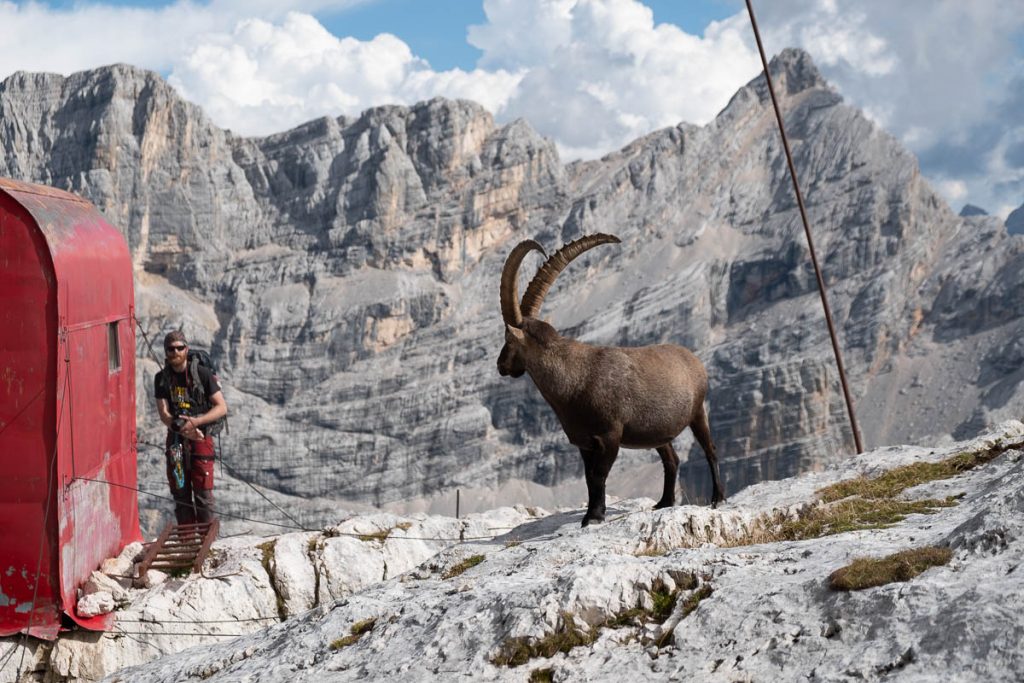
The Slataper Bivouac (pictured above) is located halfway into the Sorapiss Circuit and is the most scenic of the three options. I ran into some Ibex hanging out right next to the Bivouac. They did not seem bothered by our presence. Please take care of it, and don’t let its fate be the same as the Comici Bivouac.
Getting to the trailhead of Via Ferrata Giro Del Sorapiss
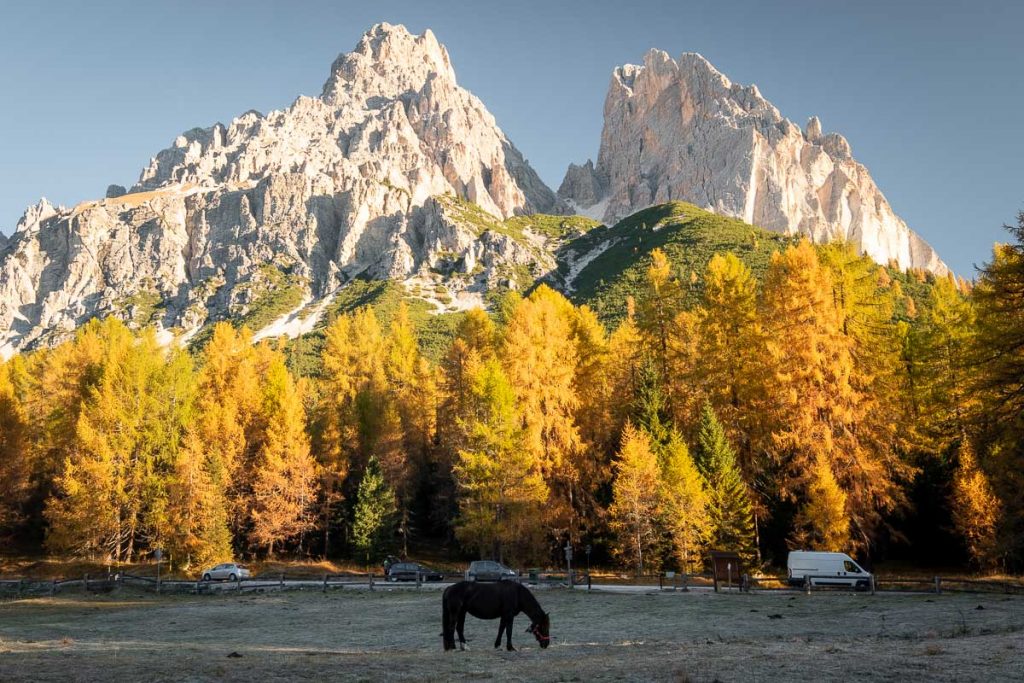
Via Ferrata Giro Del Sorapiss follows the trail to Lake Sorapiss, starting at Tre Croci mountain pass. The pass connects the towns of Cortina D’Ampezzo with Auronzo Cadore.
By Car
Passo Tre Croci is a 15-minute drive eastward on SR48 from Cortina D’Ampezzo – the nearest town. The trailhead lies roughly 100m from the B&B Passo Tre Croci.
There are two parking possibilities for the Lake Sorapiss trail. The most convenient is to park on the side of the road near the trailhead gate. However, spaces are limited and fill up quickly.
The official parking lot for the Lake Sorapis hike is a 10-minute walk from the trailhead. Remember that this parking has a vehicle height limit of 2.5 meters.
TIP: Bring cash, just in case. New parking fees are introduced each year. At the time of writing, parking was free, but that doesn’t mean it will remain free.
By bus
From June until September, line no. 30 from the Dolomiti bus company operates daily along the route between Passo Falzarego, Cortina, and Rifugio Auronzo. The bus stop nearest to the trailhead is called Passo Tre Croci. You can check the bus schedules either on Google Maps or the official website of the Dolomiti bus company, which operates on this route.
The 5 Stages Of Via Ferrata Giro Del Sorapiss
Stage 1: Passo Tre Croci to Rifugio Vandelli:
- Distance: 6.1 km / 3.8 mi
- Elevation gain: 285 m / 935 ft
- Elevation loss: 235 m / 770 ft
- Time required: 2 hours
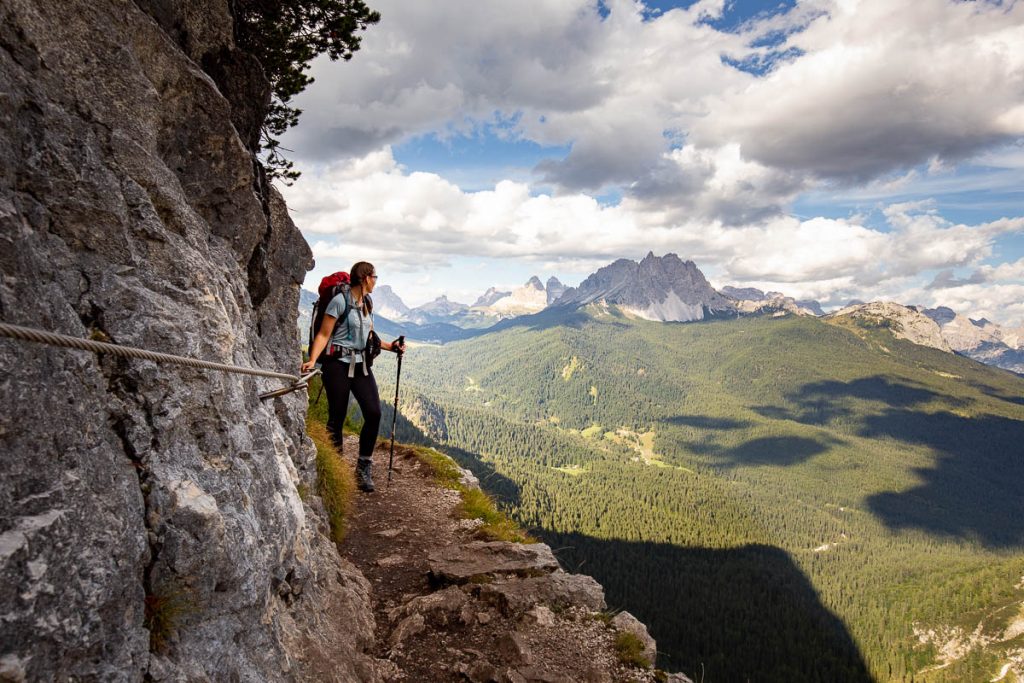
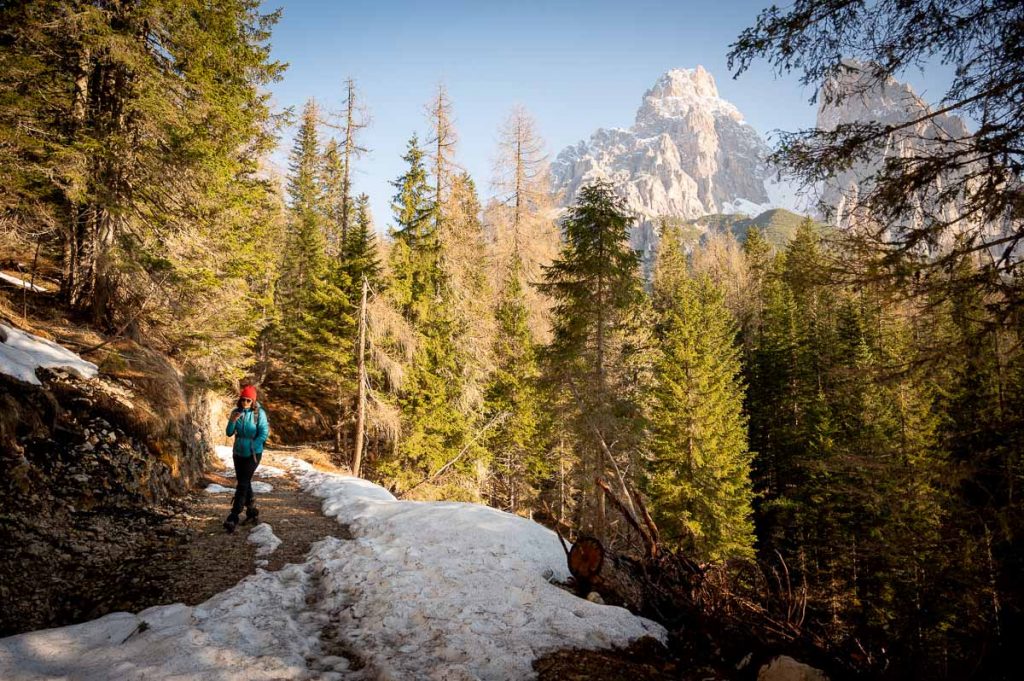
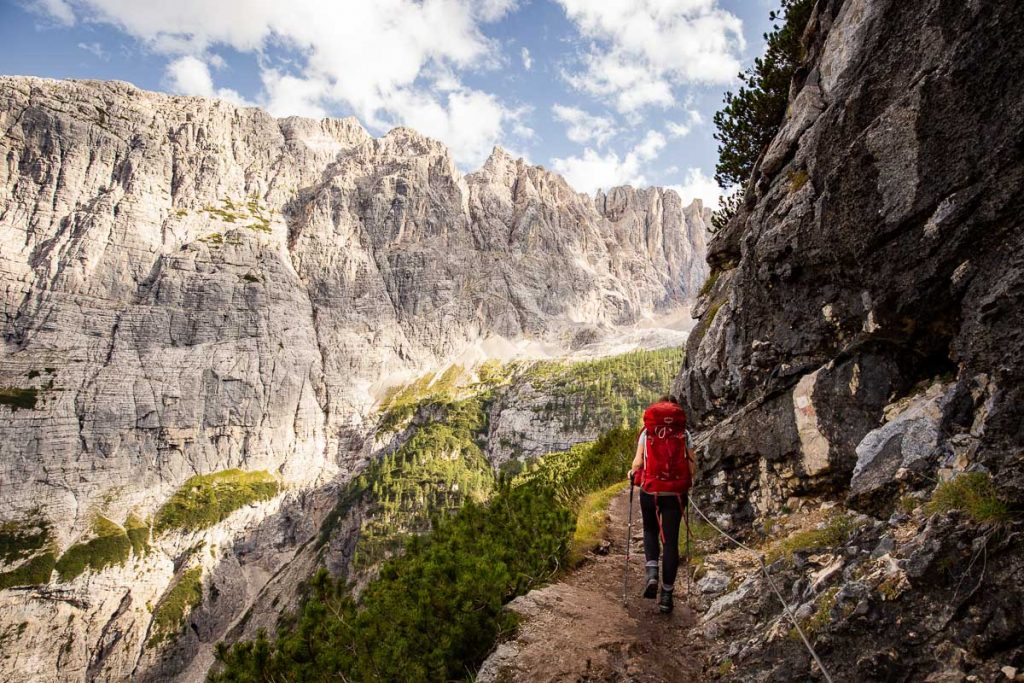
Take path no. 215 from Passo Tre Croci, a mountain pass connecting Misurina and Cortina D’ampezzo. The hike to Rifugio Vandelli takes 1.5 to 2 hours and is 6.1 kilometres one way.
Stage 2: Rifugio Vandelli to Bivacco Comici along via ferrata Alfonso Vandelli
- Distance: 3.2 km / 2 mi
- Elevation gain: 484 m / 1587 ft
- Elevation loss: 490 m / 1607 ft
- Time required: 2.5-3.5 hours
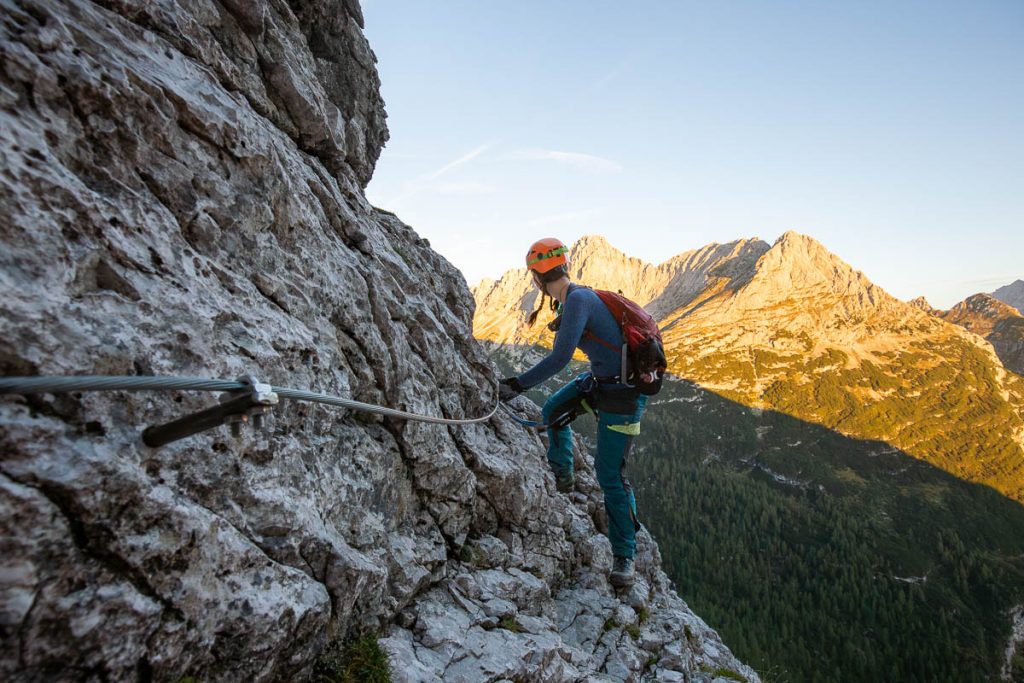
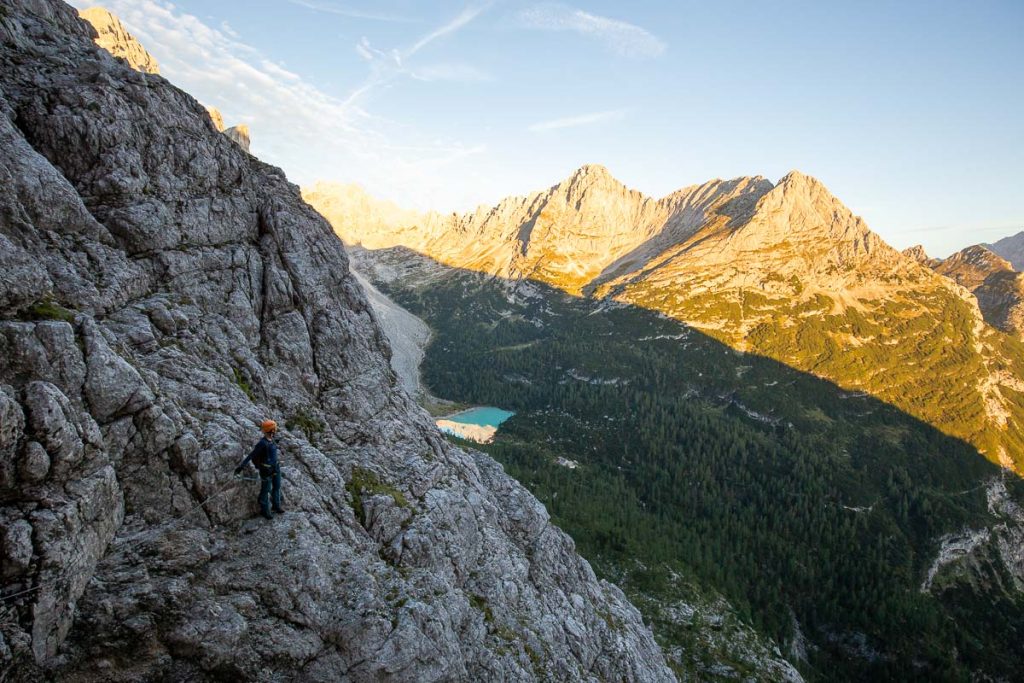
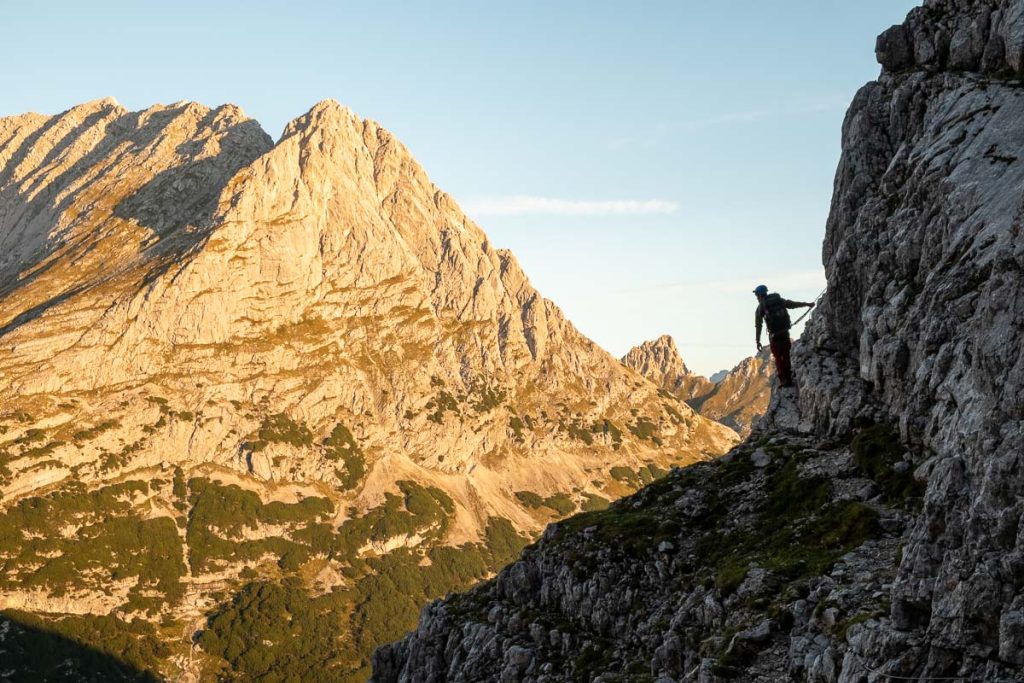
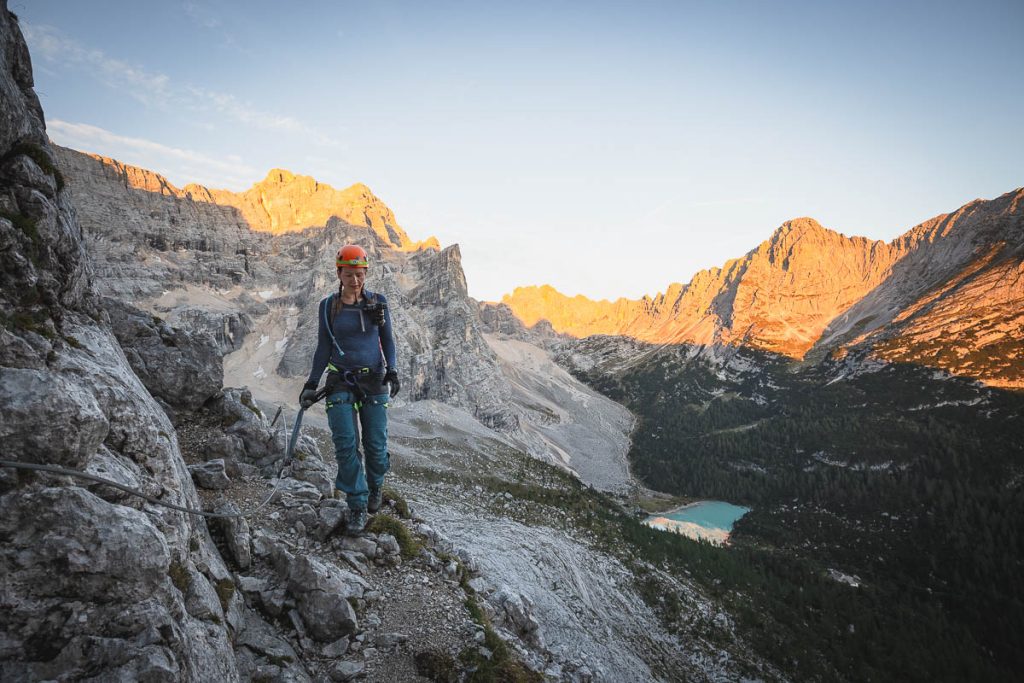
Via ferrata Giro del Sorapiss consists of three separate ferratas: Alfonso Vandelli, Sentiero Carlo Minazio and Francesco Berti.
Since “giro” means “circuit”, it can be walked in either direction. After consulting with the local and amiable owners of the Rifugio Vandelli, where I stayed the night before, I decided to tackle the route clockwise.
Staying the night before in the hut meant that I could leave most of my equipment behind and take only what was necessary, making my backpack lighter.
From Rifugio Vandelli, follow the signs for path no. 243. Soon, you will reach the western side of Croda del Fogo, where the climb along a series of ladders begins.
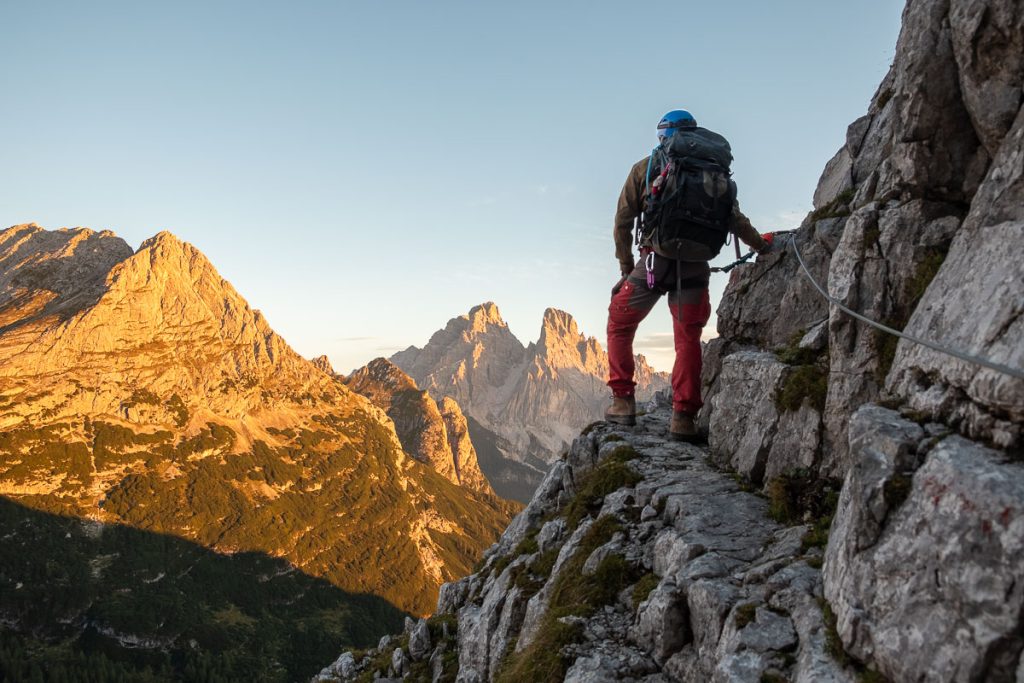
You will gain elevation quickly, and your head might spin from exposure. Luckily, the cables are present most of the way, giving excellent protection. Here’s a quick reminder: They only work if you clip in. A harness, helmet, and lanyard are necessities.
Two hours of fun climbing and jaw-dropping vistas later, with Monte Cristallo in the far background, you will reach Col del Fogo at 2562 meters. You can exhale deeply now and take your helmet off for a bit.
After gaining over 500 metres of elevation, you will lose most of it when following path no. 234, further to Bivacco Comici, the next landmark along the route.
Ensure you are equipped with a good map and know how to use it. In this case, Tabacco no 03 will do the job (I linked to it in the stats).
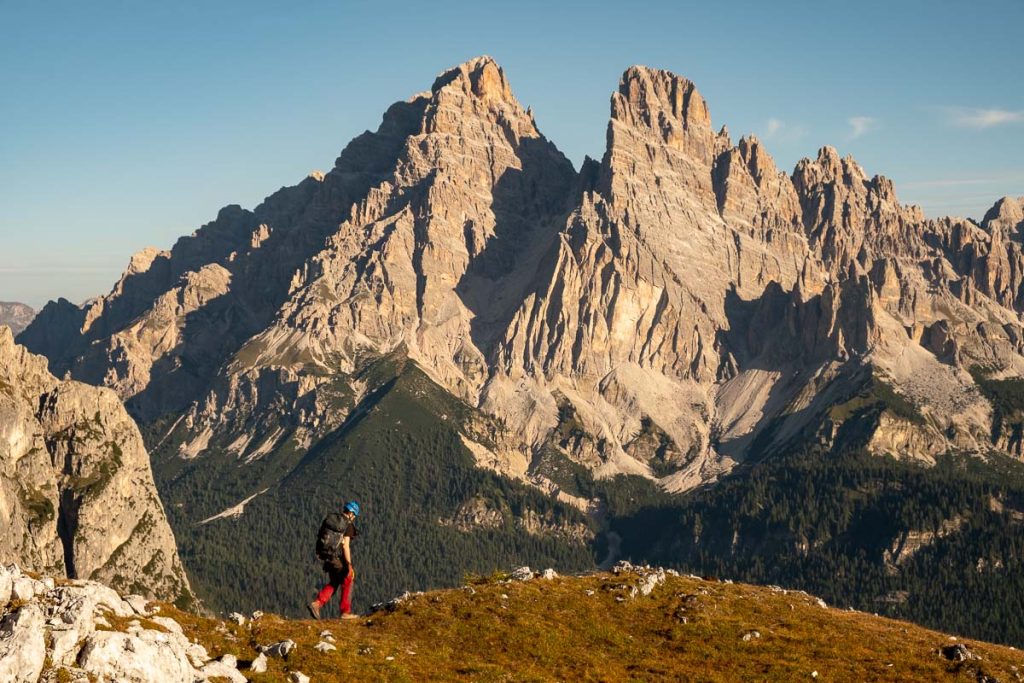
Although there is only one trail you can follow, I still managed to get lost because I had a crappy map with no details. The fact that the trail drops down a few hundred meters confused me. I followed the red markings but saw no direct signs of Bivacco Comici.
I walked down for an hour before returning to Col del Fogo. I lost around two hours and drained my water supply, only to realize we were following the right path.
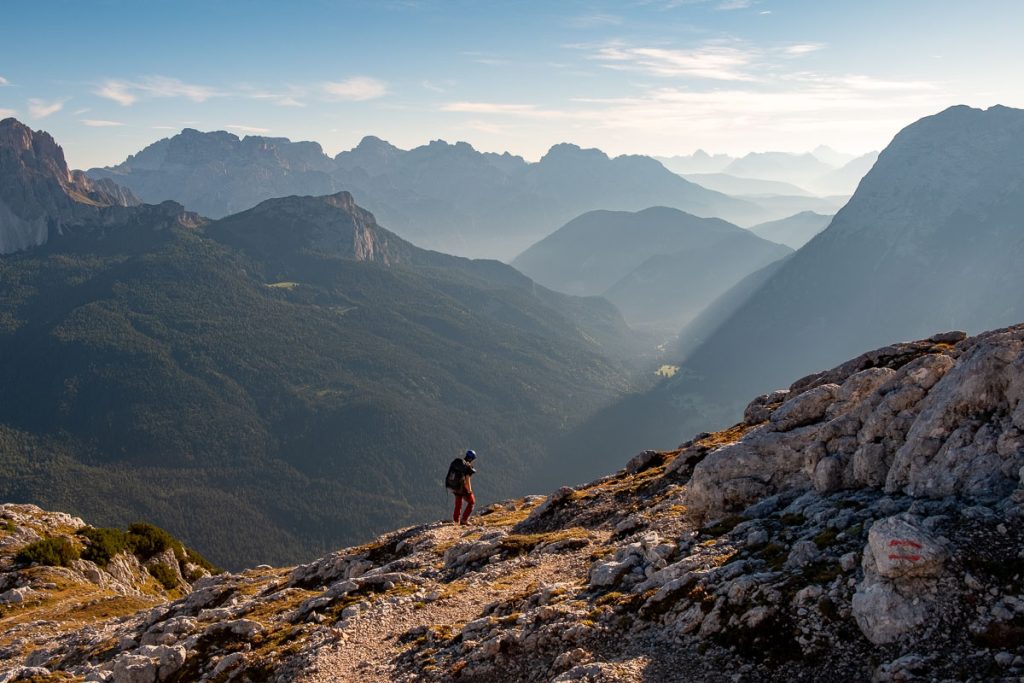
I admit that it was my fault, and it was a good reminder that you should never get too comfortable in the mountains. After another hour from Col del Fogo, we finally reached Bivacco Comici, two hours later than scheduled.
Stage 3: Bivacco Comici to Bivacco Slataper along via ferrata Sentiero Carlo Minazio
- Distance: 4.9 km / 3 mi
- Elevation gain: 620 m / 2034 ft
- Elevation loss: 100 m / 328 ft
- Time required: 2.5-3.5 hours
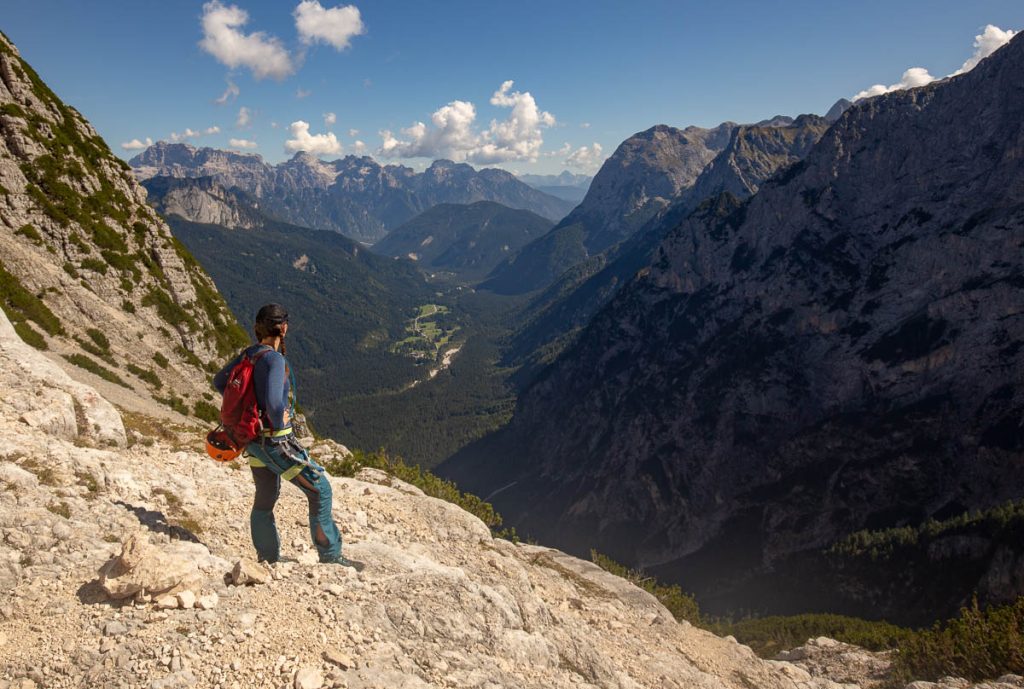
Rest well at Bivacco Comici and prepare for the second via ferrata. From the shelter, you will see a saddle and a zig-zag path leading up to it. Follow it for about 30 minutes until you reach the saddle.
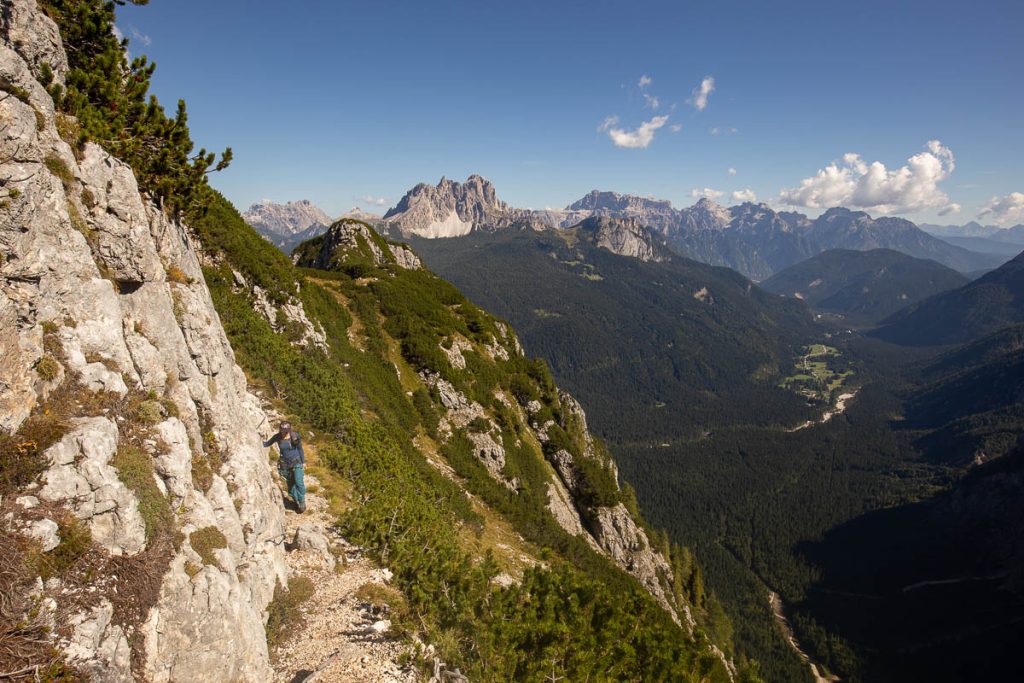
For the next 1.5 hours, you will follow a series of ledges and later grassy slopes along the undulating path no. 243. This part is known as the via ferrata Sentiero Carlo Minazio.
In some spots, the exposure is pretty decent with a few hundred-meter drop to your left. Again, cables are installed in the most challenging sections, so you can (and should) clip in for peace of mind.
Eventually, the valley opens up, and the path leads to a junction. So far, the Sorapiss Circuit has been intersecting with Alta Via 4, the multiday backpacking trip through the Dolomites. Path no. 243, which you have been following, goes to Rifugio San Marco.
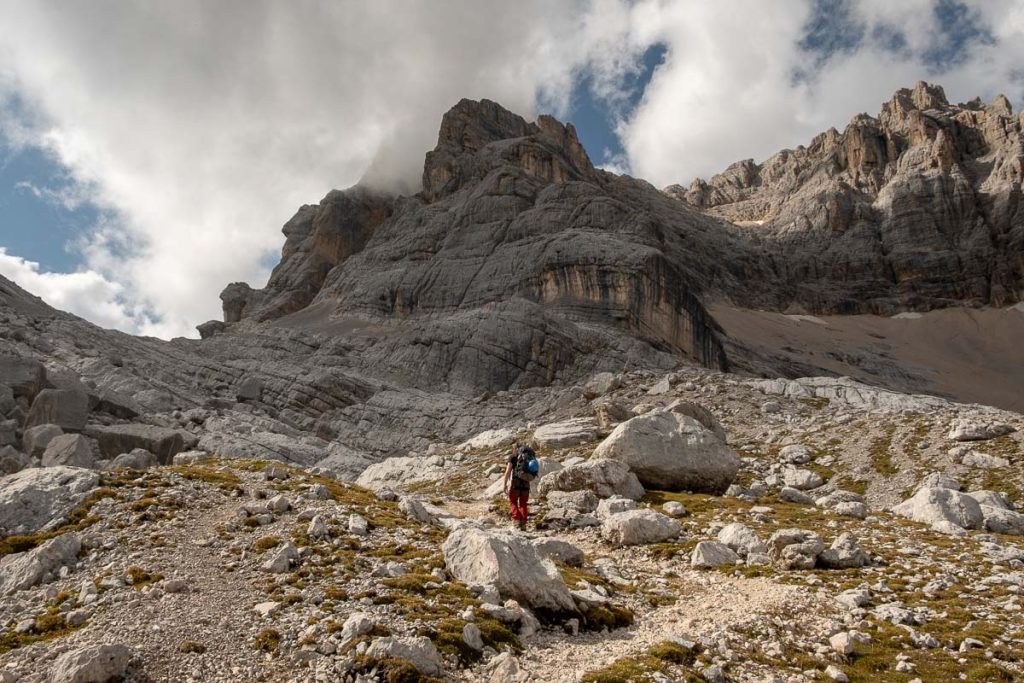
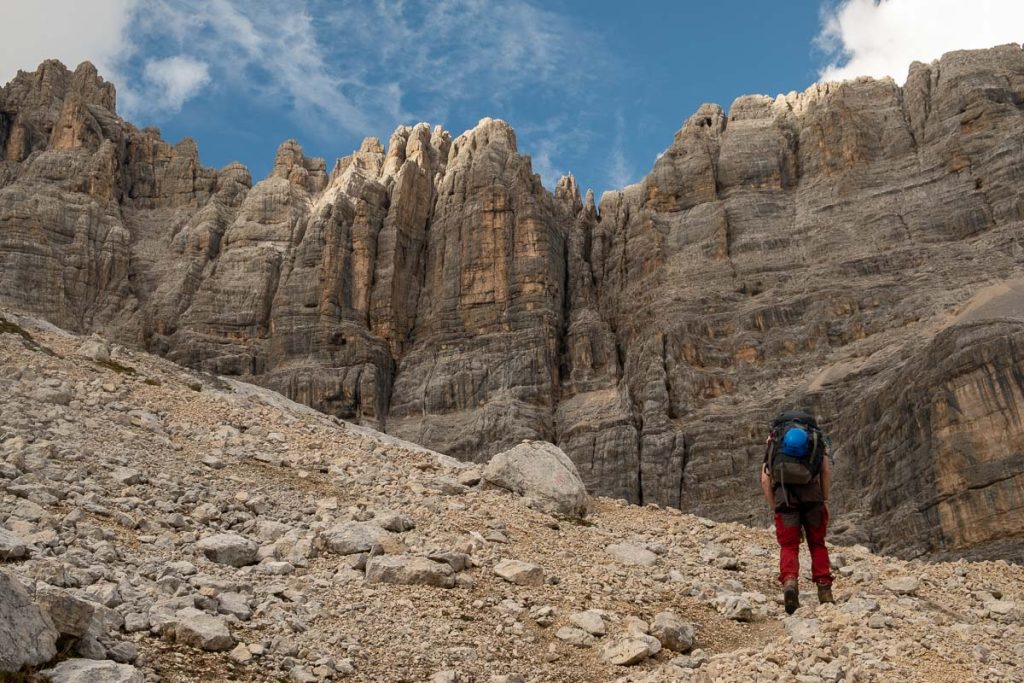
Turn right at the junction and hike up a large scree bowl along path no. 247 to Bivaco Slataper. You should reach it in about one hour.
A couple of hundred meters earlier, you will come across a little stream where you can fill up your water. Please don’t rely on it 100%, though.
One of my few mistakes on the trail was not bringing enough water. By the end of the summer, the stream was nothing more than a little trickle, and having run out of water an hour earlier, I was desperate to drink something.
I filled my HydraPak with muddy water, hoping I wouldn’t catch any waterborne disease while drinking it. A LifeStraw or iodine tablet would have come in handy.
Stage 4: Bivacco Slataper to Rifugio Vandelli along Via Ferrata Francesco Berti
- Distance: 5.7 km / 3.5 mi
- Elevation gain: 286 m / 938 ft
- Elevation loss: 846 m / 2775 ft
- Time required: 3-4 hours
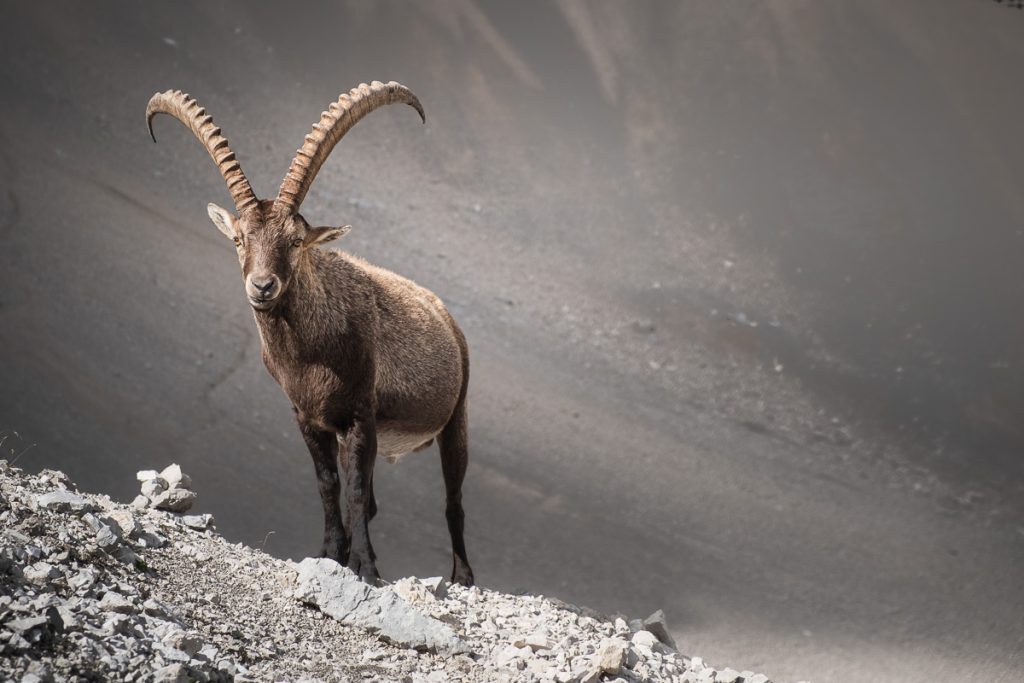
Bivacco Slataper is an option for those who are planning to split the circuit in two days as it lies, more or less, halfway along the circuit. It’s a tiny shelter with basic amenities.
The downside of overnighting here is having to carry all your equipment: stove, sleeping bag, change of clothes, and extra food and water. The weight quickly adds up.
I prefer to hike as lightly as possible, so I opted to stay at Rifugio Vandelli instead. This meant I had a few more hours before completing the circuit.
From Bivacco Slataper, the trail continues toward the saddle called Forcella del Bivacco. This is the highest point along the Sorapiss circuit. You can see the little town of San Vito Di Cadore down into the valley.
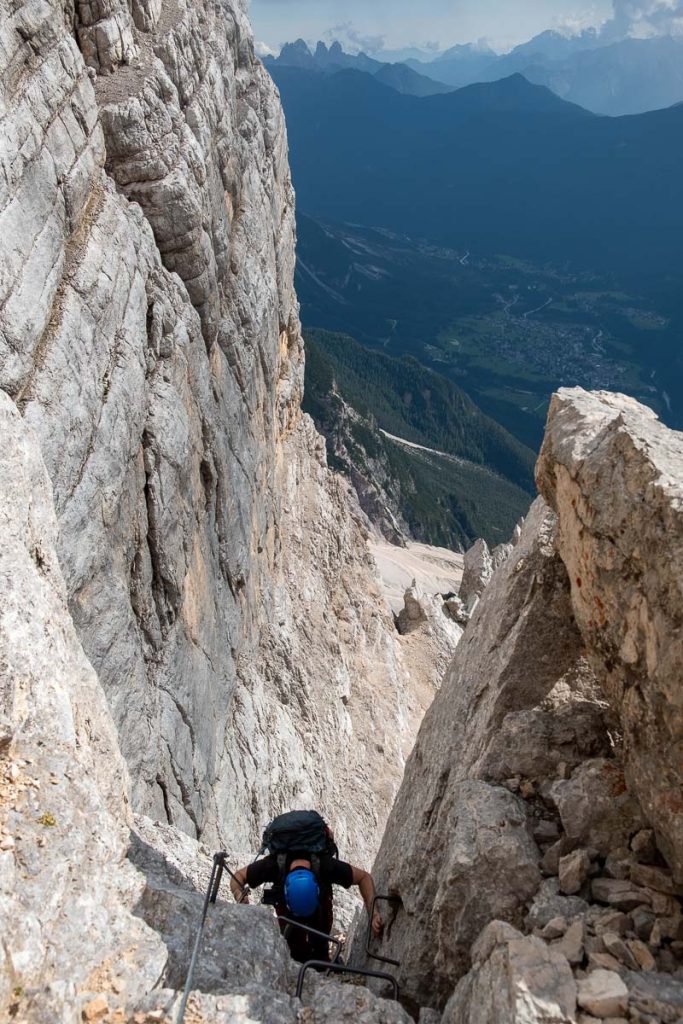
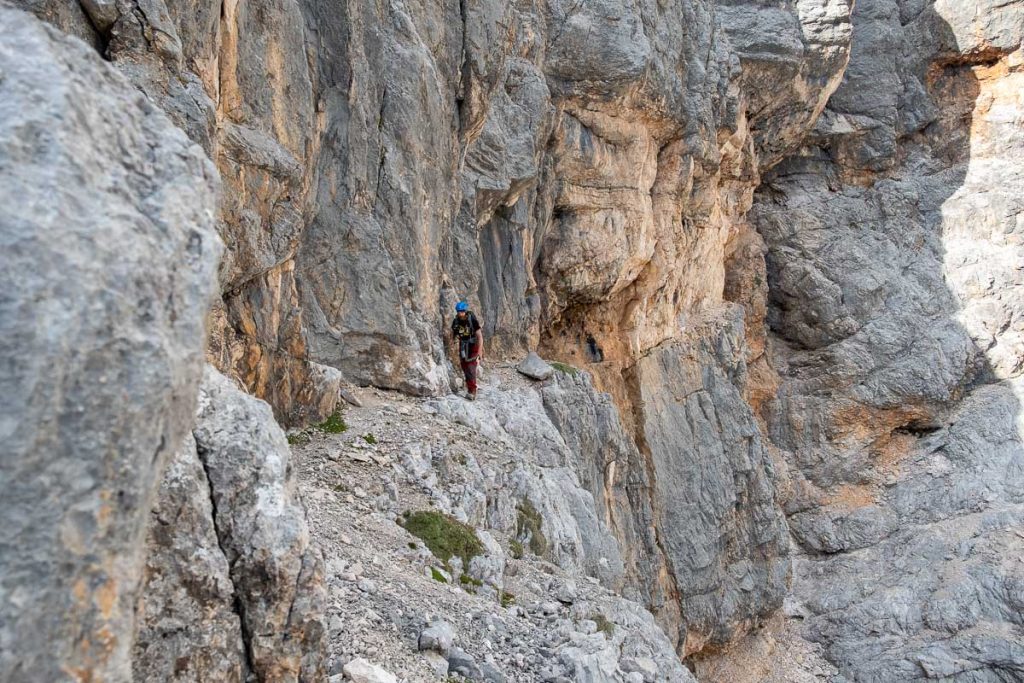
The challenging descent along the via Ferrata Francesco Berti is coming up. The cables and ladders are placed nicely, so taking it easy shouldn’t cause any real problems, apart from, at times, terrifying exposure. Once again, you will lose most of the elevation you have gained from hiking up to the saddle.
Continue right on an undulating scree path no. 242 high above the valley to another saddle—Forcella Cengia di Banco. This is the last real obstacle on an already excruciatingly long day.
I remember my heart sank along the way when, exhausted from a long day of hiking, I came across a sign for Rifugio Vandelli stating that it was still three hours away.
Having no choice but to keep going, I started imagining all the food I would order once I got there. Praying to a higher power, the kitchen would still be open. It was already 4 o’clock. Some scary clouds were building up on the horizon, and I only hoped we wouldn’t be caught in a lightning storm.
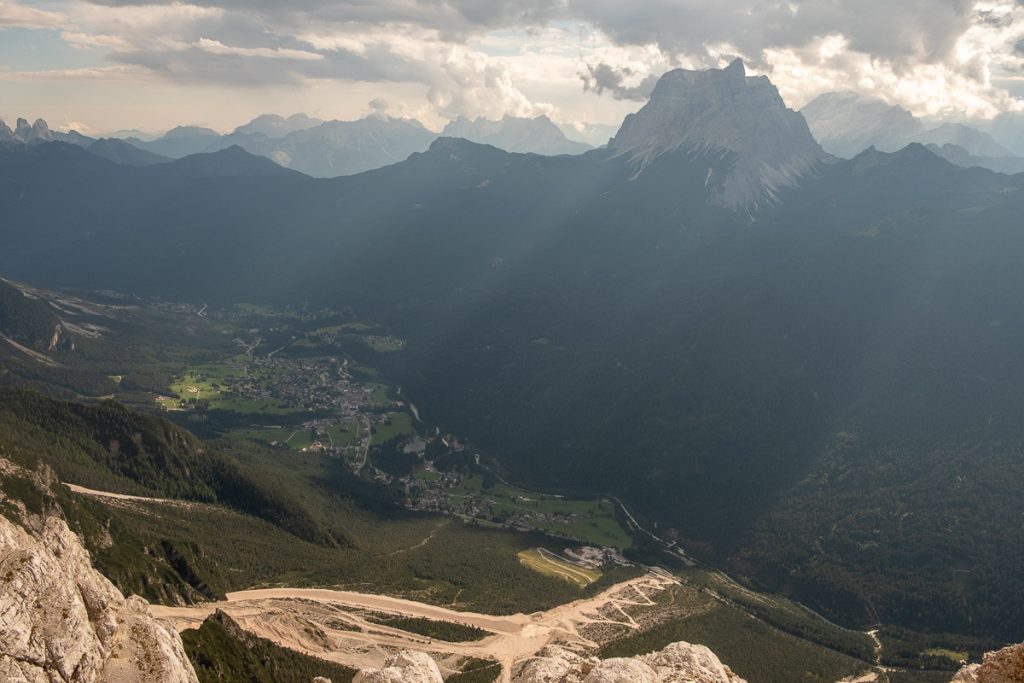
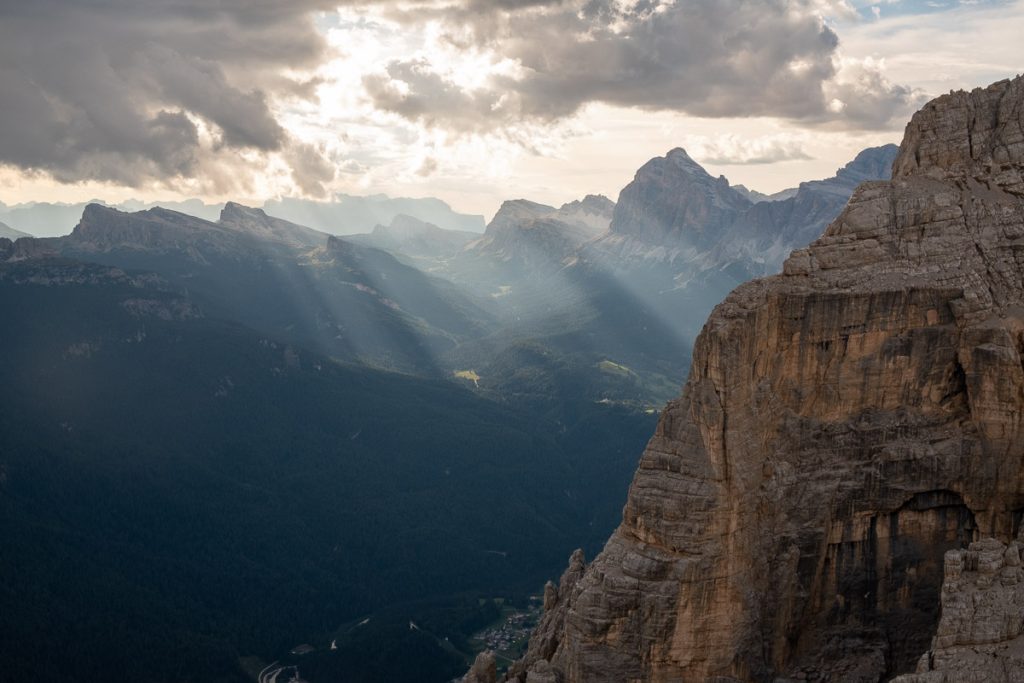
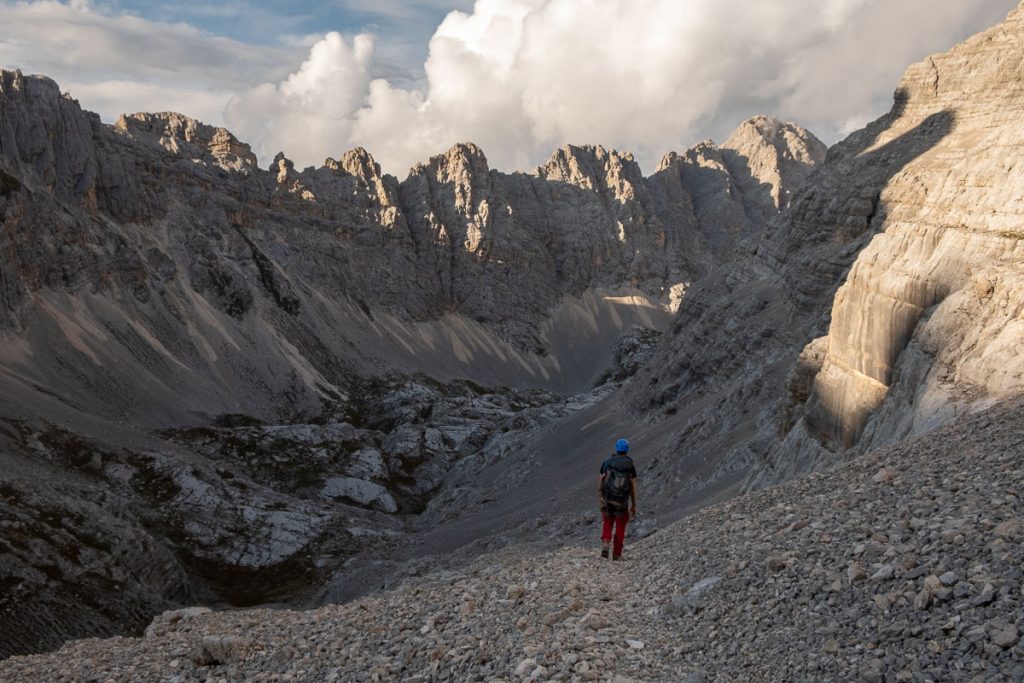
From Forcella (saddle), Cengia di Banco is smooth sailing—well, almost. After 9 hours on foot (it should have been 7, had we not lost 2 hours in the beginning), it was mostly downhill along path no. 215 to Rifugio Vandelli. The clouds that were chasing us had slowly dispersed.
The landscape is now barren, almost moonlike, until you eventually emerge onto a small plateau high above Lake Sorapiss and a small forest surrounding it.
Rifugio Vandelli, a tiny dot from where you are standing, will be visible from afar. The last bit is an unpleasant downhill walk on a steep slope and will take around 1 hour. You will see the remnants of the glacier responsible for Lake Sorapiss’ turquoise colours to your right.
Stage 5: Rifugio Vandelli to Passo Tre Croci
- Distance: 6.1 km / 3.8
- Elevation gain: 235 m / 771 ft
- Elevation loss: 285 m / 935 ft
- Time required: 1.5 – 2 hours
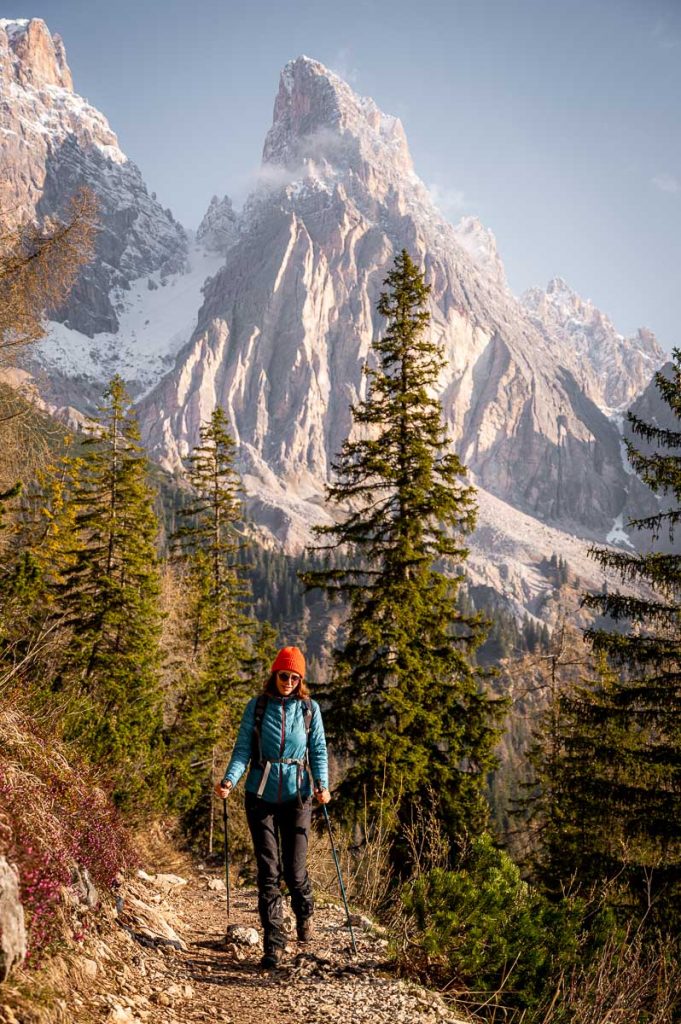
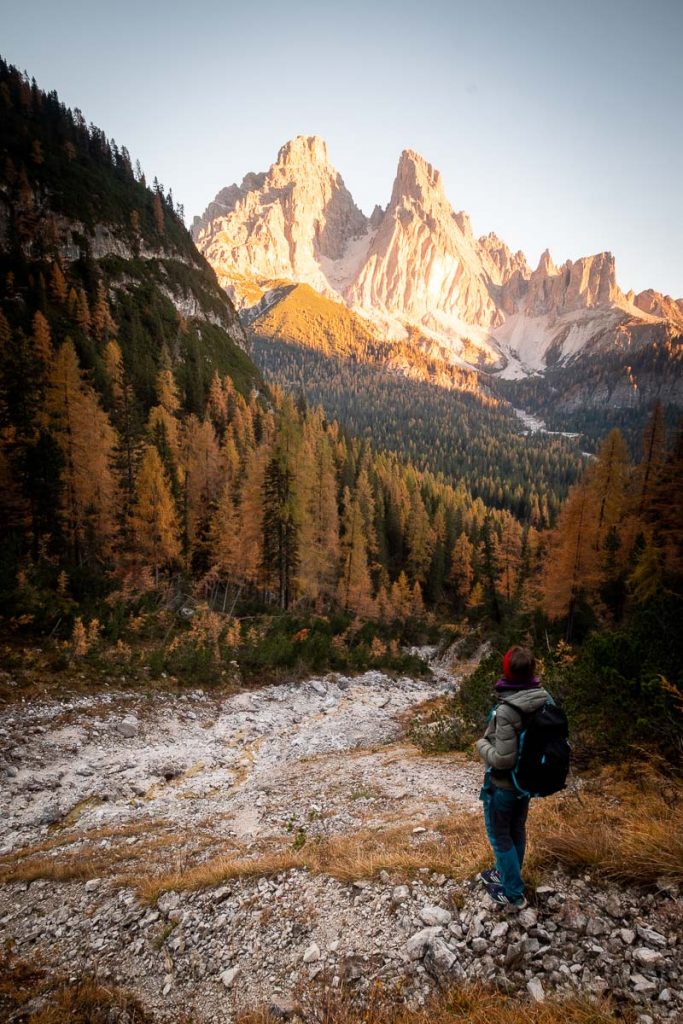
Returning to Passo Tre Croci is via the same path as the approach. By late afternoon, most crowds that spend the day at Sorapiss Lake have disappeared, so you should have the trail to yourself.
Five things to consider when planning Via Ferrata Giro Del Sorapiss
1. Weather
Giro del Sorapiss should not be attempted unless the weather forecast is good for the day. During summer, afternoon storms are frequent. September, when the storms subside, is the best month for it.
2. Staying hydrated / Water
Take enough food and water. Although I could fill up the water at two places along the way (the second one was near Forcella Cengia Di Banco), the water was murky and somewhat questionable both times.
3. Endurance
Prepare for a long and challenging day. It took me 11 hours to complete the loop counting from Rifugio Vandelli. I lost 2 hours questioning whether I was on the right path, only to learn that I was. The total elevation gain counting from Passo Tre Croci is 1910 meters. That’s over 6000 feet.
4. Navigation
Take a map with you and study the path numbers and landmarks you will pass along the way. The path is marked, but sometimes the signs aren’t entirely clear, and the markings are faded.
5. Accommodation
Plan an overnight stay in Rifugio Vandelli. Ideally, before and after the circuit, you can ensure an early start and not have to hike back from Lake Sorapiss to Passo Tre Croci after completing the circuit, adding a couple more hours to an already long day.
Shop my via ferrata gear essentials
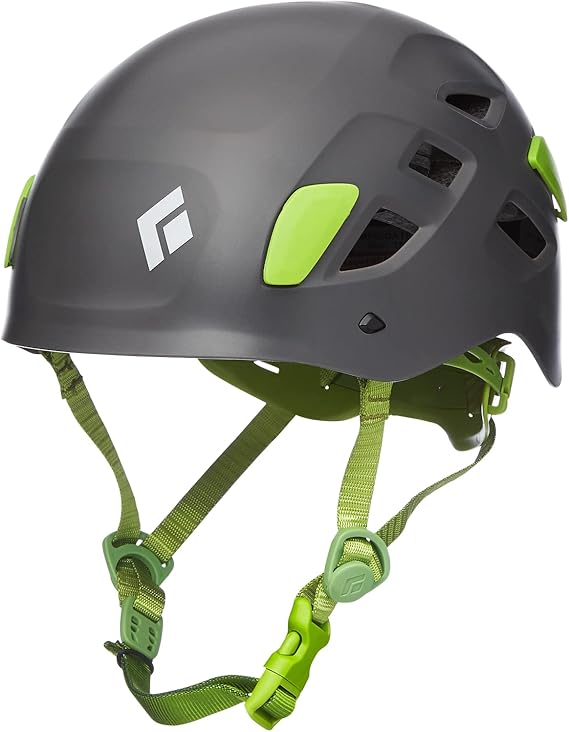
Black Diamond Helmet
Rockfall is a significant concern on via ferrata routes. Unbeknownst to you, other climbing groups above you may accidentally dislodge a small rock and send it down the mountain. If it hits you on the head, it could have serious consequences. A helmet on your head (not inside your backpack) is necessary.
Shop on: Amazon (Worldwide) / Backcountry (US)
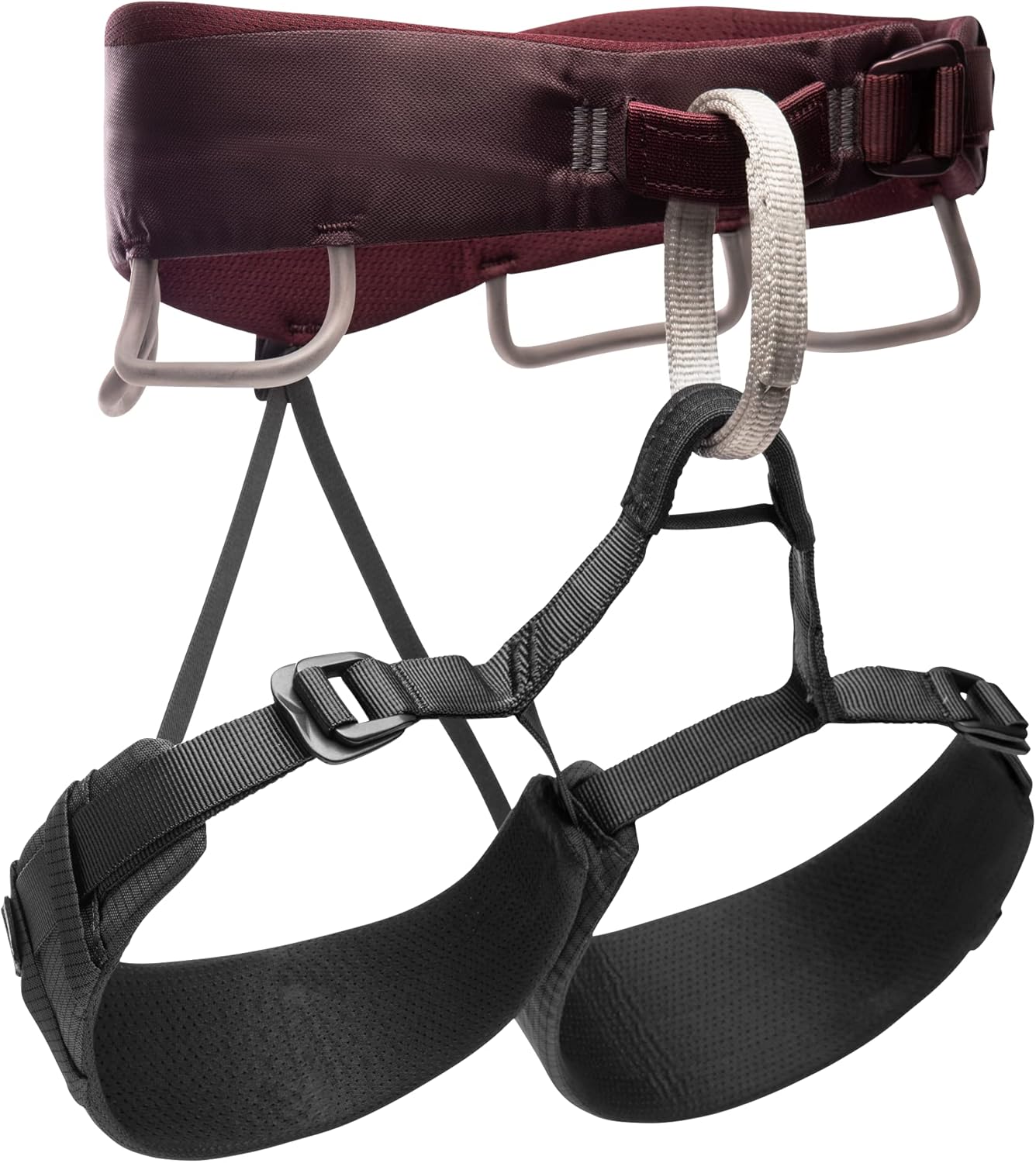
Black Diamond Momentum Harness
Another must-have on a via ferrata route is a climbing harness. A harness works as an anchor point for your via ferrata lanyard. Try it before your trip to ensure it fits snugly without limiting your movements. Aim for a lightweight harness that will be comfortable to wear between the cable-protected sections when hiking.
- Shop Women’s on Amazon (Worldwide) / Backcountry (US)
- Shop Men’s on Amazon (Worldwide) / Backcountry (US)
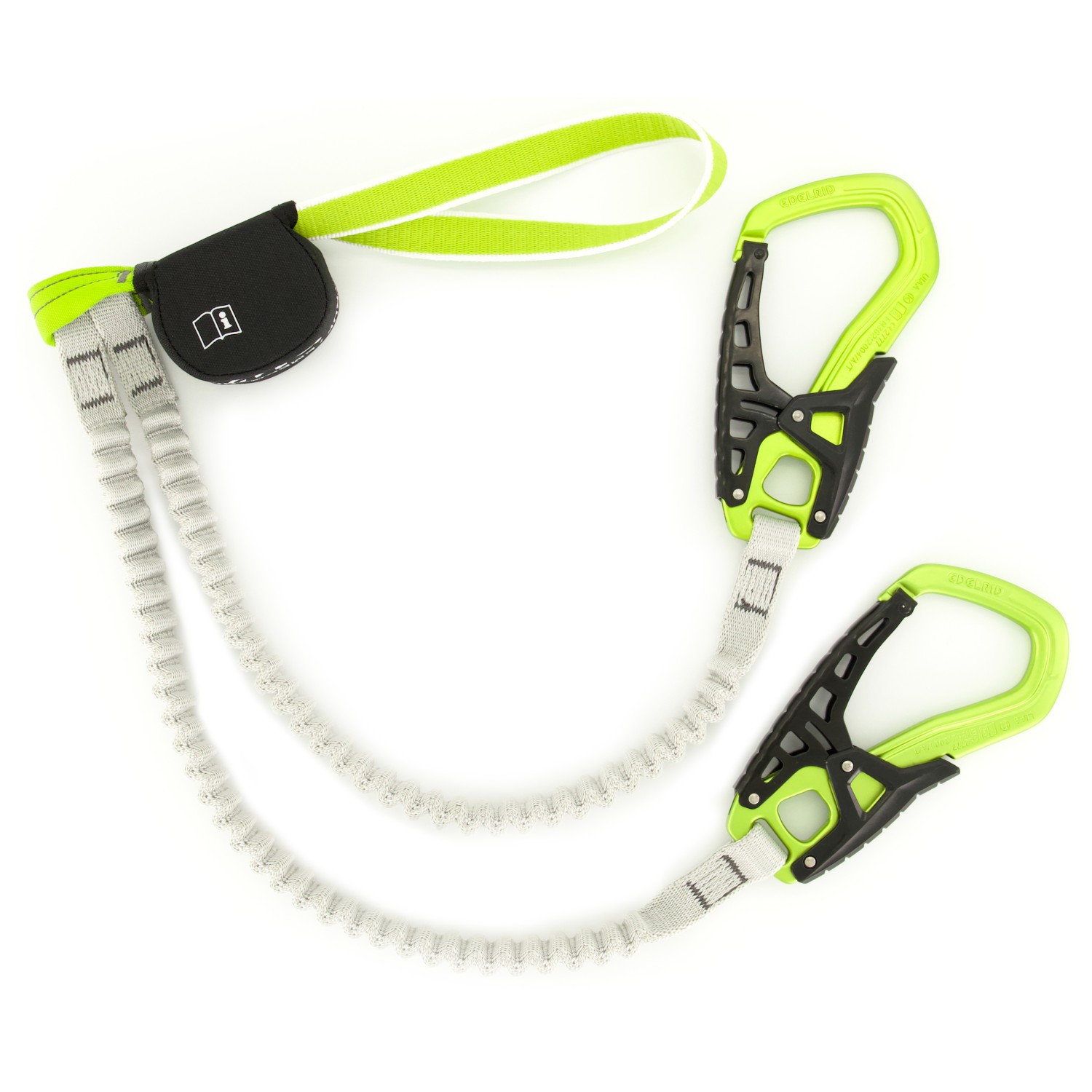
Edelrid, Camp or Black Diamond Via Ferrata Lanyard
A via ferrata lanyard connects the climber and their harness to the cables along the route. Its two arms and a hidden extra coil work as an energy absorption system in case of a fall. The two carabiners at the end of the lanyard clip into the cable. Make sure the carabiners are equipped with the palm squeeze mechanism. It’s the safest and most comfortable.
Shop on Amazon (Worldwide) / Backcountry (US)
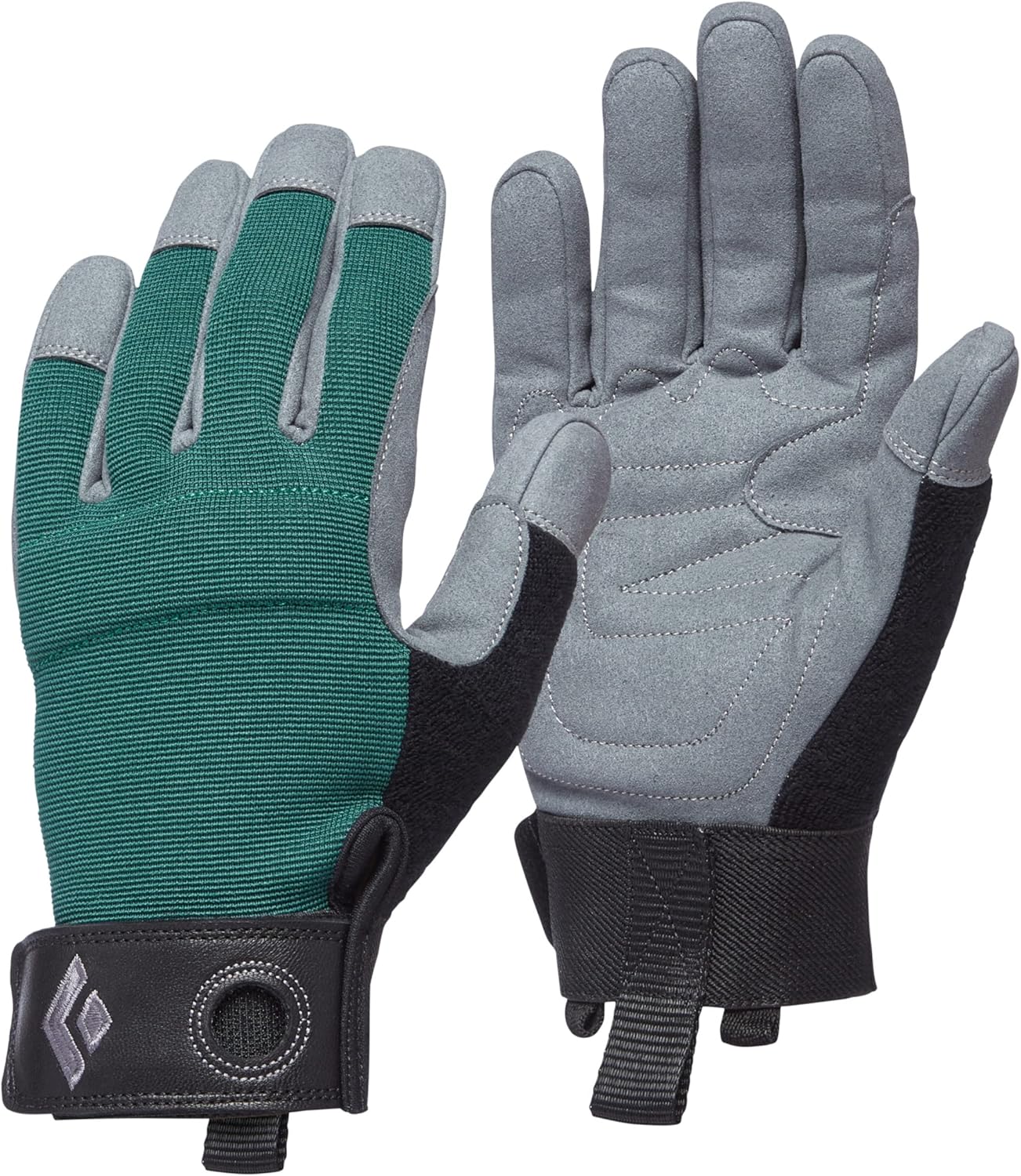
Black Diamond Crag Gloves
The gloves protect your hands from cuts and scratches you may otherwise get if you haul yourself on the cable without them. I prefer full-finger gloves for extra protection against blisters. If your hands sweat quickly, go for the fingerless version.
Shop on: Amazon (Worldwide) / Backcountry (US)
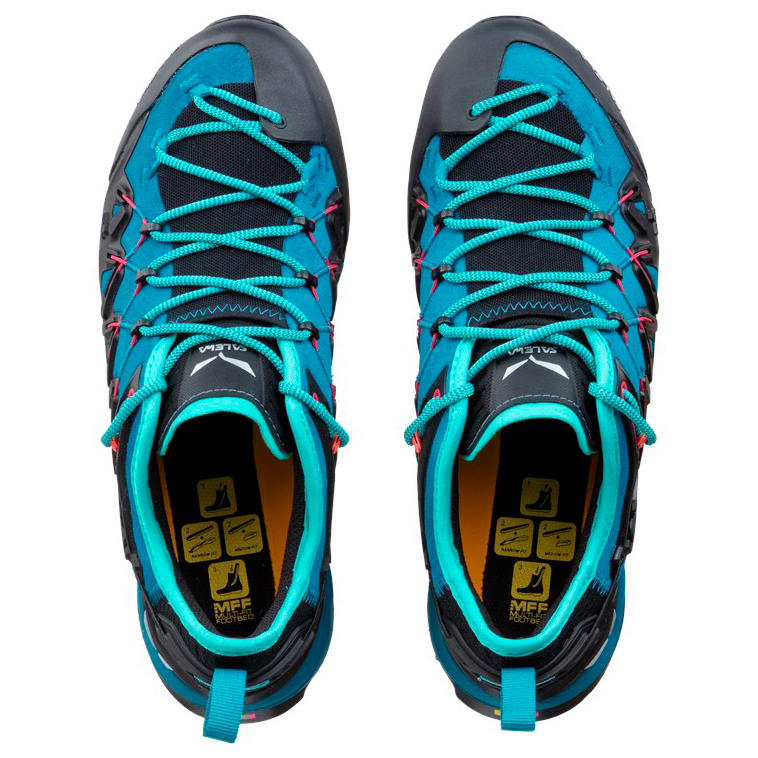
Salewa Wildfire Edge Approach Shoes
This is my go-to pair of hiking shoes for more accessible trails or via ferrata, where I don’t need extra ankle support. They provide excellent grip on the rock and are very durable.
Shop on: Amazon (Worldwide) / Backcountry (US)
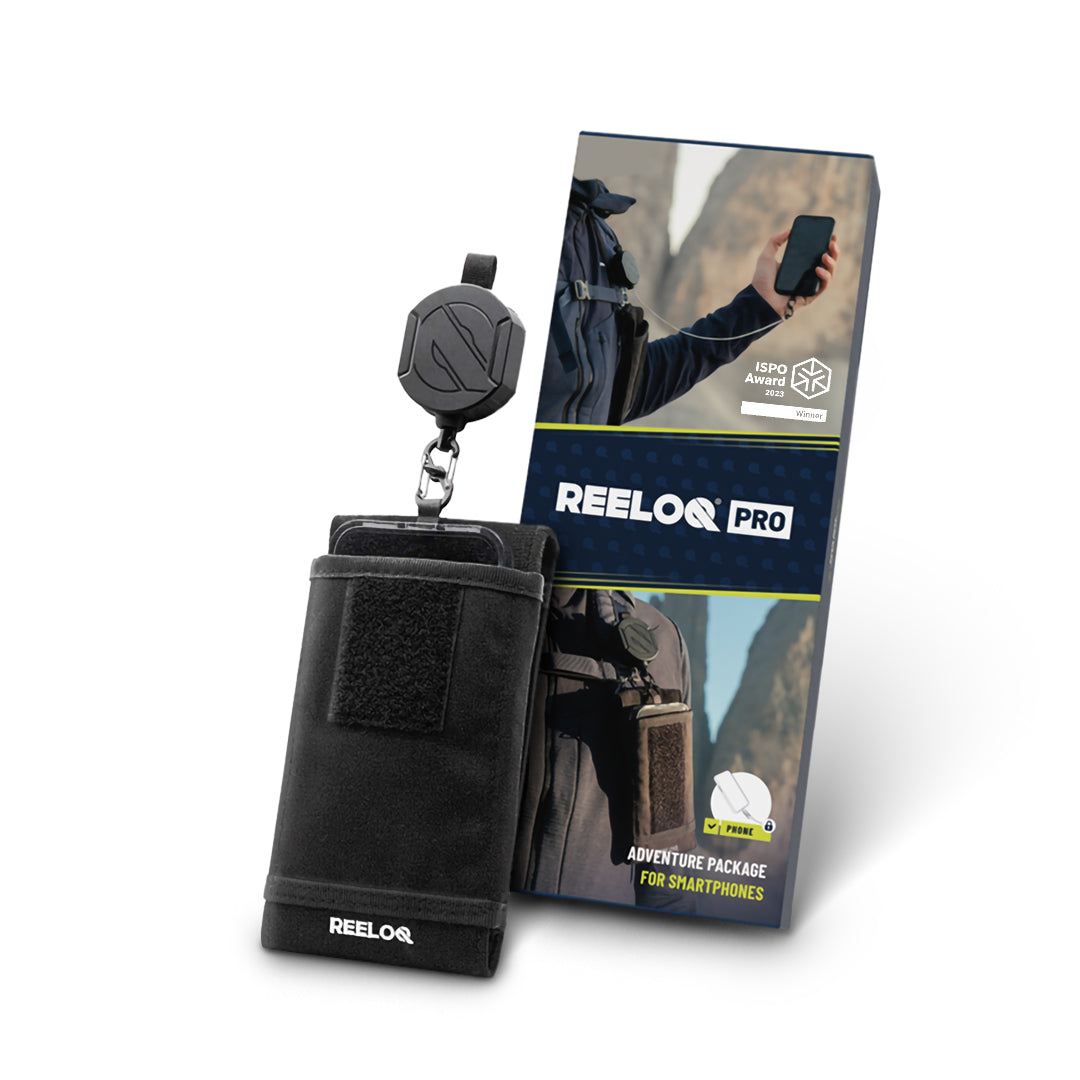
Reeloq Smartphone Securing System
If you want to take great photos on a via ferrata without worrying about losing your phone, Reeloq is the best tool for it. It’s a smartphone-securing system that allows you to use your phone on any adventure. This has been a great addition to my tool arsenal.
Shop on: REELOQ
Other hikes and via ferratas near Cortina D’Ampezzo
- Via ferrata Ivano Dibona
- Via ferrata Marino Bianchi
- Via ferrata Michielli Strobel
- Croda Da Lago Circuit Hike
- Lago Limedes and Cinque Torri Hike
- Lagazuoi Tunnels
More travel and hiking resources in the Dolomites
- Photography spots in the Italian Dolomites
- Regions in the Italian Dolomites
- Itineraries for the Italian Dolomites
- Via ferratas in the Italian Dolomites
- Day hikes in the Italian Dolomites
- Hut-to-hut treks in the Italian Dolomites
Support my website!
Hi Reader! If you found any of my articles about the Dolomites useful please consider using the affiliate links below (at no extra cost) when booking your holiday. Thank you
- Reserve your hotel with Booking.com
- Book your rental car with Discover Cars
- Buy your outdoor gear with Backcountry.com (US readers)
If you have any questions, leave them in the comments below!
Hey Marta, thanks for a very descriptive guide, it cleared up a lot. I have a question regarding the 2- climbing part. I used to climb outdoor on ferrata at 1- and indoor top rope at UIAA 5+. But have no idea what a 2- can be on rocks especially with a heavier backpack (for bivouacing) and after a long day of climbing the ferrata. Did you notice the 2- climb? Lot of guides and books skip describing this part. What is it like? Where is it located? Thanks in advance 🙂
Hi Ester. Thanks for visiting. Via ferratas are NOT climbing routes, there are scrambling routes which are protected with cables. Any climbing route will be more difficult than a via ferrata. I don’t really understand what you mean outdoor ferrata 1-. I don’t know this rating. My experience is that anyone who is a climber can tackle a via ferrata without an issue.
FYI, as of Sept 15, 2025, Via Ferrata Francesco Berti has been closed since June 2025. We tried to do the Giro di Sorapis and found out at the Refugio.
Hi Dave! Thanks for the update. I hope they will do some maintenance on it and reopen next year.
Hi Marta!
Thank you for sharing all this valuable information. It has made our trip planning so much less overwhelming and more fun.
We are planning to follow your AV4 itinerary and wanted to clarify something: does the trail from Rifugio Vandelli to Rifugio San Marco actually include the VF Alfonso Vandelli? Or do you take an alternate trail to get onto the VF?
Thank you for the help!
Hi Carmella. Thanks for visiting. Yes, the trail includes VF Vandelli. There is an alternative trail that you can take to San Marco and it leads through Via ferrata Berti, but both ways include via ferratas. I think taking Vandelli is way more scenic.
I will also add that you have two additional via ferrata on AV4: Bonacossa between rifugio Auronzo and Rifugio Fonda Savio and then another one between rifugo San Marco and Antelao.
Thanks Marta for the excellent description! Planning to do this one over two days in late August. Do you know anything about how busy the bivouac huts might be? Would I need to bring a tent just in case or do they fit a fair number of people in a pinch?
Hi Kat. Thanks for visiting. When I did this route in 2019 the bivouacs were empty, but tourism in the area exploded. The thing is if you get there early you should not have any problem securing a spot, however, those bivouacs are tiny and very very basic. They fit around 6-8 people. Carrying a tent and the rest of the camping equipment along via ferratas will be annoying to you because it will limit your movement a lot. Whilst I cannot promise you you will get a spot, I can say that this isn’t a busy route. Most people who do a part of it, do it when following Alta Via 4. They do not cross Bivacco Slapater.
Hi Marta! Thank you for the detailed hiking guide! Where do you recommend searching for places to stay while doing these day hikes? We are planning a trip in September.
Hi Eden. Thanks for visiting. I hope I understood your question correctly. I have a whole blog post about the best places to visit in the Dolomites which has a wealth of information about where to stay and things to do in these areas. Check it out! Let me know if you have more questions.
Hi Marta,
Thanks a lot for your guide, the Via Ferrata looks amazing!
A couple of friends and I are planning a hiking trip to the dolomites here in late May (May 20th). We have no Via Ferrata experience, but we are good hikers and would love to try some via ferratas out (Including this one). So 2 questions: Is this trek too hard, even if we start with some easier via ferratas? And secondly, would it be possible to do this via ferrata in late may/early June and in general go hiking in the dolomites in that timeframe? Thanks in advance!
Kindest regards, Gustav
Hi Gustav. Thanks for visiting. I can tell your right away that via ferrata Giro del Sorapiss won’t be accessible on May 20th. I hiked to Lake Sorapiss last year at the start of May and the last part of the hike plus the lake were all covered in snow and frozen. It was still a winter scenery. This Ferrata is mostly accessible from the end of June or early July. Hikes that are on the South/east facing slopes should be accessible by then, but for anything that faces north and above 2000 meters, I would steer away until late June. I hope that helps!
Hi Marta! Thanks for the fascinating story. The Via Ferrata looks impressive! Do you think this Via Ferrata is doable in early July in terms of weather (snow conditions etc.)? Thanks a lot!
Hi Lorenz. I have done this Ferrata twice. The second time was actually at the start of July, so yes it should be fine, especially since this year there was a lot less snow than during the year I’ve done it for the second time.
Hey mate
Via ferrata trips look epic. Which one do you recommend for adventure, challenge, history and beauty
Heard via ferrata 1 is pretty epic
Tim
Hi Tim. Thanks for the great feedback! I think via ferrata Torre Di Toblin or Via ferrata Giovanni Lipella will cover adventure, challenge, history and beauty! You can find a description for both in my via ferrata guide to the Dolomites.