
Via ferrata Ivano Dibona used to be the ultimate experience for adventurers in the Italian Dolomites. Who wouldn’t want to walk on the same suspension bridge Sylvester Stalone himself did when shooting the Cliffhanger movie? In 2016, the gondola providing easy access to the start of the route closed indefinitely, significantly slowing down traffic. Today, only those with enough stamina give Via Ferrata Ivano Dibona a go.
6 Things to know about Via Ferrata Ivano Dibona
I completed the whole route with my friend Jimmy in September 2019, and today, I will share my tips on tackling the most famous via ferrata in the Italian Dolomites.
1. The location of the route
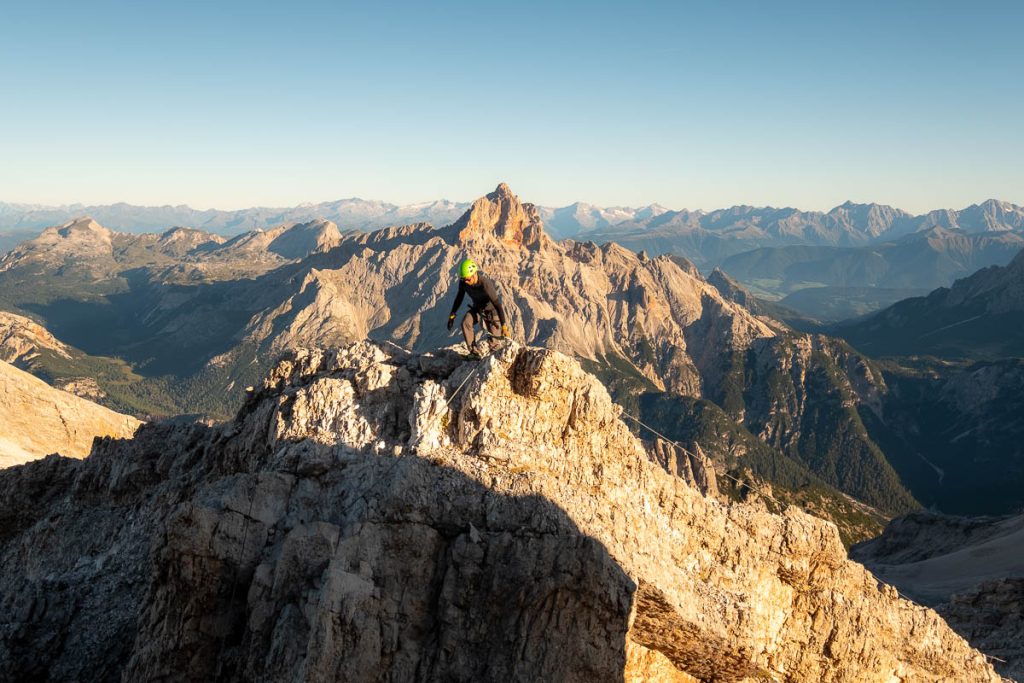
Via ferrata Ivano Dibona is located in the Monte Cristallo range in the centre of the Italian Dolomites. The nearest town where you can base yourself is Cortina d’Ampezzo. Below are a few of my recommendations for hotels and lodges in Cortina.
Read more: Guide to Cortina D’Ampezzo: Best Hikes, Via Ferratas & Photography Locations.
2. Via Ferrata Ivano Dibona: Map & Stats
- Distance: 8 km / 5 mi
- Time required: 8 h
- Elevation gain: 1200 m / 3940 ft
- Route difficulty: intermediate (B)
- Blue: Approach from Rifugio Son Forca to Staunies saddle
- Yellow: Via Ferrata Ivano Dibona
- Red: Emergency exit route
- Black: Rio Gere Son Forca chairlift
- Purple: Alternative approach from Passo Tre Croci to Rifugio Son Forca
TIP: Click on the icon in the top left corner of the map, and a window with the descriptions will pop up.
3. Know before you go
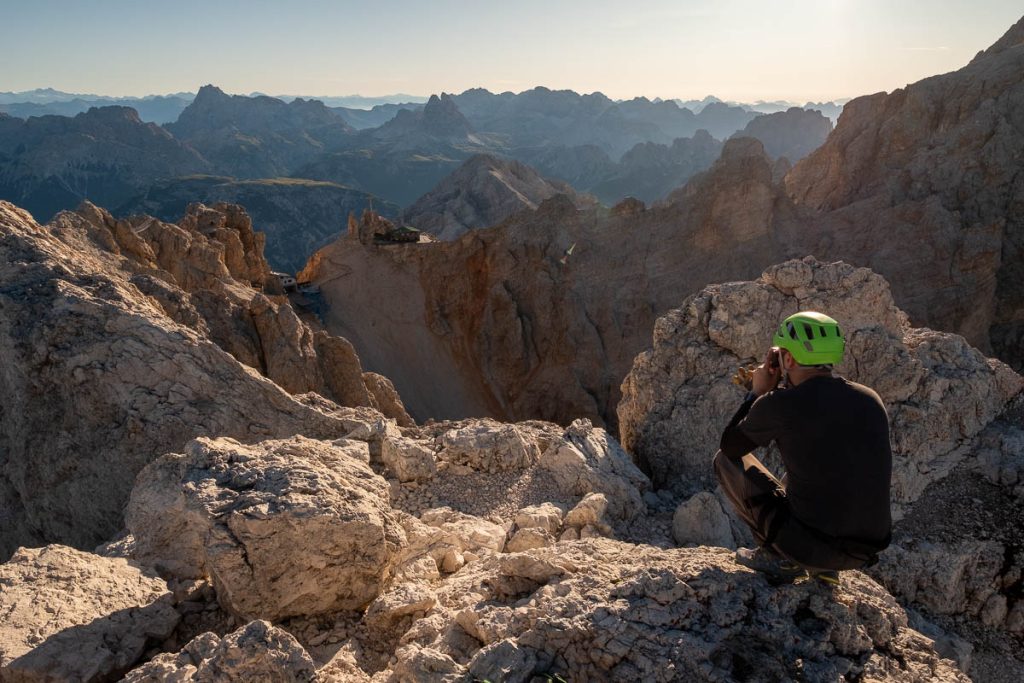
You should expect to hike for at least 8-10 hours. Plan accordingly and pack enough water, a hat, and sunscreen. The route is exposed to the sun in many places. I also recommend bringing lightweight hiking poles, which you can easily stow away. You will be thankful for them on all the scree slopes.
TIP: Because it’s a full-day excursion, I cannot stress enough how important it is to leave early. September is the best month for undertaking this route, as the chances of afternoon storms are much lower than in July or August.
4. How to reach Via Ferrata Ivano Dibona?
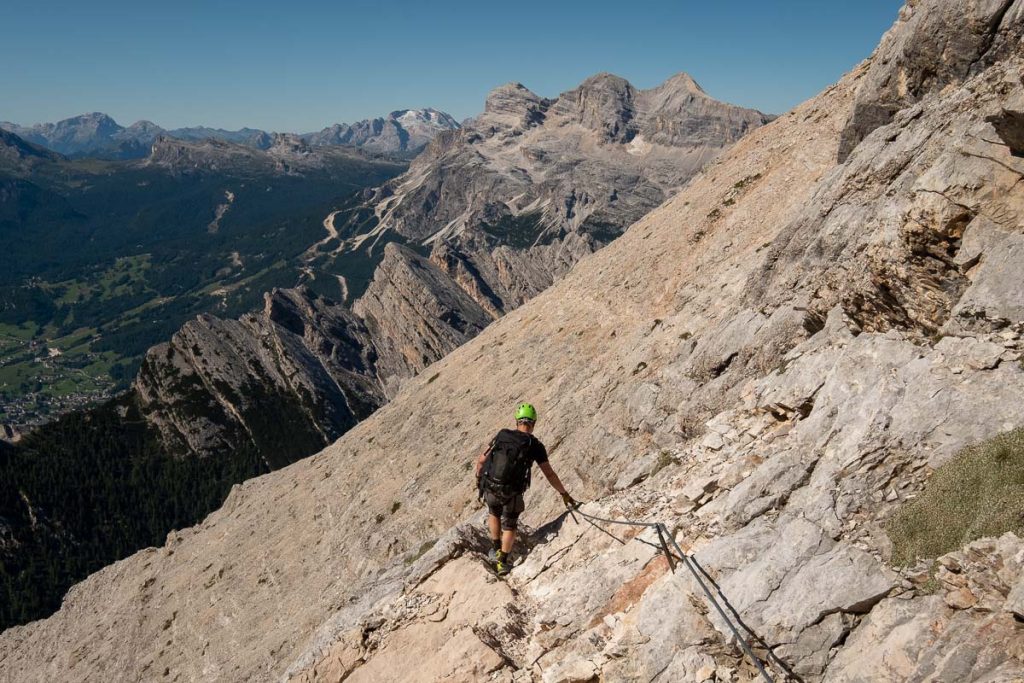
To get to the start of the approach hike, you will first need to take a chairlift.
How to reach the chairlift
The Rio Gere—Son Forca chairlift is a 15-minute (8 km) drive from Cortina d’Ampezzo towards Passo Tre Croci. An ample parking area is on the opposite side of the road from the chairlift. Follow the link for directions.
TIP: Use public transport to reach the bottom of the chairlift. Bus no. 030, operated by Dolomiti bus, runs from Cortina. The bus stop’s name is Rio Gere, and I marked it on the map. The journey time is 16 minutes. Check for schedules here.
The running times of the chairlift
During the summer season, the lift remains open from the third week of June until the last week of September, giving a 3-month window for tackling Via Ferrata Ivano Dibona.
TIP: Be aware that the chairlift only runs between 8:30 and 16:30. This 8-hour window usually does not leave enough time to complete the whole route in one day. Since this route can be turned into a loop, I recommend purchasing the return ticket for the chairlift to save money. The ticket stays valid for one week.
Alternative approach
If you are budget-conscious, you can also start the hike directly from Passo Tre Croci along path no. 203 to Rifugio Son Forca. I marked this trail in purple on the map. This will add circa 300 meters (1000 ft) of elevation gain, 6 kilometres (3.7 miles) and a couple of hours to an already long day. I only recommend this option if you plan an overnight stay in Rifugio Son Forca.
5. Overnight stay opportunity along Via Ferrata Ivano Dibona
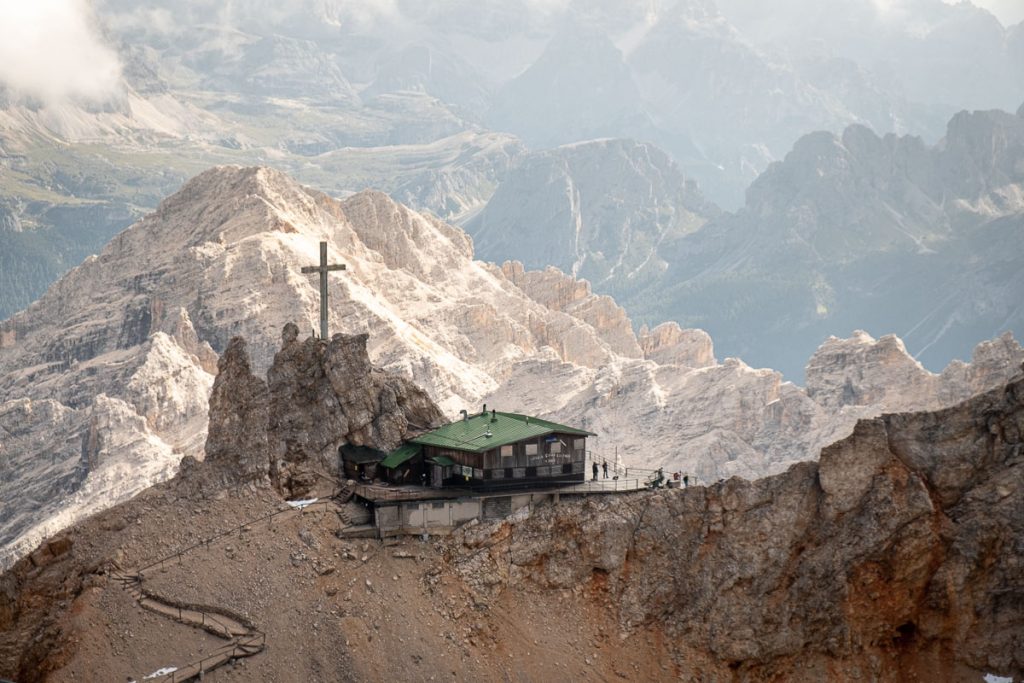
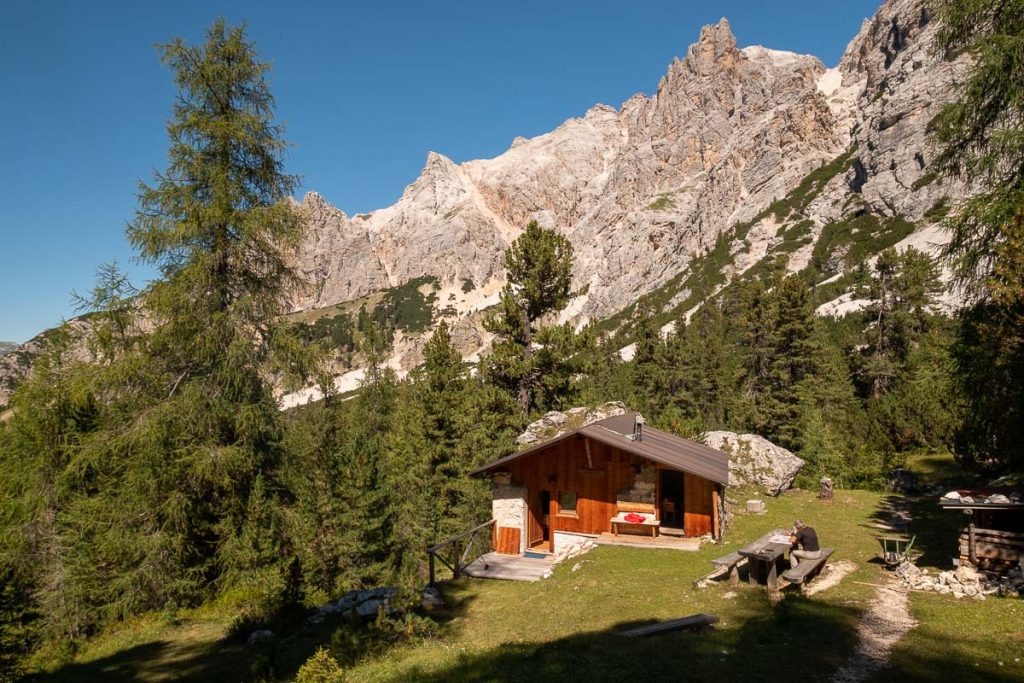
Rifugio Son Forca is a privately operated hut near the top of the Rio Gere—Son Forca chairlift station. A bed in the dormitory costs Euro 45.50. Visit the website for a complete price list and bookings.
Staying overnight in the hut is an excellent idea if you want to start the via ferrata early in the morning—this is what I did.
TIP: If you want to know more about the whole hut business in the Dolomites, jump to this article.
6. Via ferrata Ivano Dibona: route stages
Stage 1: Rifugio Son Forca to Forcella Staunies
Time required: 1.5 – 2 hours
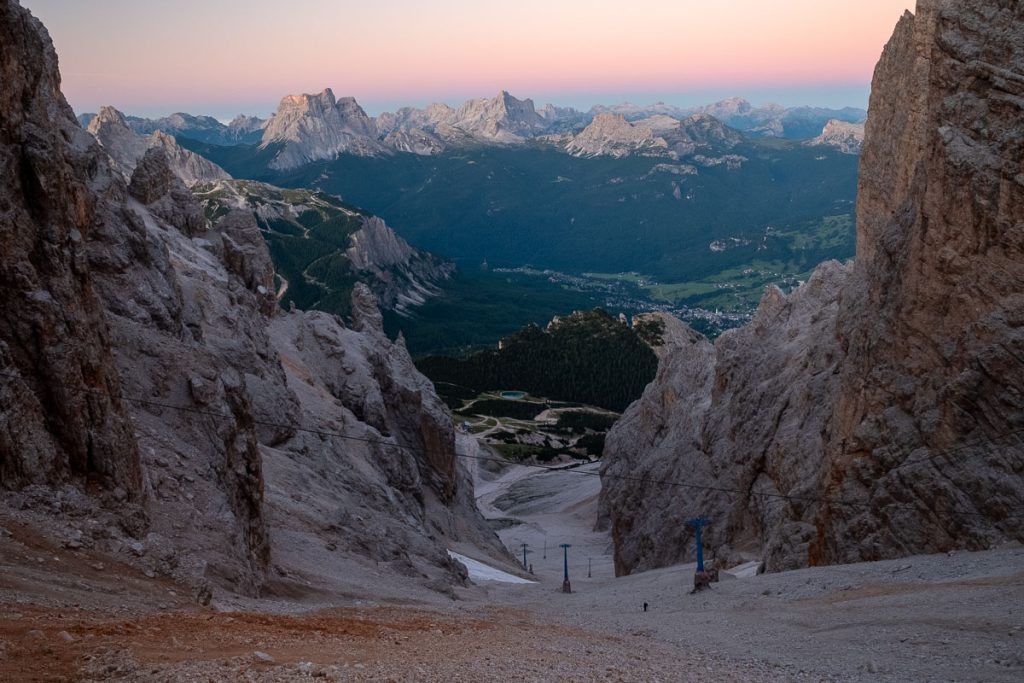
Brace yourself for a severe calf workout. There is one main reason why so few people nowadays choose Via Ferrata Ivano Dibona for their adventure. The approach is gruelling.
Start near the Son Forca hut and follow the dirt road to the old gondola station. From here, you will see a steep and narrow gully with old pylons where the old gondola used to run.
All you have to do is follow the gully up to the saddle. Now, I am making it sound more accessible than it is. As you get higher, the slope becomes looser and looser. For every two steps you take, you slide down one.
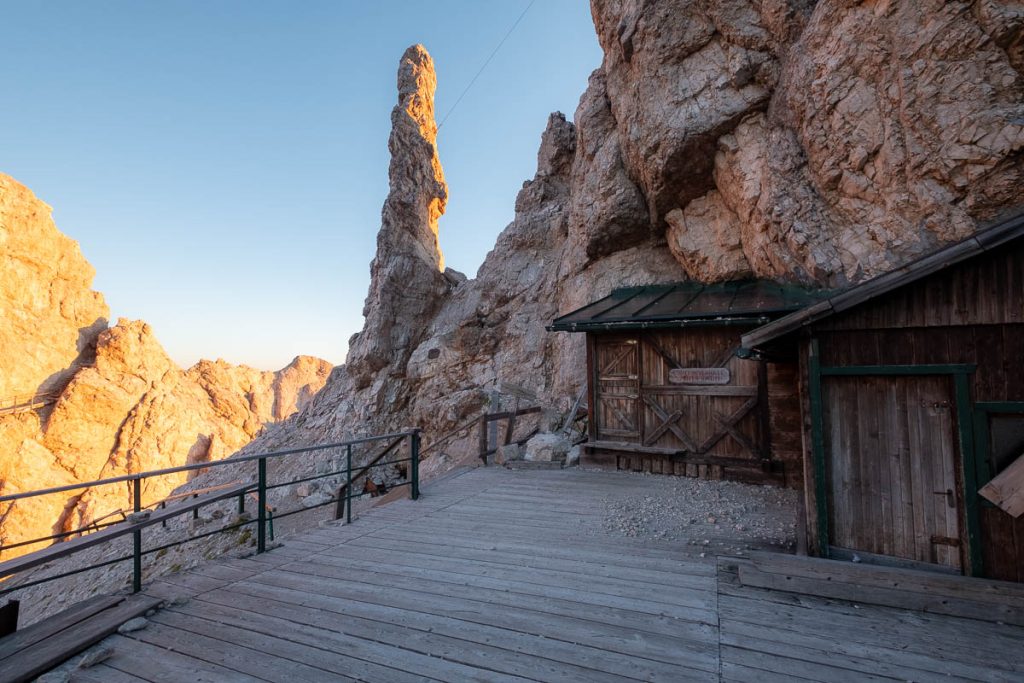
After around 1,5 – 2 hours leaving the Son Forca hut, you should reach the Forcella (saddle) Staunies. Slightly to the right, you can see the remains of the Lorenzi refuge.
Be careful if you decide to explore the area. The terrace is decaying, and a few planks have become loose. If you fall, it’s a long way down.
A little winter room (pictured above) is adjacent to the refuge, where you can stay should you become stranded. However, there isn’t any place to get fresh water or use toilet facilities. I stayed in this winter room the previous year when tackling the nearby via ferrata Marino Bianchi.
Stage 2: Forcella Staunies to the suspension bridge
Time required: 30 mins
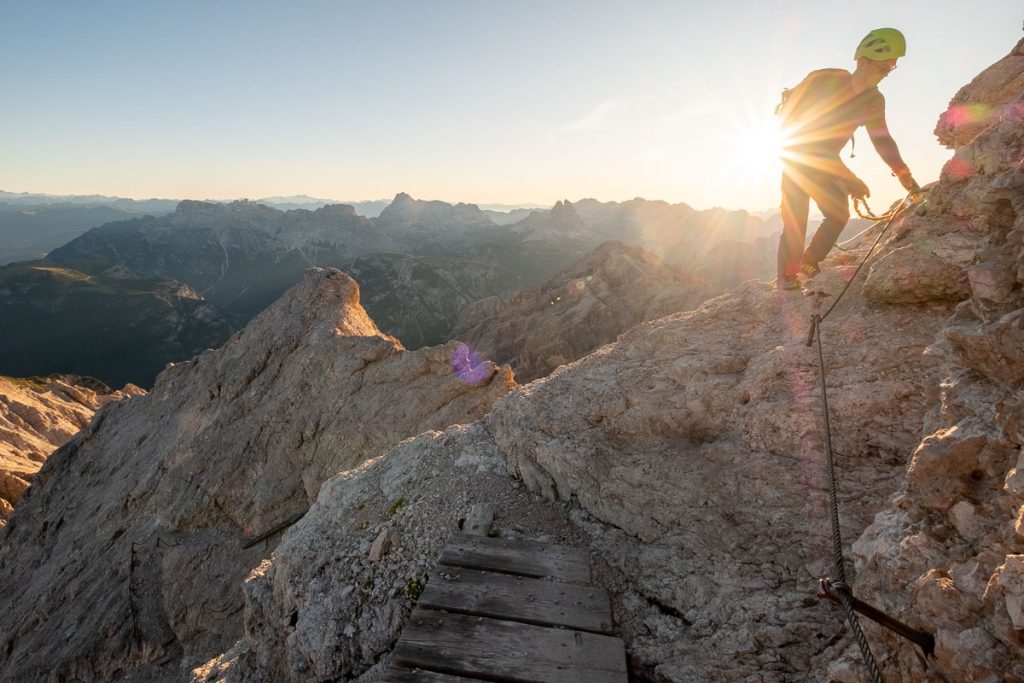
The saddle is the perfect place to put on your helmet & harness and attach your via ferrata lanyard. Soon, the cables will begin.
From the saddle, the path climbs along the metal stairs belonging to the upper gondola station. A spray-painted sign points towards the via ferrata Ivano Dibona.
The whole location is a bit eerie, and I am unsure how long those stairs will be accessible to the public. The lack of maintenance in the last few years is showing.
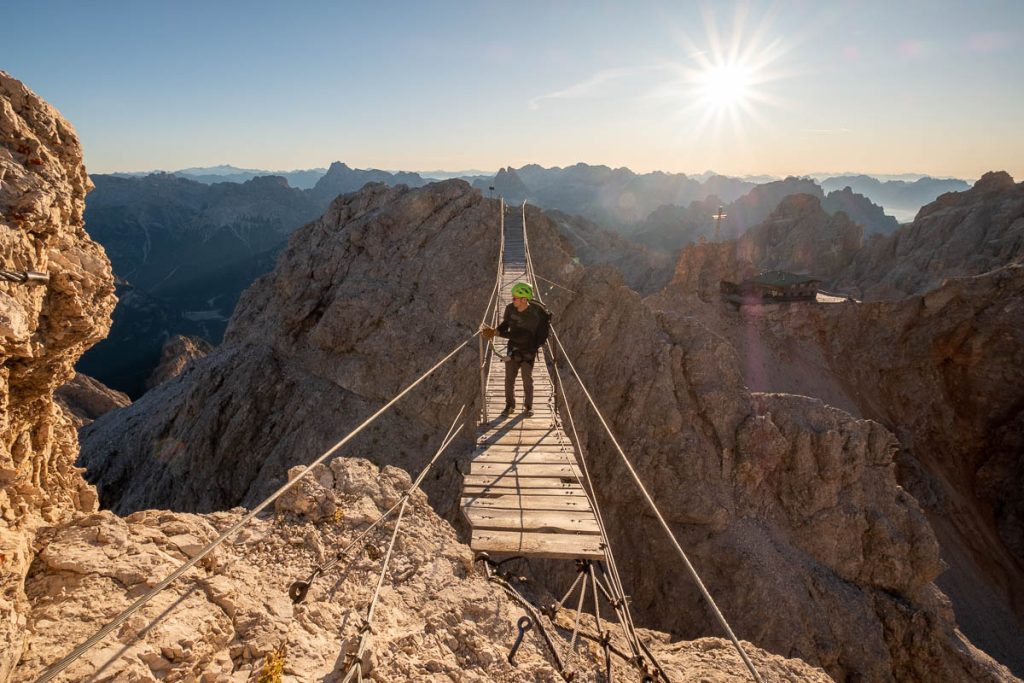
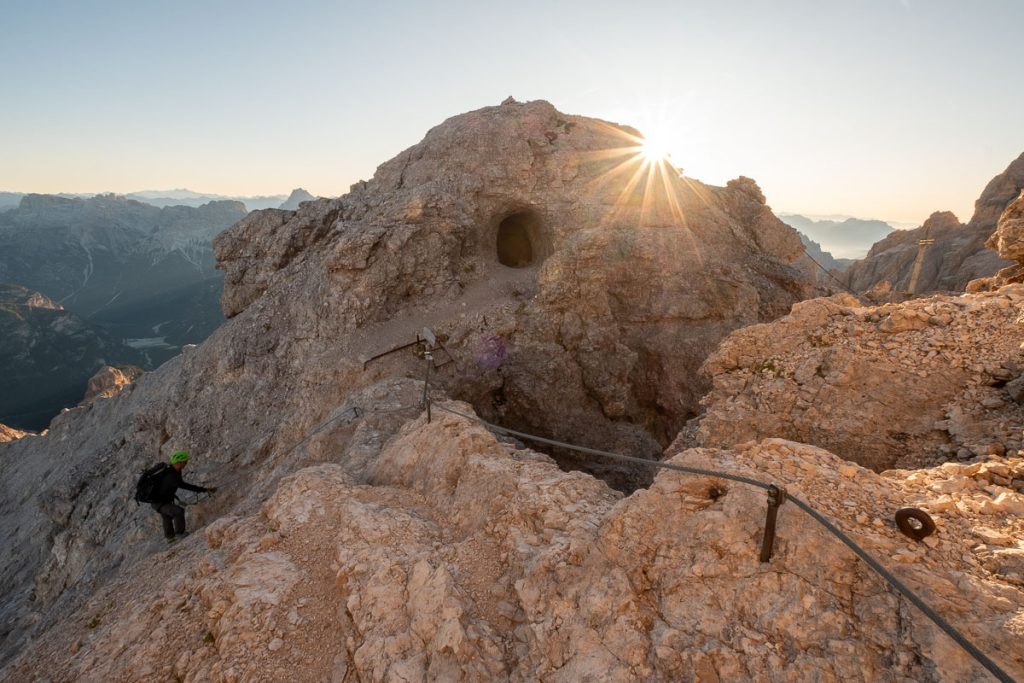
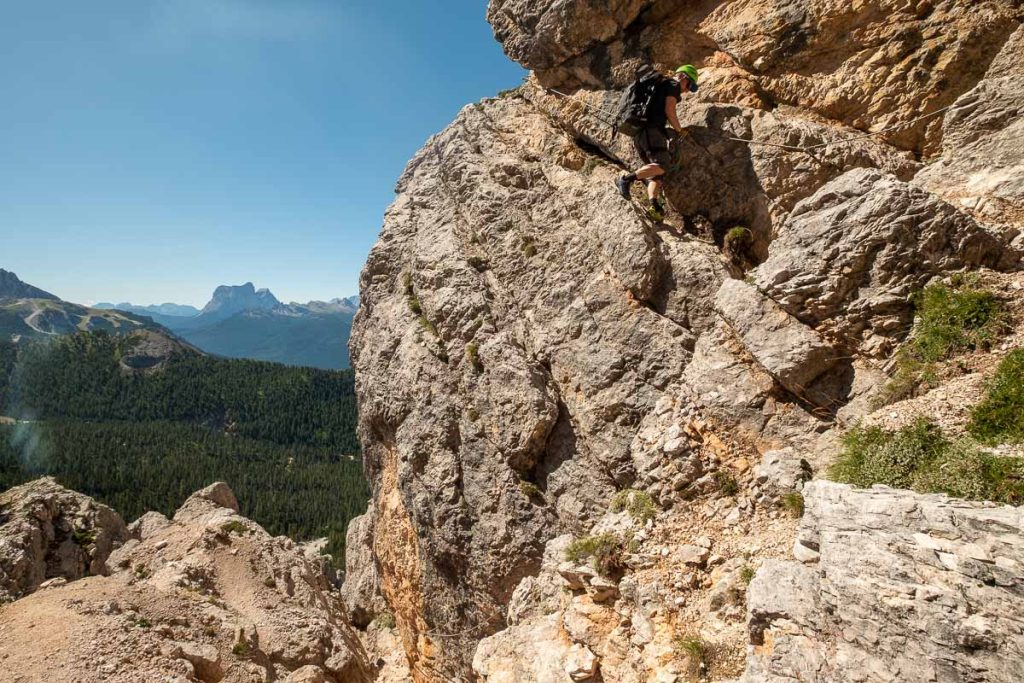
After a couple of minutes, you will reach a ladder marking the start of the climbing section. Follow the cables and the red-painted marks, then pass some short tunnels dating back to World War I. You will reach the iconic suspension bridge 15-20 minutes after leaving the Staunies saddle.
Stage 3: The ridgeline traverse to Cristallino D’Ampezzo summit
Time required: 30 mins
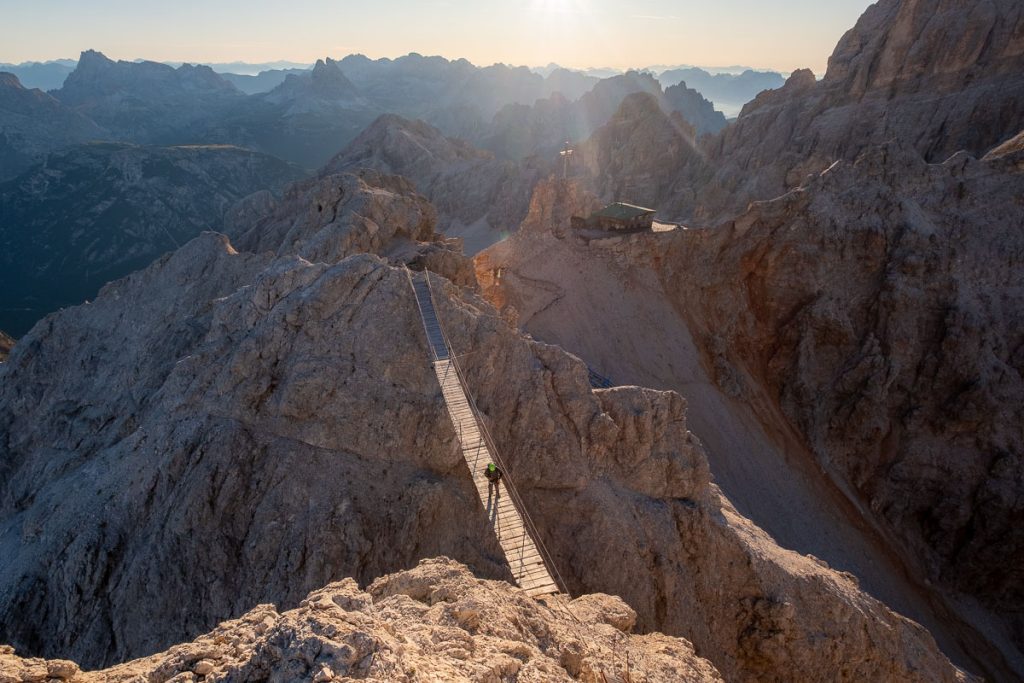
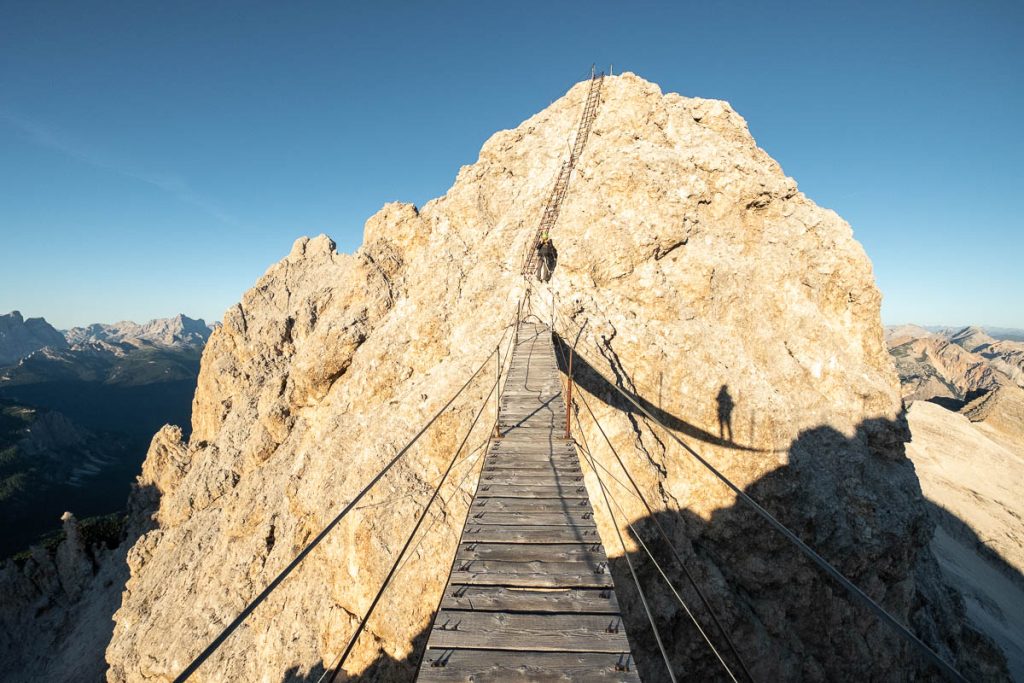
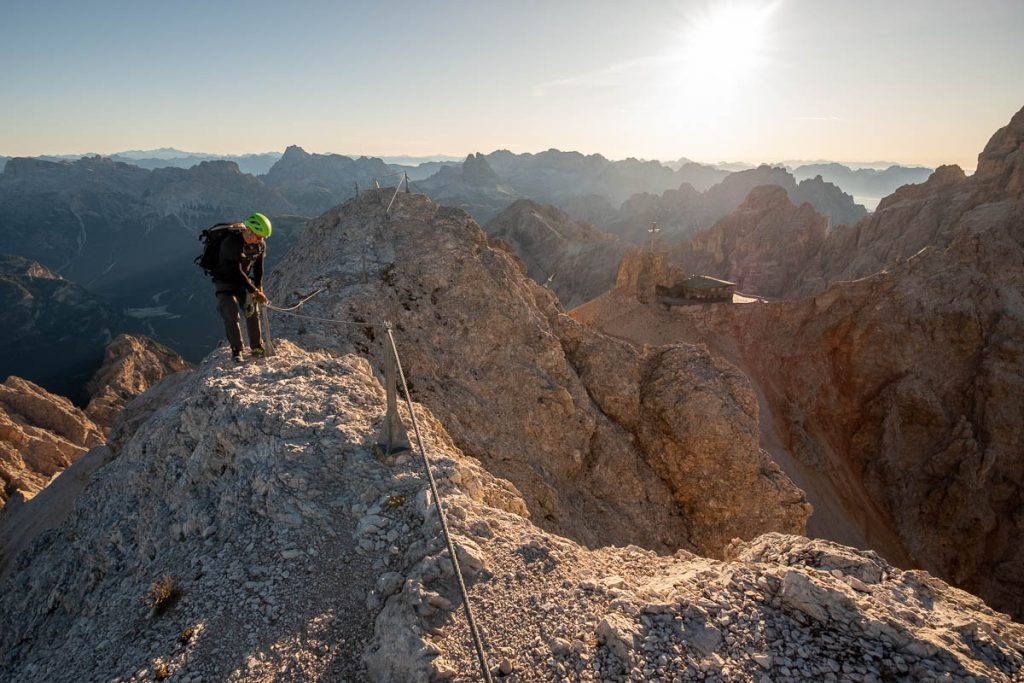
Cross the bridge and climb the long ladder to a little summit. This is a perfect vantage point to snap some photos of the bridge. Here, you will get a fantastic 360-degree view of your surroundings, including the famous Tre Cime peaks. Make sure to download the Peak Finder app. It’s an excellent tool to learn the names of the peaks around you.
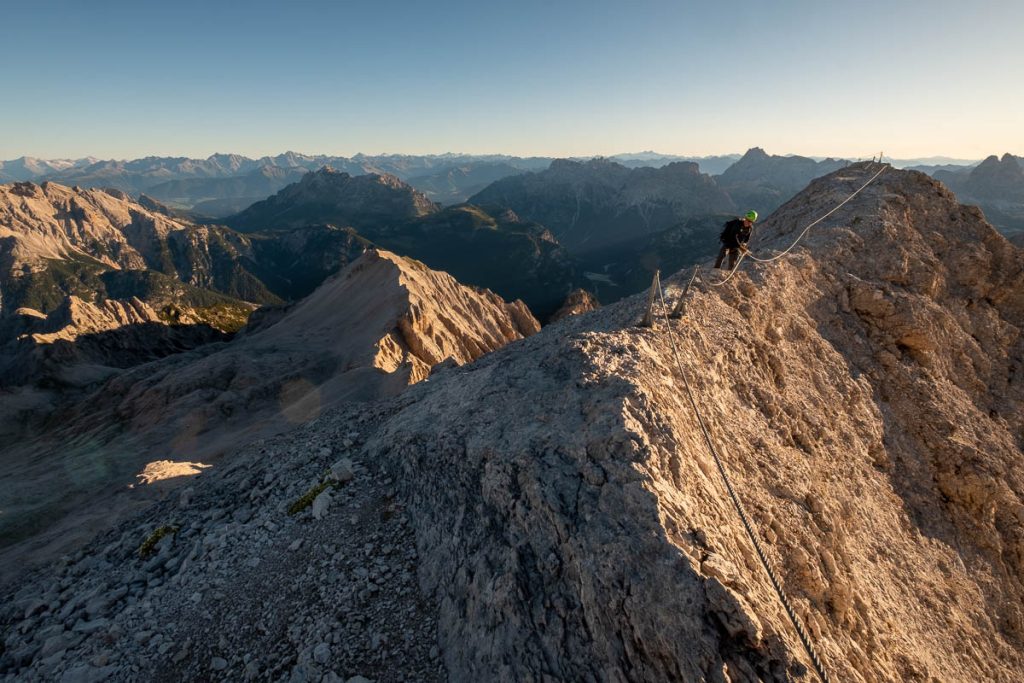
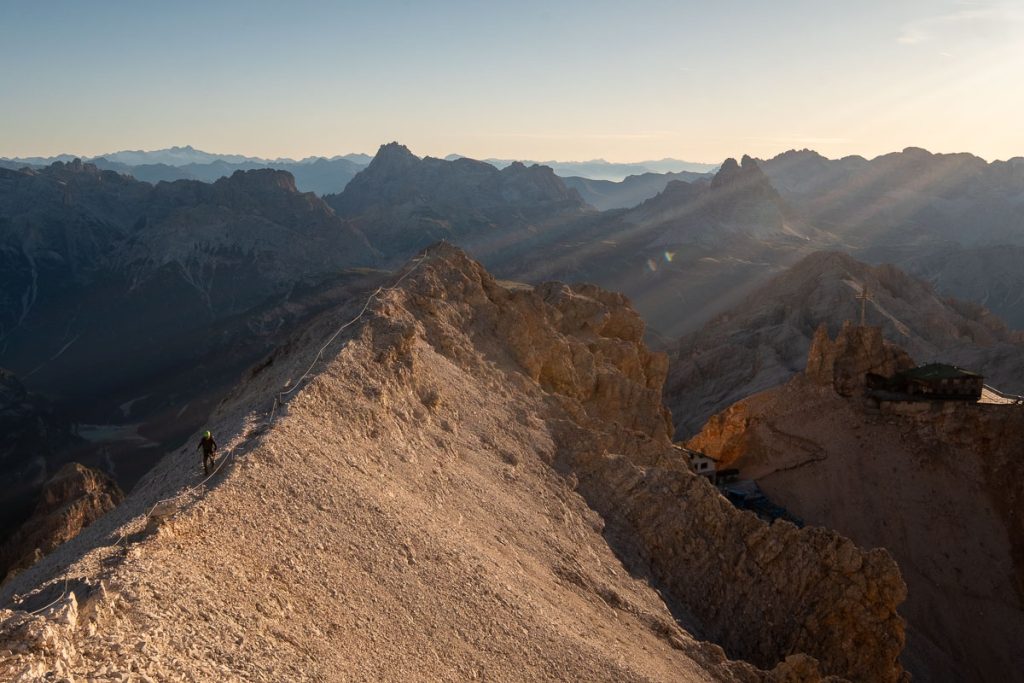
From the little summit, continue hiking along the ridgeline, where the cables stretch continuously. Thanks to the fantastic views, this is my favourite part of the ferrata.
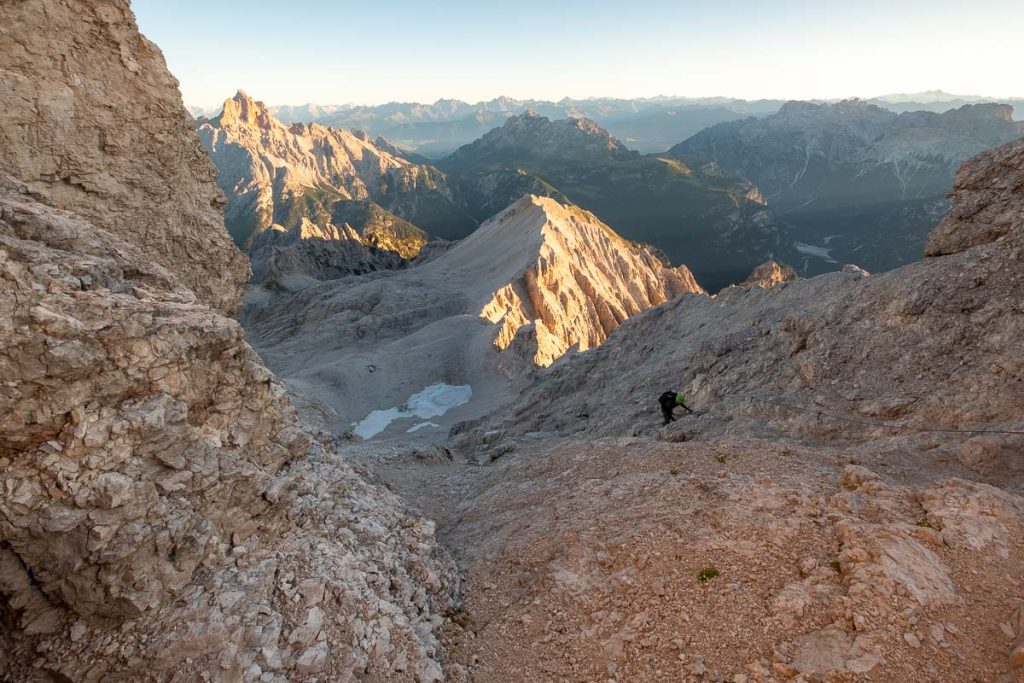
The summit of Cristallino D’Ampezzo, where you can get an excellent view of the scree gully where you hiked before, is well worth the 15-minute detour.
Stage 4: Cristallino D’Ampezzo summit to Bivacco Buffa di Perrero
Time required: 1.5 – 2 hours
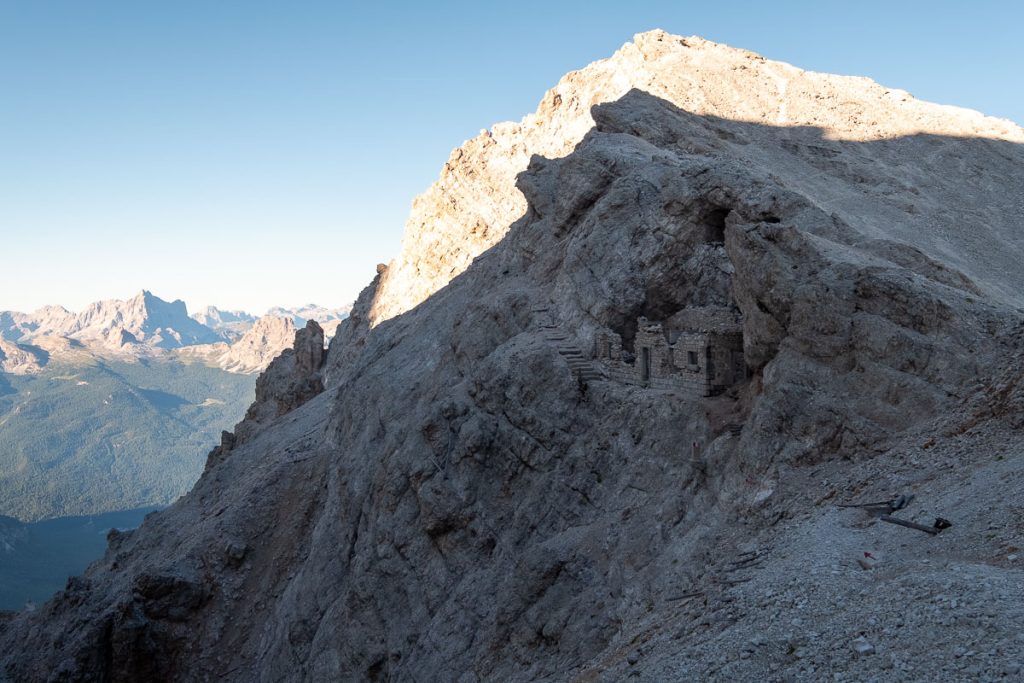
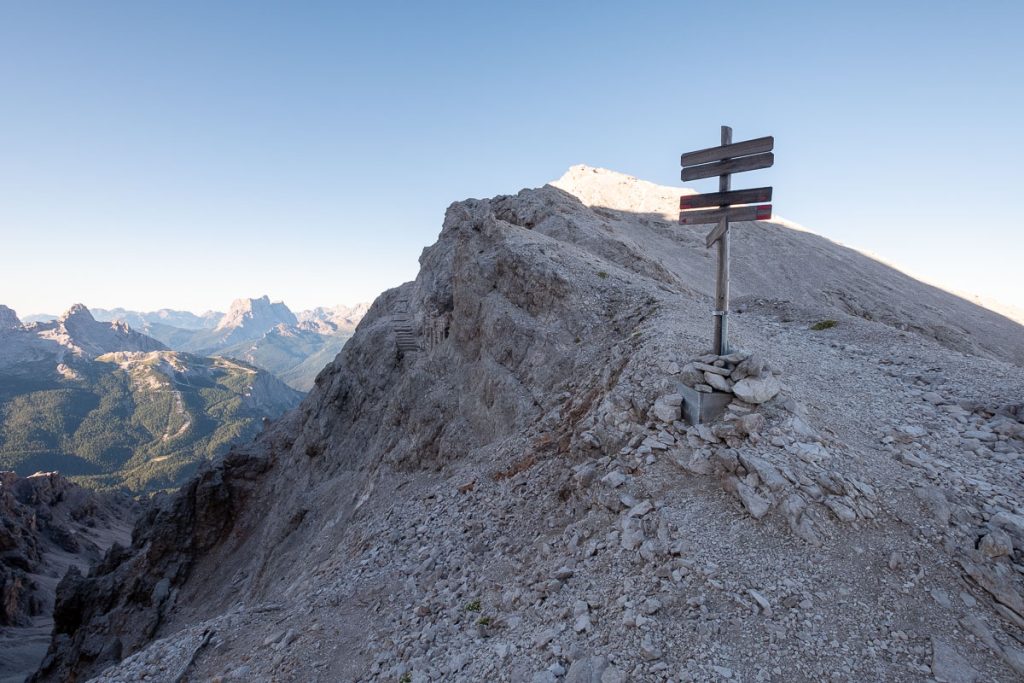
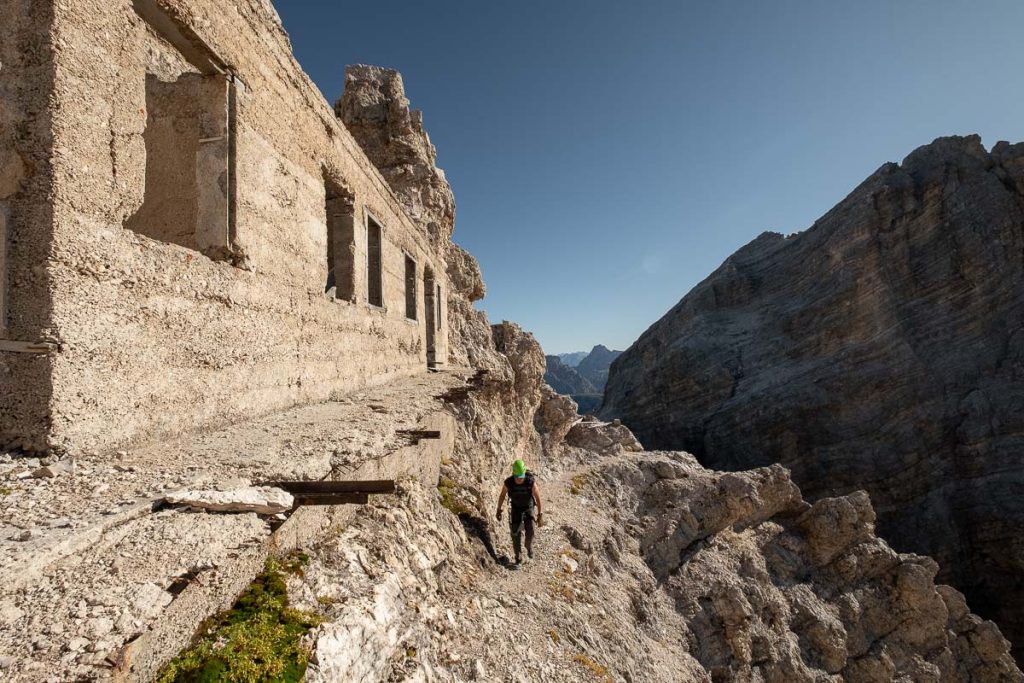
Continue the hike down to Forcella Grande, then straight towards the ruins of a World War I barrack. You will follow the cables for the next few hours as they stretch intermittently along the route until you get to Forcella Alta.
TIP: If the weather turns bad, use the emergency exit route starting at Forcella Grande. It will take you back to Rifugio Son Forca in approximately 90 minutes. It is marked in red on the map.
This is where the signs stop, and you must pay attention to avoid missing the turn-off, as I did. Having a good map or GPS will undoubtedly help. Unfortunately, my GPS flew off into the gully as I was gearing up a few hours before. I call it a work hazard. Nowadays, I wear a GPS watch on my wrist.
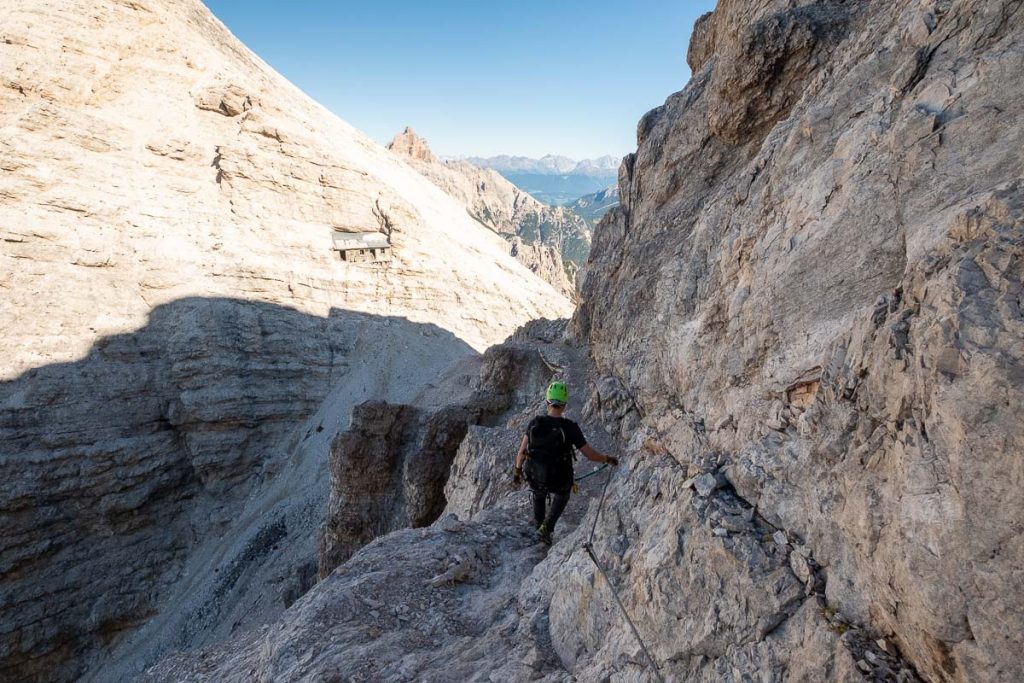
From Forcella Alta, you have to descend a scree gully. For the next few hours, you’ll follow the route along ledges and platforms built into the rock wall. This is a deceptively easy part of the ferrata, but it is very exposed in places, so always stay clipped in.
TIP: Bivacco Buffa Di Perrero was recently restored from the old World War I bunker. It didn’t exist in 2019 when I did the route. It’s possible to stay there overnight; however, be aware that no water sources are nearby, and the bivouac is very basic.
Stage 5: Bivacco Buffa Di Perrero to Rifugio Son Forca
Time required: 4-6 hours
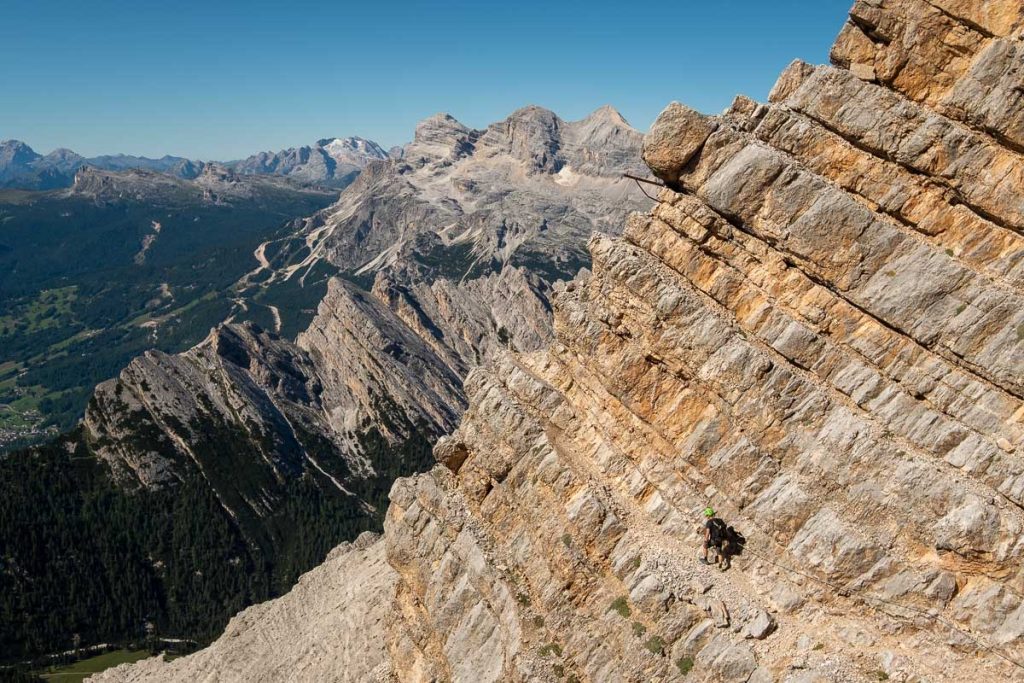
From Bivouac, keep following the spray-painted arrows marking the route until you eventually begin a sharp descent along an unpleasant scree path. This is a real knee buster after already walking for a few hours. Your legs will be tired.
Eventually, you will reach a forest. To the left, you can spot the path leading back to Rifugio Son Forca. From here, it’s another 90 minutes to walk back, but at least the trees will provide some shade and cool air.
Make sure to save some energy, as the last 30 minutes before reaching the Son Forca hut are once again steeply uphill. Think about the ice-cold beer you can have at the hut. The last thing on the itinerary is to take the chairlift to the car park.
Shop my via ferrata gear essentials
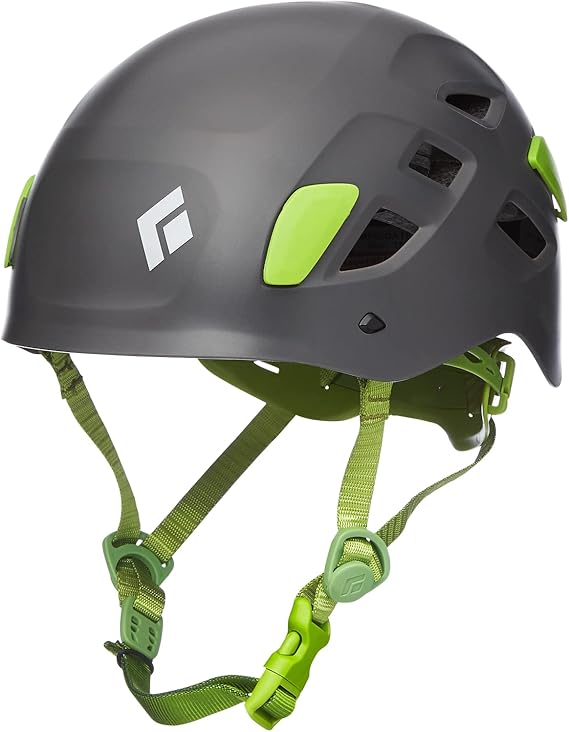
Black Diamond Helmet
Rockfall is a significant concern on via ferrata routes. Unbeknownst to you, other climbing groups above you may accidentally dislodge a small rock and send it down the mountain. If it hits you on the head, it could have serious consequences. A helmet on your head (not inside your backpack) is necessary.
Shop on: Amazon (Worldwide) / Backcountry (US)
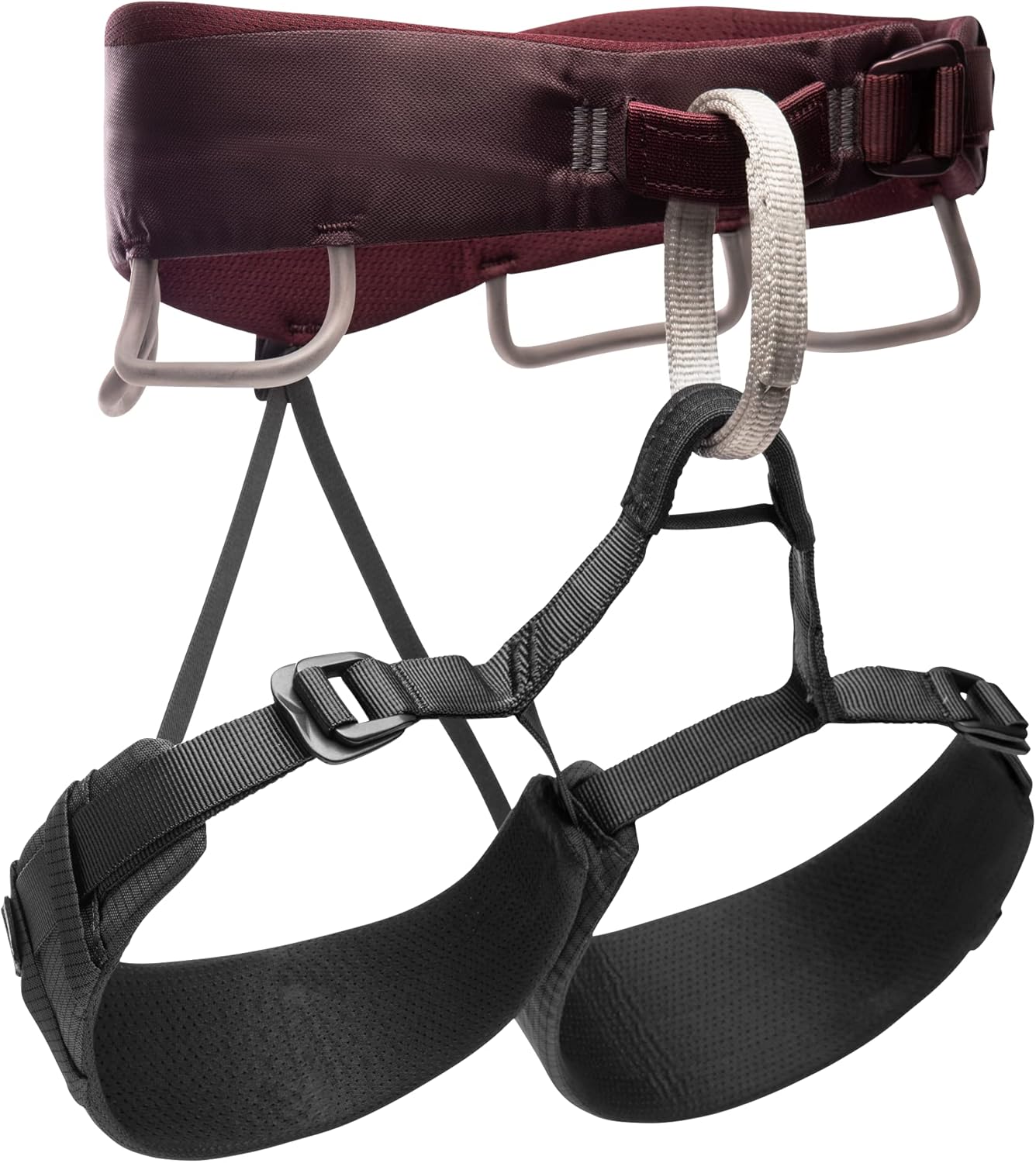
Black Diamond Momentum Harness
Another must-have on a via ferrata route is a climbing harness. A harness works as an anchor point for your via ferrata lanyard. Try it before your trip to ensure it fits snugly without limiting your movements. Aim for a lightweight harness that will be comfortable to wear between the cable-protected sections when hiking.
- Shop Women’s on Amazon (Worldwide) / Backcountry (US)
- Shop Men’s on Amazon (Worldwide) / Backcountry (US)
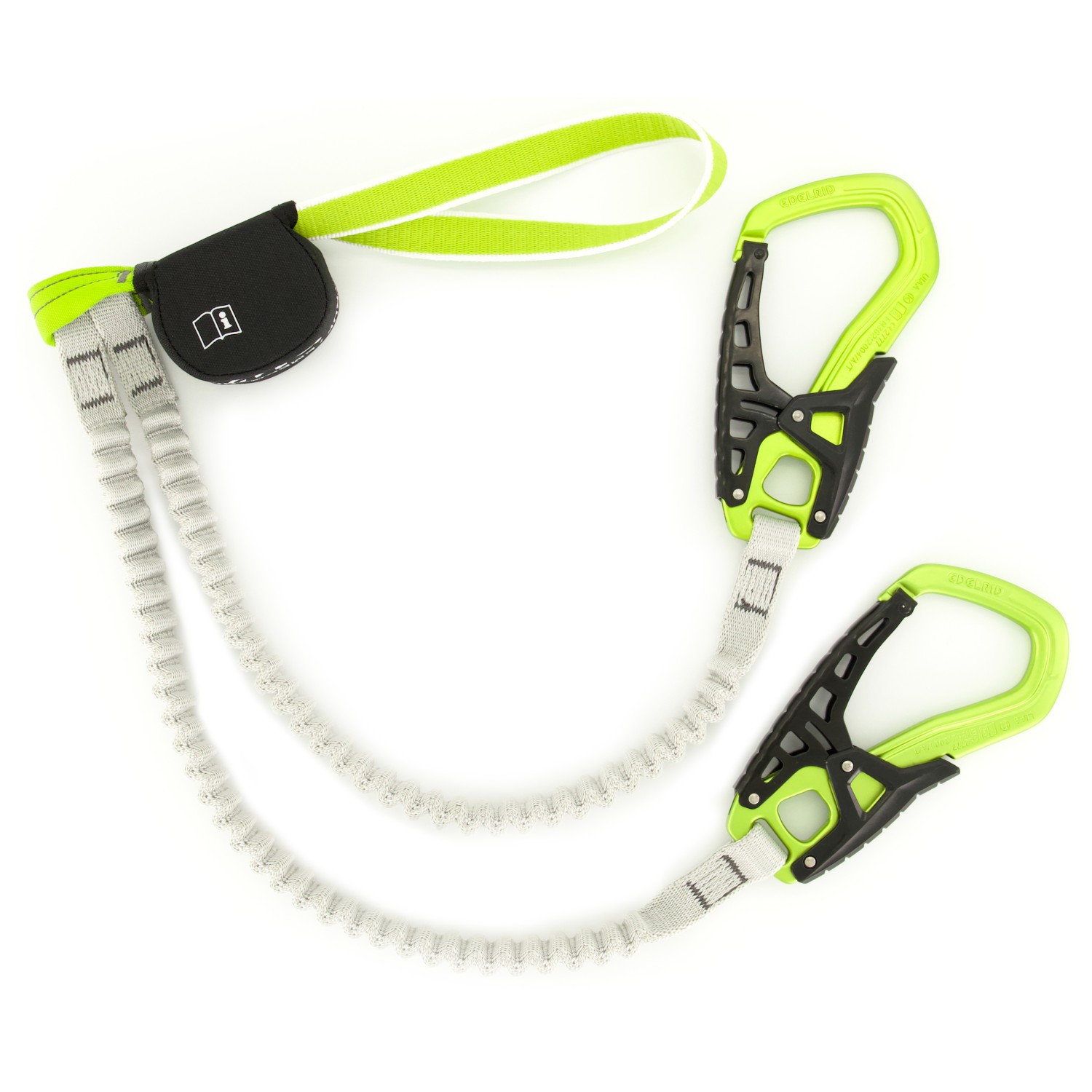
Edelrid, Camp or Black Diamond Via Ferrata Lanyard
A via ferrata lanyard connects the climber and their harness to the cables along the route. Its two arms and a hidden extra coil work as an energy absorption system in case of a fall. The two carabiners at the end of the lanyard clip into the cable. Make sure the carabiners are equipped with the palm squeeze mechanism. It’s the safest and most comfortable.
Shop on Amazon (Worldwide) / Backcountry (US)
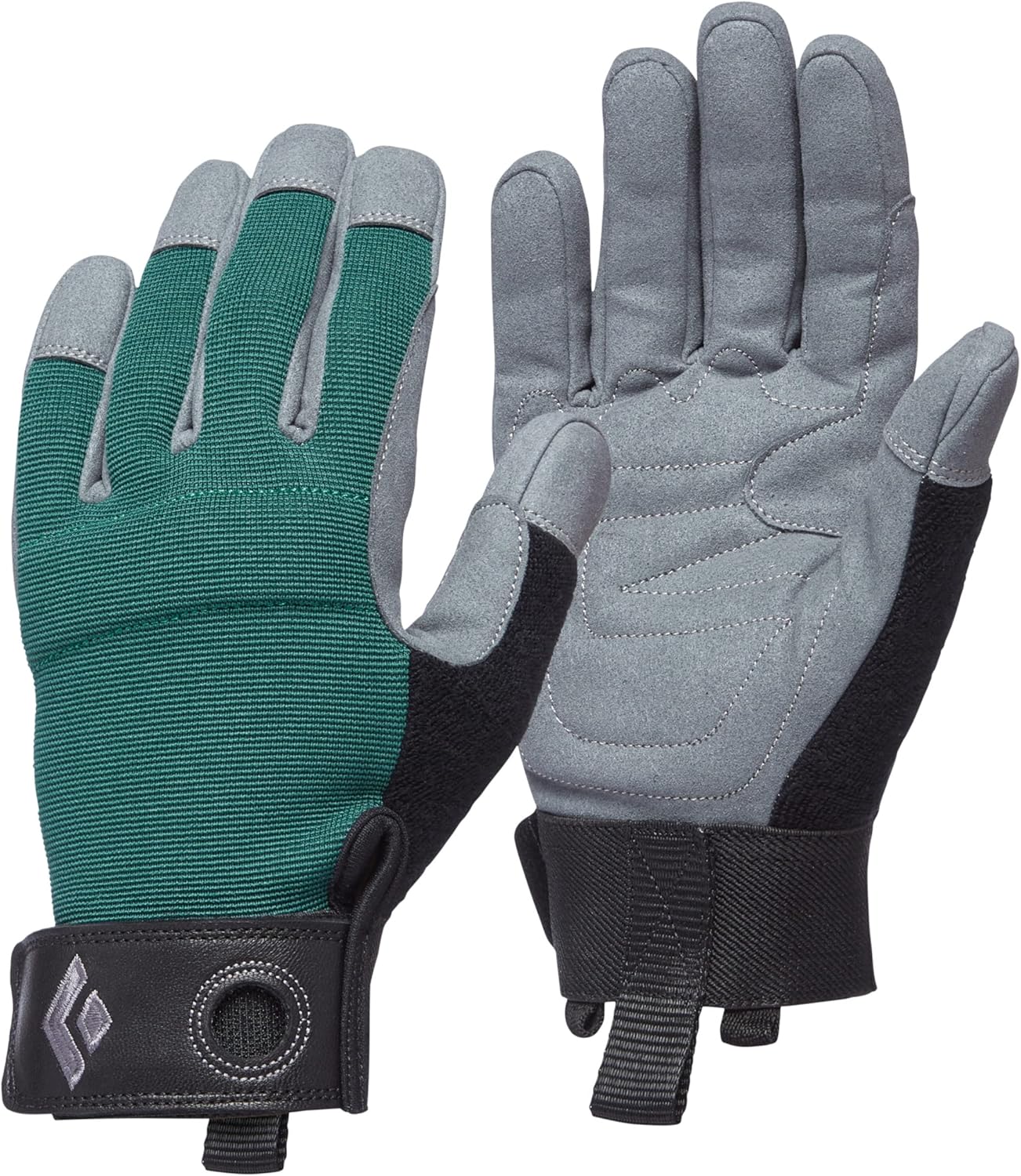
Black Diamond Crag Gloves
The gloves protect your hands from cuts and scratches you may otherwise get if you haul yourself on the cable without them. I prefer full-finger gloves for extra protection against blisters. If your hands sweat quickly, go for the fingerless version.
Shop on: Amazon (Worldwide) / Backcountry (US)
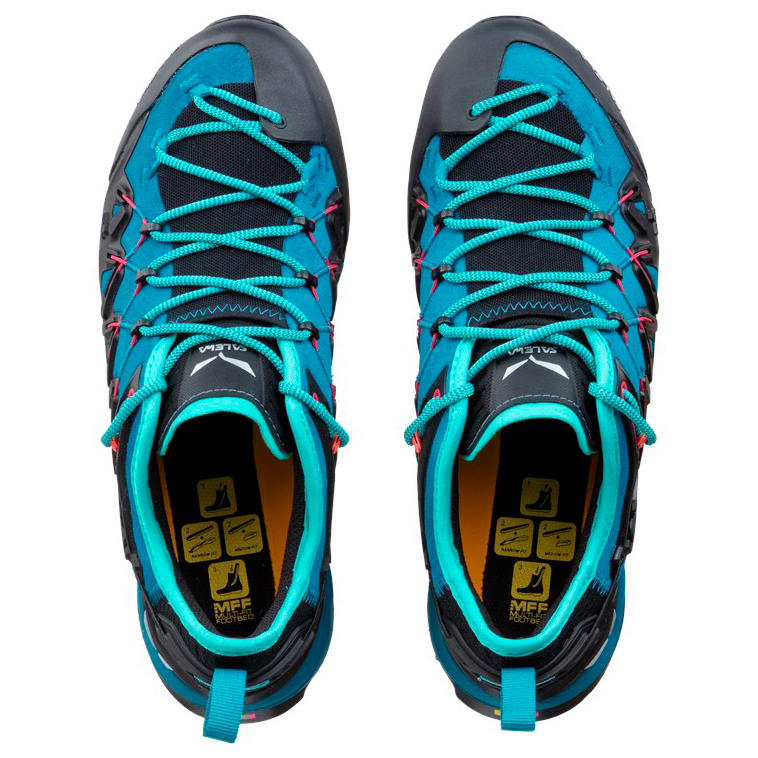
Salewa Wildfire Edge Approach Shoes
This is my go-to pair of hiking shoes for more accessible trails or via ferrata, where I don’t need extra ankle support. They provide excellent grip on the rock and are very durable.
Shop on: Amazon (Worldwide) / Backcountry (US)
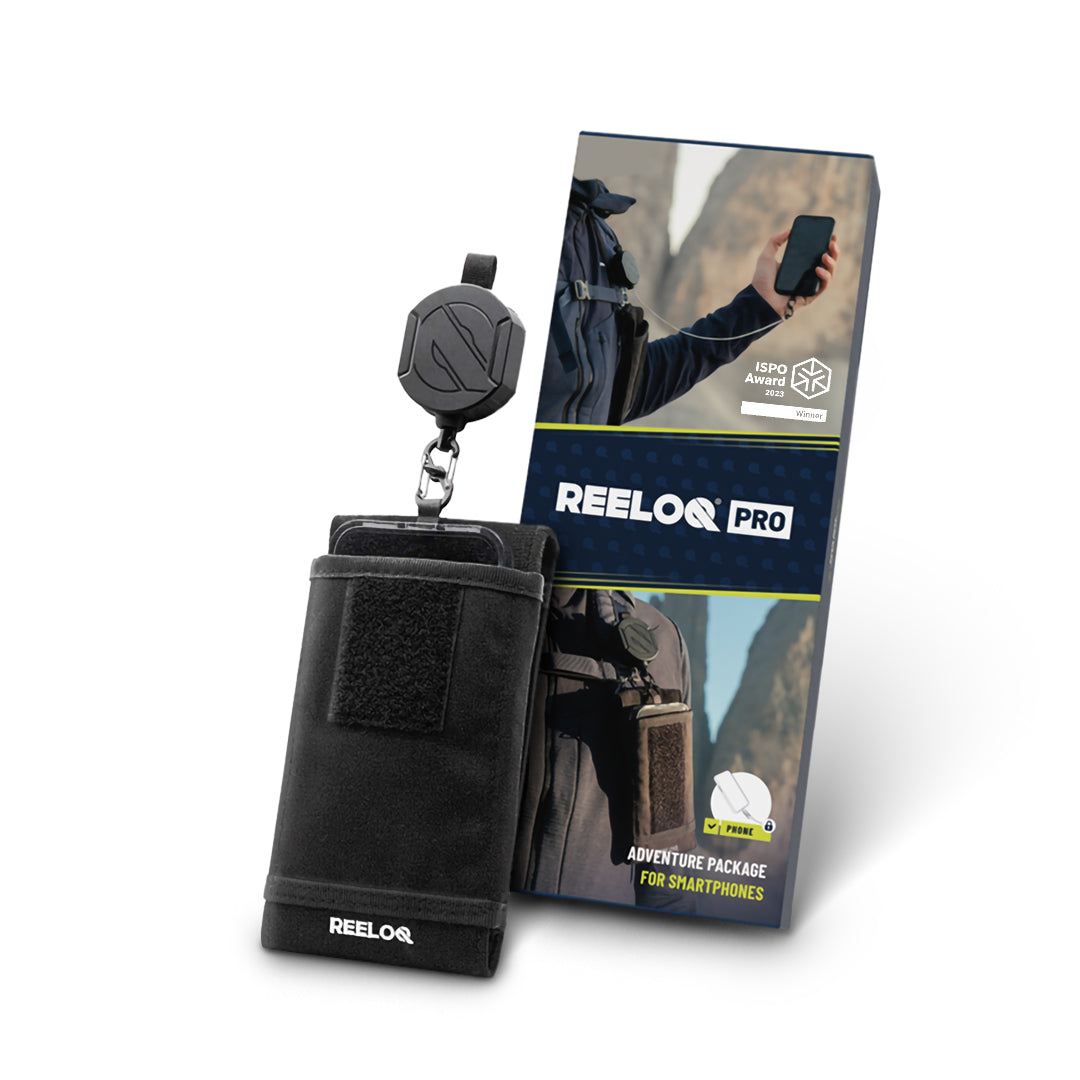
Reeloq Smartphone Securing System
If you want to take great photos on a via ferrata without worrying about losing your phone, Reeloq is the best tool for it. It’s a smartphone-securing system that allows you to use your phone on any adventure. This has been a great addition to my tool arsenal.
Shop on: REELOQ
Other hikes and via ferrata near Cortina D’Ampezzo
More travel and hiking resources in the Dolomites
- Photography spots in the Italian Dolomites
- Regions in the Italian Dolomites
- Itineraries for the Italian Dolomites
- Via ferratas in the Italian Dolomites
- Day hikes in the Italian Dolomites
- Hut-to-hut treks in the Italian Dolomites
Support my website!
Hi Reader! If you found any of my articles about the Dolomites useful please consider using the affiliate links below (at no extra cost) when booking your holiday. Thank you
- Reserve your hotel with Booking.com
- Book your rental car with Discover Cars
- Buy your outdoor gear with Backcountry.com (US readers)
If you have any questions, leave them in the comments below!
Amazing website! How difficult is this ferrata?
Hi Sam. Thank you. It’s all answered in the text 😉
Hi Marta, ur site so cool and thanks for the info. I’ve seen maps with your route but in the other direction, trying to understand the difference… Going down the scree gully I would think is easier than going up.
Hi Chuck. Thanks for stopping by. Since it is a circuit you can go either way. I wanted to be at the bridge really early in the morning. As for the scree gully whether it is easier going down that’s debatable. The rocks are quiet large so running down that scree can be dangerous.
Hello Marta,
My name also is Marta. I stumbled across your website by chance, this particular piece of it. It seems you have a fascinating life and passion. Blessings to you, Marta
Hi Marta! Nice of you to leave this feedback. Happy travels to you!
We just returned from an attempt to do this VF. The chairlift to Son Forca is still not operating so we had to walk up there. However when we reached the top Forcela Staunies we found out that there was so much snow that we returned back. After much disappointment. So my question is- how one can check that the ferrata is passable and that the snow doesn’t cover the iron rope? Thanks
Hi Pavlos. Yes, I talk about it quite a lot that hiking in the Dolomites (or any mountains in the Southern Hemisphere) doesn’t properly kick off until the third week of June, and northern slopes even July. That’s when the chairlifts and huts open. Best way to know is to study maps. Southern slopes which are exposed to the sun are free of snow much sooner than the Northern slopes. You never however get a 100% guarantee.
Hi Marta,
First of all, I did a trip to the Dolomites Sept 2023 using your blog and it was incredible, so thank you.
I’m heading back this June, unfortunately quite early season (arriving there 16th) and would be hoping to do this VF probably around the 20th if it’s accessible then. Is June as bad for afternoon storms as July & August. We are trying to figure out if it’s even worth attempting it at this time of year. Thanks again!
Hi Paula. Thanks for visiting. Yes, the storms are already there in June. You have to check the weather the day before heading out anyway, so that’s your best bet. I stayed in Rifugio Son Forca the night before to be able to start really early (5AM) That way not only you get fantastic views, but also you will be done with the via ferrata sections by early afternoon.
I hope that helps!
Hello,
I have a new question but it doesn’t concern the via ferrata. Do you know if the dismesso Lorenzi refuge, which is on the via ferrata, is open?
Have a nice day.
Thomas
Hi Thomas. I do talk about the decaying state of rifugio Lorenzi in the text;) No, the hut has been closed since 2016 and has been in a decaying state since.
Hello, thank you for this article.
I want to do a multi-day hike in the dolomites next summer with some friends. The bivuac buffa di ferrero would be our first stop. Do you know if it has been renovated? And is it possible to go there without all the necessary via ferrata gear (helmet, harness, …)?
Thanks again for this article.
Hi Thomas. Thanks for visiting. After your comment, I did a quick check and yes it has been renovated and set up as a Bivouac. When I did the VF Ivano Dibona it was a place that was falling apart and was often used as a toilet (it stank of pee). I am glad to see it has been renovated and put to good use. It’s amazing. Now for your question. No, you should carry Via ferrata gear with you. Whilst I sometimes see some daredevils without the gear on via ferratas I have personally learned on my own skin that all it takes is one wrong step and the next thing you know there is a mountain rescue operation underway and someone has to risk their own lives to save yours. Insurance might not cover any accidents if they learn that you were not properly equipped. So with that said, have fun and stay safe! Let me know if you have more questions!
Thanks you for the quickly answer.
Hello! I’m planning on doing this route in September. I’d like to do a link up of Cristallo and Ivano Dibona.
A few questions:
– Is there ANY other place I can park my car to start earlier without an overnight stay at the rifugio? ( For example, can I just park at San Forca, instead of the lift?)
– If not, is my only choice to start really early, an overnight stay at the rifugio the night before? If so, what happens if I miss the cable car down?
– During the decent of Ivano Dibona, would it be faster to turn around when the route gets boring (I’m guessing at the start of the forrest) and go down via the scree path to the rifugio?
– alternatively, are there any intersections with a main road at which point I can get a taxi back to the car park?
Thanks!!
Amrutha
Hi Amrutha! Thanks for stopping by. September is when I did it too! As for your questions:
1) No, I am afraid you can’t drive up to rifugio Son Forca.
2) You can do via ferrata Ivano Dibona in a day, but not if you want to connect it wil via ferrata Marino Bianchi. However if you do Marino Bianchi only and then just a short trip to Dibona (for example to the bridge and back) you can do it all in a day which means taking the cable car up first thing in the morning, then hike/ferrata then back to the chairlift and ride it down to the car.
3) I don’t exactly know what you mean with the route getting boring once you get down to the forest. Once you make it down to the forest you are pretty much 80% in and all you have left is to hike back to the refuge. If you mean to use the escape route after the bridge, then sure you can do that, but you will be missing out on seeing the mountain refuge dating back to WW1, which was built into the wall,
4) no I am afraid not. You can hike to Hospitale but from there is quite the bus journey back to Cortina and then up to the parking for the chairlift.
I hope that answers it for you. Let me know if you have more questions!
Hallo,
ich finde leider keine genauen Öffnungszeiten für den Lift zum Klettersteig. Ist dieser aktuell geöffnet? Haben Sie evtl. auch einen Link für mich mit weiteren Infos. Danke 🙂
Hallo. Die Rio Gere-Son Forca chairlift offnet am 18/06 und bleib offen bis 18/09 in diesem Sommer Saison. Dolomiti Superski is eine gute Webseite wo man alle offnungszeiten von chairlifts sehen kann.
The guided time you gave is around 8 hours for the via ferrata, I take it this includes the hike from Rifugio Son forca up the screen gully or is the 8 hours starting from Refugio Lorenzi, ie, after the screech gully?
Hi Wilde. Thanks for stopping by. This is for the entire route from start to finish (Son Forca to Son Forca).
Hi, if we just wanted to do the hike to the famous suspension bridge and head back – how long would that take?
Hi Shailesh! Thanks for stopping by. It takes around 2 hours from rifugio Son Forca to Forcella Staunies. Then from there to the bridge is another 30 mins (includes scrambling on cables so you will need the VF equipment). To get back down it will be ca. 90 mins. A total of around 4 hours. I hope that helps!