
I firmly believe that the more work you are willing to put into something, the greater the reward. This couldn’t be truer with via ferrata Marino Bianchi. The initial approach through a scree-filled valley will test your patience and calf strength. The reward comes in 360-degree views over the Dolomites and an off-the-beaten-path experience far from the tourist crowds.
About Via Ferrata Marino Bianchi
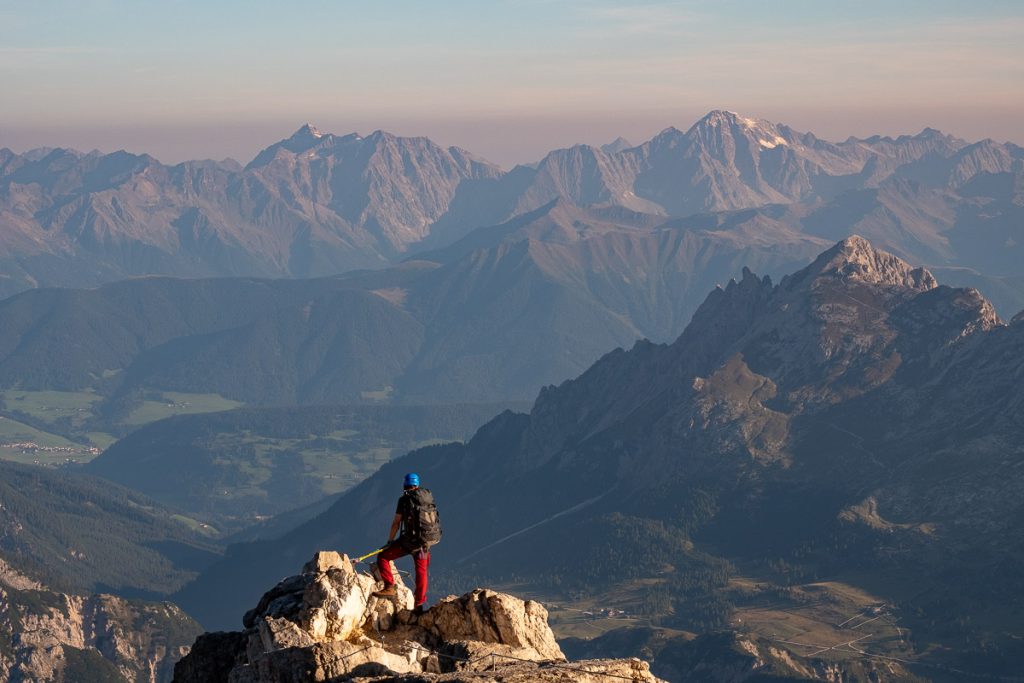
Via ferrata Marino Bianchi is located in the Monte Cristallo range in the centre of the Italian Dolomites. It reaches the summit of Cristallo di Mezzo. The nearest town where you can base yourself is Cortina the Ampezzo. Below are a few of my recommendations for hotels and lodges in Cortina.
Read more: Guide to Cortina D’Ampezzo: Best Hikes, Via Ferratas & Photography Locations.
Via Ferrata Marino Bianchi: map & stats
- Distance: 6km / 3.7 mi
- Elevation gain: 920 m / 3020 ft
- Time required: 6-7 hours
- Route difficulty: intermediate (C)
- Type of route: out and back
- Black: Rio Gere – Son Forca chairlift
- Blue: Rifugio Son Forca to Forcella Staunies
- Yellow: Via Ferrata Marino Bianchi
- Orange: Via Ferrata Ivano Dibona
- Purple: Alternative approach from Passo Tre Croci to Rifugio Son Forca
TIP: To view the map’s legend, click on the icon in its top left corner
Know before you go
Start as early as possible to have the best chance for good weather. The weather in the Dolomites often follows the same pattern, with crystal clear blue skies in the morning and cloud build-up during the day, turning into storms by the afternoon.
I also recommend bringing lightweight hiking poles, which you can easily stow away. You will be thankful for them on the steep slope.
The stages of Via Ferrata Marino Bianchi
Stage 1: Getting to Rifugio Son Forca
There are two ways to reach the start of Via Ferrata Marino Bianchi: chairlift or hiking. I recommend using the chairlift to save time and strength. If you are budget-conscious, go for the latter option.
By taking a chairlift
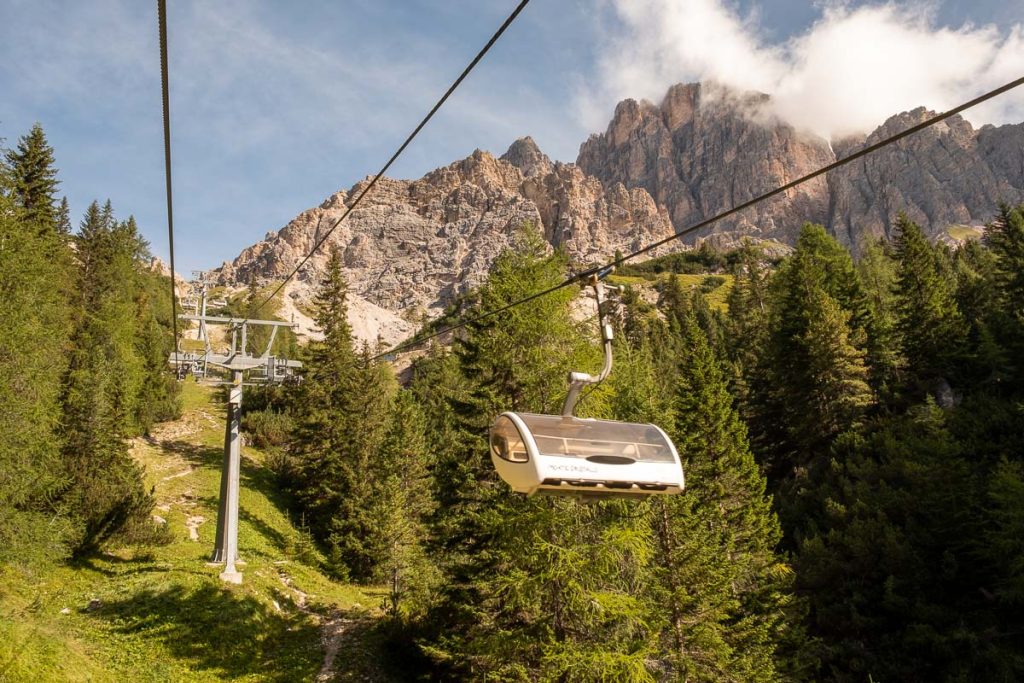
The fastest way to the Son Forca hut is by using the Rio Gere-Son Forca chairlift. The chairlift is around one kilometre from Tre Croci mountain pass and 8 kilometres, or a 15-minute drive, from Cortina d’Ampezzo, the nearest town. A big gravel parking lot is on the opposite side of the road from the chairlift station.
TIP: You can reach the bottom of the chairlift by taking bus no 030 from Cortina. The Dolomiti bus company operates on this route. The bus stop’s name is Rio Gere (see on the map). You can check for schedules here.
The running times of the chairlift
During the summer season, the lift remains open from the third week of June until the last week of September, giving a 3-month window for tackling Via Ferrata Marino Bianchi. Get a roundtrip ticket right away to save money.
TIP: Be aware that the chairlift only runs between 8:30 and 16:30. This 8-hour window should give you enough time to tackle Via Ferrata Marino Bianchi.
By hiking
You can also walk to Rifugio Son Forca directly from Passo Tre Croci using path no. 203. However, this will add another two hours and 300 meters of elevation gain to an already long day. My advice is to take the chairlift. Trust me, you will need the extra energy for what’s coming.
TIP: Passo Tre Croci is one stop further from Rio Gere on bus route no. 030
Stage 2: Rifugio Son Forca to Forcella Staunies
- Time required: 1.5 – 2 hours
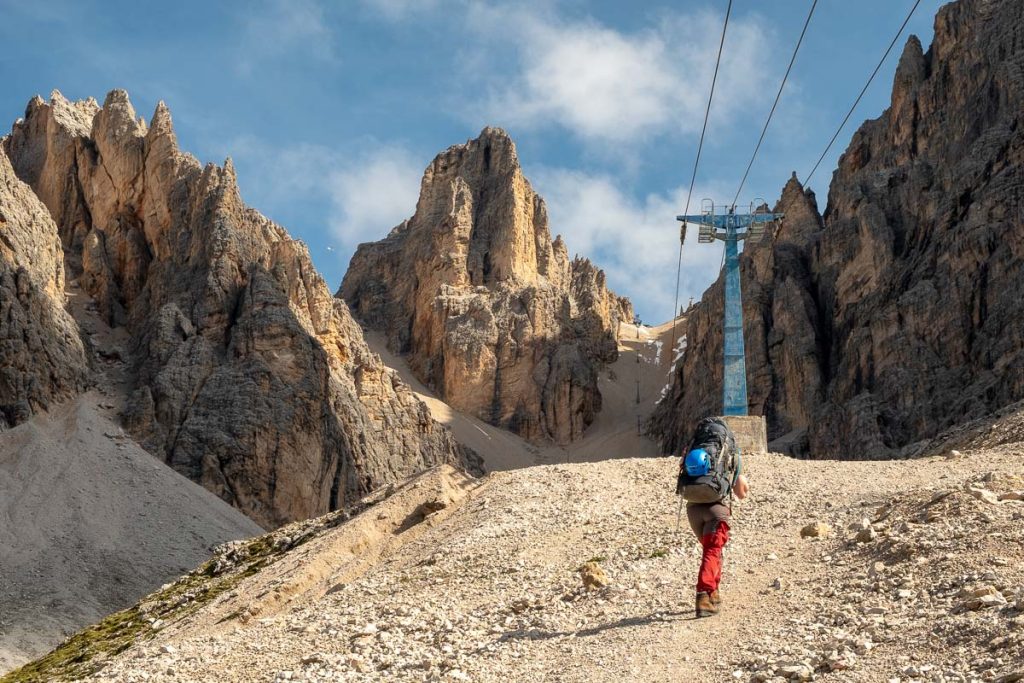
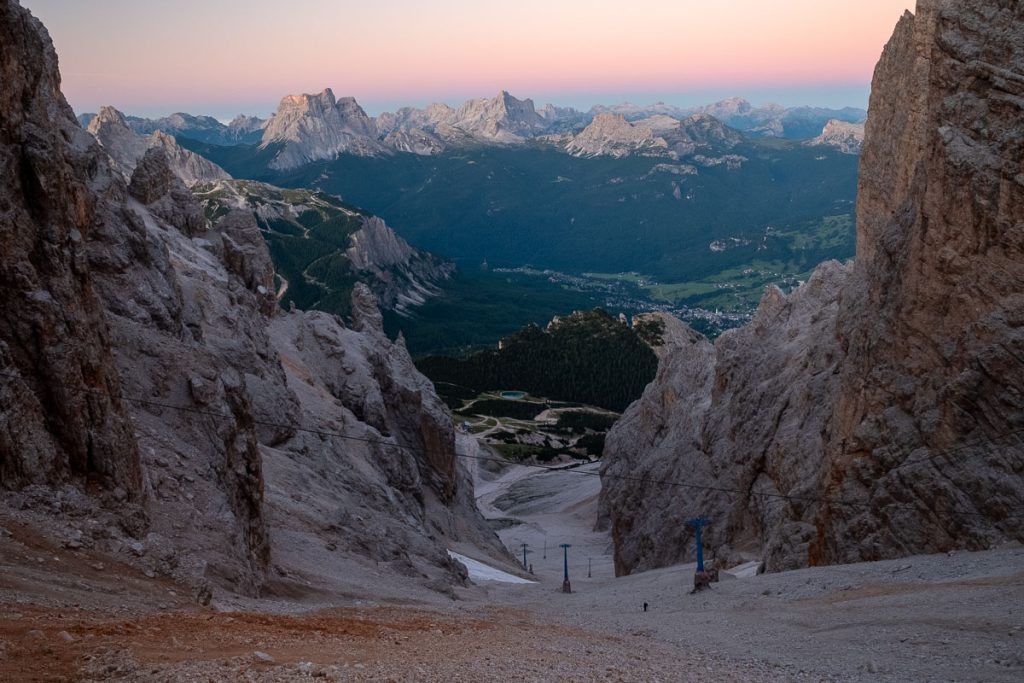
From Rifugio Son Forca, you must follow the signs for Rifugio Lorenzi & Via Ferrata Marino Bianchi. The path leads through a scree gully with dramatic views of the spires.
Another lift could have bypassed this part of the approach until 2016. However, the lift has been closed for a few years now, and there is no prospect of it reopening soon.
If it weren’t for the views reminding me every step of the way why I am putting myself through this torture, I would have probably given up.
The screen becomes looser as you go higher, setting you back one step for every two steps you take forward. In other words, it’s arduous work. After 1.5-2 hours, you should reach the saddle & Rifugio Lorenzi.
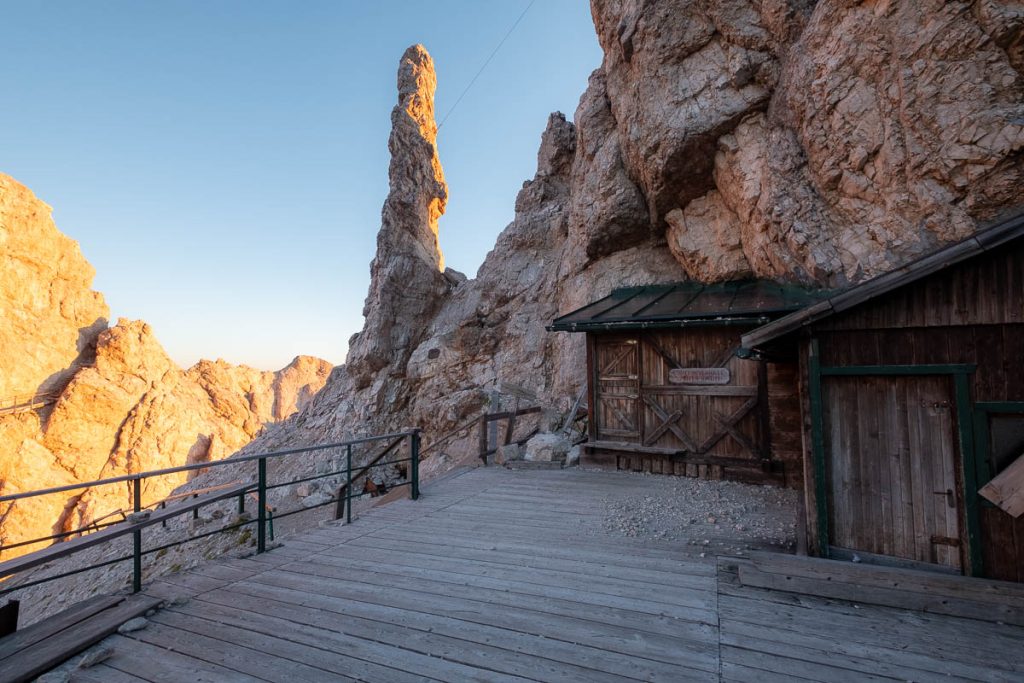
The hut’s location makes it one of the most photogenic in the Dolomites. Unfortunately, it no longer operates and is slowly decaying.
Warning signs have been placed to remind you to be careful when walking on its terrace. Some planks have become loose, and the whole construction doesn’t feel sturdy.
Should you choose to break the journey down into two days, there is still a tiny winter room where you can spend the night. This is especially useful if you want to kill two birds with one stone and tackle the nearby via Ferrata Ivano Dibona.
It has two beds and a few blankets but no electricity or other amenities. There is also no water source anywhere near. We shared it with another couple. It was a tight squeeze, but we managed.
Stage 3: Rifugio Lorenzi to Cristallo di Mezzo Summit
- Time required: 1.5-2 hours
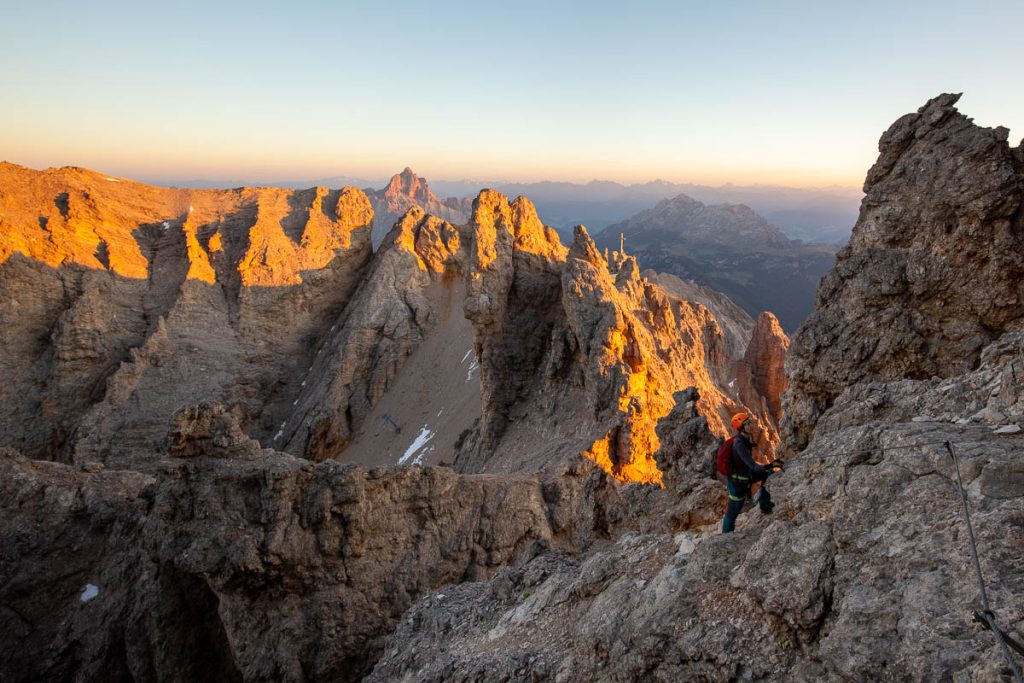
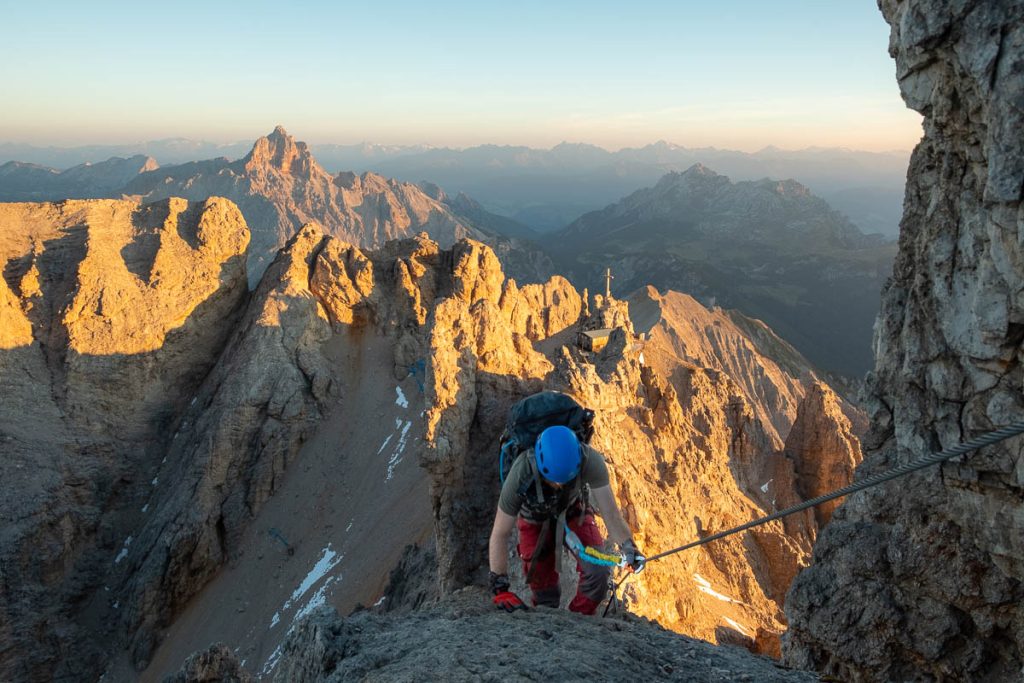
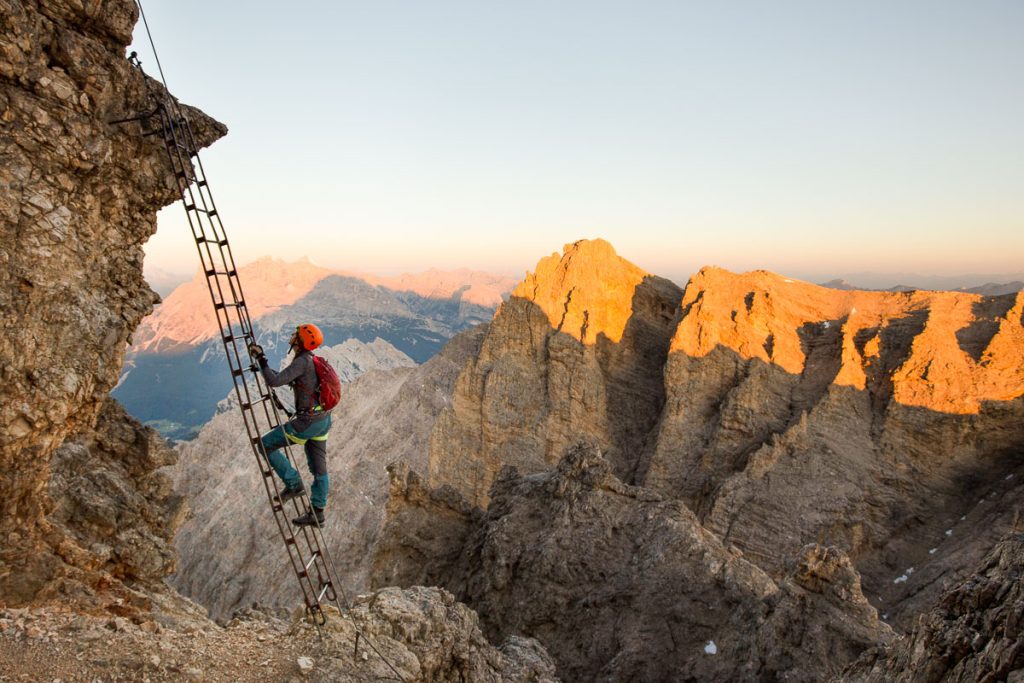
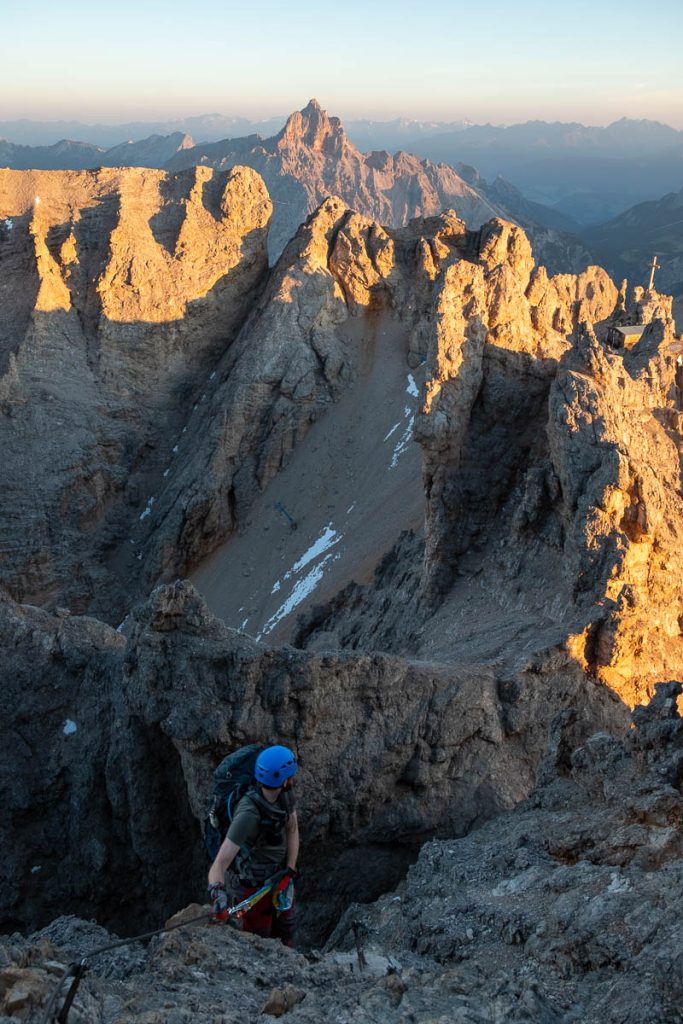
I hope you are ready for some severe exposure. You will be thankful for all the cable protection, especially along the sharp summit ridgeline.
Remember, it only works if you clip in, so use your via ferrata equipment. Too often, I have seen people along these crazy routes with their helmets and harnesses in their backpacks.
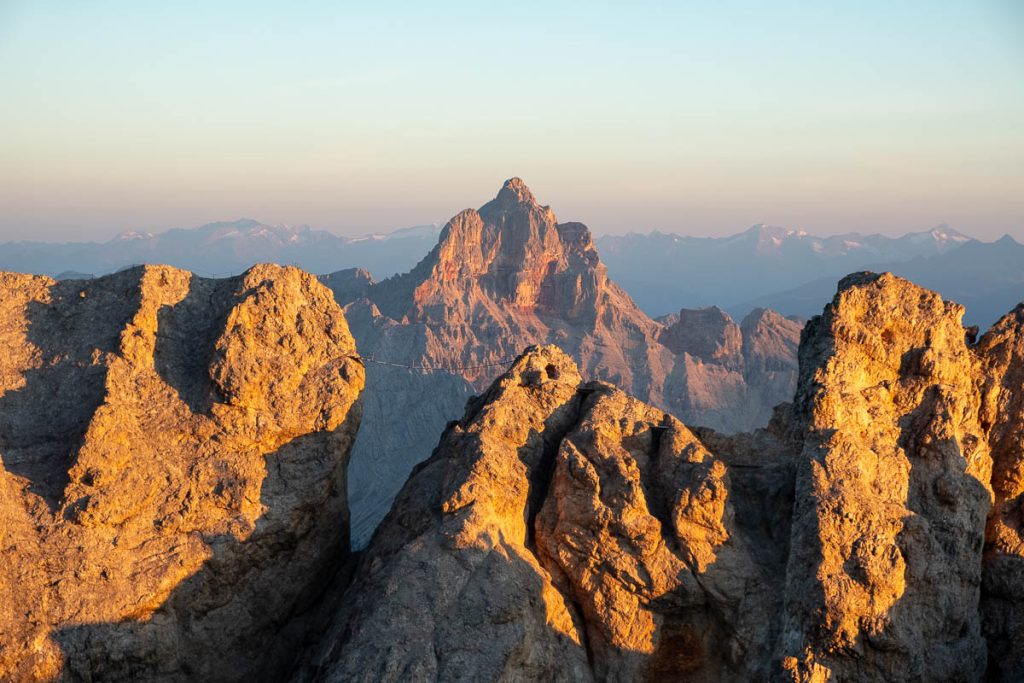
Via ferrata Marino Bianchi is very straightforward and occasionally uses ladders. The cross above the Lorenzi hut will be visible most of the way up. When you look back and squint your eyes, you will also see the famous suspension bridge belonging to the via ferrata Ivano Dibona.
What you can see from the summit of Cristallo Di Mezzo
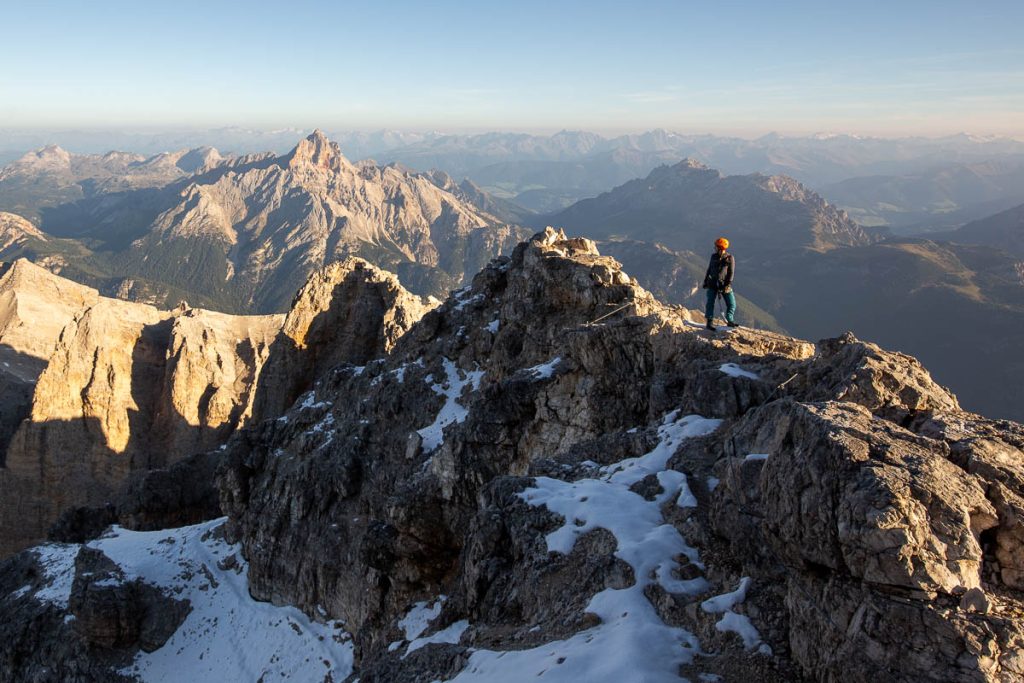
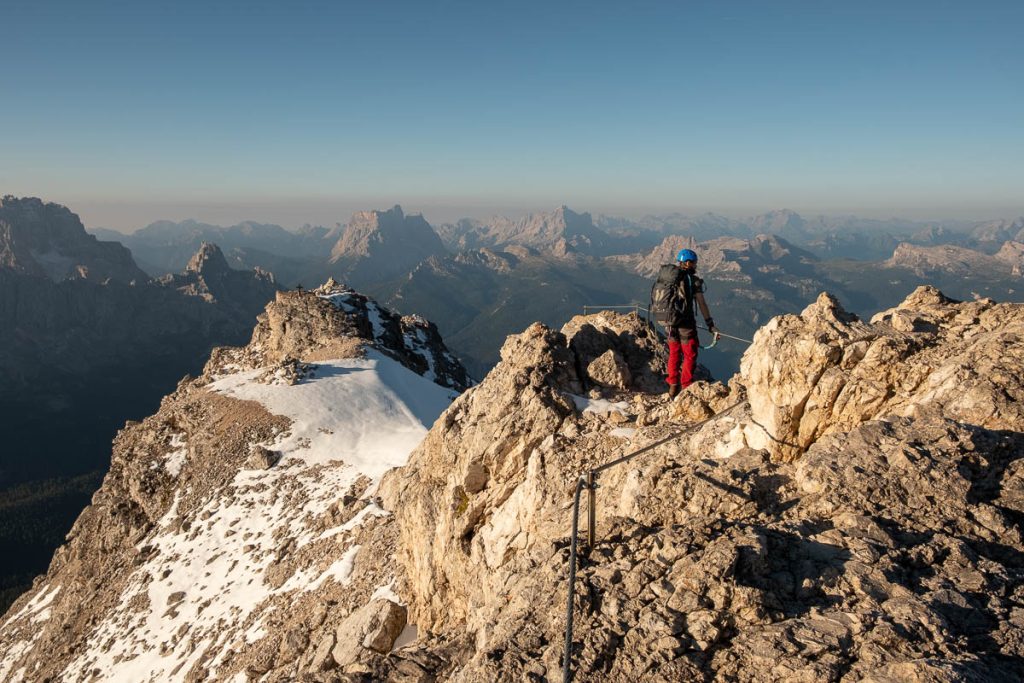
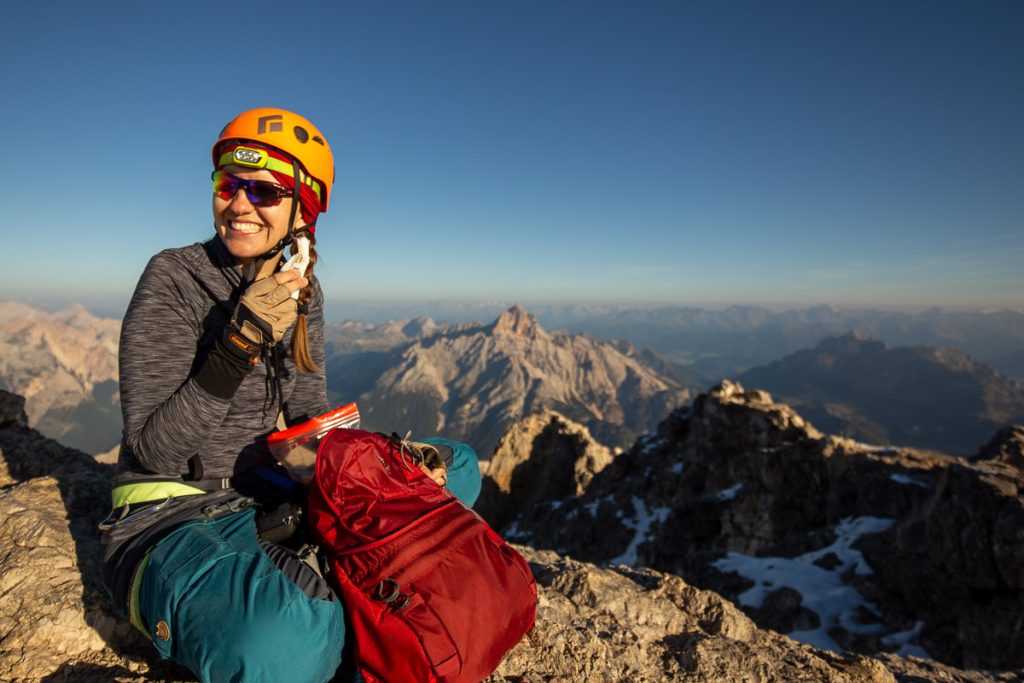
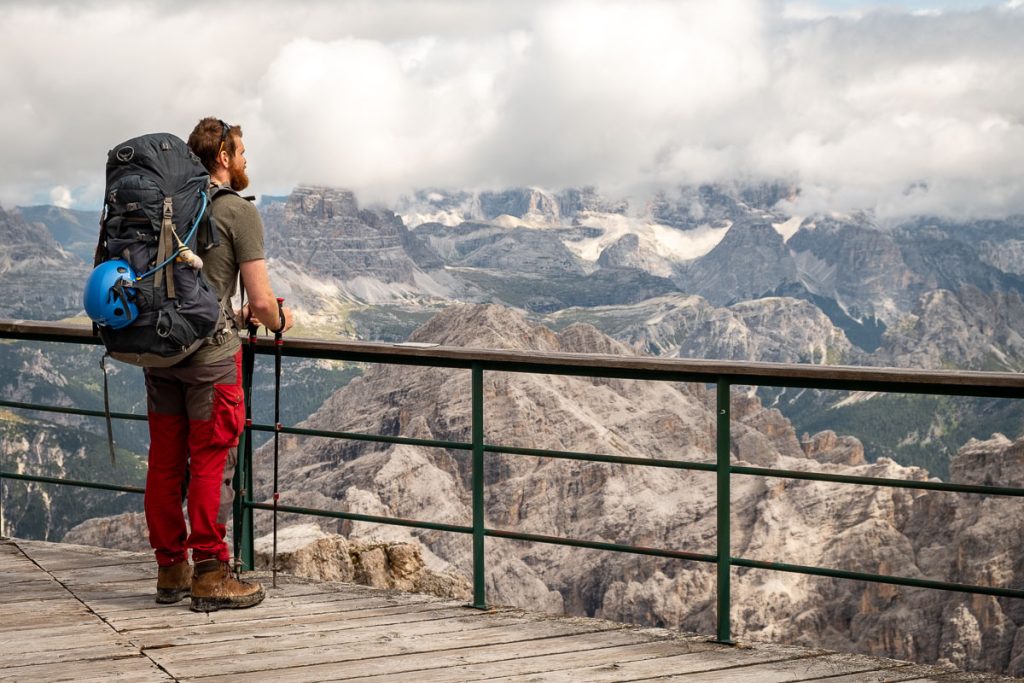
From the top, you get 360-degree views toward the Sorapiss group to the south, where the via ferrata Giro del Sorapiss runs. To the north, you can see Lago di Landro (Dürrensee). The famous Tre Cime peaks are slightly to the east. Looking west, you will see the Tofane group standing proudly above Cortina D’Ampezzo.
Bring a map (Tabacco 03) to distinguish all the peaks around you. Looking at them all from above 3000 meters is an excellent reward for the effort you have put into getting here.
Stage 4: The descent
- Time required: 2.5 – 3 hours
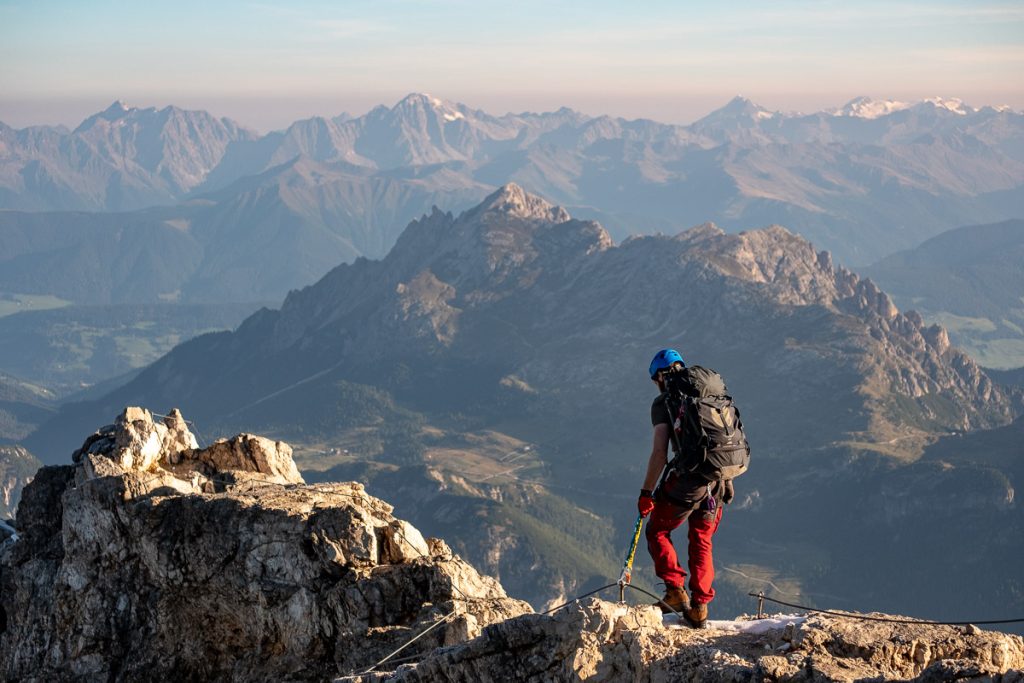
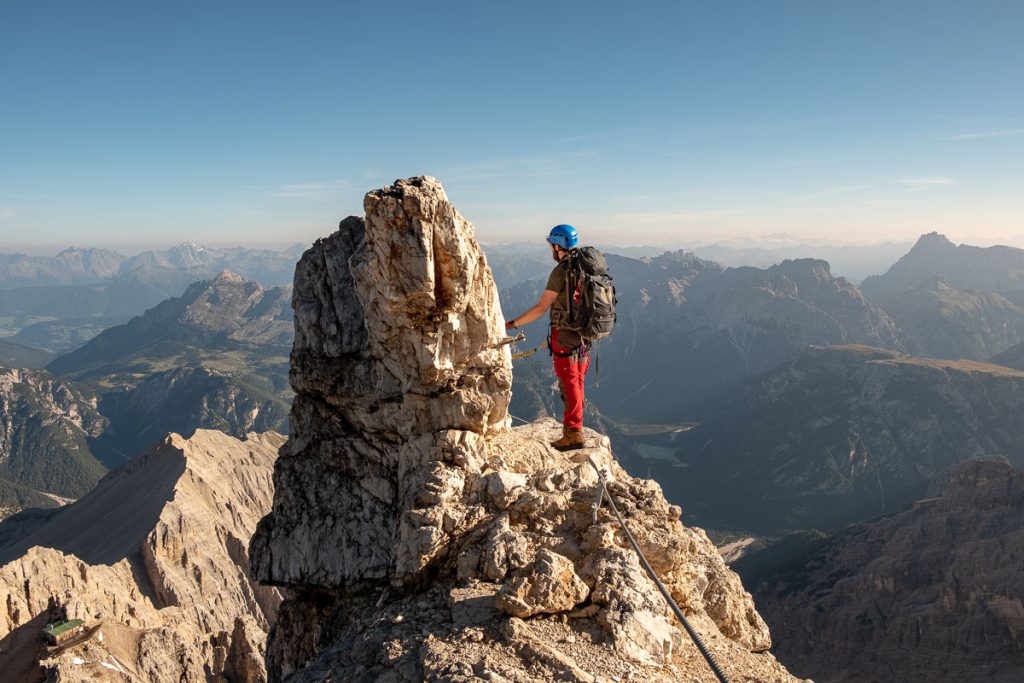
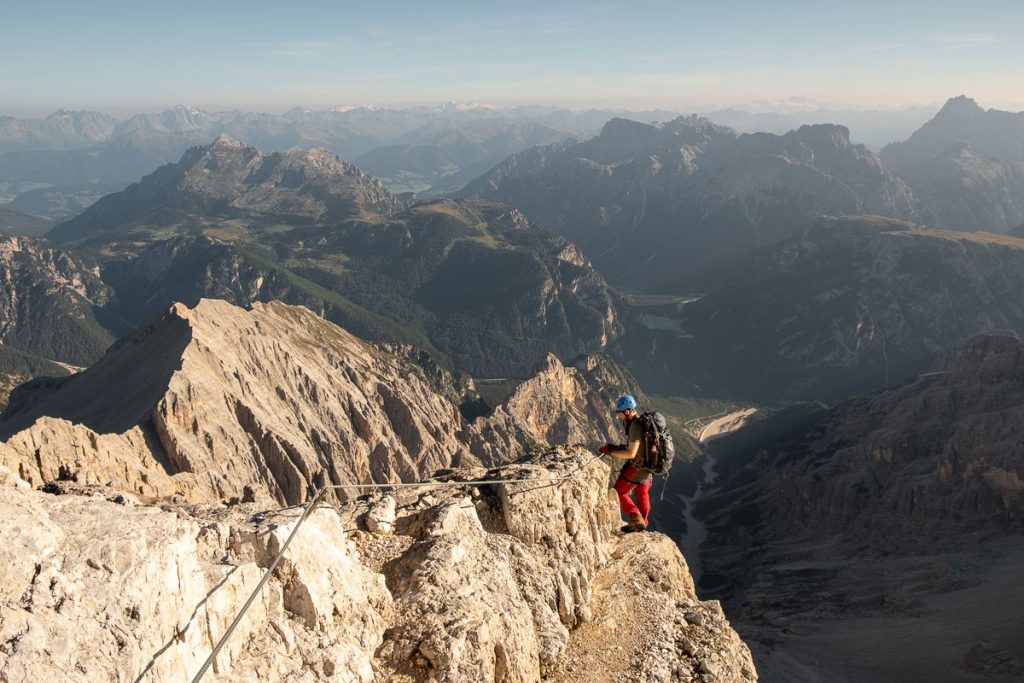
The descent starts near the summit cross and follows an alternative route for 15 minutes. However, it quickly gets you back on the same path. You must downclimb the whole route on the same path you followed to the summit. Take extra care, as downclimbing is more tricky than going up.
Once you reach the Staunies saddle, retrace your journey down the scree gully between Rifugios Lorenzi and Son Forca. The good news is that the way down will be much swifter than the way up. I used my hiking poles well and decided to run back down, taking significant steps. Within 45 minutes, I was back at Son Forca hut.
Extension: Via Ferrata Ivano Dibona
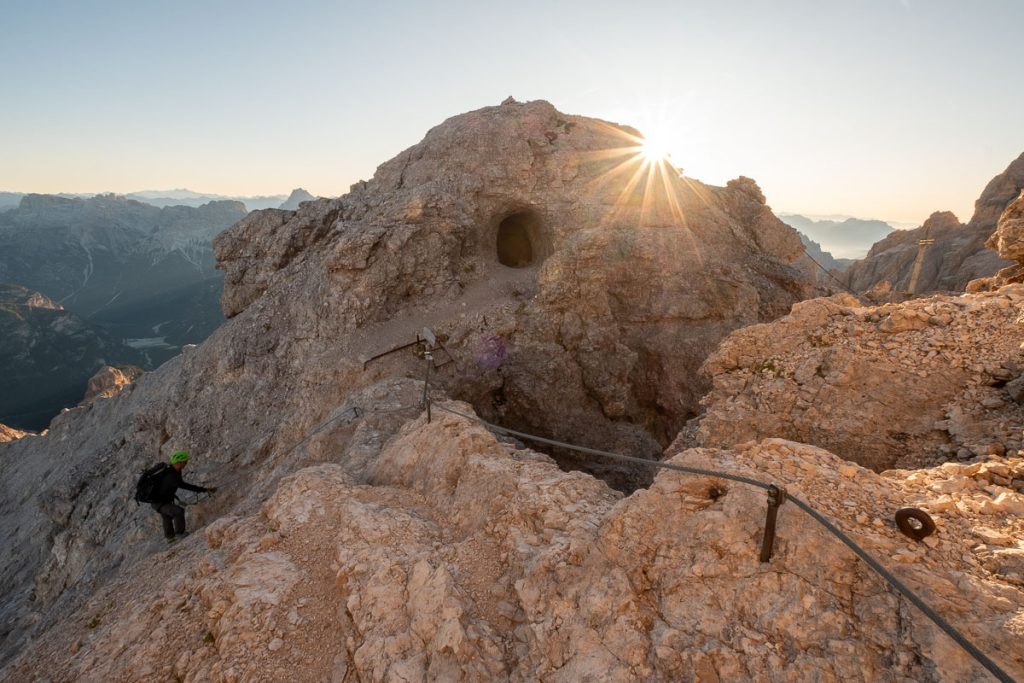
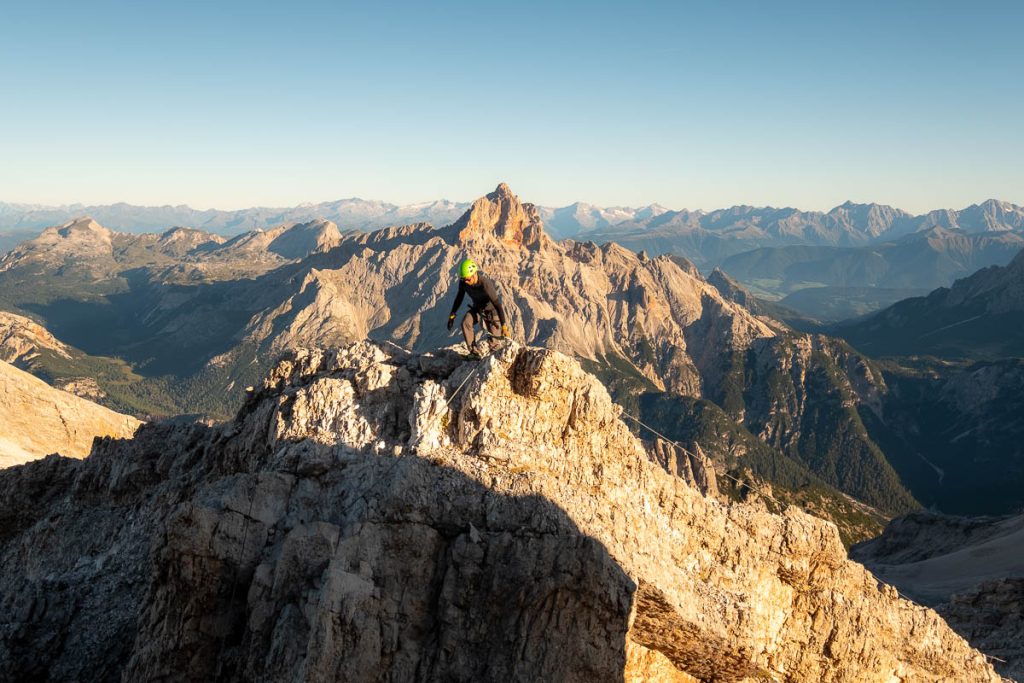
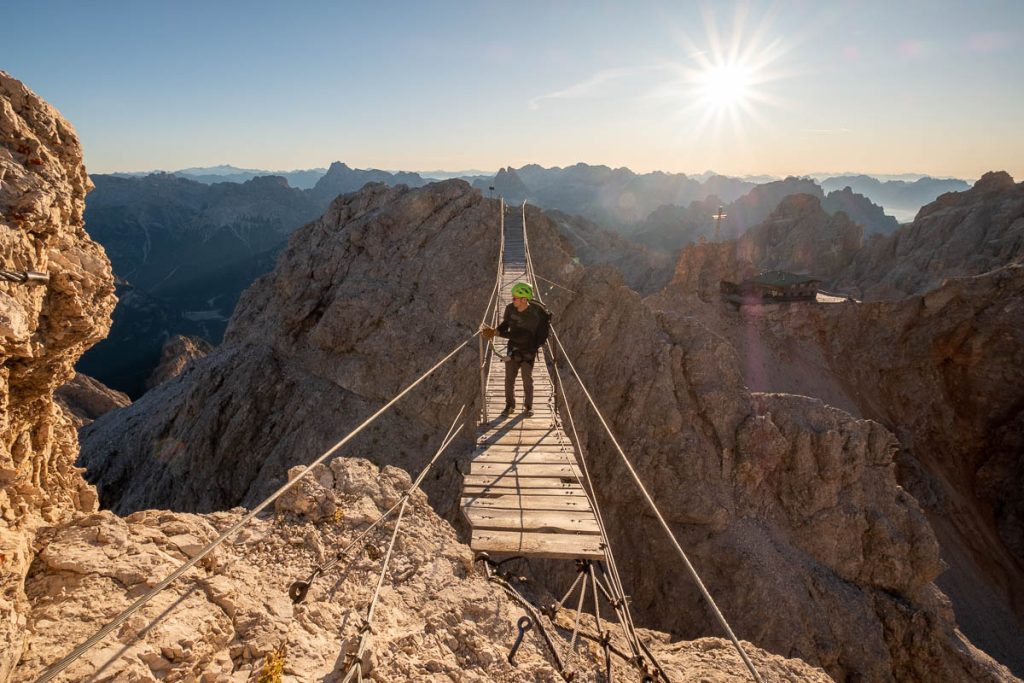
Are you an ultra marathon trail runner who hits the gym after running up a mountain? Was the fix of the good views not enough so far? Or do you want to stand in the exact spot where Sylvester Stalone stood fighting some badass villain in the Cliffhanger movie?
Once you make it back down from the summit of Cristallo di Mezzo to Rifugio Lorenzi, you can head across to the other side of Forcella Staunies and hike to the famous suspension bridge along the via ferrata Ivano Dibona.
The short detour is well worth it. It will only take 45 minutes to an hour there and back. Walking along the bridge and looking down will make your heart beat faster. You will also get the perfect view of the ridgeline where you were climbing earlier.
Shop my via ferrata gear essentials
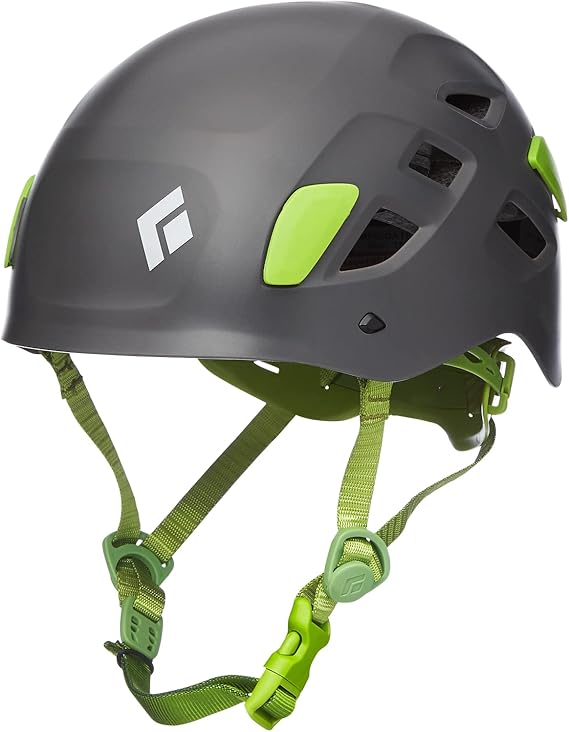
Black Diamond Helmet
Rockfall is a significant concern on via ferrata routes. Unbeknownst to you, other climbing groups above you may accidentally dislodge a small rock and send it down the mountain. If it hits you on the head, it could have serious consequences. A helmet on your head (not inside your backpack) is necessary.
Shop on: Amazon (Worldwide) / Backcountry (US)
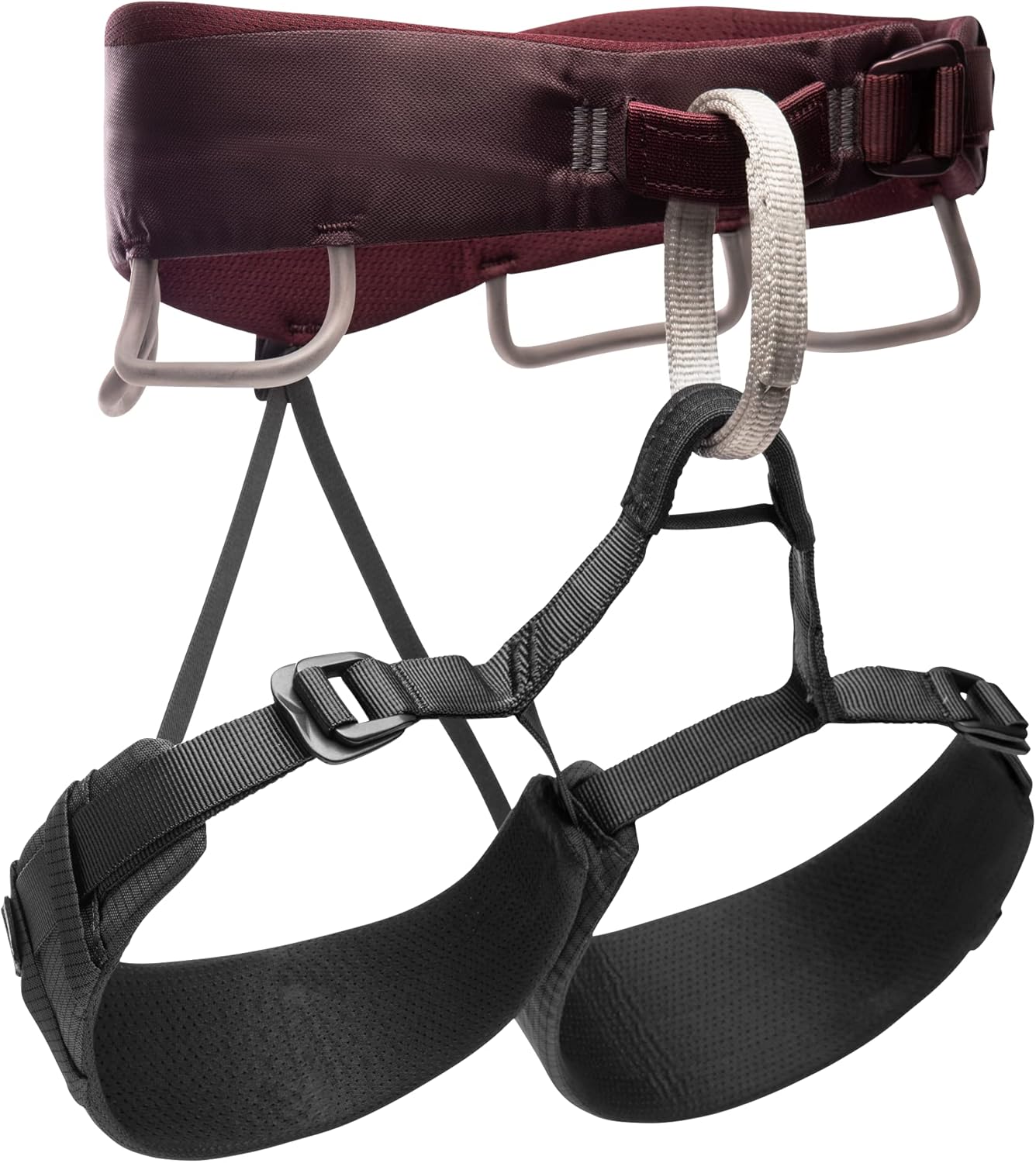
Black Diamond Momentum Harness
Another must-have on a via ferrata route is a climbing harness. A harness works as an anchor point for your via ferrata lanyard. Try it before your trip to ensure it fits snugly without limiting your movements. Aim for a lightweight harness that will be comfortable to wear between the cable-protected sections when hiking.
- Shop Women’s on Amazon (Worldwide) / Backcountry (US)
- Shop Men’s on Amazon (Worldwide) / Backcountry (US)
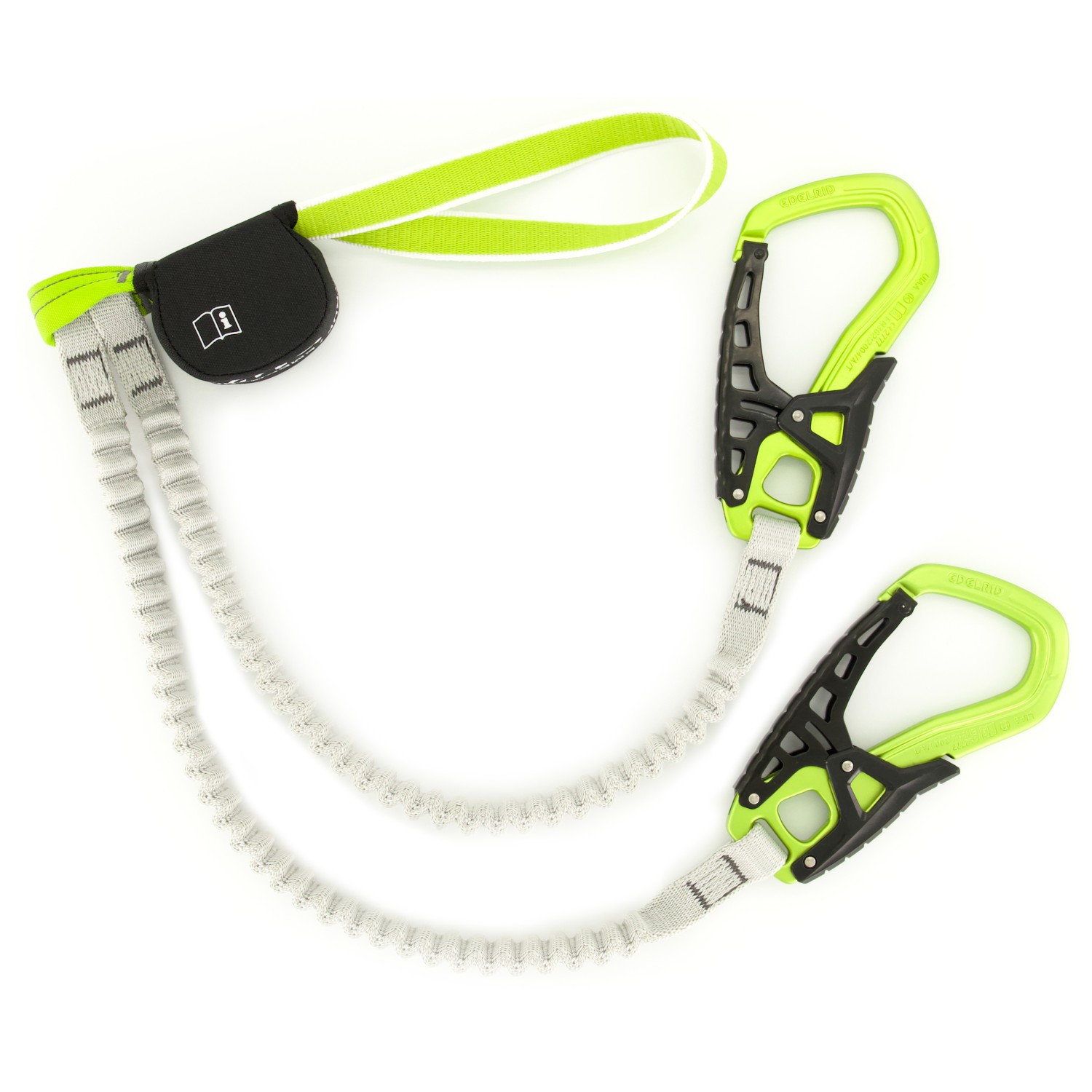
Edelrid, Camp or Black Diamond Via Ferrata Lanyard
A via ferrata lanyard connects the climber and their harness to the cables along the route. Its two arms and a hidden extra coil work as an energy absorption system in case of a fall. The two carabiners at the end of the lanyard clip into the cable. Make sure the carabiners are equipped with the palm squeeze mechanism. It’s the safest and most comfortable.
Shop on Amazon (Worldwide) / Backcountry (US)
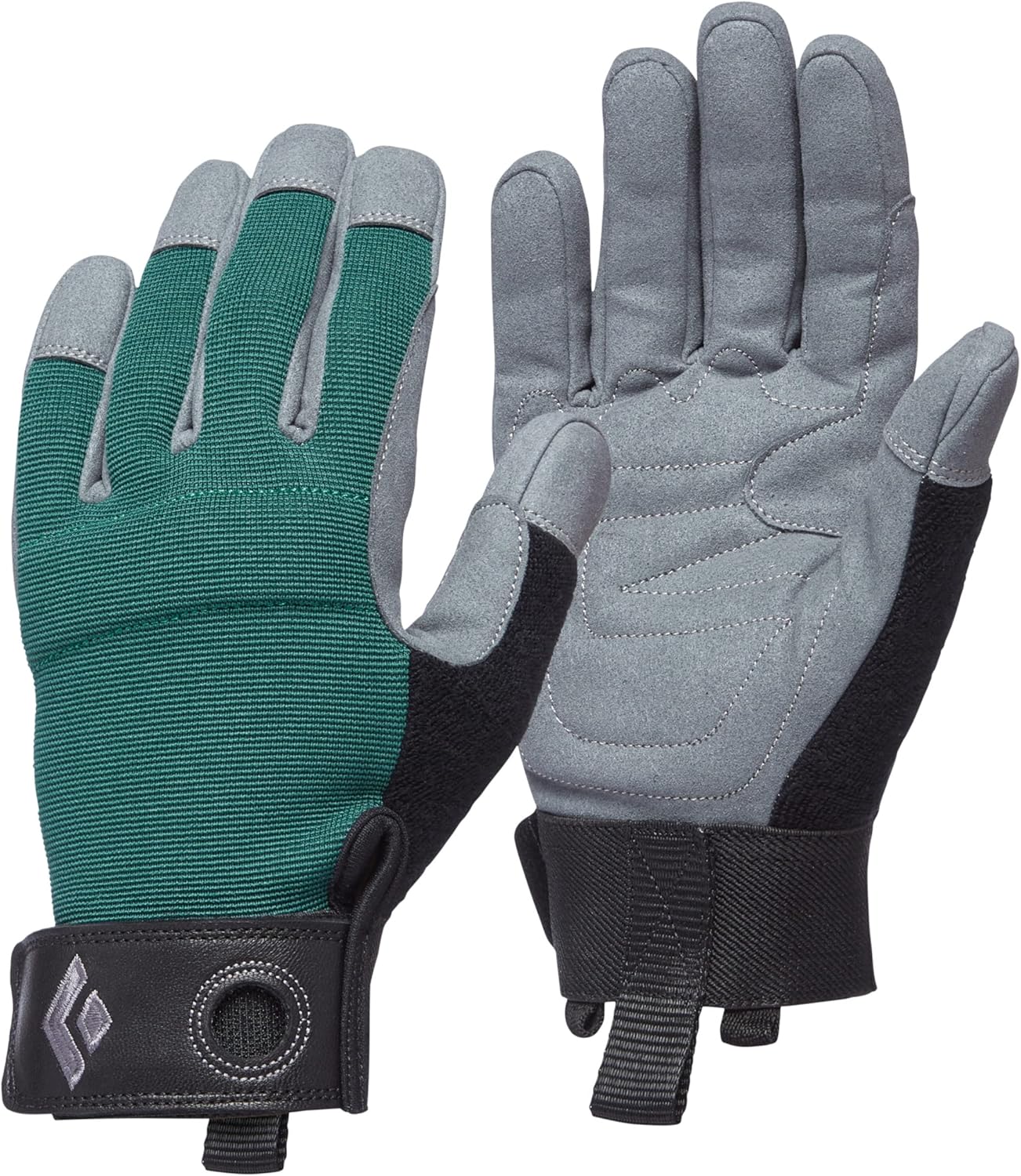
Black Diamond Crag Gloves
The gloves protect your hands from cuts and scratches you may otherwise get if you haul yourself on the cable without them. I prefer full-finger gloves for extra protection against blisters. If your hands sweat quickly, go for the fingerless version.
Shop on: Amazon (Worldwide) / Backcountry (US)
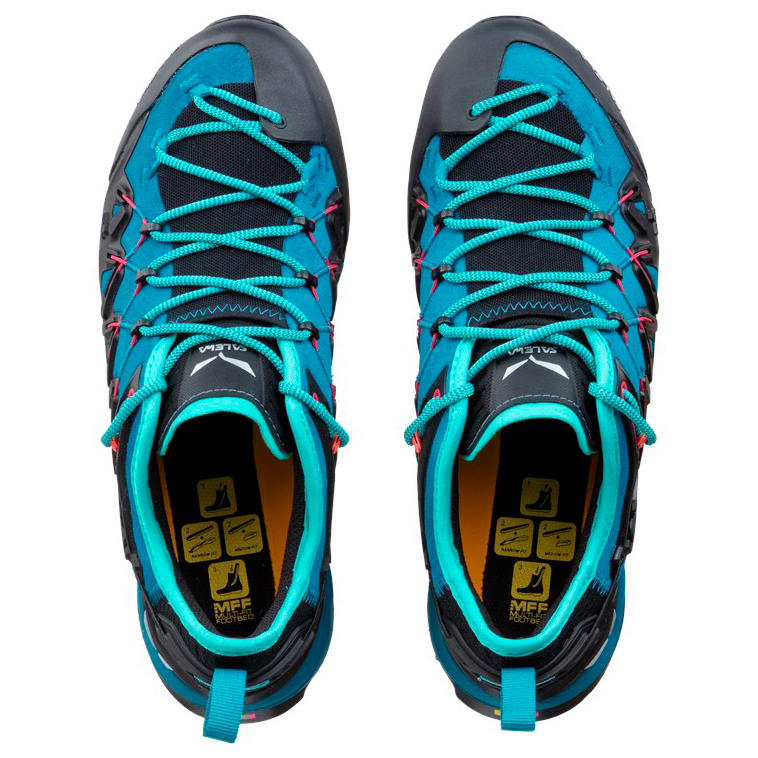
Salewa Wildfire Edge Approach Shoes
This is my go-to pair of hiking shoes for more accessible trails or via ferrata, where I don’t need extra ankle support. They provide excellent grip on the rock and are very durable.
Shop on: Amazon (Worldwide) / Backcountry (US)
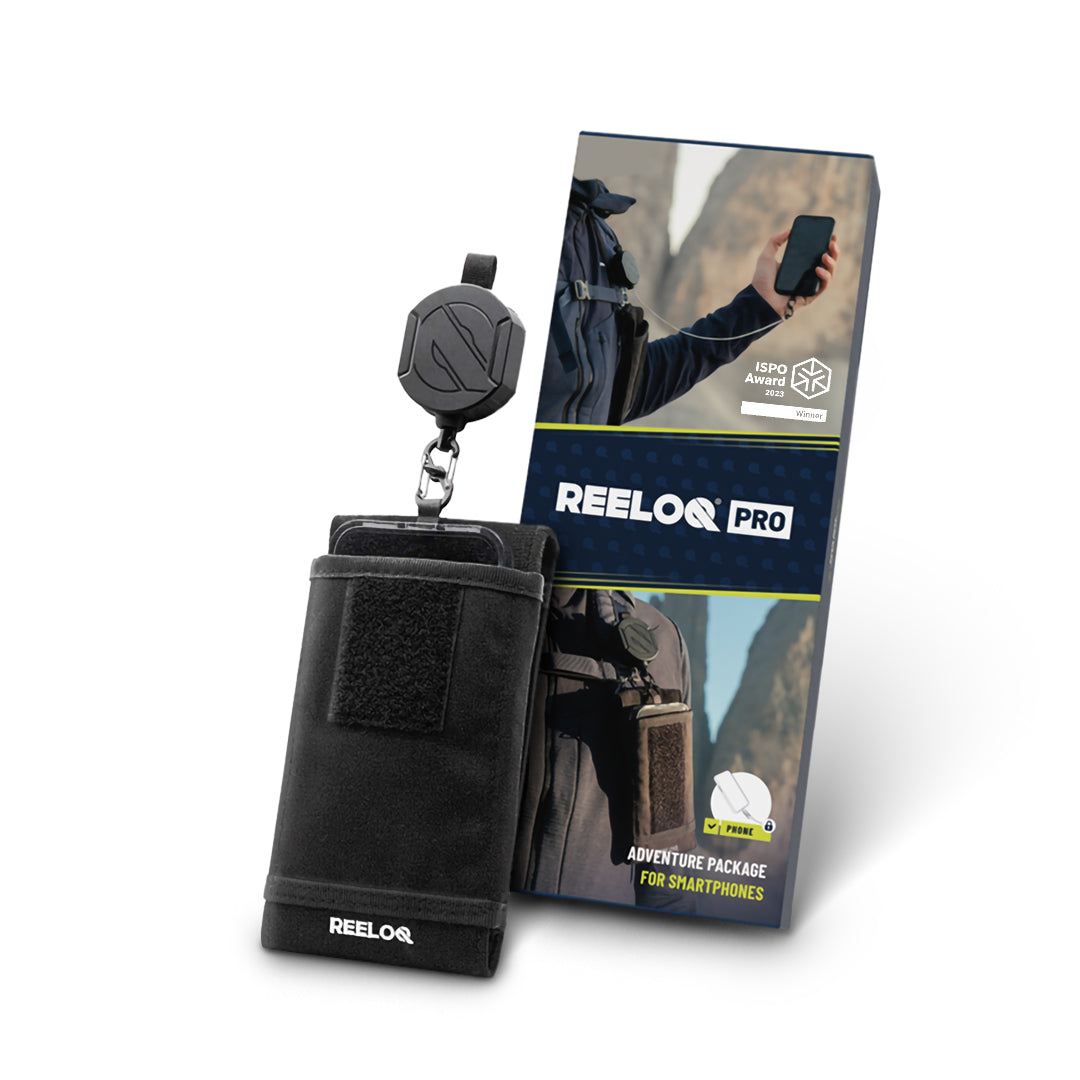
Reeloq Smartphone Securing System
If you want to take great photos on a via ferrata without worrying about losing your phone, Reeloq is the best tool for it. It’s a smartphone-securing system that allows you to use your phone on any adventure. This has been a great addition to my tool arsenal.
Shop on: REELOQ
Other hikes and via ferrata near Cortina D’Ampezzo
More travel and hiking resources in the Dolomites
- Photography spots in the Italian Dolomites
- Regions in the Italian Dolomites
- Itineraries for the Italian Dolomites
- Via ferratas in the Italian Dolomites
- Day hikes in the Italian Dolomites
- Hut-to-hut treks in the Italian Dolomites
Support my website!
Hi Reader! If you found any of my articles about the Dolomites useful please consider using the affiliate links below (at no extra cost) when booking your holiday. Thank you
- Reserve your hotel with Booking.com
- Book your rental car with Discover Cars
- Buy your outdoor gear with Backcountry.com (US readers)
If you have any questions, leave them in the comments below!
Hi Marta!
My wife and I are headed to Dolomites and Tyrol areas next month. Thanks for all of your posts, it’s been very helpful in our planning. Hopefully we will be able to get Marino Bianchi in, but it’s a big trip already! Have you had a chance to climb the Stubai glacier ferrata?
Thanks!
-Jeff
Hi Jeff. I live in Tyrol and have done quite a few ferratas in the area, but none in the Stubai Valley so far. Have fun on your trip!
Hello again!
Your post was so helpful for our adventures! Marino Bianchi was great, the scree wasn’t so bad on the way up but oh my was that a long slog. We went to see the bridge on Ivano Diabona for kicks. Ra Bujela was a great warm up on our first afternoon in town, and we did Punta Ana/Giuseppe di Olivieri today. Lagazuoi Tunnels tomorrow and then to Tyrol! Thanks again for all of your posts.
Hi Jeff! Amazing! I am so glad to hear you are having a great time! Enjoy Tirol too! It’s my home 🙂
Hi, Marta. Whenever I visit your blog, I am in awe of the photos and info you provide. Thank you again!
I am going to do this via ferrata Marino Bianchi with Ivano Dibona.
I will start around 6am at Passo Tre Croci and walk all the way up to the saddle(Forcella Staunies) and do the Marino Bianch first and back to the saddle and go for Ivano Dibona.
1. How long do you think it takes from the saddle to Cristallo Di Mezzo and back to the saddle?
2. Should I take the same route, back to the saddle? or Should I go further to go back to the saddle?
By the way, I am going to spend the night in Buffa di Perrero Bivacco.
3. By what time do you think I will arrive at the Bicacco, considering I am a just regular fit / mountain lover!
So no worries going back down!
Hi! Thanks for your lovely feedback. I can only tell what it took me. I needed 3 hours from the Saddle to the summit and back to the saddle. Including all the photos along the way.
Yes it is the same route up and down on the Marino Bianchi Via ferrata.
From the Saddle you should count another 2+ hours to the Bivouac. So all in all I reckon I would need around 8-9 hours in total. I consider myself a mid-speed hiker. I hope that helps!
Hi, Marta! I am planning a quick detour to around the Dolomites region first week of June, and was wondering if any of the via ferrata mentioned above is doable between June 3-5th? And if so do you know of any guide or groups available since I’m flying solo?
Oh, and thank you for sharing inspiring adventures. They are all noted down on my bucket list!
Hi Kristina, Thanks for visiting. I can’t predict the snow conditions I am afraid. Generally anything that is South Facing should be doable at this time. Via ferrata Degli Alpini Al Col Dei Bos near Cortina should be. Marino Bianchi is very high so I wouldn’t bet on that one. Especially due to a very long approach.
Another one you should look into near Cortina is Ra Bujela. It’s a short one, but it faces South so there will be no snow on it.
I hope that helps!
This blog is absolutely gorgeous, thanks so much for all the great info and photos!
Thanks Jeff for your lovely feedback!
I just came across your page and I love all of the information. I will be going to the Dolomite region for the first time on 8 November (13 days!!!!). I am not going to do any strenuous climbing, unfortunately, but I will be doing a lot of photography. I am a large format photographer and work with 4×5 inch sheet film. I will be bringing my camera and lots of black and white film with me to shoot as much as I can. I’ve been looking at various areas and the more I look, the more new areas I find. If you only had 1 week and wanted as many beautiful views of the amazing mountains as well as the clouds (to prevent boring skys in photos and to make the images more dramatic) what would you recommend? I will be flying in from Boston in the US into Venice and then renting a car. Would a small rental car be ok? Or should I get something more mid size or larger like SUV?
Hey Michael. Thanks for stopping by on my site. We had some fresh snow on the peaks in recent days and the conditions are amazing. If I only had a week and was looking for places that are easy accessible I think I would head to a town in Val Pusteria (San Candido, Sesto, Dobiacco, Monguelfo). It has access to many amazing spots and a lot of other lovely valleys branch off of it. My second choice would be Val Gardena (great access to Seceda, Alpe Di Siusi or Santa Maddalena – the 3 most beloved locations for photographers). Yes a small car will be ok, as long as it has enough horsepower otherwise you might struggle with driving up the mountain passes. Make sure the car is equipped with a set of snow chains. Carrying snow chains is required from the first week of November until April in the Alpine regions. I hope that helps!
Hi Marta. Back to Cortina again shortly with plans for Marino Bianci, Ivano Dibona and Giovani di Lipella. Returning to your website pretty much daily now in anticipation of the trip. Huge thanks again for all the great info and images. We plan on a bivvy at Rf Lorenzi which should be interesting considering the recent weather but will let you know how we get on! Best wishes. Tom
I am so glad to hear it Tom. Stay safe at rifugio Lorenzi. The last time I was there was almost 4 years ago and the terrace was already in a pretty bad shape. I imagine it has gotten a lot worse since then.
Hi
I used your website to plan a trip to the dolomites a couple of years ago – Giro del Sorapiss in a day (good advice on water!) – and it is great to return to it now to plan for 2023 Great articles and incredible photos – keep up the awesome work.
Best wishes
Hi Tom! Thanks so much for coming back to my site! I will be returning to the Dolomites many times next year as I now am based in Tirol! I can’t wait to explore even more of these ranges.