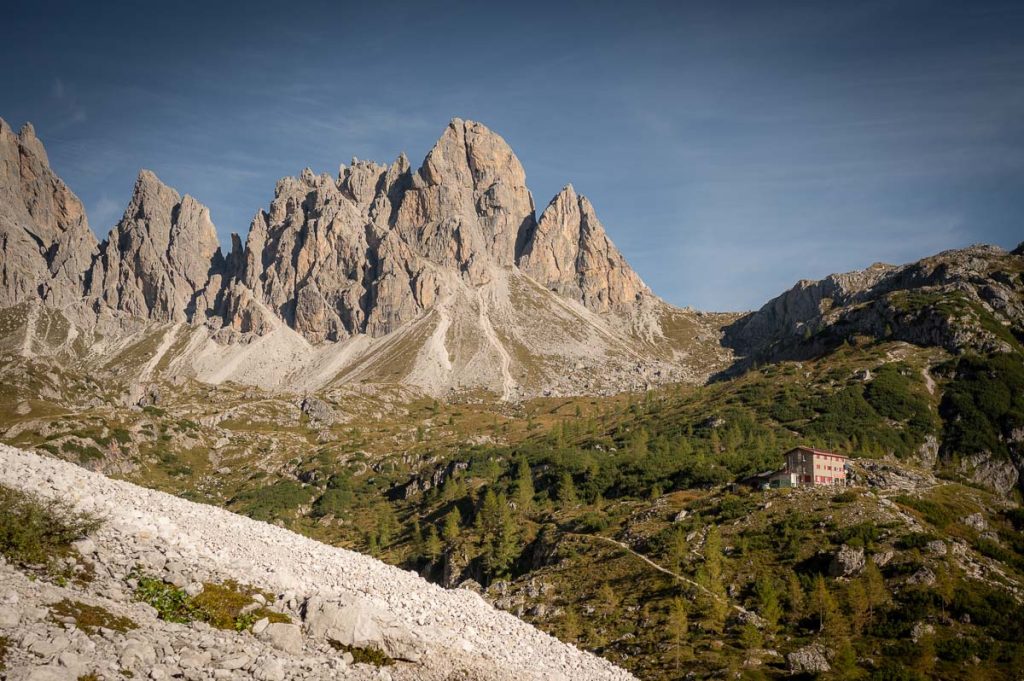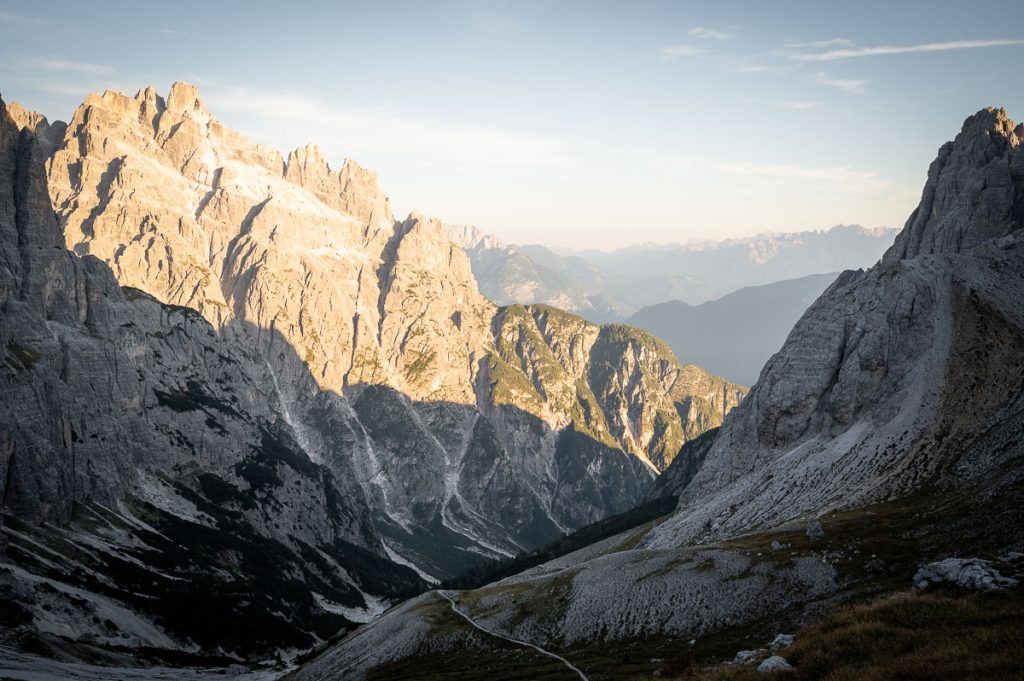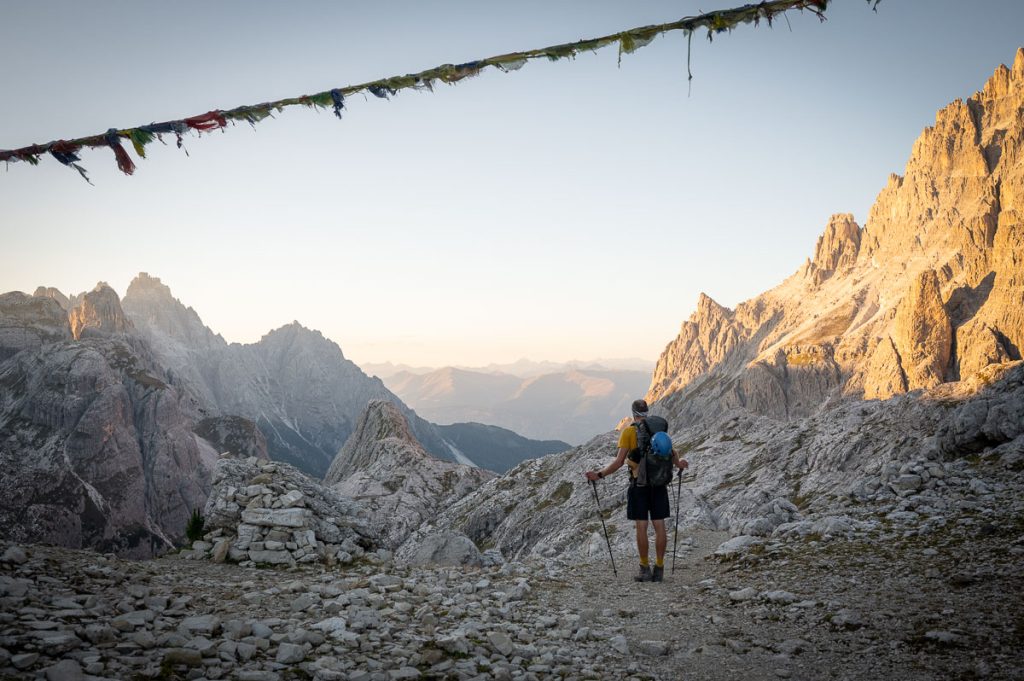
The via ferrata Roghel & Cengia Gabriella combo is one of the most challenging routes I have done in the Dolomites. What makes it stand out from the rest is the solitude that it offers, something that is hard to find these days in the Dolomites.
Total roundtrip distance (incl. approach)
26.5 kilometres / 16.5 miles
Elevation gain
1750 meters / 5740 feet
Difficulty
Advanced (C/D)
Time required
12-14 hours
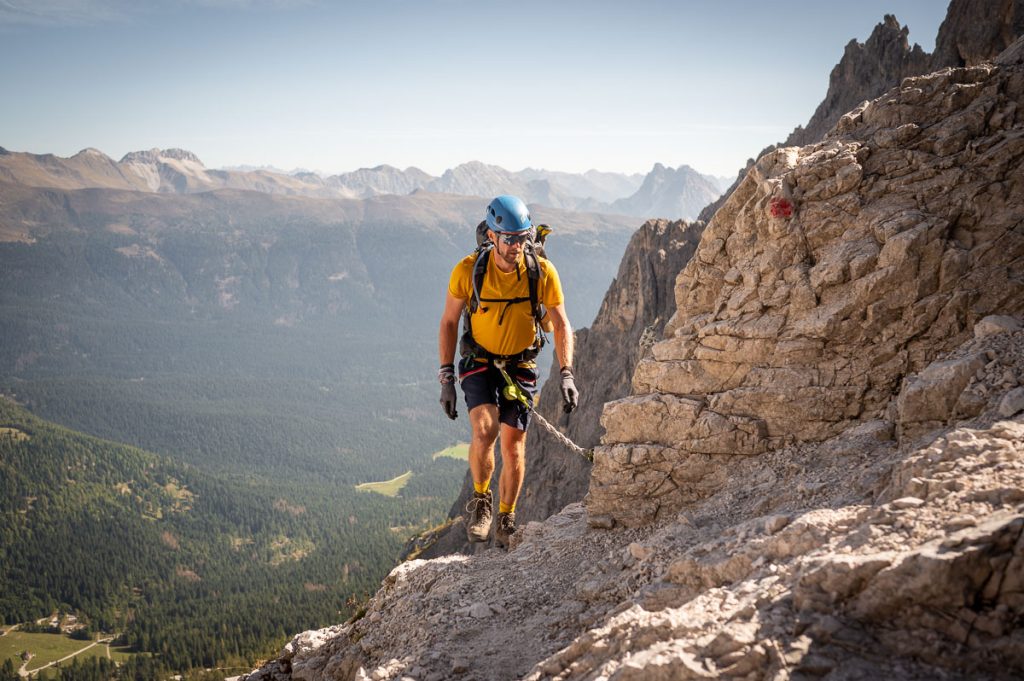

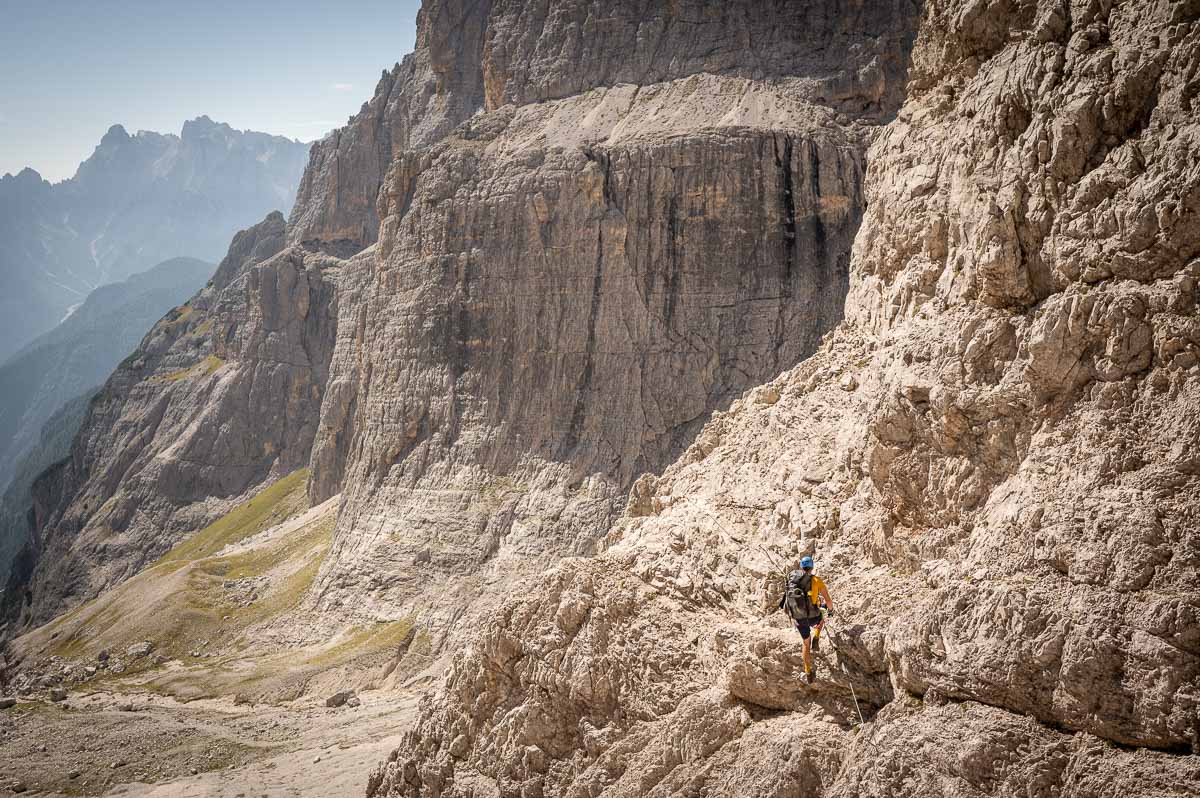
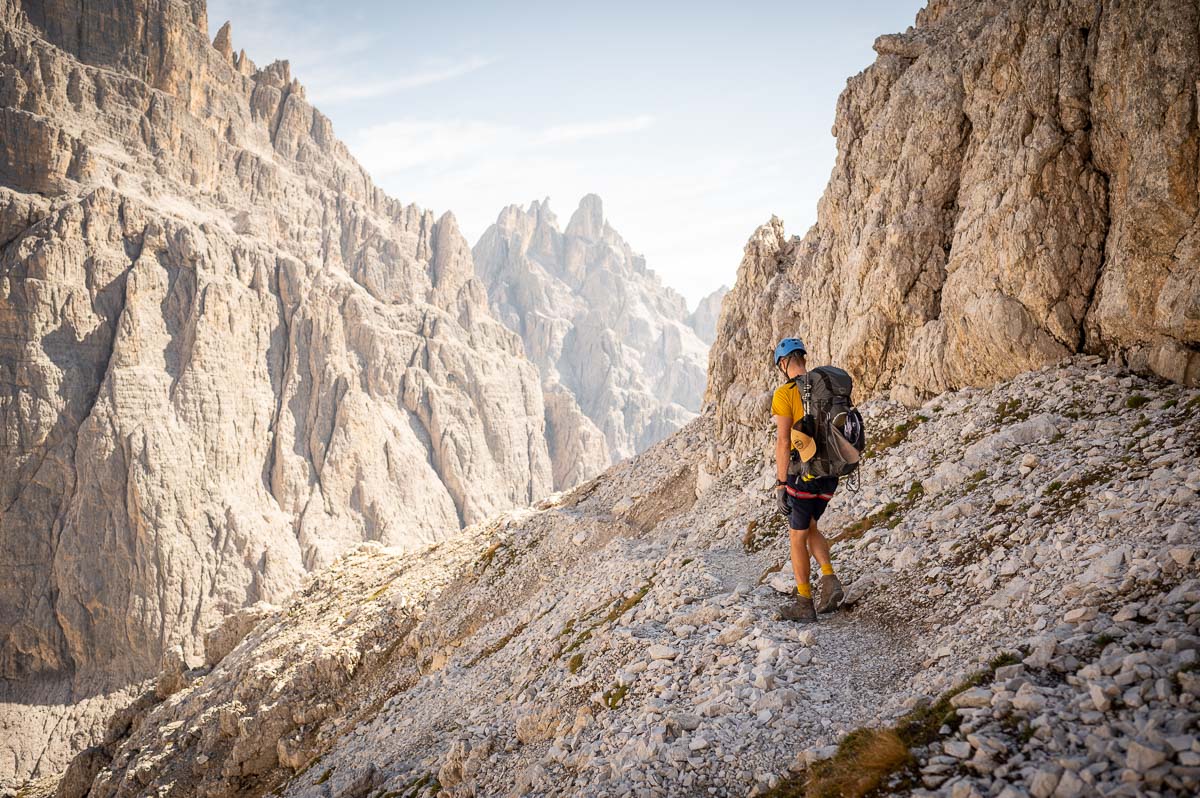
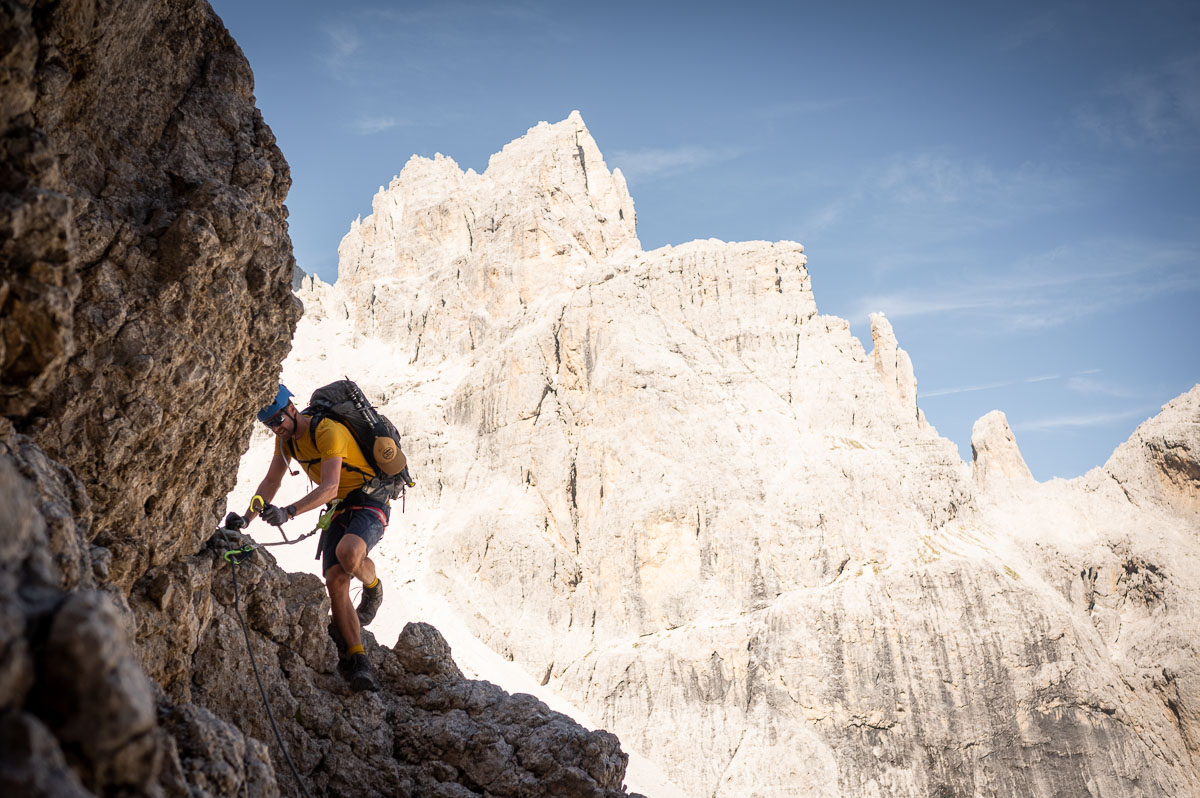
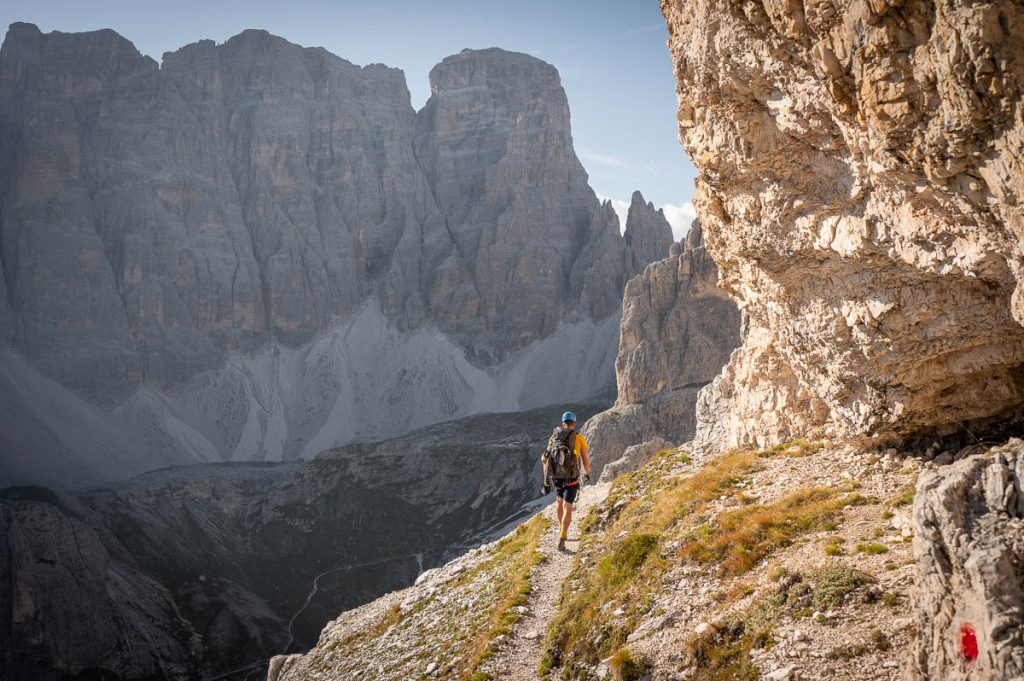
Overview of the via ferrata
Via ferratas Roghel & Cengia Gabriella are located in the wonderful Sesto Dolomites, part of the Popera mountain group. While you can do them separately, it is best to combine them due to the logistics of transportation. Because of the length and significant elevation gain, I highly recommend planning a stay for at least one night in one of the huts along the route.
The map of the via ferrata
Above is the interactive map of the via feratta Roghel & Cengia Gabriella combo. Click on the top left-corner icon to open the map legend. You can also click on individual stages, and a window will open, displaying the distance and elevation gain for each stage.
Important info about the via ferrata
Via ferratas, Roghel & Cengia Gabriella traverse high alpine environments and many gullies, where snow lingers well into the summer. I tackled this route at the end of September, which was ideal. All the snow was gone, and the afternoon storms common during the summer were gone.
When to go: July-September
Trail numbers: 124, 110, 103, 102
Highest point: 2650 meters / 8694 feet
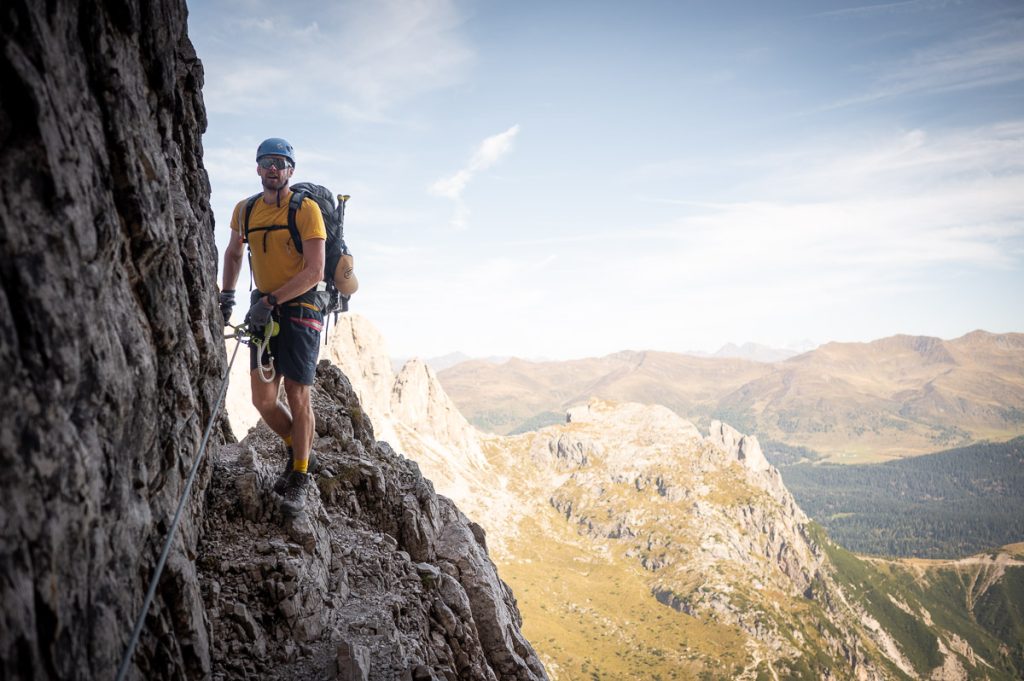
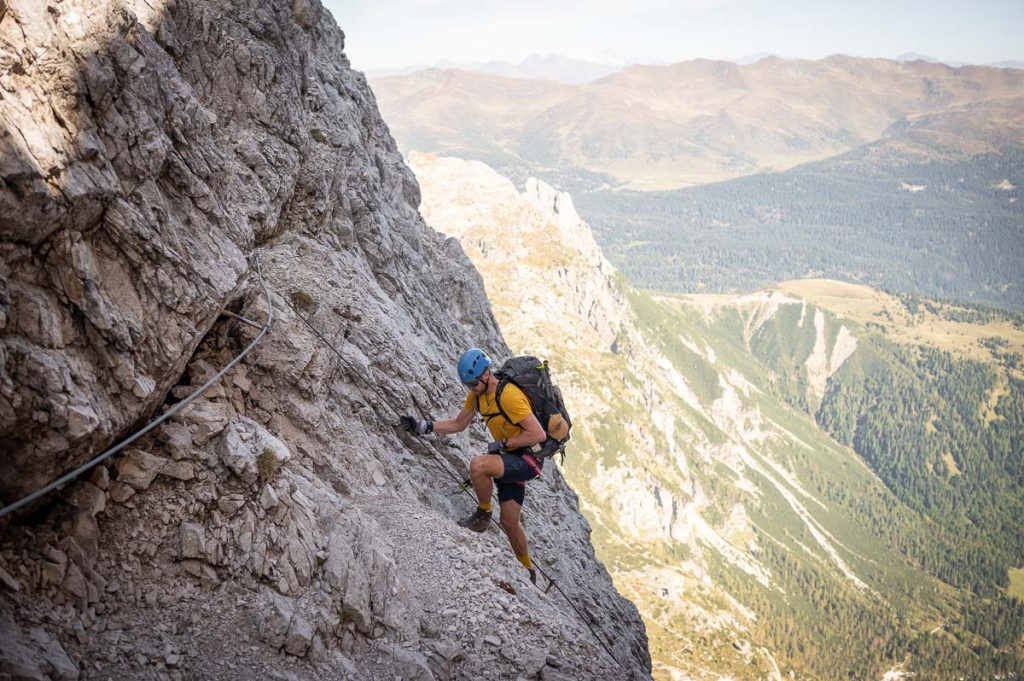

Stages of via ferrata Roghel & Cengia Gabriella
- Stage 1: Kreuzbergpass to Rifugio Berti
- Distance: 4.2 km / 2.6 miles
- Elevation gain: 388 m / 1274 feet
- Elevation loss: 163 m / 534 feet)
- Time required: 1.5 – 2 hours
- Stage 2: Rifugio Berti to the start of cables
- Distance: 1.87 km / 1.2 miles
- Elevation gain: 467 m / 1534 feet
- Elevation loss: 58 m / 190 feet)
- Time required: 1-1.5 hours
- Stage 3: Via ferrata Roghel & Cengia Gabriella to Rifugio Carducci
- Distance: 11.7 km / 7.2 miles
- Elevation gain: 707 m / 2319 feet
- Elevation loss: 761 m / 2497 feet)
- Time required: 7-8 hours
- Stage 4: Rifugio Carducci to Rifugio Zsigmondy
- Distance: 2.53 km / 1.6 miles
- Elevation gain: 201 m / 660 feet,
- Elevation loss: 254 m / 834 feet)
- Time required: 1 hour
- Stage 5: Rifugio Zsigmondy to Hotel Dolomitenhof (finish line)
- Distance: 5.93 km / 3.7 miles
- Elevation gain: 0 m / 0 feet
- Elevation loss: 743 m / 2438 feet
- Time required: 1.5 hours
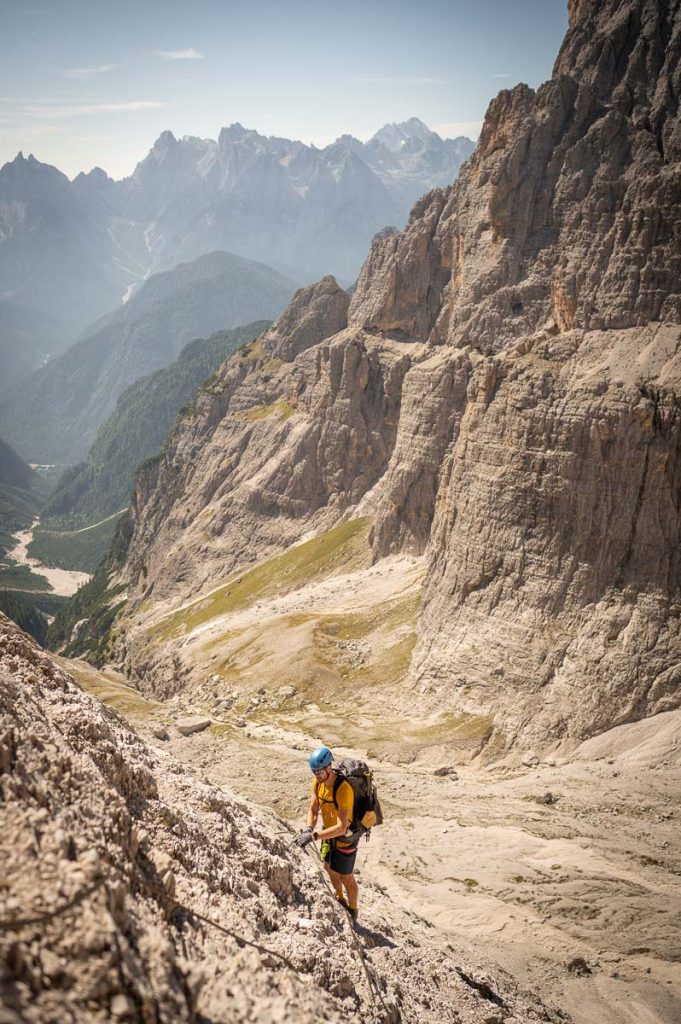
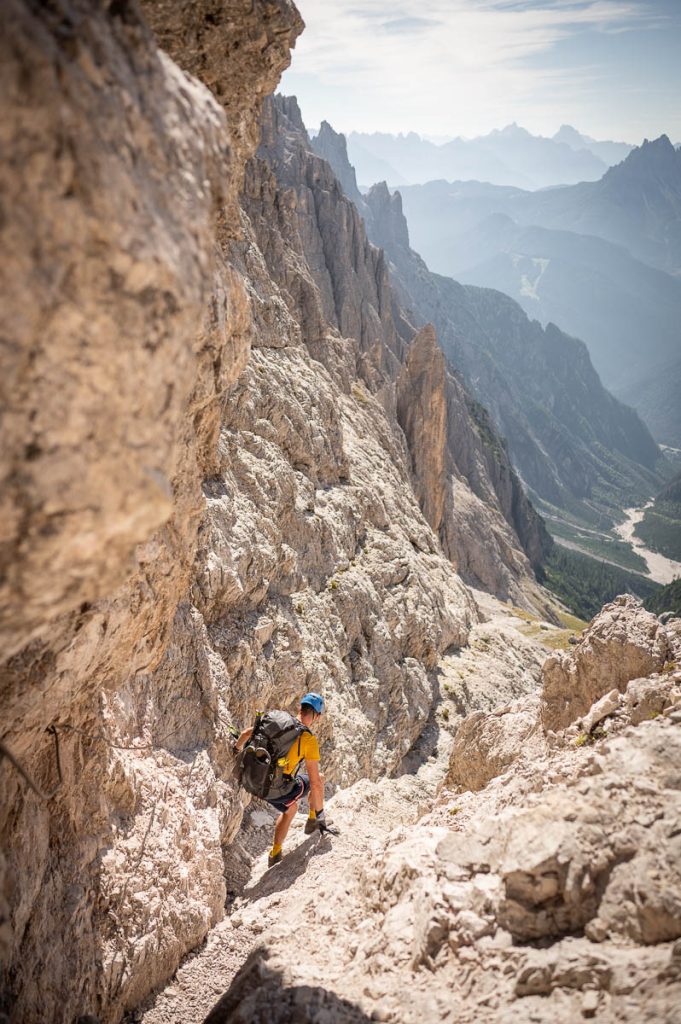
Getting there
This overnight adventure starts at Kreuzberg Pass (Passo Monte Croce), 8 kilometres (5 miles) from Sesto, the nearest town. It finishes in the Fiscalina Valley, near the Dolomitenhof Hotel. Both locations are 8 kilometres (5 miles) apart.
By bus
Both Kreuzberg Pass and Fiscalina Valley can be reached via Public Transport. The bus stop names are Moos (Sexten), Kreuzbergpass and Moso (Sesto), Pian di Val Fiscalina, respectively. Check the connections on the Süd Tirol Mobil info website.
By car
If you travel by car, I recommend leaving the car at Kreuzberg Pass due to seasonal driving restrictions in the Fiscalina Valley. You can read about them here. Once you finish the route, you can catch a bus back to Kreuzberg Pass.
Overnight stay & dining possibilities
There are four alpine huts along the route: Rifugio Berti, Rifugio Carducci, Rifugio Zsigmondy and Rifugio Fondovalle. The best option for an overnight stay is Rifugio Carducci, which lies approximately two-thirds of the way. Rifugio Zsigmondy is another 1 hour from Carducci and two hours away from the finish line. If you plan to start late on day one, stay in Rifugio Berti instead.
TIP: If you have never stayed in an alpine hut, here is everything you should know beforehand.
Around the halfway point is a tiny alpine bivouac (Bivacco Battaglion Cadore). It is visible along the route but requires a slight 15-minute detour. If you want to stay there overnight, you must bring enough food, water, and a sleeping bag.
All huts and the bivouac are marked on the map.
TIP: Via ferratas Roghel & Cengia Gabriella connect excellently with other via ferratas in the area. You can combine them all into a 4-day Dolomiti Sesto Circuit.
Where to stay nearby
The nearest towns to the trailhead are Moso, Sesto & San Candido. The latter is located in the Puster Valley, a great starting point for many hikes and via ferratas.
Best Value
Basic, self-contained alpine apartments in the centre of Sesto are within walking distance of many local restaurants.
Top Rated
Cabin-like apartments with balconies overlooking the Sextener Dolomites. Access to a Sauna is a great bonus.