Even though the Dolomites cover only a small area of Italy, the number of activities and beautiful places around here makes it difficult to narrow down the choice. While planning a trip, you will have to face reality sooner or later. You can’t see it all. In this article, I give you step-by-step tips on planning a perfect holiday in the Dolomites.
Dolomiti Trip Planning Checklist
1. Decide what month to visit
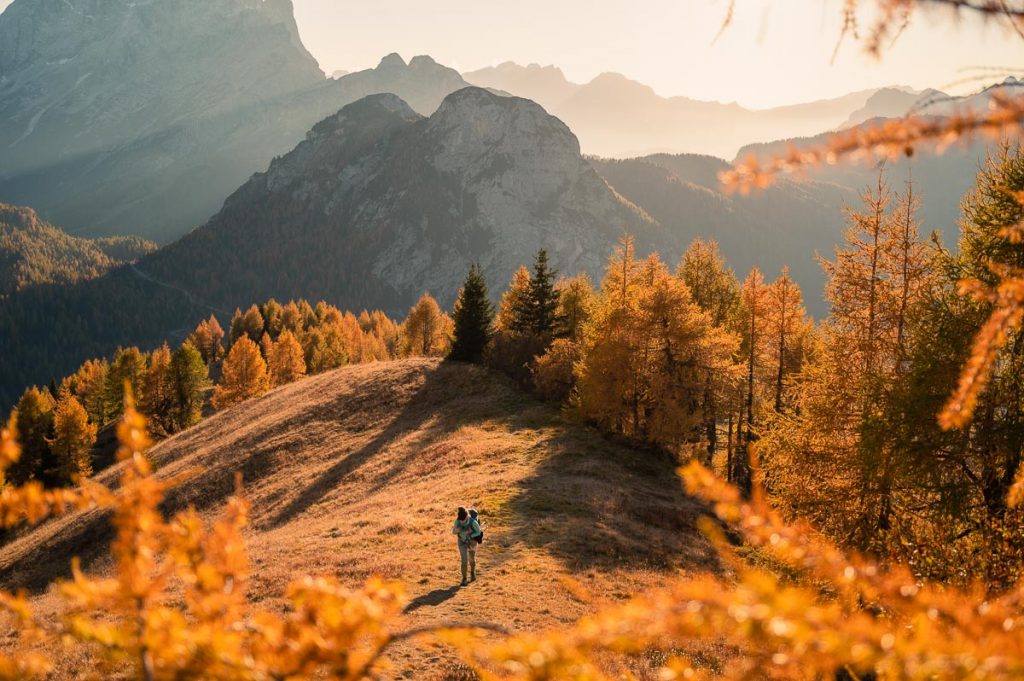
You can visit the Dolomites year-round. I recommend that you plan your holidays according to your interests.
- If you plan on hiking or doing via ferratas, go between June and October,
- If you want to include overnight treks with stays in alpine huts, then plan your visit for no earlier than mid-June until the end of September (in some places, the beginning of October)
- If you want to go skiing, then plan your trip between the December and Easter holidays (note that those dates change yearly)
- If you love biking, you can come as early as May. Many beautiful biking trails lead through the valleys. May is reasonably okay to visit for hiking, but you must stick to low-elevation trails or valley walks.
- Don’t like the heat and crowds? Go in October. This is my favourite month to travel the Dolomites, and I created a dedicated autumn hiking itinerary you can follow.
TIP: Avoid November. It’s a dead season, and most hotels and restaurants are closed. July and August are very busy; hotels and alpine huts book out months in advance.
2. Decide how you will get there
If you live in Central Europe and own a car, it is simple: you can drive. However, many of you live overseas and will need to travel by air.
Because the Dolomites are in Italy, the obvious choice might seem to be to fly to one of the cities in Italy, but that’s not always the most optimal or budget-friendly way. The closest airports to the Dolomites are:
- Verona (Italy)
- Innsbruck (Austria)
- Venice Treviso (Italy)
- Venice Marco Polo (Italy)
- Munich (Germany)
- Milan Bergamo (Italy)
- Milan Malpensa (Italy)
Munich, being the most significant international airport, might offer the best connections. The drive from Munich to the Dolomites also takes you across the Austrian Alps, and the views along this route are excellent. You could even squeeze in a one-day visit to Innsbruck on the way.
Venice Marco Polo should be your choice if you don’t plan on hiring a car. There are direct shuttles from the airport to Cortina D’Ampezzo, one of the best towns in which to base yourself in the Dolomites.
Verona is a great place to fly to because it is super close. However, Verona airport is tiny, so that the connections will be limited. You could catch a train from Verona to Bolzano and then travel by local bus.
3. Choose your transport

Should we rent a car for our trip to the Dolomites? That’s the most common question I receive from my readers. I wish there were a straight answer to that. There are pros and cons to using public transport and renting a car. You should consider some points when choosing the right option for you.
Public transit
The roads in the Dolomites are often narrow and windy, so it takes specific skills to drive them. Go with public transport if:
- You are not a confident driver,
- You want to do a multiday hike that starts and ends in a different location,
- If you plan to stay only in one region, many regions offer regional travel cards, which include public transport and cable car transfers.
TIP: Public transport is very limited during shoulder seasons. If your trip is in May or October, then rent a car.
Renting a car
Choose a rental car if:
- You are a photographer, and getting to certain spots very early or late is important to you,
- You value freedom and don’t want to be bound to schedules,
- You are travelling in a bigger group (3+). It will be more cost-effective.
TIP: Look for a vehicle that will suit your budget and requirements on Discover Cars. Choose a car with enough horsepower to drive up steep mountain passes.
4. Prioritize what you want to do and see

Are you the crazy outdoor type who can’t sit still for a minute, or a mellow type who likes to wander around towns and take gondolas to the viewpoints?
If you answered yes to the first one, the best option would be a multiday hike. It will also be the most budget-friendly. There are many hut-to-hut hikes in the Dolomites to choose from.
If dragging a heavy backpack through mountain passes and sleeping in dorms isn’t for you, I recommend sticking to one or two regions of the Dolomites. You can stay in a hotel and plan walks, hikes, or via ferratas daily.
5. Pick a region
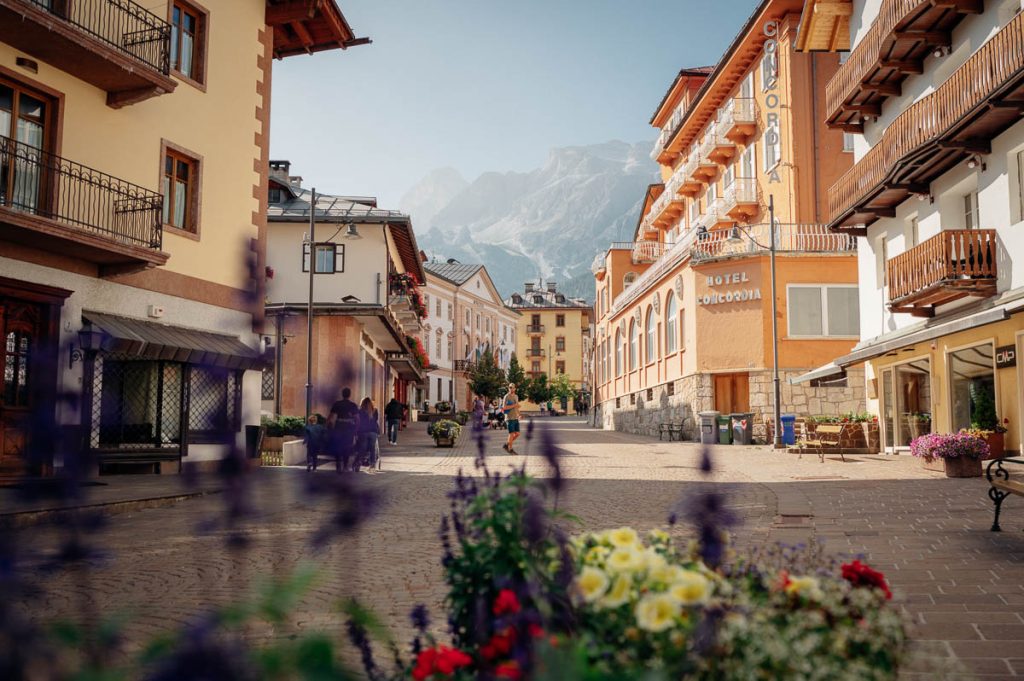
Speaking of regions. Many of you have trouble deciding where to base yourself in the Dolomites. Below are my recommendations. Each link will take you to a guide that includes the best towns, hikes, via ferratas, and photography spots in each region.
- Cortina and Central Dolomites
- Puster Valley
- Gardena Valley
- Fassa Valley
- Funes Valley
- Primero Valley
- Badia Valley (Alta Badia)
TIP: You can also view my article about my favourite towns in the Dolomites.
6. Get some maps
Depending on which region you visit, you will need a topography map. For example, if you stay in Val Gardena, you can get the Tabacco Map no. 05.
Map no. 06 is perfect for trails in Val Di Fassa and Rosengarten Nature Park. If you are only hanging around Tre Cime Nature Park, get the tobacco map no. 10. I always tell you what maps to get in each article dedicated to hikes, regions, or via ferratas.
7. Book your accommodation
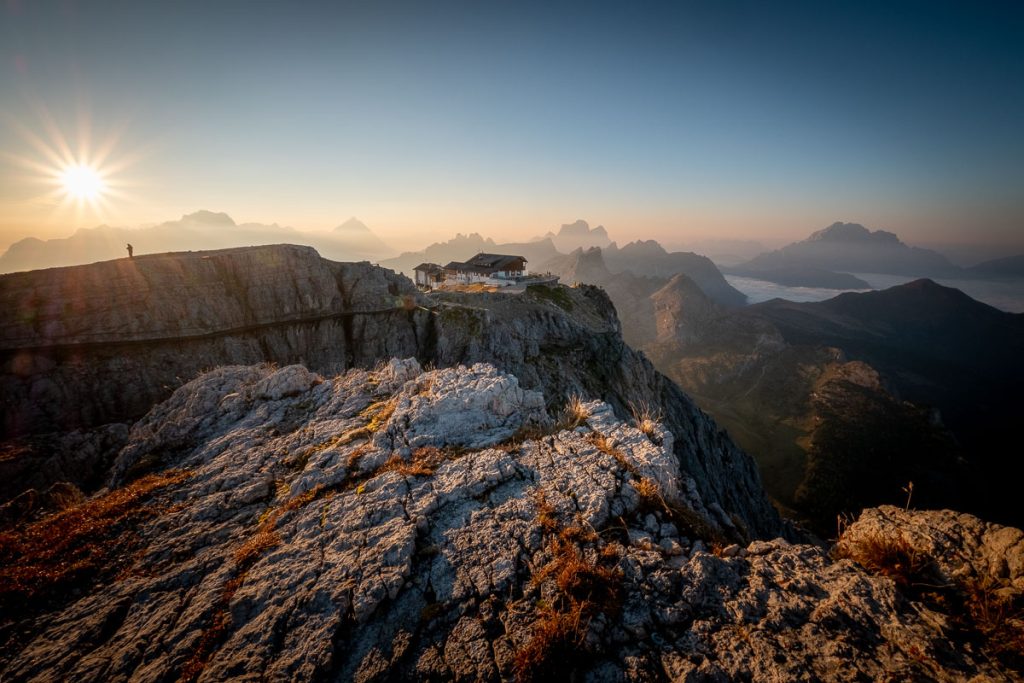
Sticking to one or a maximum of two regions in the Dolomites might be better because of the limitations many hotels impose on their guests. For example, some have a 3-night minimum stay.
It is also much more relaxing to stay in one location for a few nights instead of checking in and out of your accommodation daily.
It’s not uncommon to book accommodation with a half-board catering option. This means that in addition to breakfast, you also receive dinner during your stay. It is either a buffet or a preplanned 3-course menu.
I always use booking.com when I search for accommodation. It allows you to set your budget and tick all the boxes that are important to you (for example, type of accommodation, dog-friendly, including spa, etc.).
Important: Please refrain from using Airbnb or booking accommodation from private hosts. As a local living in the Alps and struggling with astronomical rent prices, I greatly advocate sustainable tourism.
8. Choose your activities
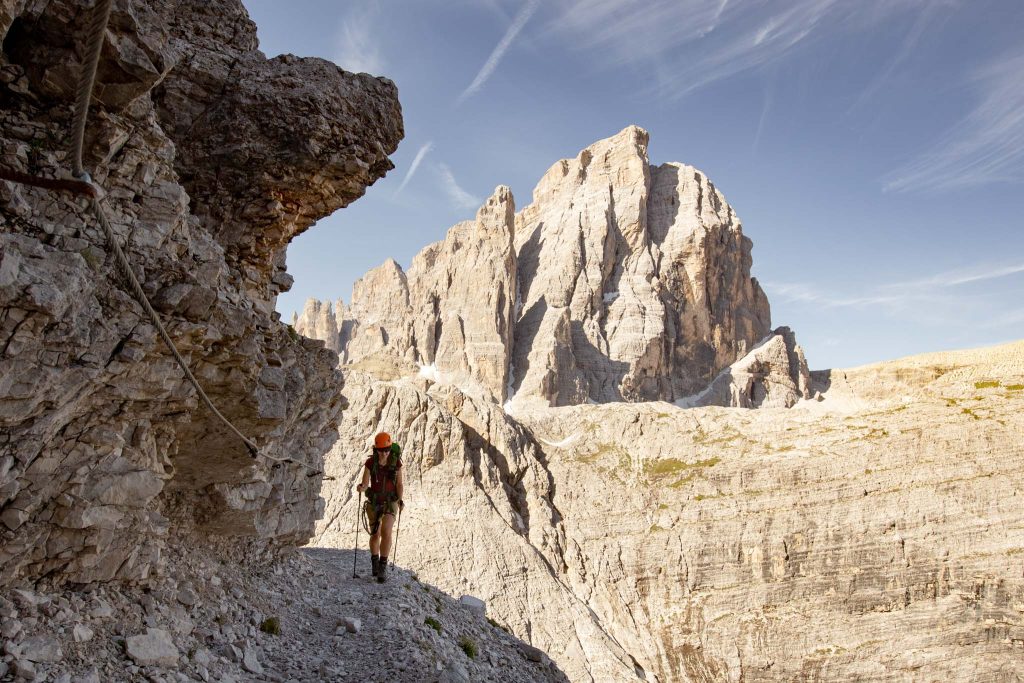
Now that you’ve picked the region, transport, and hotels, it’s time to plan your days. A lifetime isn’t enough to walk every trail in the Dolomites, and the choice is quite overwhelming.
My advice is to don’t try to pack too much. If you are staying for a week and want to spend every day outdoors, plan at least a day’s rest. Not taking rest is something I am often guilty of myself. The truth is you will never be able to see it all.
Dolomites are famous for the many via ferrata routes set up in the mountains. Try at least one. There are plenty of beginner routes to choose from.
TIP: If you’ve never done a via ferrata before, go to my beginner’s guide to ferrata climbing.
9. Pack for your trip to the Dolomites
I created a specific hut-to-hut packing list for the Dolomites, but it is just as valid if you are staying in hotels and plan on doing day hikes or via ferratas only. The only extra outfit you may need is a pair of jeans for an evening outing. The idea behind this packing list is to have all the essentials with you and not overpack, something many of us are guilty of.
10. Enjoy your trip, and don’t stress about things you can’t control
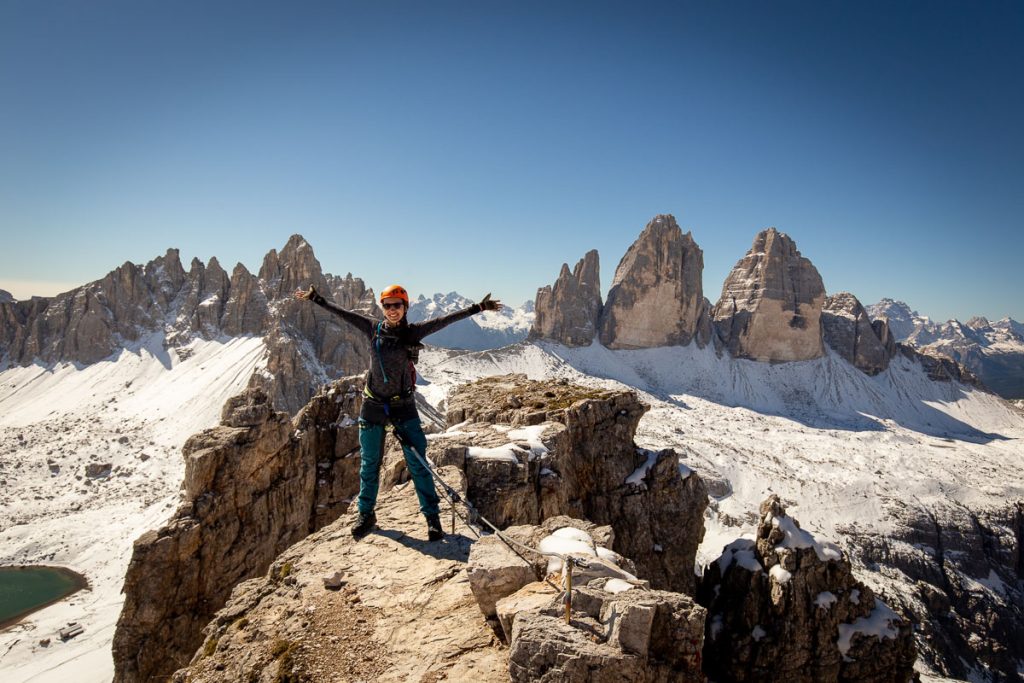
Weather forecast is not ideal? The train was cancelled, and you will arrive a bit later, or there is traffic on the road. These are the things we don’t have much control over.
If life gives you lemons, make a lemonade. You are privileged enough to travel to one of the most beautiful regions in the World, so don’t take it for granted, even if the conditions aren’t ideal. I am sure you will make memories that will last a lifetime.
Support my website!
Hi Reader! If you found any of my articles about the Dolomites useful please consider using the affiliate links below (at no extra cost) when booking your holiday. Thank you
- Reserve your hotel with Booking.com
- Book your rental car with Discover Cars
- Buy your outdoor gear with Backcountry.com (US readers)
If you have any questions, leave them in the comments below!