
There are over 700 via ferratas in the Dolomites. Their history dates back to the 1st World War when soldiers set up intricate mountain routes to fight the enemy. Since then, frayed ropes have been replaced with steel cables, and the via ferratas have turned into adventure sites for people who want to take hiking to the next level. If you want to explore the world of via ferrata in the Italian Dolomites but are unsure which beginner routes would be good to start with, you have come to the right place.
Beginner Via Ferratas In The Italian Dolomites
I was a beginner just a few years ago. Still, after two full summer seasons in the Dolomites and my move to Tirol in Austria, I managed to tick off dozens of beginner, intermediate, and advanced routes. Here are a few that I consider great for novices.
TIP: Are you new to the via ferratas? Read my beginner’s guide!
The map of the routers
Click on individual icons, and the name and a link to an article about a via ferrata will pop up.
1. Via ferrata Gran Cir
Roundtrip Distance: 3.5 km / 2.17 mi
Elevation Gain: 380 meters / 1250 feet
Time Required: 2-3 hours
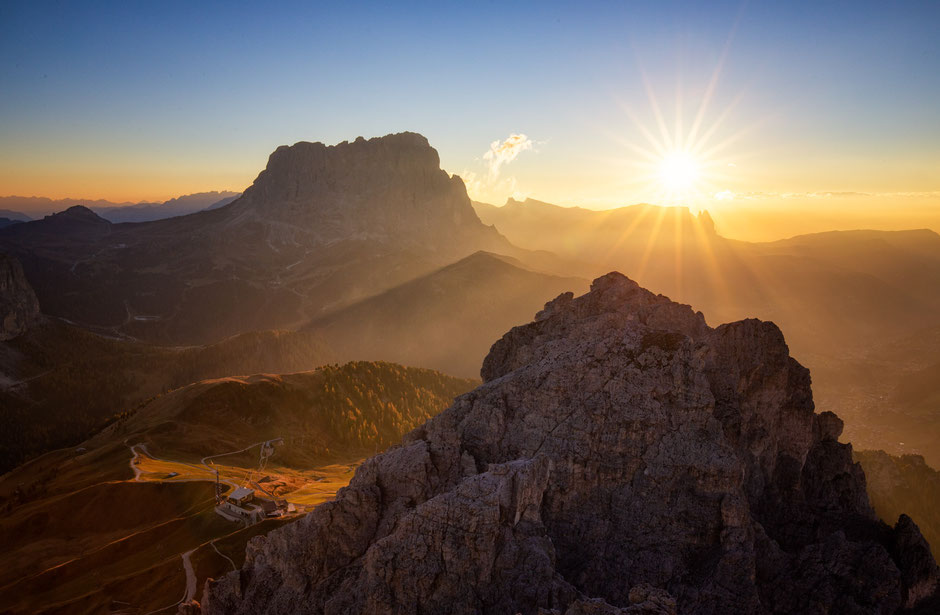
If you like getting great rewards for little effort, then Via Ferrata Gran Cir is for you. There is a good reason why this route is at the top of the list. It’s the easiest, and the ascent is only 60 to 90 minutes long.
Starting at Passo Gardena, one of the most photogenic mountain passes in the Dolomites, the route will take you to the top of Gran Cir mountain, where you can enjoy beautiful views of the nearby Sella mountain group and Sassolungo.
2. Via ferrata Innerkofler/De Luca
Roundtrip Distance: 9.9 km / 6.15 mi
Elevation Gain: 591 m / 1938 ft
Time Required: 5-6 hours
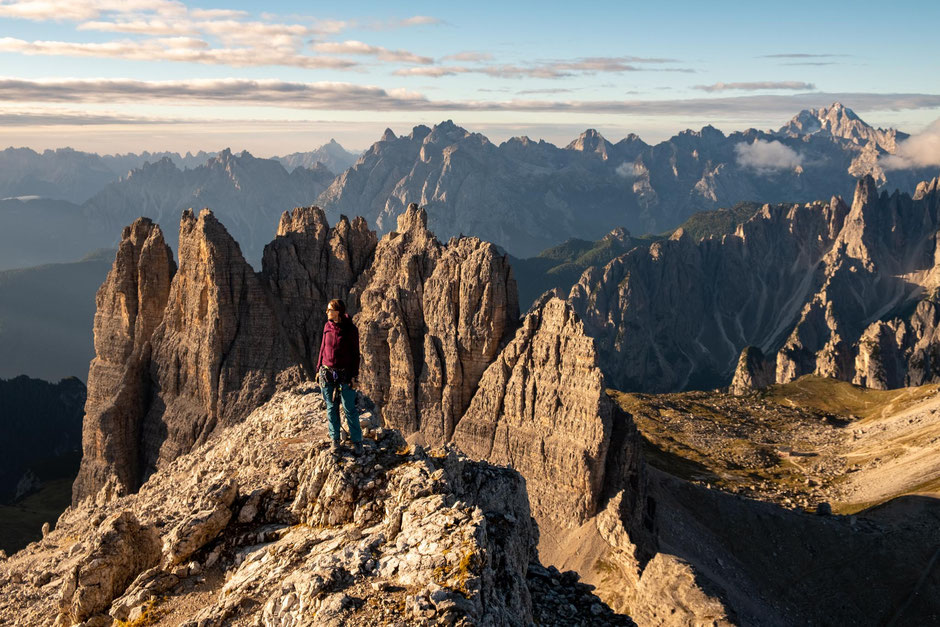
This gem is in the Italian Dolomites’ popular Tre Cime Nature Park. Via ferrata Innerkofler packs a hell of a punch considering it’s just a half-day excursion.
The Ferrata starts near rifugio Locatelli (Dreizinnenhütte), one of the best mountain huts in the Italian Dolomites. It then takes you to the summit of Monte Paterno, at the foot of which the refuge was built.
You can admire the famous three peaks from an elevated view and away from the crowds. Just make sure to leave early to have the summit all to yourself. Via ferrata Innerkofler isn’t exactly a hidden gem.
3. Via ferrata Passo Santner
Roundtrip Distance: 7.9 km / 4.9 mi
Elevation Gain: 875 m / 2870 ft
Time Required: 5-7 hours
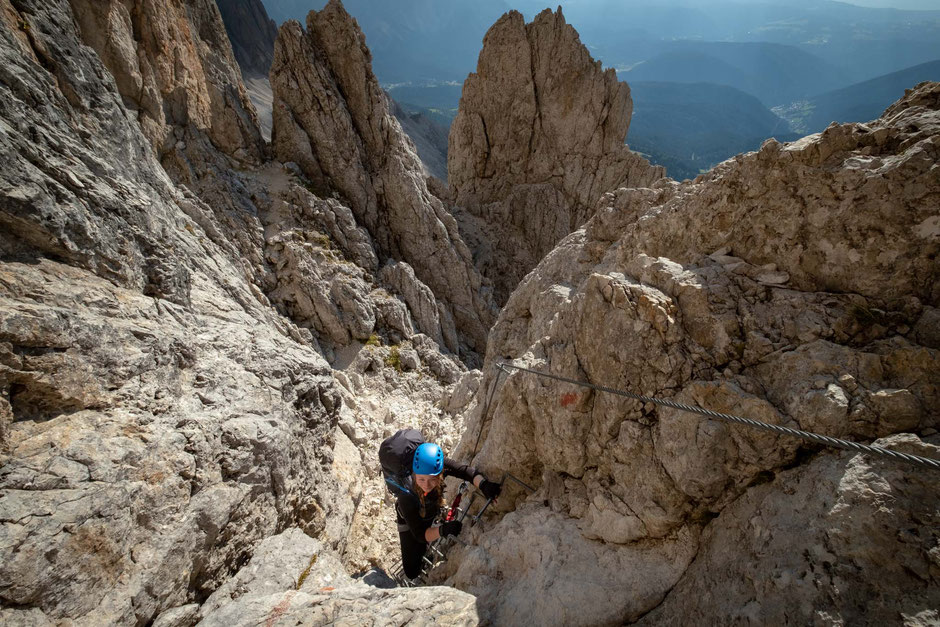
This one is a bit harder than the two previously mentioned via ferratas for a beginner route. However, I decided to include it in the beginner list because it never presents any scary exposure. The protection, in the form of cables and iron rods, is excellent from start to finish.
The real challenge is to focus on the route and not the amazing views surrounding you. Rosengarten Nature Park, where via ferrata Passo Santner ferrata is located, is known for its many dramatic spires, many of which are visible on this route.
The ferrata’s culmination is the Santner mountain pass, from which you can get an excellent view of the Vajolet towers—one of my favourite Dolomite photography subjects.
4. Via ferrata Catinnacio D’Antermoia
Roundtrip Distance: 16 km / 10 mi
Elevation Gain: 1252 m / 4108 ft
Time Required: 8-10 hours
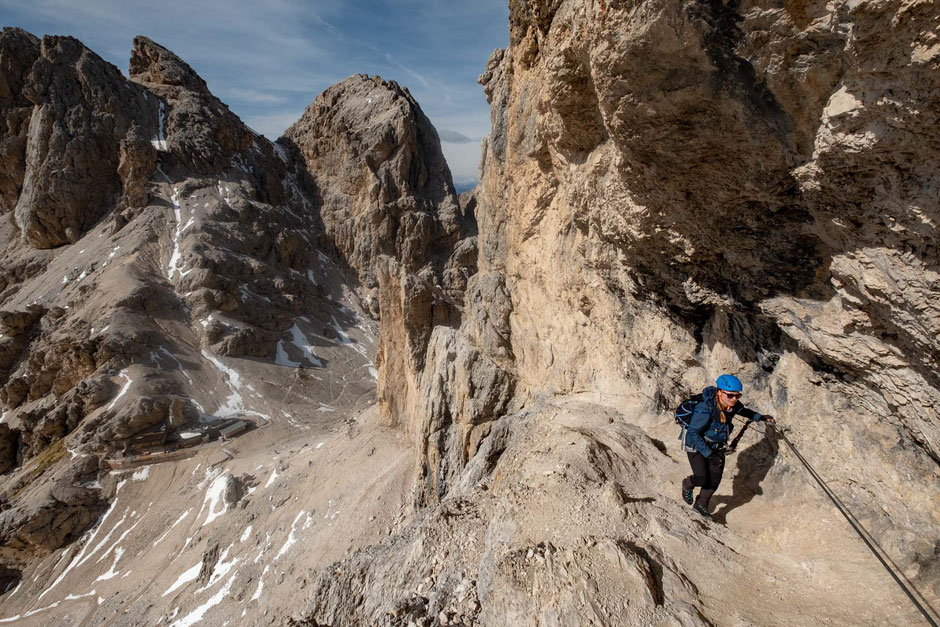
At 3002 meters, Monte Catinaccio is the highest peak in the Rosengarten group. Thanks to the beginner via ferrata Catinnacio D’Antermoia and the proximity of the nearby Passo Principe mountain hut, you can have its summit under your belt in just a few hours.
The route starts at Rifugio Principe, which is built on the mountain pass and has the same name. If you study the photo above, you will notice the hut. It’s the most interesting hut I encountered in the Dolomites because it’s built right into the side of the mountain.
This via ferrata doesn’t pose any significant challenges. The only real obstacle might be in your mind. Sure-footedness is a necessity on any of these routes.
5. Via ferrata Ra Gusela
Roundtrip Distance: 6.8 km / 4.2 mi
Elevation Gain: 337 m / 1105 ft
Time Required: 3-4 hours
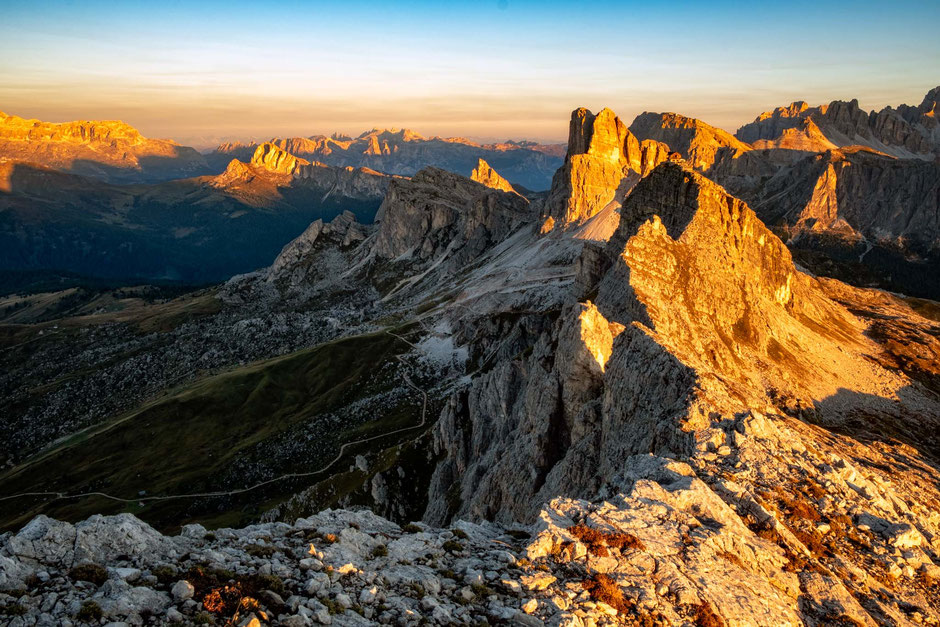
If you’ve researched the Dolomites, I am sure you’ve seen at least one photo of the Giau mountain pass (Passo Giau).
The mountain standing on the pass – Ra Gusela, is a beloved photography subject for many who visit this area. However, few realise you can reach its summit along the beginner’s via ferrata Ra Gusela.
There is nothing technical or complicated about this ferrata. The only scary thing is the few hundred meters high and nearly vertical walls on the other side of the mountain. Don’t worry, though, this is not the side you will be scrambling on.
6. Via ferrata Averau
Roundtrip Distance: 1.2 km / 0.75 mi (from Averau hut)
Elevation Gain: 230 meters / 750 feet (from Averau hut)
Time Required: 1.5 – 2 hours (from Averau hut)
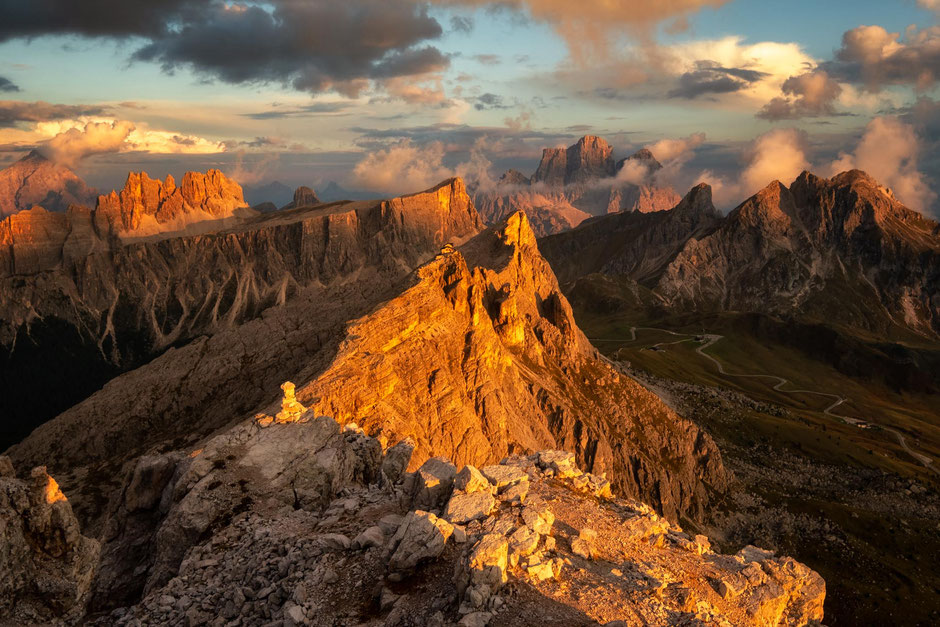
Monte Averau is just two peaks across from Monte Ra Gusela. If I were to single out my favourite beginner via ferrata, it would be this one. You may wonder why? It’s because of the views from the summit.
The cable section on this route is quite intense but very short. After that, it’s a straightforward path to the summit, where some of the best views I have witnessed in the Dolomites await you.
Several different approaches are available to reach Via Ferrata Averau. The route can also be connected with the previously mentioned Ra Gusela. Together, they will make for an exciting mountain day.
7. Via ferrata Sass Rigais
Roundtrip Distance: 12.2 km / 7.6 mi
Elevation Gain: 980 m / 3215 ft
Time Required: 6-8 hours
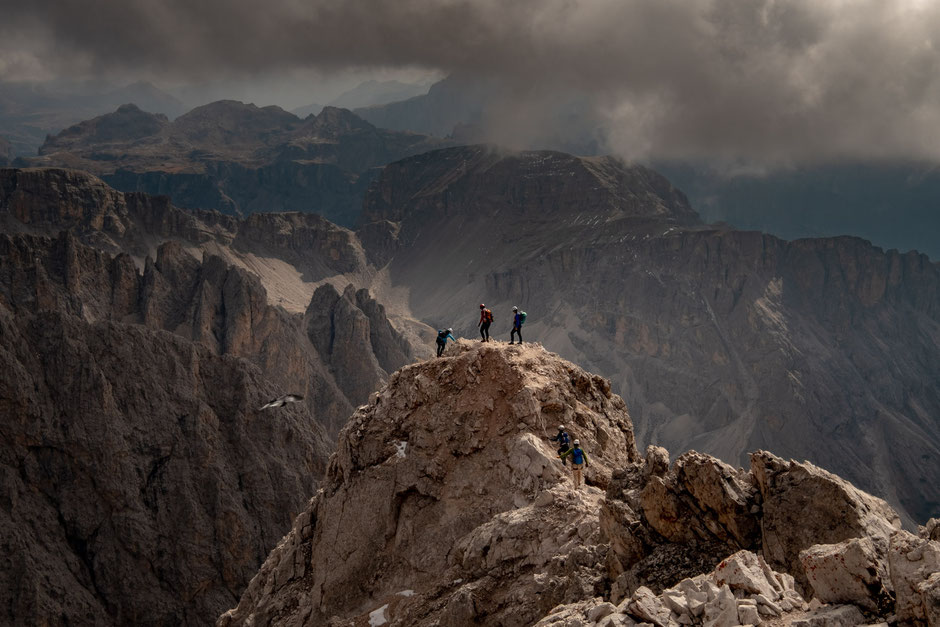
This great beginner via ferrata will allow you to summit the highest peak of the Seceda ridgeline—one of the most iconic photo spots in the Dolomites. The peak is called Sass Rigais and reaches over 3000 meters.
Due to a relatively long approach, this ferrata is a bit harder than the others mentioned in this article. The exposure along the cable section is also greater. I debated whether to include it on my intermediate list, but decided against it.
If you have a head for heights, you shouldn’t have problems completing this via ferrata. The route is straightforward, and there are always great spots to place your feet. For more information about this route, check out my other article.
8. Via Ferrata Sassongher
Roundtrip Distance: 6.6 km / 4.1 mi
Elevation Gain: 510 m / 1670 ft
Time Required: 3-4 hours
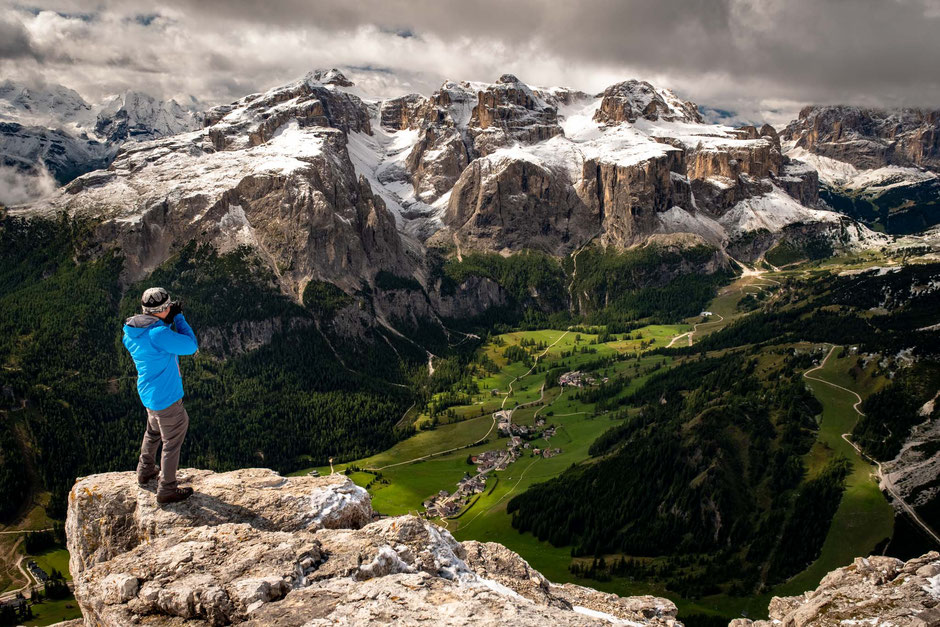
Sassongher is a distinct peak standing over the town of Corvara. It also lies within the borders of the Puez Odle Nature Park, home to the famous Seceda ridgeline.
When I first saw Sassongher, I thought it was unattainable for a mere mortal like myself. Looking at it from Corvara, all you see are 90-degree steep walls.
Luckily, the slopes on the other side of the mountain, where the path runs, are a lot more gentle, making the via ferrata Sassongher one of the easiest on this list.
The cable-protected section lasts for only around 100 meters. After that, you have another 30-45 minutes of switchbacks to reach the summit. The total round-trip time to the top is 3-4 hours, which makes for a great half-day trip.
9. Via Ferrata Sass de Putia
Roundtrip Distance: 12.1 km / 7.5 mi
Elevation Gain: 930 m / 3050 ft
Time Required: 5-7 hours
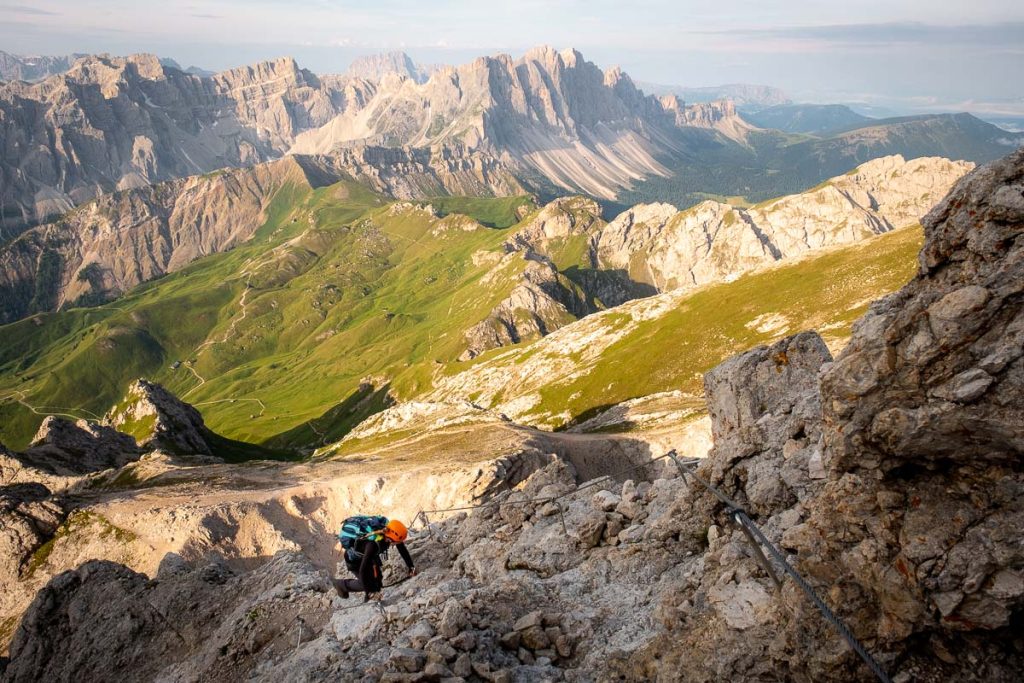
The hike to the summit of Sass de Putia begins at Passo Delle Erbe near the village of Santa Maddalena in Val Di Funes.
Sass de Putia has two summits. The lower one can be reached via a day hike, but to reach the true summit, you must tackle the via ferrata section, stretching for around 200 vertical meters before the top. The whole route takes around 5-7 hours to complete.
Via Ferrata Sass de Putia can also extend the popular long-distance trek Alta Via 2, which runs nearby. I chose this option when hiking it during one of the summer seasons I spent in the Dolomites.
Read more: Guide to Via Ferrata Sass De Putia.
10. Via Ferrata Strada Degli Alpini
Roundtrip Distance: 16 km / 10 mi
Elevation Gain: 1134 m / 3722 ft
Time Required: 7-9 h
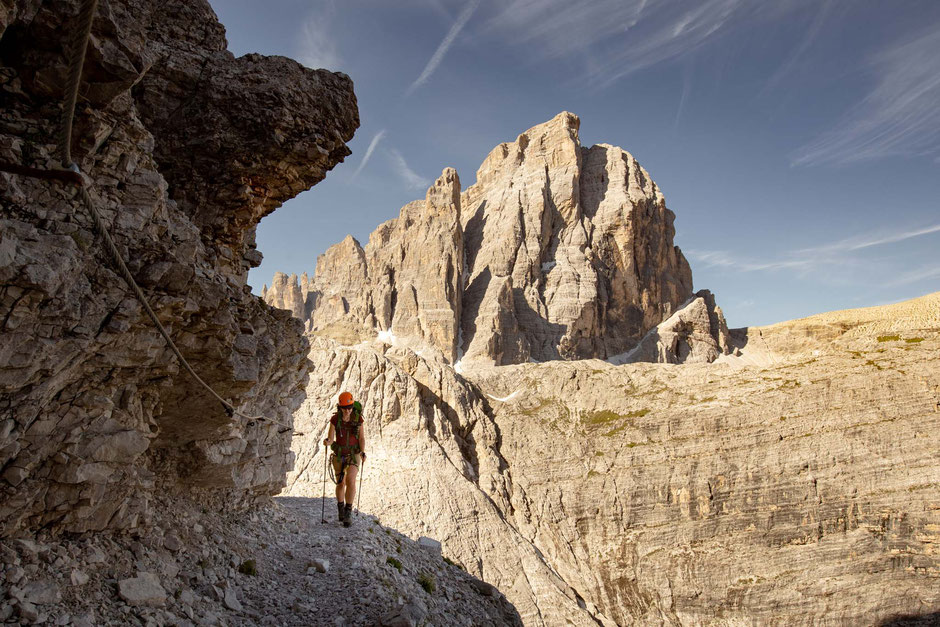
I have deliberately decided to leave the best for last. If you spend as much time in the mountains as I do, you can quickly become what I call the ‘view snob’. Regular green rolling hills no longer quench my thirst for amazing views.
I need sheer walls and dramatic spires, and Via Ferrata Strada degli Alpini delivers precisely that. It remains within the beginner level, attainable even for those without any via ferrata experience.
11. Via Ferrata Sentiero Bonacossa
Roundtrip Distance: 7.3 km / 4.5 mi
Elevation Gain: 504 meters / 1653 feet
Time Required: 4-5 hours

Via ferrata Sentiero Bonacossa runs between Rifugio Auronzo in the Tre Cime Nature Park and Col De Varda, which lies just outside the park’s border. It’s one of the very few via ferratas in the Dolomites that can be walked in either direction.
The highlight of the via ferrata Sentiero Bonacossa is the viewpoint of the Cadini di Misurina group. The cable-protected section starts right after the viewpoint.
TIP: Via ferrata Sentiero Bonacossa connects well with the intermediate via ferrata Merlone. You can stay overnight in Rifugio Fonda Savio to complete both routes.
12. Via Ferrata Croda Rossa
Roundtrip Distance: 10.2 km / 6.3 mi
Elevation Gain: 1080 m / 3543 ft
Time Required: 4-5 hours

If you like bagging summits, this one is for you. Croda Rossa is a mountain in the northern part of the Sesto / Sextener Dolomites. On a good weather day, you can spot the highest summit of Slovenia – Mount Triglav, from the summit of Croda Rossa. The route is filled with World War I memorabilia.
Via ferrata Croda Rossa can be completed on its own (if you ascend and descend the same route) or in conjunction with via ferrata Zandonella, which runs on the opposite side of the summit. You can complete it as part of a multiday traverse across the Sextener Dolomites like I did.
Shop my via ferrata gear essentials
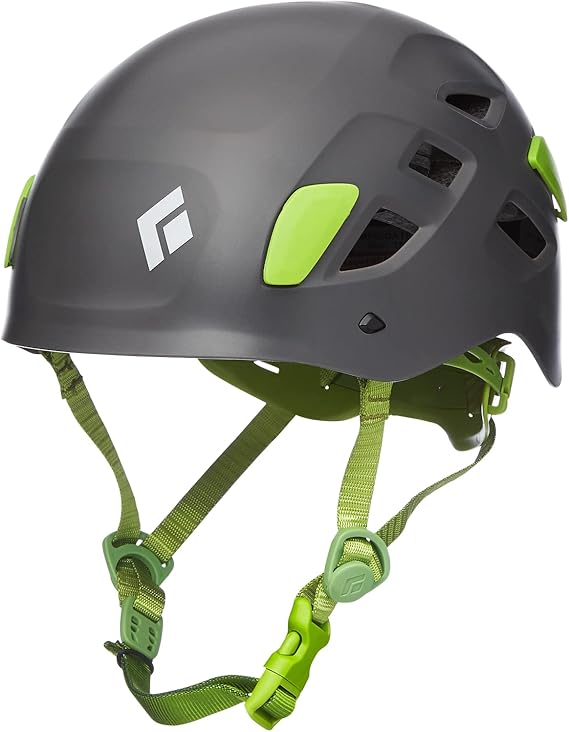
Black Diamond Helmet
Rockfall is a significant concern on via ferrata routes. Unbeknownst to you, other climbing groups above you may accidentally dislodge a small rock and send it down the mountain. If it hits you on the head, it could have serious consequences. A helmet on your head (not inside your backpack) is necessary.
Shop on: Amazon (Worldwide) / Backcountry (US)
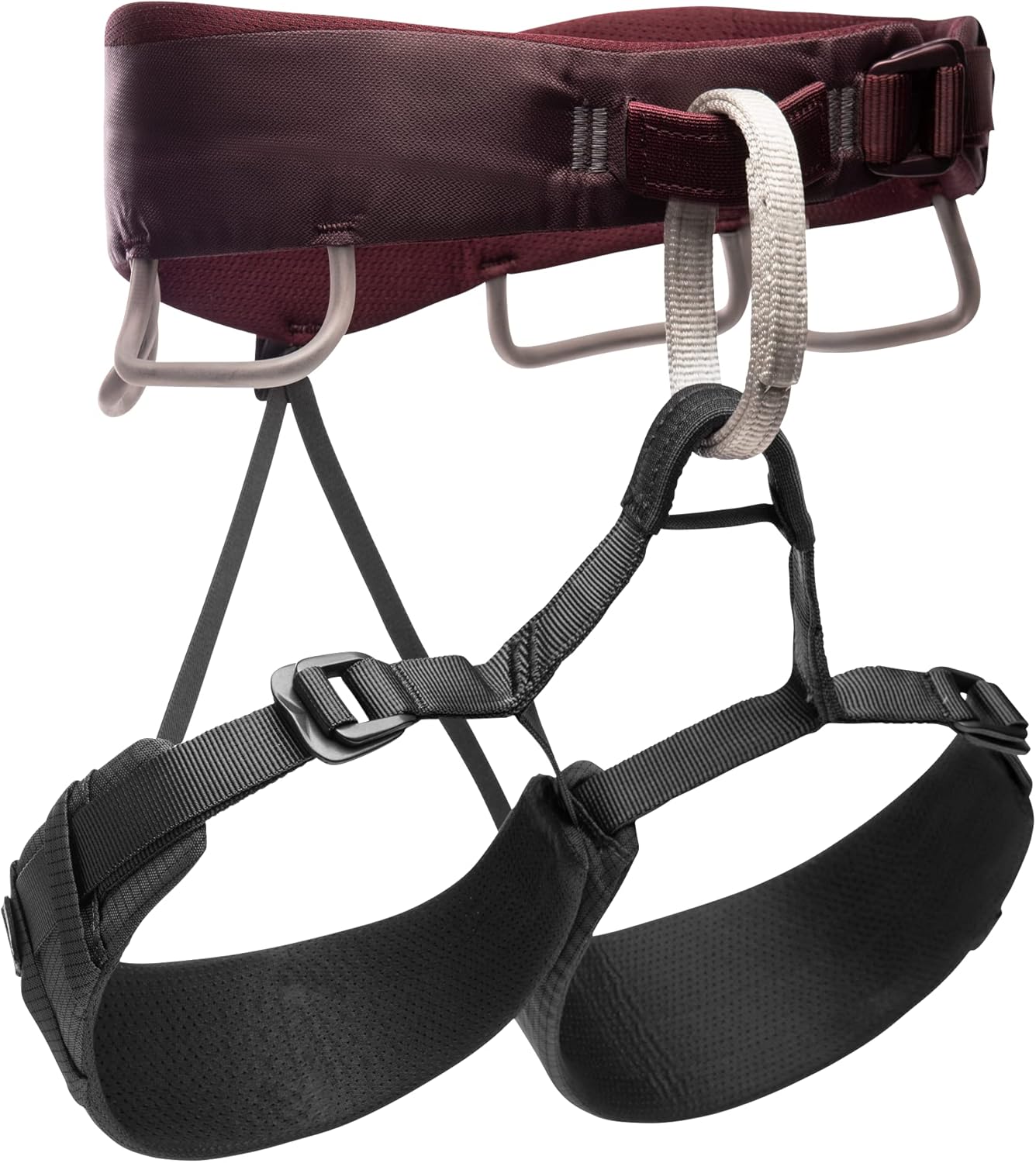
Black Diamond Momentum Harness
Another must-have on a via ferrata route is a climbing harness. A harness works as an anchor point for your via ferrata lanyard. Try it before your trip to ensure it fits snugly without limiting your movements. Aim for a lightweight harness that will be comfortable to wear between the cable-protected sections when hiking.
- Shop Women’s on Amazon (Worldwide) / Backcountry (US)
- Shop Men’s on Amazon (Worldwide) / Backcountry (US)
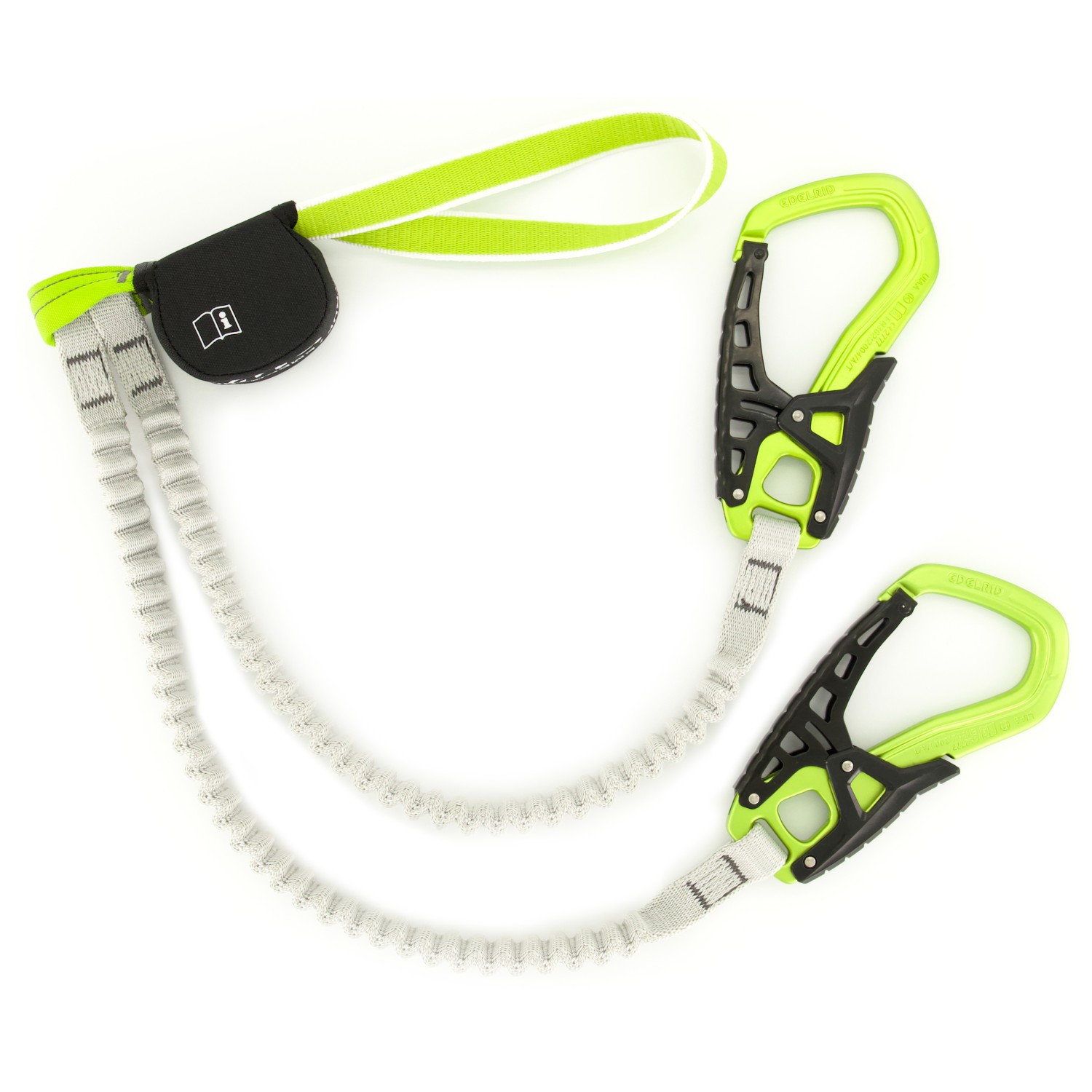
Edelrid, Camp or Black Diamond Via Ferrata Lanyard
A via ferrata lanyard connects the climber and their harness to the cables along the route. Its two arms and a hidden extra coil work as an energy absorption system in case of a fall. The two carabiners at the end of the lanyard clip into the cable. Make sure the carabiners are equipped with the palm squeeze mechanism. It’s the safest and most comfortable.
Shop on Amazon (Worldwide) / Backcountry (US)
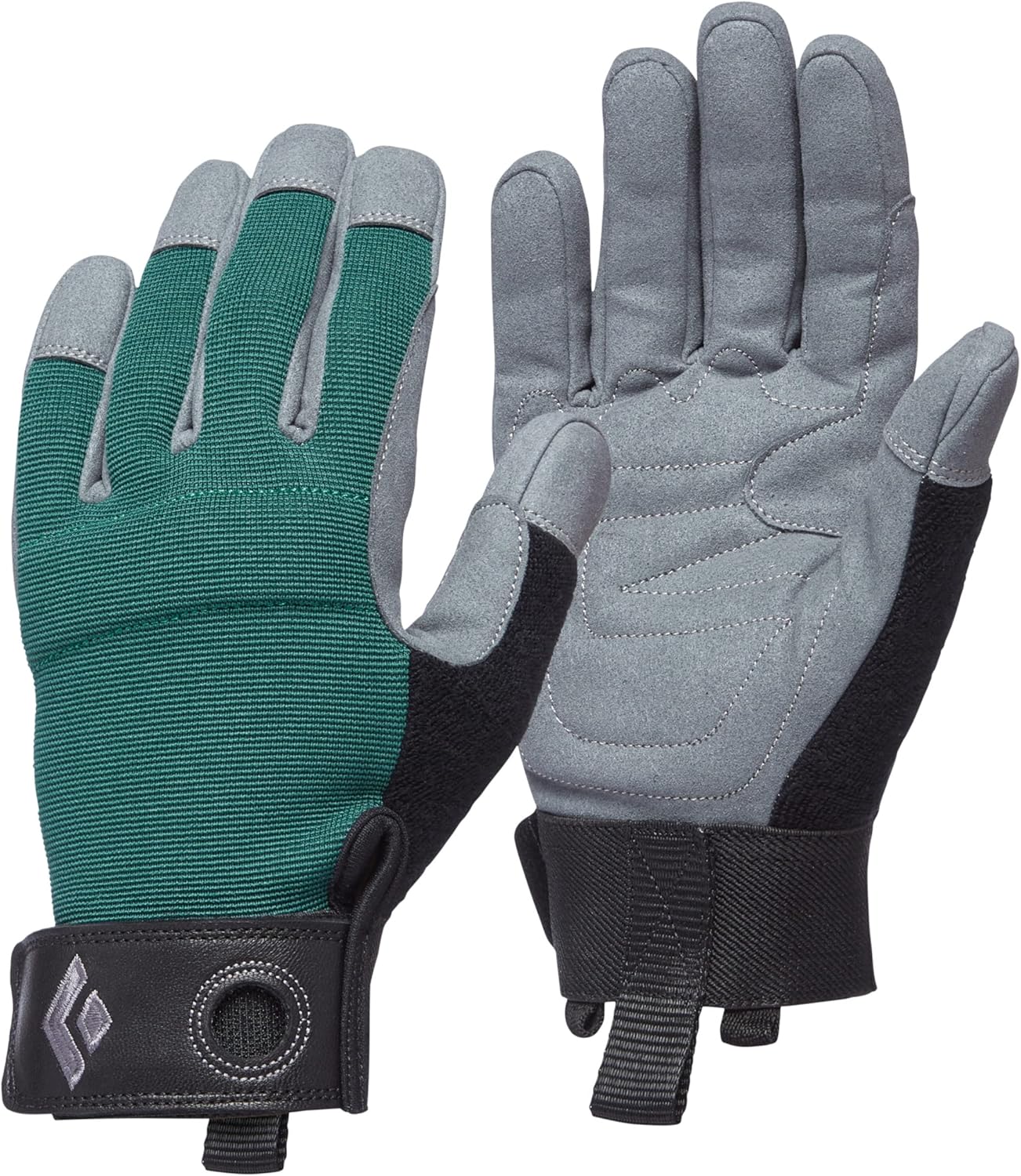
Black Diamond Crag Gloves
The gloves protect your hands from cuts and scratches you may otherwise get if you haul yourself on the cable without them. I prefer full-finger gloves for extra protection against blisters. If your hands sweat quickly, go for the fingerless version.
Shop on: Amazon (Worldwide) / Backcountry (US)
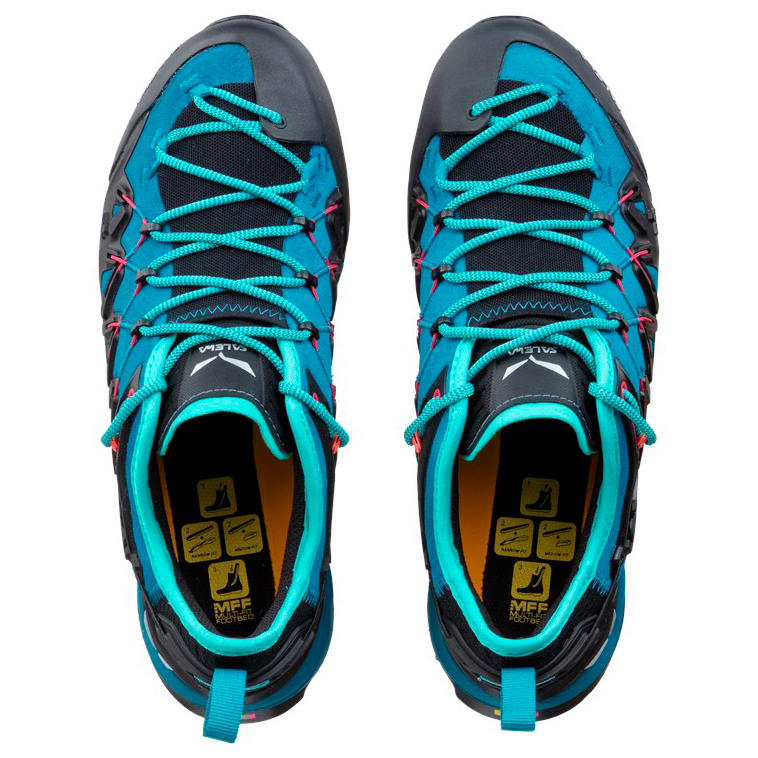
Salewa Wildfire Edge Approach Shoes
This is my go-to pair of hiking shoes for more accessible trails or via ferrata, where I don’t need extra ankle support. They provide excellent grip on the rock and are very durable.
Shop on: Amazon (Worldwide) / Backcountry (US)
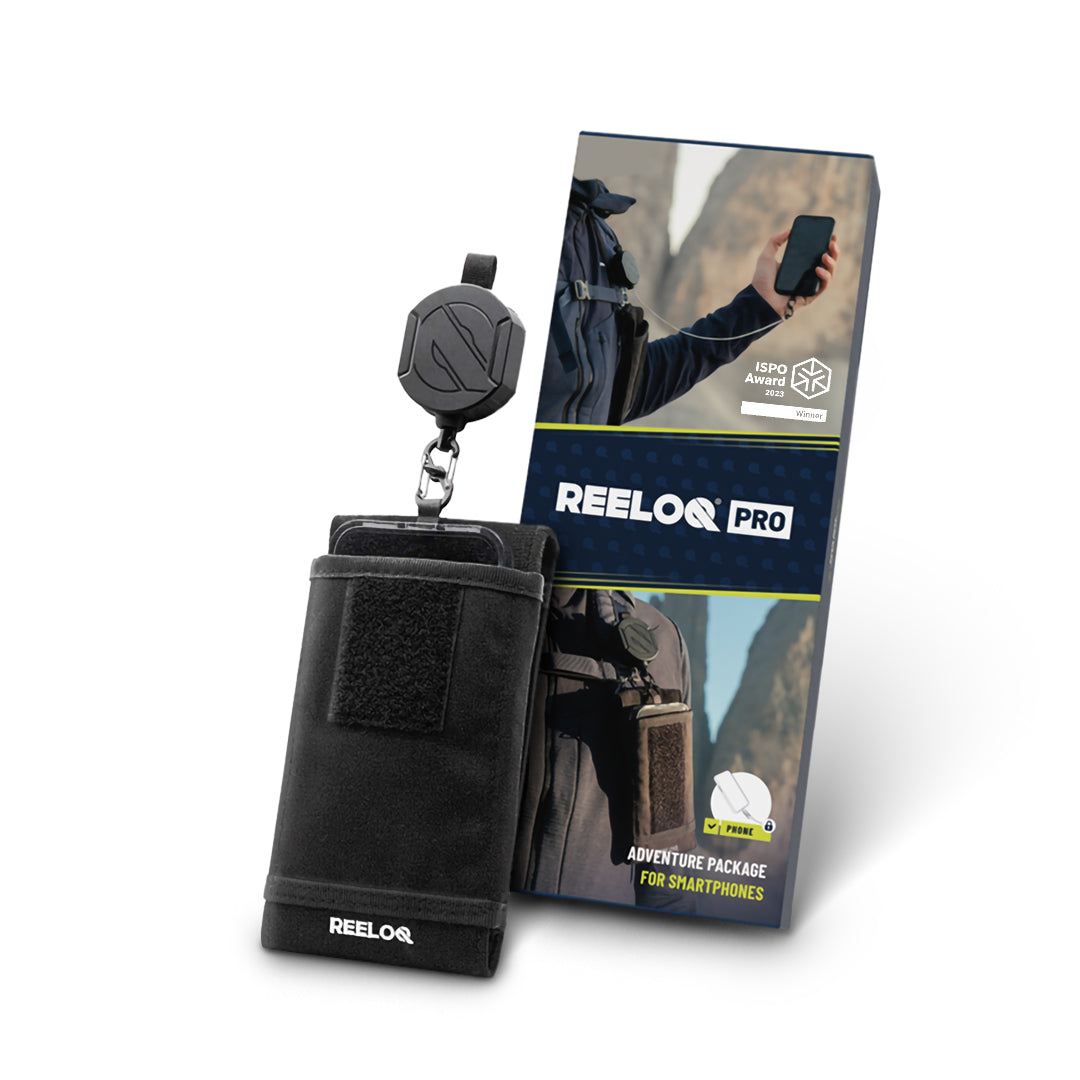
Reeloq Smartphone Securing System
If you want to take great photos on a via ferrata without worrying about losing your phone, Reeloq is the best tool for it. It’s a smartphone-securing system that allows you to use your phone on any adventure. This has been a great addition to my tool arsenal.
Shop on: REELOQ
Support my website!
Hi Reader! If you found any of my articles about the Dolomites useful please consider using the affiliate links below (at no extra cost) when booking your holiday. Thank you
- Reserve your hotel with Booking.com
- Book your rental car with Discover Cars
- Buy your outdoor gear with Backcountry.com (US readers)
If you have any questions, leave them in the comments below!
Dear Marta,
Thank you so much for your generous information on all the travelling sides!
Do you think going solo on via Ferratas is ok?
Kindest regards
Evgenia
Hi Evgenia. I am generally of the opinion that venturing into the mountains is always safer with a partner. I hardly ever venture entirely on my own. With that said many of the beginner routes are quite busy with other people so you never really feel like you are on your own.I hope that helps!
Hi – my partner plan to visit the dolomites in july. we are interested in 2 seperate days via feretta – if you could pick 2 within close proximity what ones would you pick and where would be the best base? can’t wait!
Hi Danielle. Check out my other post about via ferratas in Cortina D’Ampezzo. It’s a great place to stay and try some ferratas. Otherwise I also recommend Val Pusteria and Sesto and San Candido. I have a post about best places to visit/stay in the Dolomites where I talk about what ferratas you can do in each area.
Hi Marta,
I plan to go for a 3-days stay in the dolomites with 4 other people.
We all are via ferrata beginners.
I would like to know which is the best place to organise 2-3 days of different via ferrata from the same rifugio, to only have a very small back pack with us and sleep in the same refugio ?
Knowing that I only want easy ones 😬
Any other options than refugio Locatelli ?
What would you recommend ?
Thank you for your amazing articles
🙏
Chris
Hi Chris. Thanks for visiting. It’s a tough question tbh because there is usually just one max two via ferratas next to a refuge. There are a couple of suggestions I would have. One is to stay in Rifugio Zsigmundy Comici which lies on the Croda Fiscalina Circuit or Rifugio Carducci. Starting from either you can do via ferrata Strada Degli Alpini. Though it’s a one-way ferrata you can do it in and back the same way from either of the above-mentioned huts. The second ferrrata you can do there is via ferrata Severino Casara which is a circuit around Croda dei Toni. For that one it would be best to stay in Carducci but Zsigmundy is fine too. I haven’t done that one yet but it’s on my list for my next summer visit. The third ferrats would then be either Innerkofler or Torre di Toblin (rifugio Zsigmundy is around 2 hour walk from either of those ferratas and from rifugio Locatelli).
Another I would recommend for you to consider is Rosengarten Traverse. You could start from Koelner Hut to Rifugio Alberto Primero along via ferrata Passo Santner then Primero to Rifugio Passo Principe and then extension via ferrata catinaccio. Then third day passo principe to Alpe di Tires and do the extension via ferrata Sentiero Massimiliano. Only one ferrata would be done with full backpacks, the other two you could do with light load after leaving your stuff in the huts.
Let me know if that helps and if you have any more questions!
Thank you so much Marta. So helpful , thanks for this amazing site 🤩
No worries!
Hi Marta – your blogs are so helpful, thank you! Do you know of any companies that do guided one day via ferratas? This will be our first time with our teenage children to the Dolomites and would love to try a beginner route but I am not comfortable on our own!
Hi Rebecca. Thanks for visiting and for your great feedback. I understand if you are not comfortable. There are definitely some companies who do guided tours for example guide Dolomiti in Cortina D’Ampezzo. I haven’t used them myself but they seem to have great reviews on google. Let me know if I can help you any further!
Hi Marta!
I’m so happy to have found your website. Awesome work! In case I cannot find the info anywhere, where is the best place to rent gear for one day? Also, do you have a favorite campground near one of your favorite Ferratas? Thanks!
Hi Kevin!! Thanks for stopping by. To be honest with you I wasn’t very impressed with the campgrounds in the Dolomites. I found them very busy and campervans were too close to one another. The campground in Siusi was super luxurious, but unless you plan on doing the Rosengarten traverse then it isn’t very practical to stay at. I always recommend my readers to stay in the mountain huts. It’s the best value for money accommodation in the Dolomites! As for rental gear, it highly depends on where you will be doing the ferratas. I have a whole article about via ferratas in Cortina D’Ampezzo which is a convenient place for renting or buying gear. Let me know if I can help further!
By any chance, do you have or know of a map with via ferratas + difficulty for the Alta Via 2? I am curious how difficult the via ferratas are on that route.
Hi Greg! Yes, Tabacco and Kompass make maps with via ferratas marked on them. As for Alta Via 2 head over to my guide for Alta Via 2 which will tell you which maps to get. I hope this answers your questions. Let me know if it does!
Very informative website.
My question is: are the via ferratas circular? i mean from where you start, you finish? or do you finish away from where you started?
Hi Joe,
Thanks for stopping by. This really depends on the route but you can check individual articles I have for via ferratas to see if it’s a loop or out and back the same way. Some or loops some aren’t/
Thank you so much for all this great info! I have based my trip mostly on your suggestions but have a few questions:
1. I know we cant rent via Ferrata gear from Cortina D’Ampezzo but I am planning to start on the Ouest side and finish in Cortina D’Ampezzo, do you know of where else I would be able to rent out via Ferrata gears ? And would I have to return them on the same day..
Here is where I am planning to be: 6 days
Val di Fassa (Vajolet towers) -> Val Gardena -> Seceda -> Tre Cime di lavaredo -> Cinque Torri -> Cortina D’Ampezza..
2. My second question is around transportation from one place to another, is it easy to find buses or what is the best way to go from one place to another ? (I know if I am starting in Cortina there is the tourist info center but since I am starting on the other side, I was wondering).
Any tips that you can give me would be appreciated 🙂
Thank you!!
Yara
Hi Yara,
Thanks for visiting my site. If you are planning to do 6 days of via ferratas then do consider buying the gear. The total set will set you back around 150-200 euros, 6 days rent will be around 150 euros. It’s just not cost-efficient to rent it. Secondly, I don’t know of any places that would allow you to rent it in one town and return it to another one.
Public transport is relatively good in the Dolomites and most towns are connected with one another through buses. You can check the Sued Tirol Mobil up and search for bus stops on Google maps, but I am not exactly sure what your plan is. Do you plan on hiking from hut to hut and incorporating all the places that you have enlisted there, or are you going to do each place as a day trip, then return to a town and keep on travelling to the next spot. Whilst buses are pretty good, the issue I’ve got with them is their frequency meaning you really have to be mindful of the times. Another thing is they start relatively late and I always recommend people to do the trips really early in the morning, because in the summer season by midday all peaks tend to be in the clouds, as opposed to glorious bluebird mornings. To start really early though, the only option is to rent a car. Let me know if that helps!