
Every time I read that a ridgeline traverse is mentioned in the description of a route, whether it’s a hike or via ferrata, I immediately add it to my list. Why, you may wonder? Because they always offer the best views-to-effort ratio. When I first read that Via Ferrata Sentiero Massimiliano runs along the Terrarossa ridgeline, it quickly made it onto my Dolomites adventure bucket list.
Everything to know about Via Ferrata Sentiero Massimiliano (Maximiliansteig)
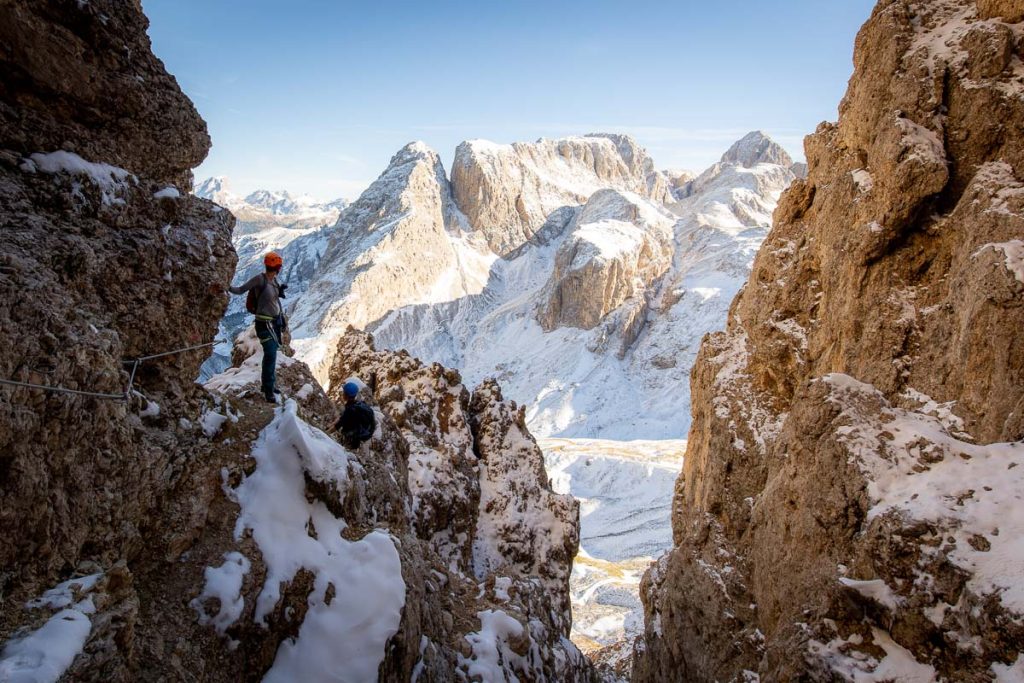
Via ferrata Sentiero Massimiliano (in German: Maximiliansteig) is one of 6 iron paths in the Rosengarten Mountain Group. The two nearest towns where you can start the approach to reach the ferrata are Siusi and Campitello di Fassa.
Via Ferrata Sentiero Massimiliano: the stats counting from the Alpe Di Tires Alpine Hut
- Distance: 4.4 km / 2.7 mi
- Elevation gain: 389 m / 1276 ft
- Elevation loss: 394 m / 1293 ft
- Time required: 3-4 hours
- Route difficulty: intermediate
- When to go: June – October
- Map required: Tabacco map no. 029 (Rosengarten) or Tabacco map no. 06 (Val Di Fassa)
Getting to the start of Via Ferrata Sentiero Massimiliano (Maximiliansteig)
Via ferrata Sentiero Massimiliano begins directly behind Rifugio Alpe Di Tires (Tierseralp hütte). There are a few options to choose from to reach the hut. I marked them all on the map above. Please note that all distances are one way.
It’s always a good idea to have a hiking map with you to visualize the routes better. You will require the Tabacco map no. 029 or 06 for the Via Ferrata Sentiero Massimiliano and the hiking routes leading to its start.
TIP: Click on each trail, and a description window will appear.
Option 1: Top of the Siusi gondola to Rifugio Alpe Di Tires across Denti Di Terrarosa saddle
- Distance: 7.8 km / 4.8 miles
- Elevation gain: 657 m / 2154 feet
- Elevation loss: 63 m / 208 feet
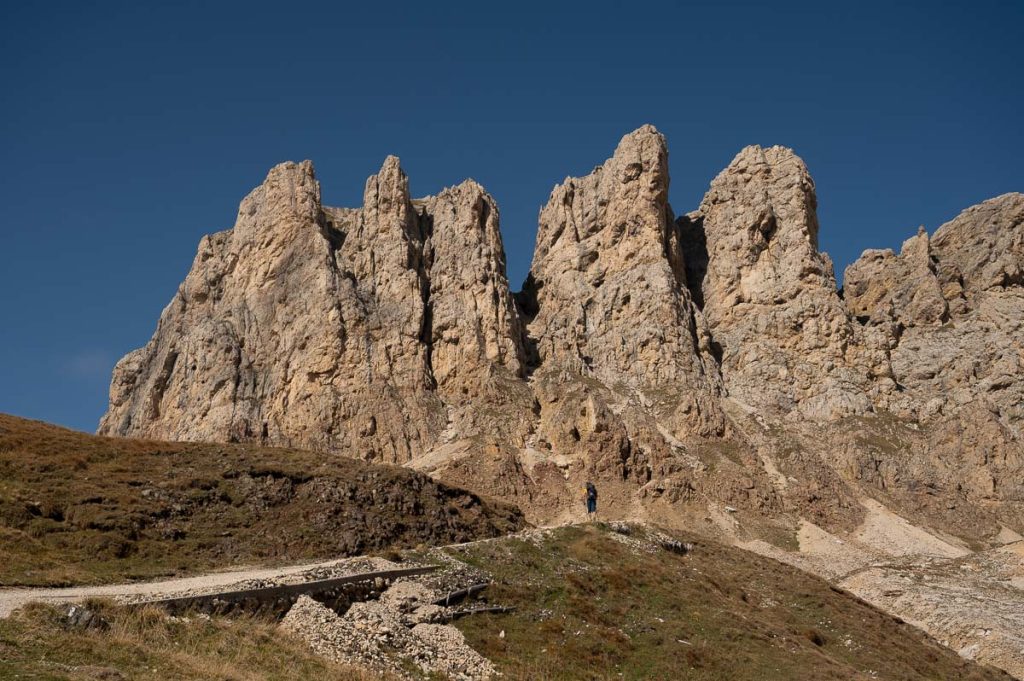
From the town of Siusi take the Alpe di Siusi Gondola up to Compatsch. From there follow path number 7, then path number 2. The total time to reach the rifugio from Compatsch is 2,5 hours one way.
Option 2: Top of the Col Rodella cable car to Rifugio Alpe Di Tires
- Distance: 11.8 km / 7.3 miles
- Elevation gain: 430 m / 1413 feet
- Elevation loss: 443 m / 1454 feet
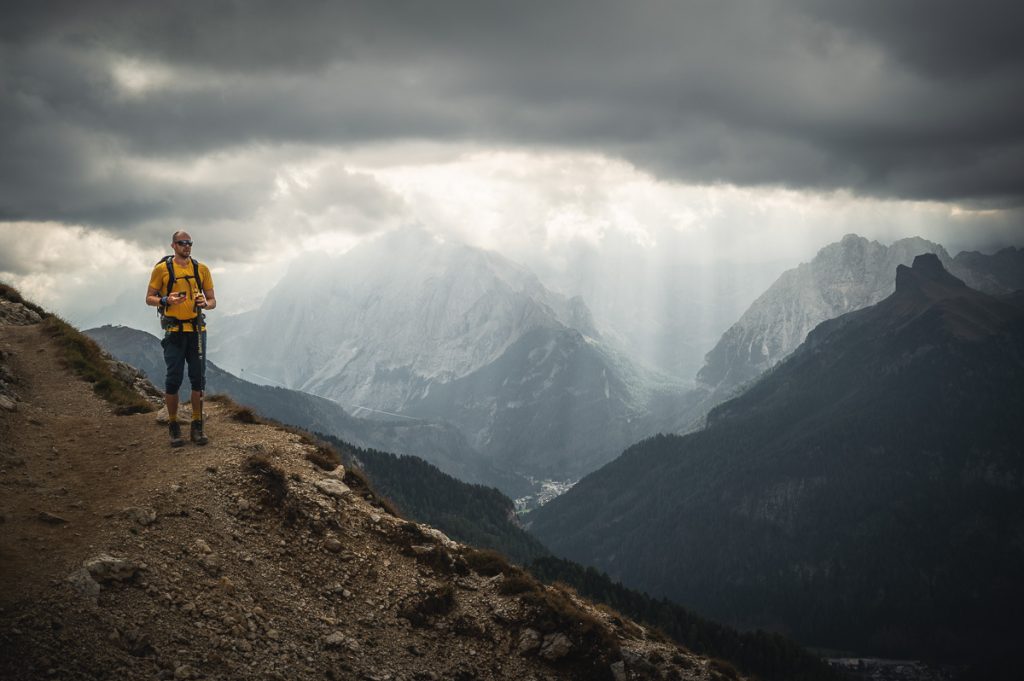
From Campitello di Fassa, take the Col Rodella Cable car, then hike first toward Rifugio Sassopiatto, then in the direction of Alpe Di Tires. This is my favourite approach to the hut. A part of it intersects with the Sassolungo Circuit hike.
Option 3: Rifugio Micheluzzi to Rifugio Alpe Di Tires
- Distance: 7 km / 4.4 miles
- Elevation gain: 592 m / 1942 feet
- Elevation loss: 0 m / 0 feet
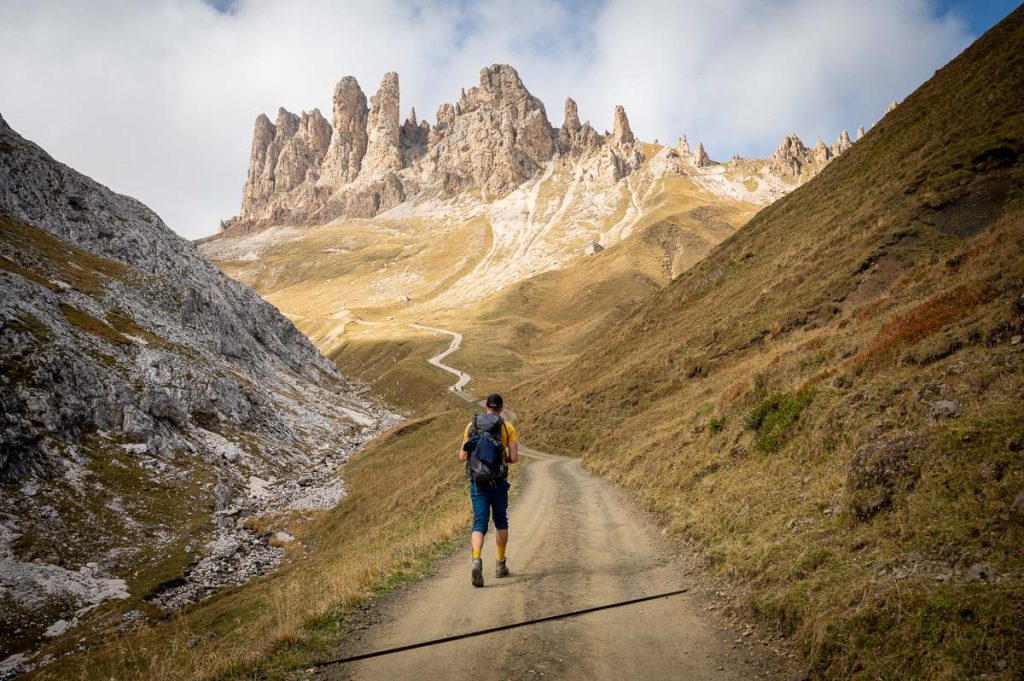
From the village of Campitello in Fassa Valley, you can take a taxi to Rifugio Micheluzzi and then hike for 2 hours along path no. 532 across Duron Valley.
TIP: Options 2 and 3 can be combined. You can choose one for the approach to the hut and follow the other when returning to Campitello di Fassa.
Via ferrata Sentiero Massimiliano as part of the Rosengarten Traverse
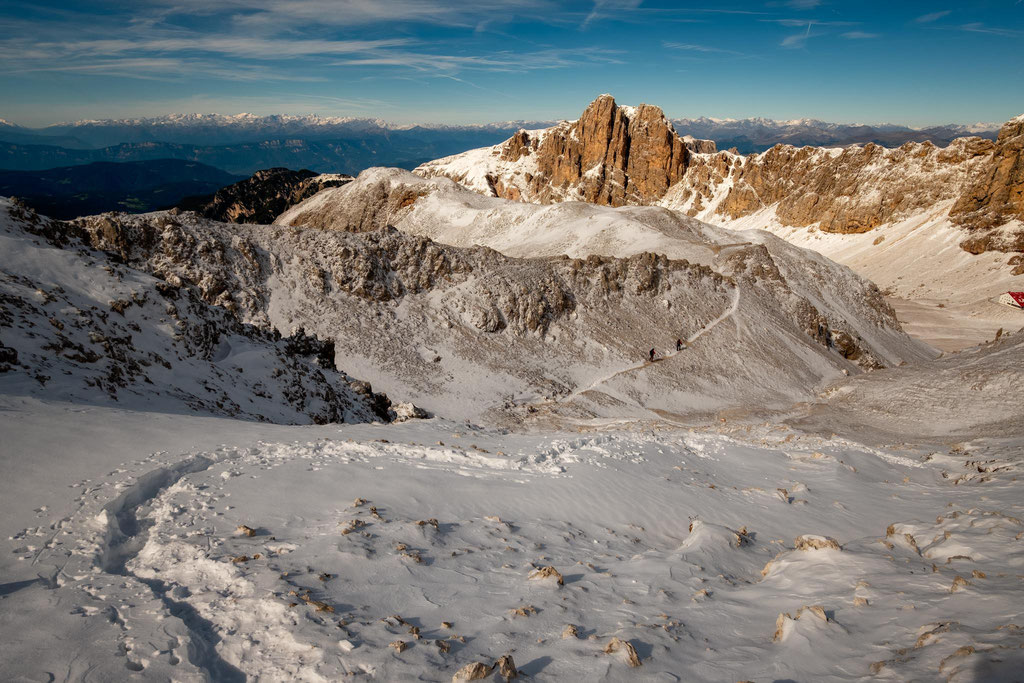
I reached Alpe di Tires hut from rifugio Passo Principe (2,5 hours), where I stayed the night before, while traversing the Rosengarten group. This route only makes sense if you are planning a multiday backpacking trip.
Where to stay overnight when planning to tackle Maximiliansteig?
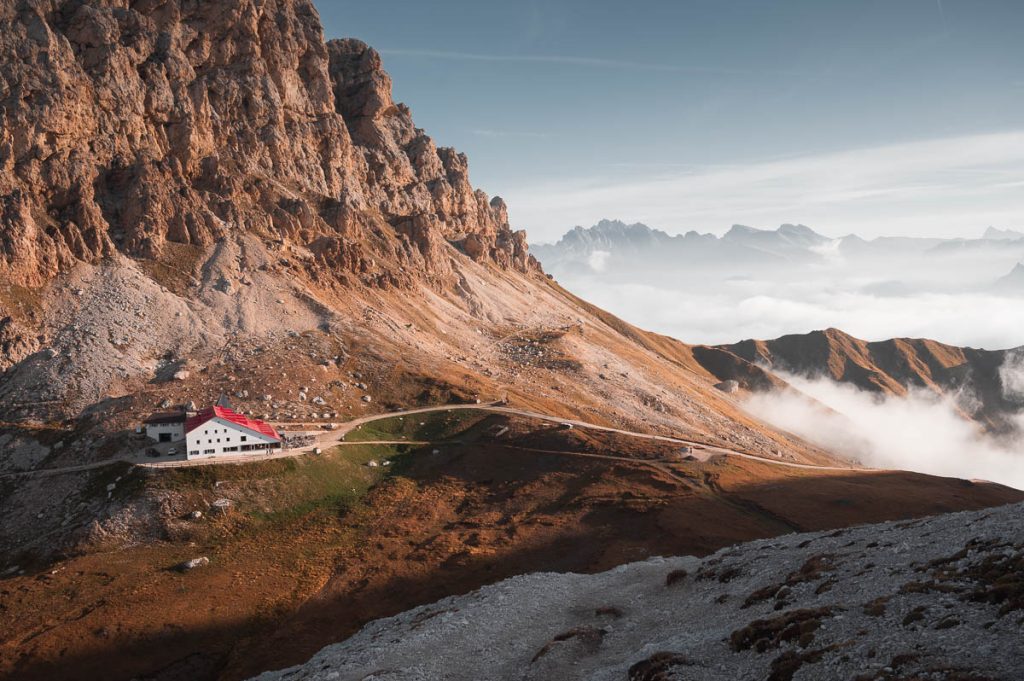
I recommend an overnight stay in the Alpe di Tires hut when attempting the Via Ferrata Sentiero Massimiliano. Otherwise, you will look at a long mountain day (10+ hours). It’s a very popular hut, so book your bed in advance.
TIP: Stay two nights in Rifugio Alpe Di Tires and tackle the nearby Via Ferrata Laurenzi the next day. It is another ridgeline traverse.
Via Ferrata Sentiero Massimiliano: Route Description and my personal experience
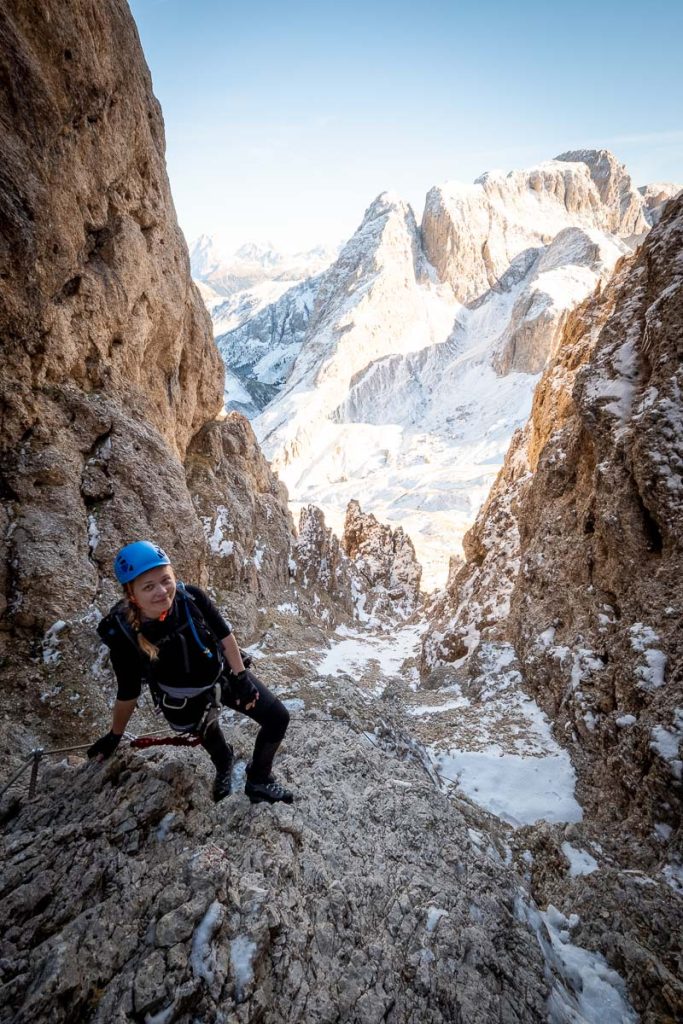
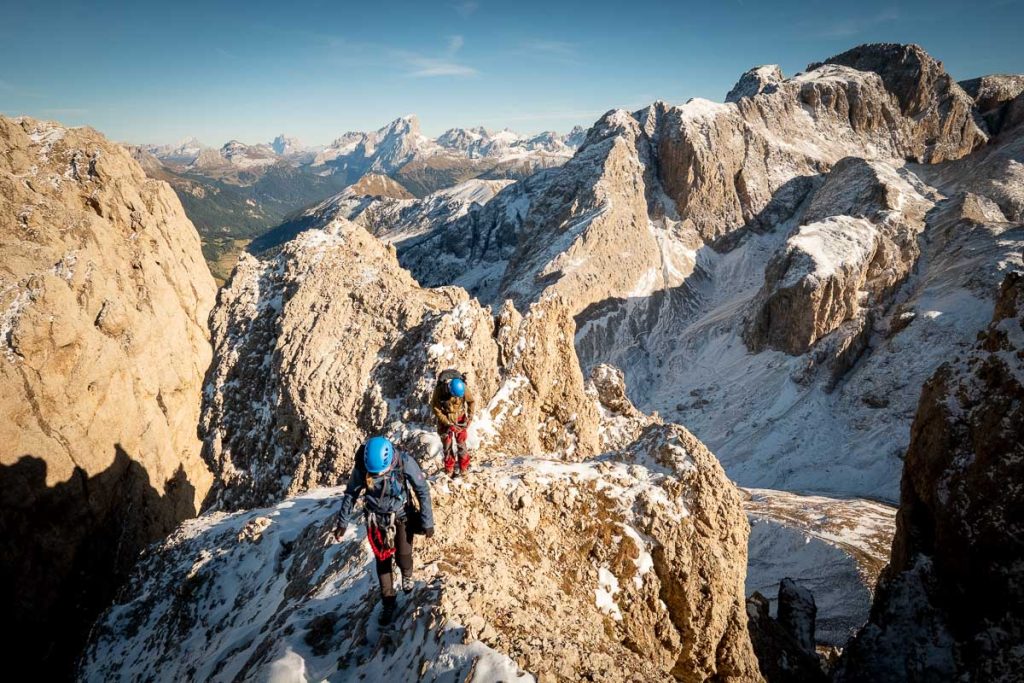
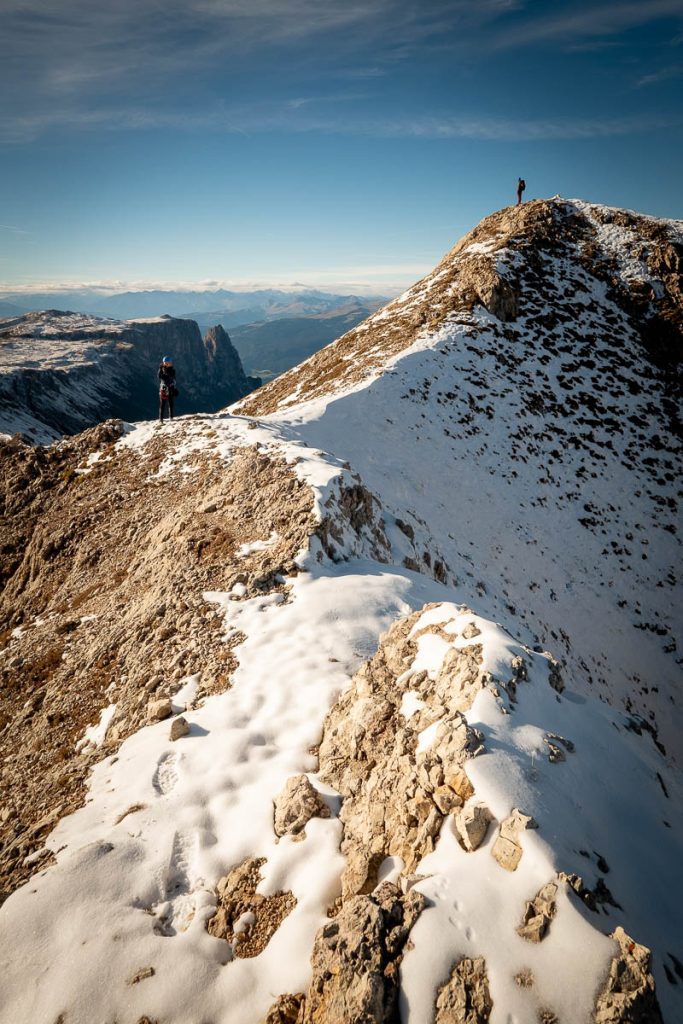
You will find the signs for Maximiliansteig right near the hut. After a short but intense 15 minutes, you will reach a narrow gully. Because the gully stays in the shade most of the day, it’s prone to icing. The day I picked to traverse the via ferrata Sentiero Massimiliano was only a couple of days after a snowfall.
At the start of October, the daytime temperatures are still relatively high. They often plummet to below zero Celsius at night, melting the snow during the day and then freezing it again overnight. This is the perfect recipe for some icy conditions in a few places, including the gully that stays in the shade during the day.
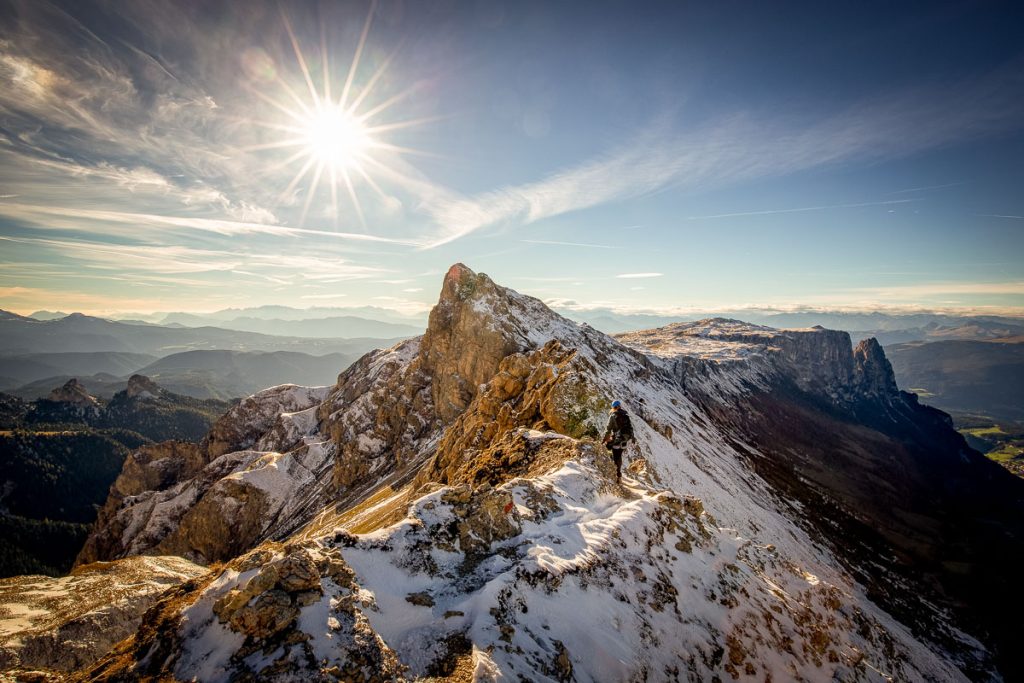
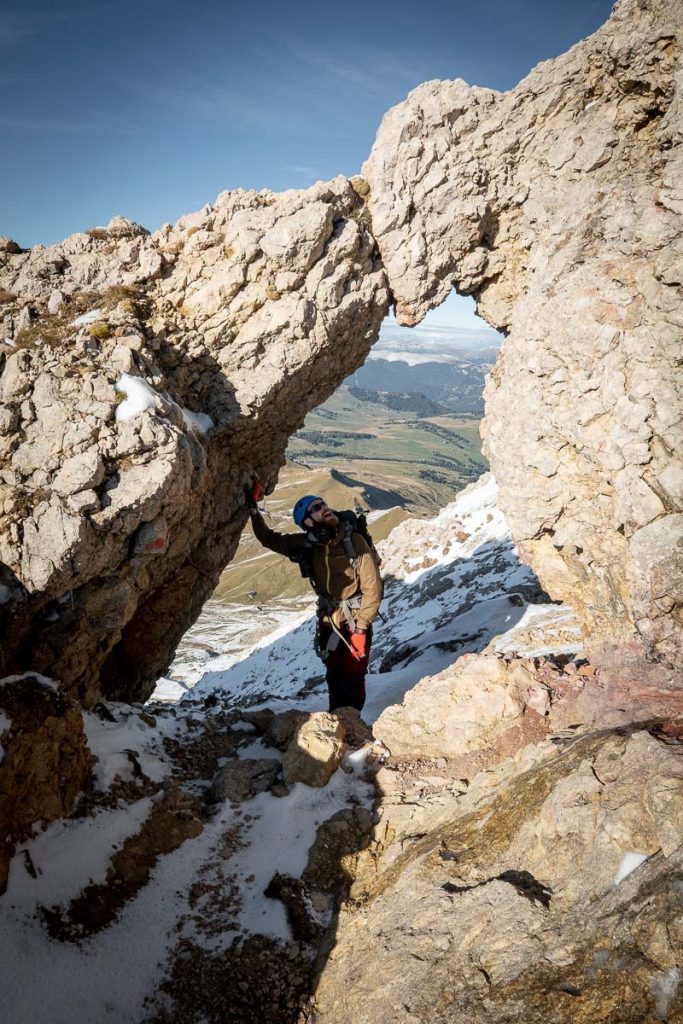
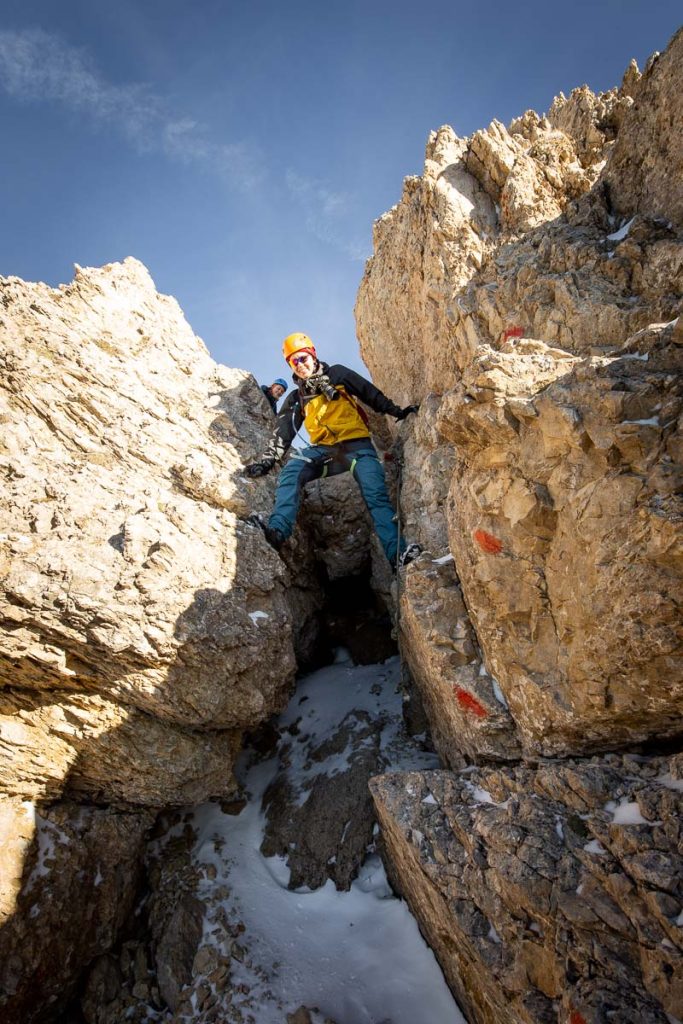
After the gully crossing, you will quickly reach a col, where you’ll get an aerial view of Alpi Di Siusi. After a section of cables, you will arrive at the first of two summits on today’s agenda: The Dente Grande di Terrarossa (2653 meters).
Marmolada’s south face – the highest peak in the Dolomites and Catinaccio – the highest summit of the Rosengarten group, which we bagged the day before, is visible in the distance. You will also get the first clear view of the entire ridgeline and the Terrarossa peak. It was so tantalizingly close, yet a fair bit of work away from reaching.
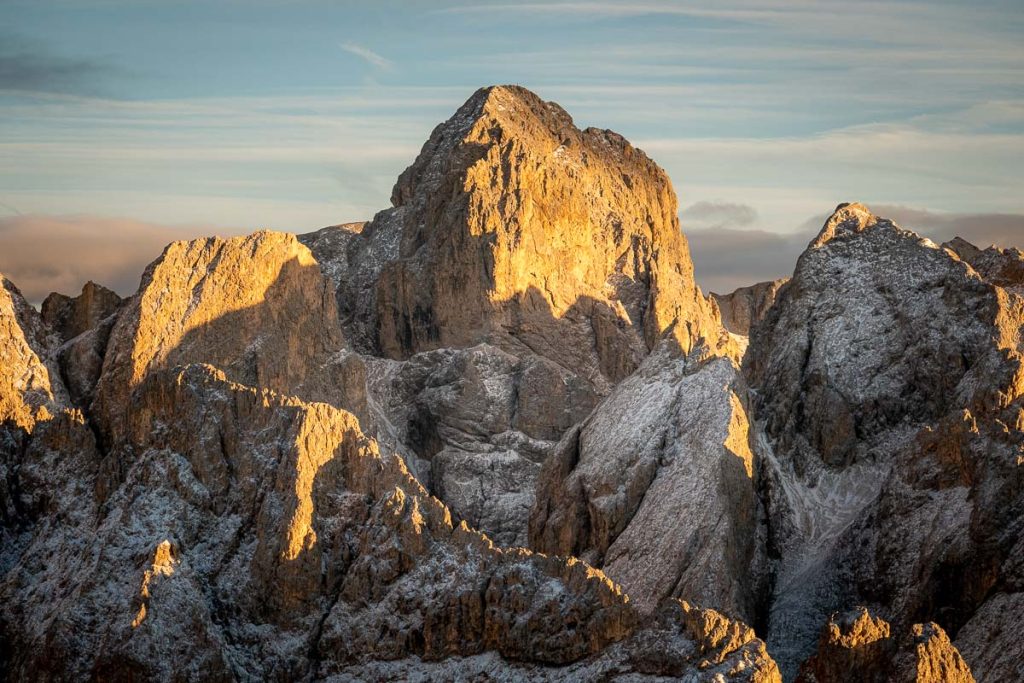
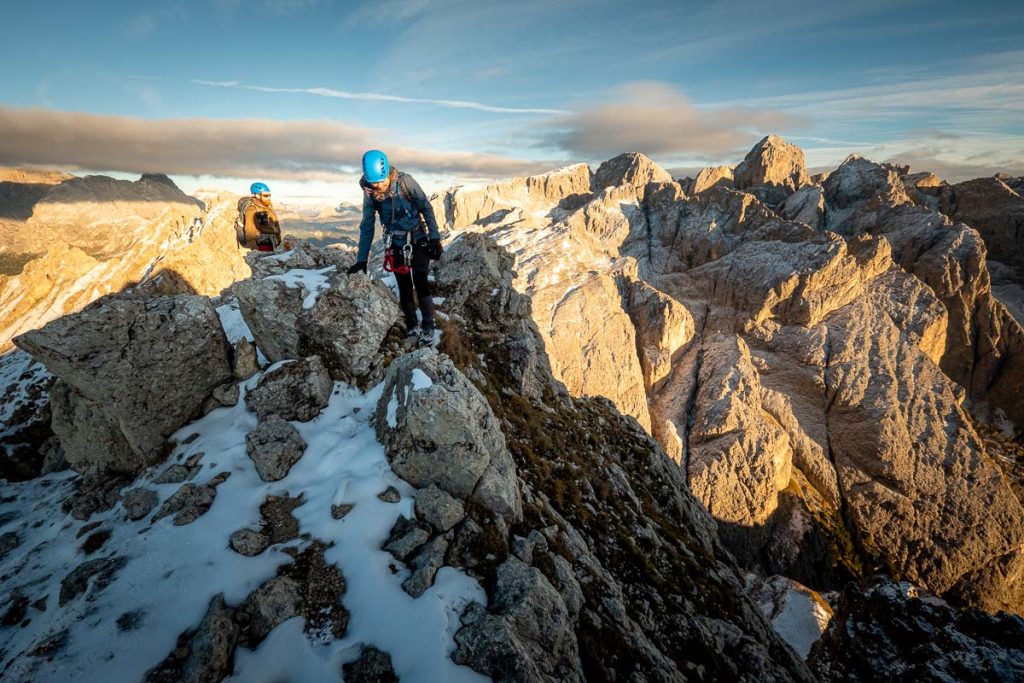
With intermittent cable protection, the undulating ridgeline is fun to tackle and easy to follow. The prominent red paint marks are easy to spot, provided the weather conditions are good. When traversing the ridgeline, you are constantly surrounded by jaw-dropping views.
The ridgeline traverse shouldn’t take longer than 30-40 minutes before you reach the last push to the summit. Thankfully, cables have been installed in the most challenging sections. Make sure you take full advantage of them. Some parts with big drops on either side can make your head spin.
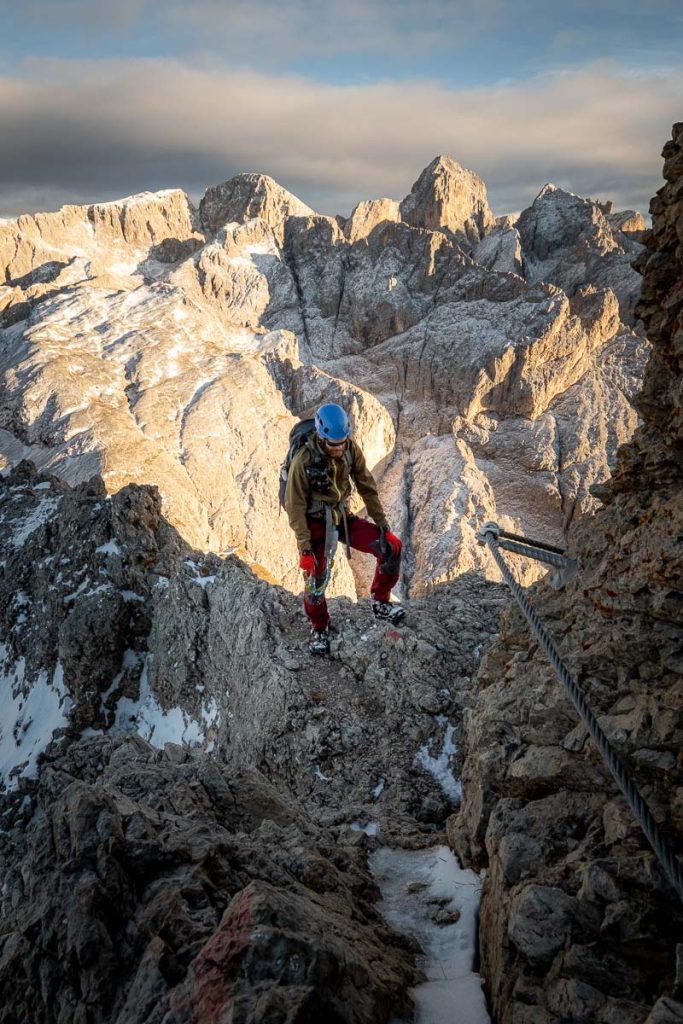
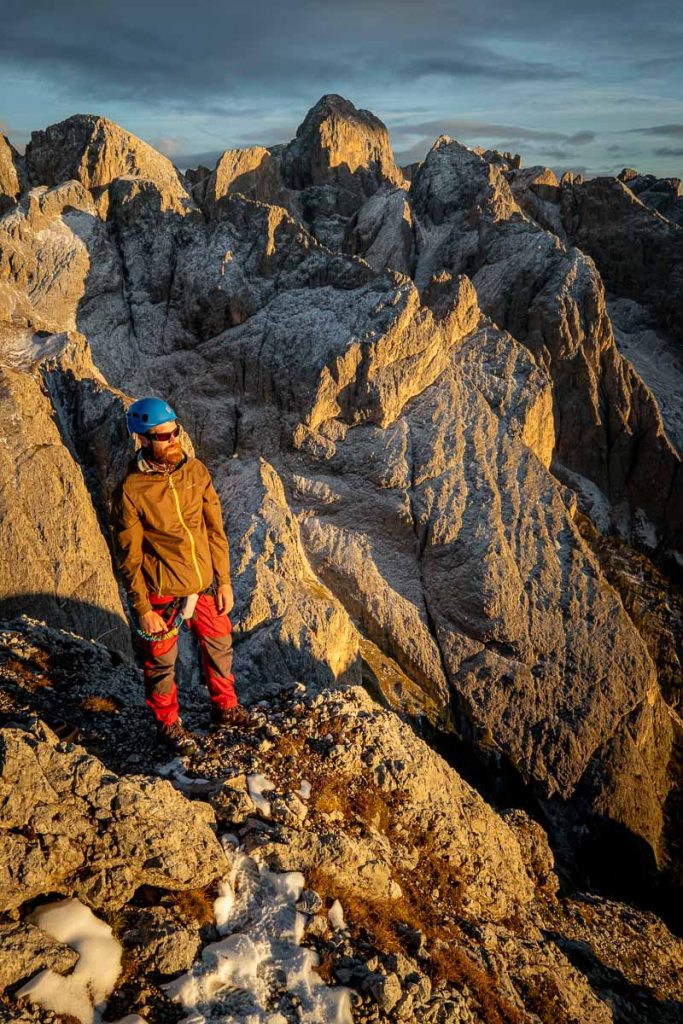
If, for some reason, you are not feeling your best, or the weather has turned for worse, this is where you will encounter the escape route back to the Alpe Di Tires, clearly marked with the “Notausstieg” sign. It means Emergency Exit.
Due to icy conditions along the route, there was more than one time when we thought about turning back, but I’ve got to admit, I had a bit of summit fever. The prospect of returning after already putting in all that work didn’t seem too appealing.
In the end, we decided to push through and hope the conditions would improve. As a result, my gloves got soaking wet from grabbing onto snow-covered rocks and cables, but after a few more cable sections, we were on the top of the Cima di Terrarossa. Tired but happy, we made it in one piece and just in time for sunset.
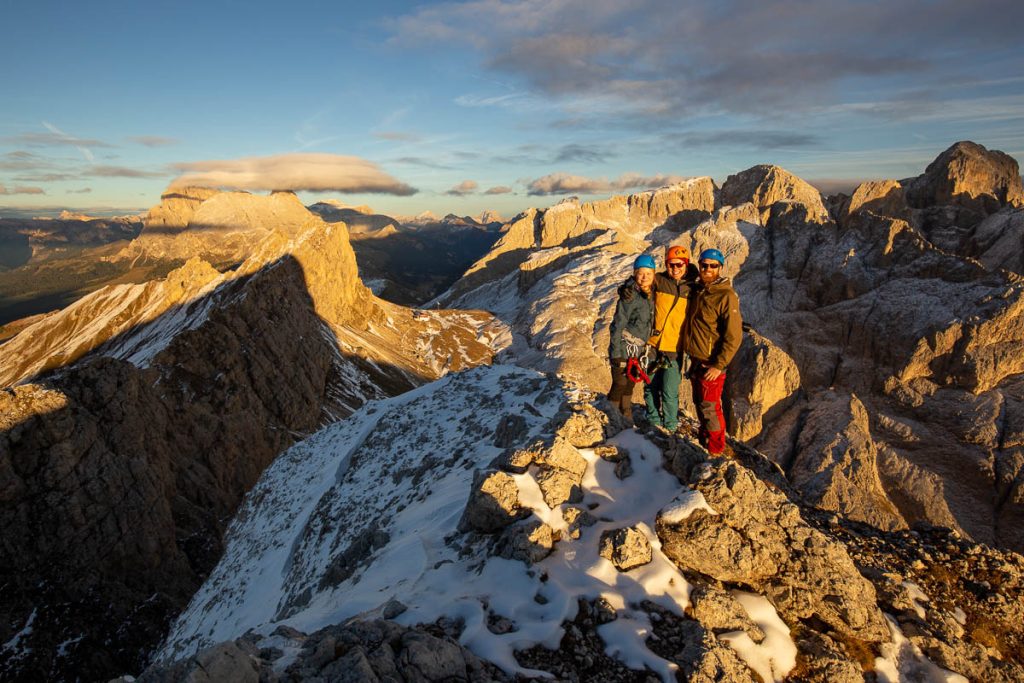
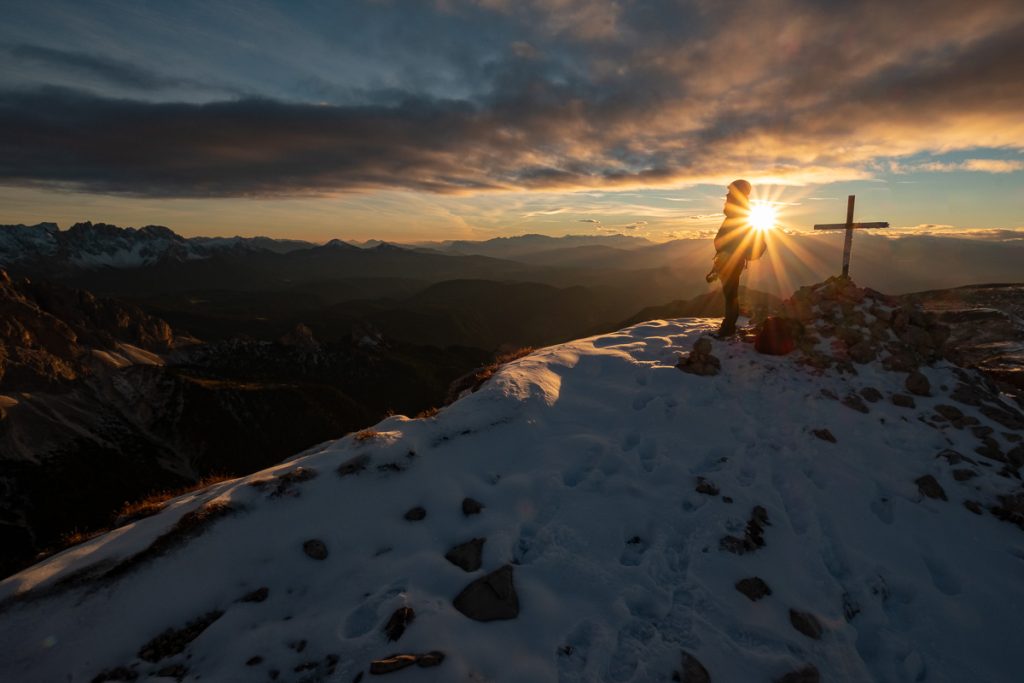
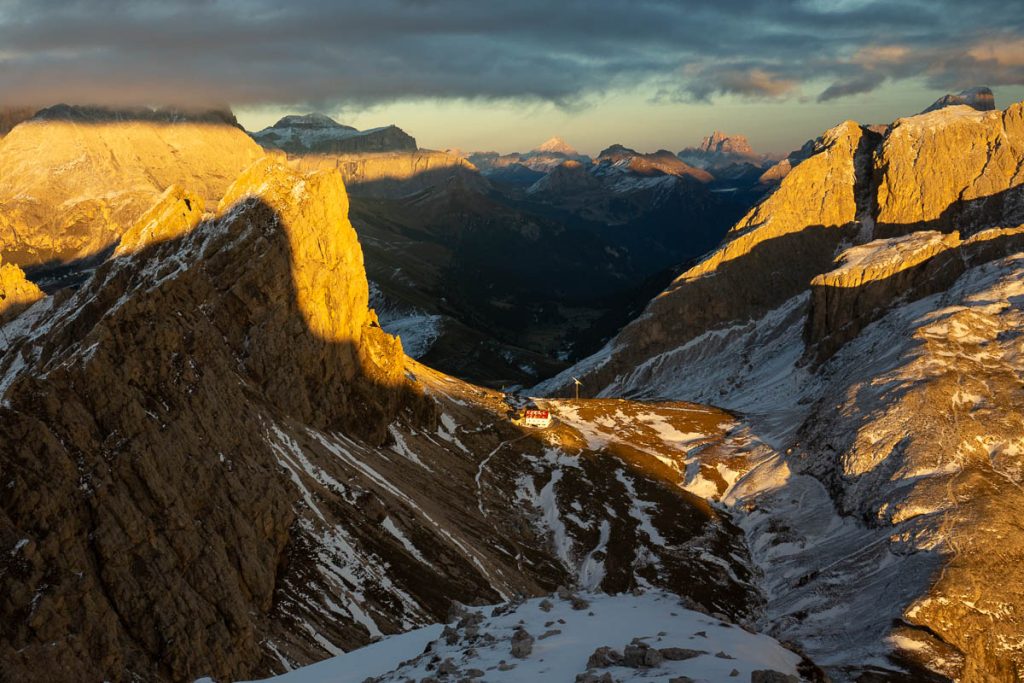
We hung around to watch the sunset and then quickly rushed back to the hut, taking advantage of the last bit of light. The path and refuge are visible from the summit.
Forty-five minutes later, we were back at the hut, drinking hot chocolate and planning our next via ferrata in a few days. The whole route (excluding the time at the summit) took us 3 hours to complete.
Other via ferratas in the Rosengarten Mountain Group
- Via Ferrata Passo Santner
- Via Ferrata Catinaccio D’Antermoia
- Via Ferrata Laurenzi
- Via Ferrata Masare and Roda De Vael
Shop my via ferrata gear essentials
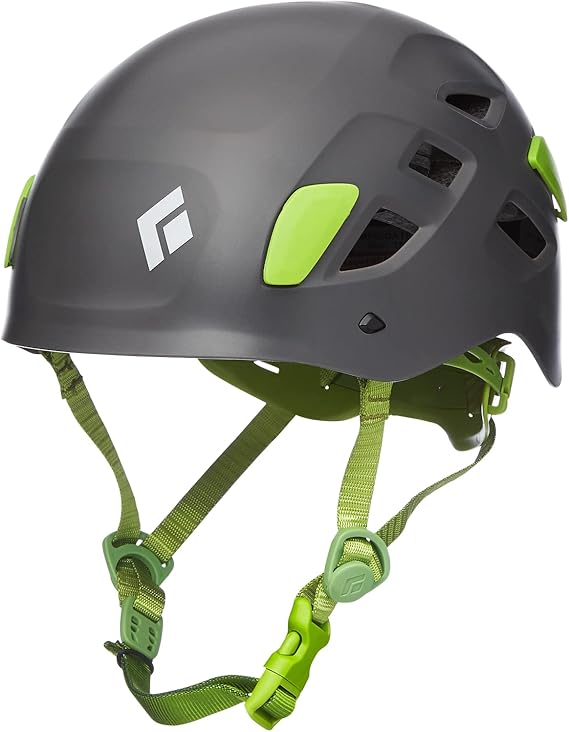
Black Diamond Helmet
Rockfall is a significant concern on via ferrata routes. Unbeknownst to you, other climbing groups above you may accidentally dislodge a small rock and send it down the mountain. If it hits you on the head, it could have serious consequences. A helmet on your head (not inside your backpack) is necessary.
Shop on: Amazon (Worldwide) / Backcountry (US)
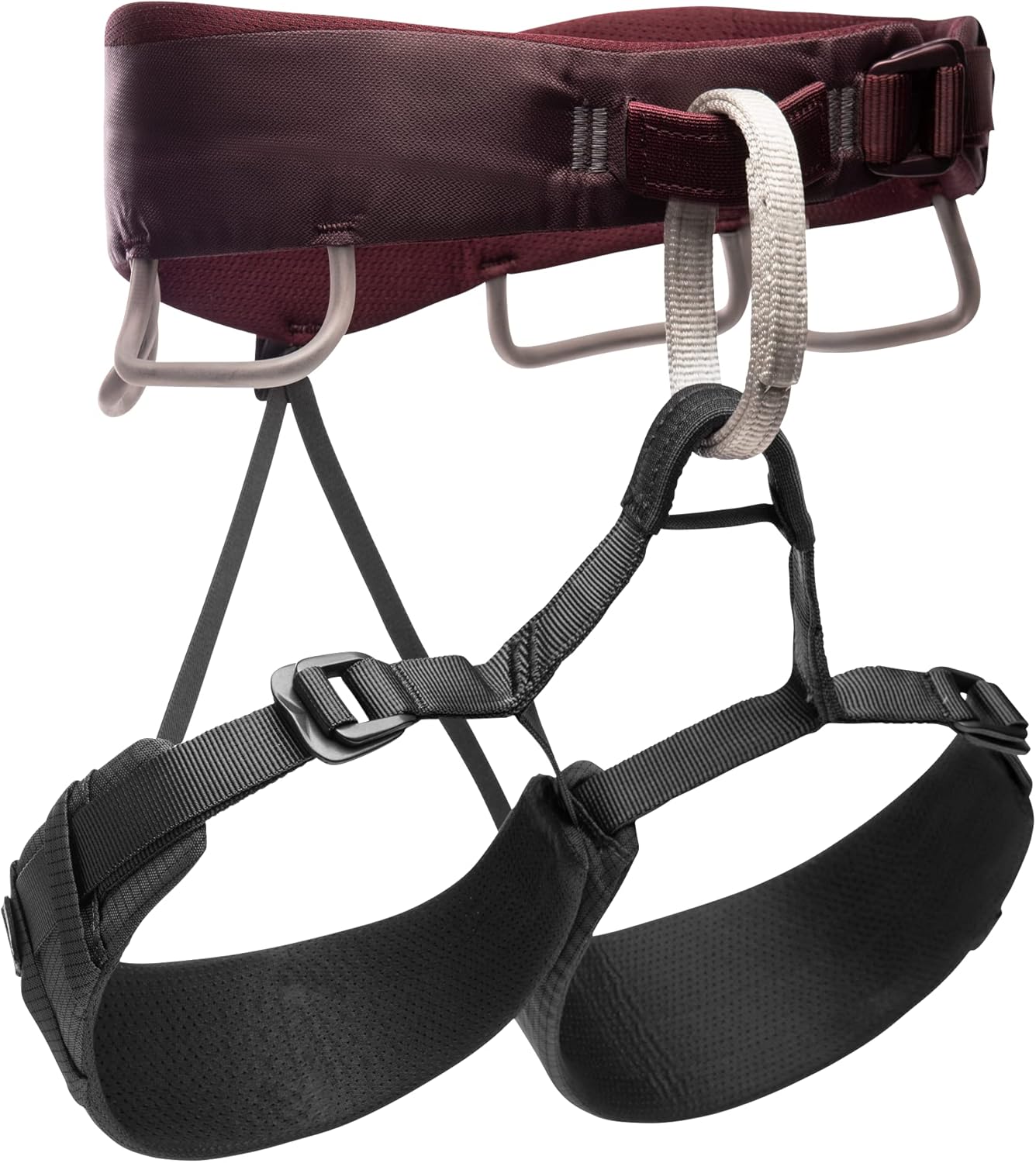
Black Diamond Momentum Harness
Another must-have on a via ferrata route is a climbing harness. A harness works as an anchor point for your via ferrata lanyard. Try it before your trip to ensure it fits snugly without limiting your movements. Aim for a lightweight harness that will be comfortable to wear between the cable-protected sections when hiking.
- Shop Women’s on Amazon (Worldwide) / Backcountry (US)
- Shop Men’s on Amazon (Worldwide) / Backcountry (US)
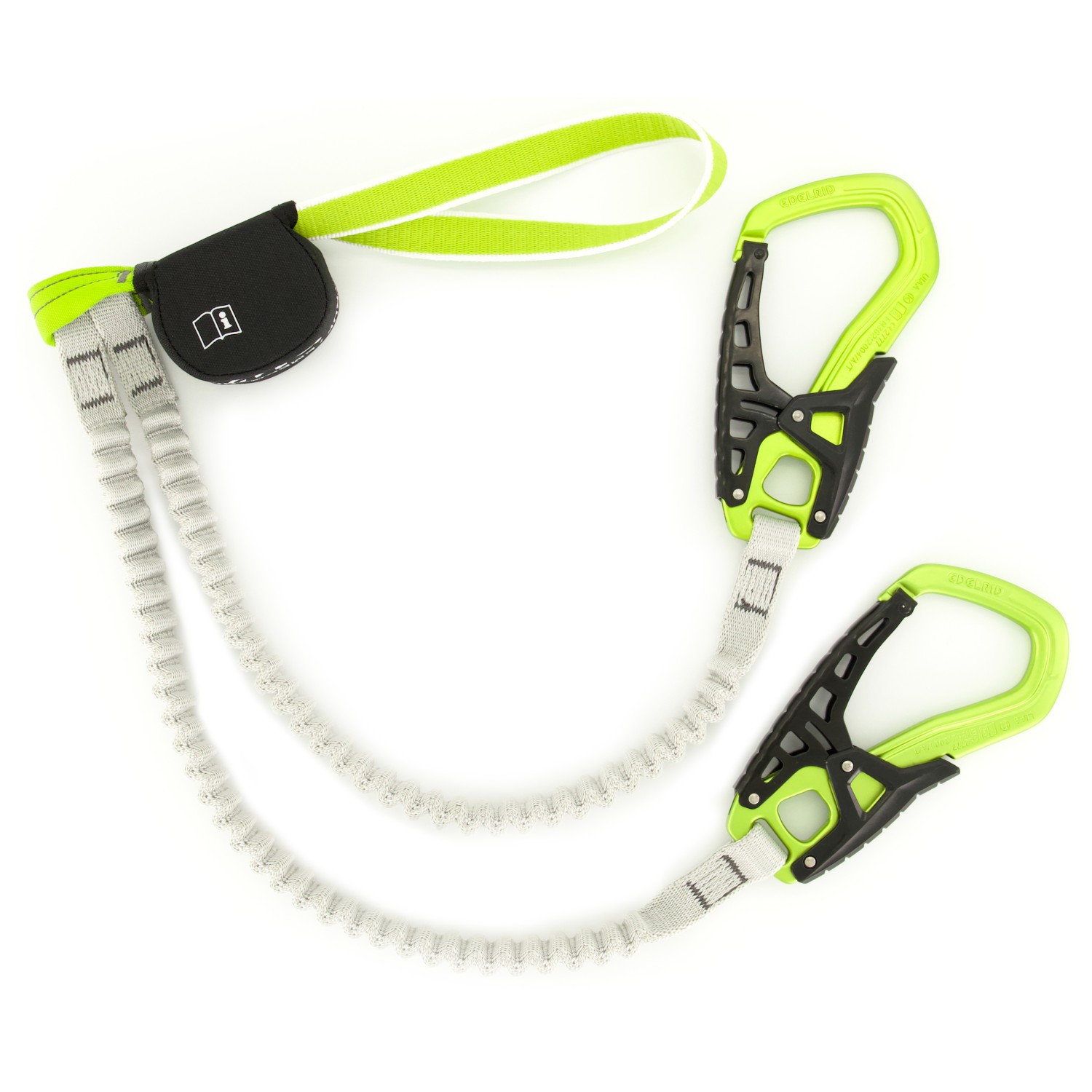
Edelrid, Camp or Black Diamond Via Ferrata Lanyard
A via ferrata lanyard connects the climber and their harness to the cables along the route. Its two arms and a hidden extra coil work as an energy absorption system in case of a fall. The two carabiners at the end of the lanyard clip into the cable. Make sure the carabiners are equipped with the palm squeeze mechanism. It’s the safest and most comfortable.
Shop on Amazon (Worldwide) / Backcountry (US)
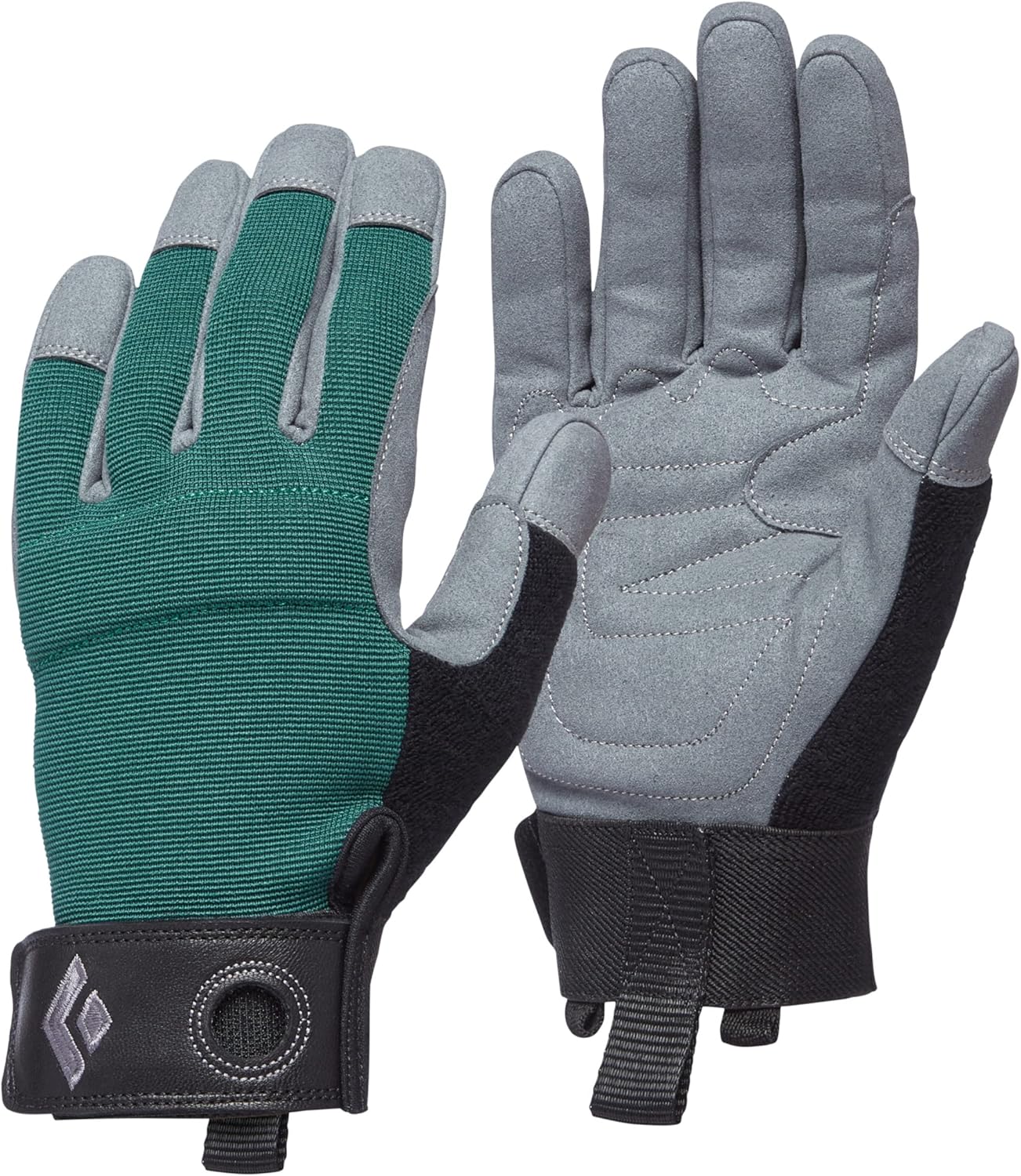
Black Diamond Crag Gloves
The gloves protect your hands from cuts and scratches you may otherwise get if you haul yourself on the cable without them. I prefer full-finger gloves for extra protection against blisters. If your hands sweat quickly, go for the fingerless version.
Shop on: Amazon (Worldwide) / Backcountry (US)
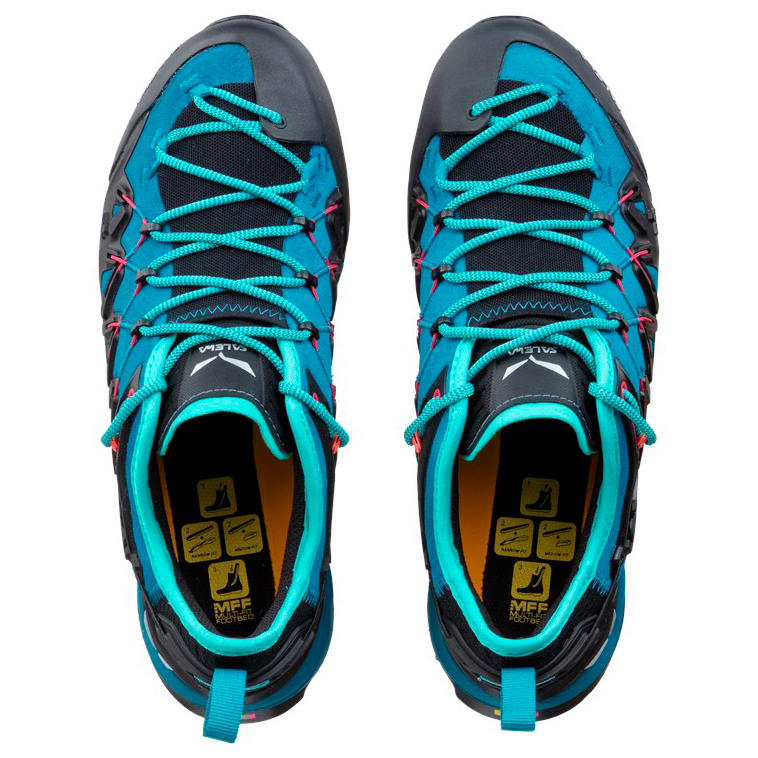
Salewa Wildfire Edge Approach Shoes
This is my go-to pair of hiking shoes for more accessible trails or via ferrata, where I don’t need extra ankle support. They provide excellent grip on the rock and are very durable.
Shop on: Amazon (Worldwide) / Backcountry (US)
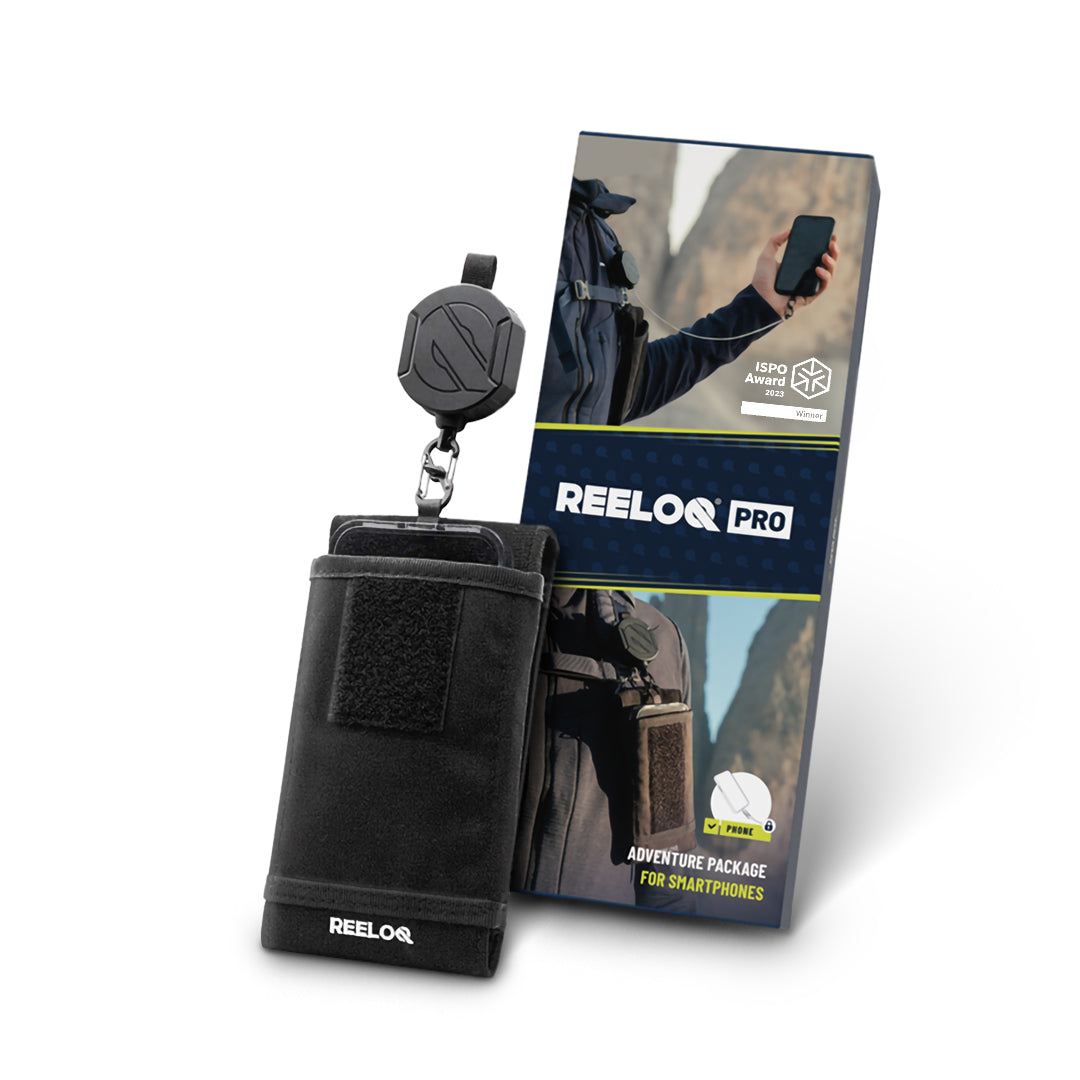
Reeloq Smartphone Securing System
If you want to take great photos on a via ferrata without worrying about losing your phone, Reeloq is the best tool for it. It’s a smartphone-securing system that allows you to use your phone on any adventure. This has been a great addition to my tool arsenal.
Shop on: REELOQ
Other regions in the Dolomites worth visiting
- Puster Valley (Val Pusteria)
- Fassa Valley (Val Di Fassa)
- Gardena Valley (Val Gardena)
- Funes Valley (Val Di Funes)
- Primero Valley (Val Primero)
- Badia Valley (Val Badia / Alta Badia)
- Cortina D’Ampezzo & Central Dolomites
- Tre Cime Nature Park
More travel and hiking resources in the Dolomites
- Photography spots in the Italian Dolomites
- Regions in the Italian Dolomites
- Itineraries for the Italian Dolomites
- Via ferratas in the Italian Dolomites
- Day hikes in the Italian Dolomites
- Hut-to-hut treks in the Italian Dolomites
Support my website!
Hi Reader! If you found any of my articles about the Dolomites useful please consider using the affiliate links below (at no extra cost) when booking your holiday. Thank you
- Reserve your hotel with Booking.com
- Book your rental car with Discover Cars
- Buy your outdoor gear with Backcountry.com (US readers)
If you have any questions, leave them in the comments below!
Hello,
I was wondering if it is possible to start the hike from Ortisei. I am staying in Rifugio Firenze the night before. Do you know if the chairlift in Ortisei will take you to Compatsch or will it add extra time to the hike to Alpe di Tires?
Hi Maxwell. The gondola from Ortisei won’t take you to compatsch but up to Alpi Di Siusi. It will be around 1 hour extra to walk from there to Alpe Di Tires. Longer, but most certainly doable in a day. I hope that helps!