
Standing on mountain summits during sunrises and sunsets are my favourite life experiences. Unfortunately, to be on the summit for sunrise means either hiking at unsociable hours or bivouacking in sub-zero temperatures. As I get older, both of these options seem less appealing. When I learned about the Capanna Fassa refuge located right on the summit of Piz Boè —the highest peak in the Sella Group in the Italian Dolomites—I knew I had to stay there overnight.
Hiking Guide To The Summit Of Piz Boè in the Italian Dolomites
Piz Boé Summit: The stats
- Distance roundtrip: 6.4 km (4 mi)
- Elevation gain: 422 meters (1384 ft)
- Time required: 2-3 hours
- Parking: 46.4881629, 11.8104728
- Type of hike: Circuit
- Trail numbers: 627A, 627, 638
Piz Boé Summit hike map overview
On the map above, you can view where to park, the trail to the summit of Piz Boè (purple), and the alternative approach that doesn’t require the cable car (yellow). This map is for overview only and should not be used for navigation. You can get the Tabacco Map no. 05 or no. 07.
Where is the Piz Boè Located?
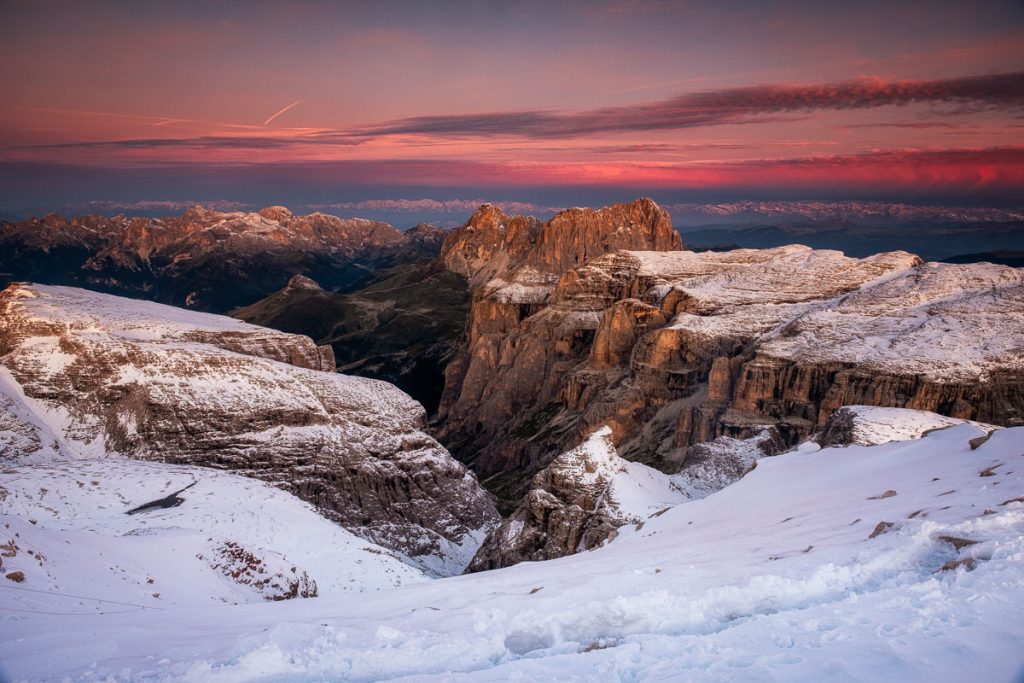
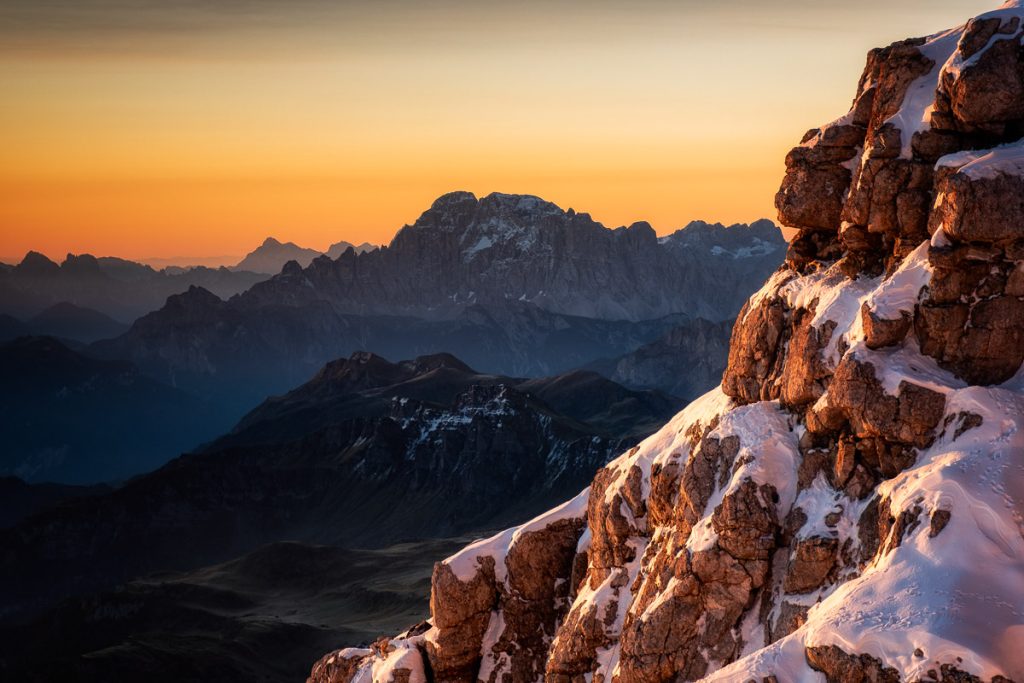
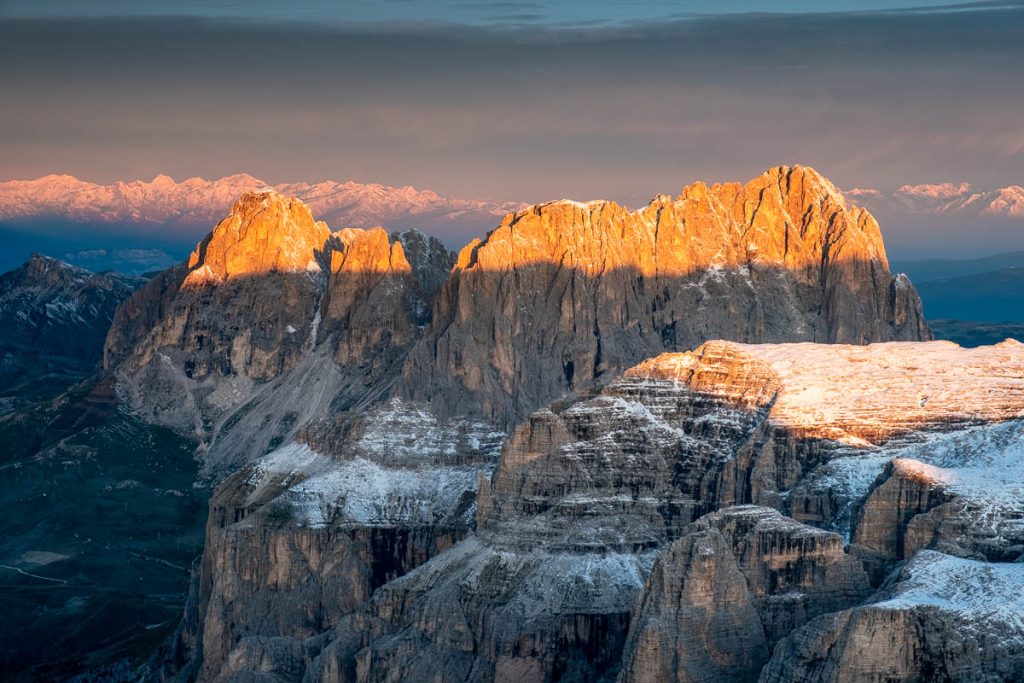
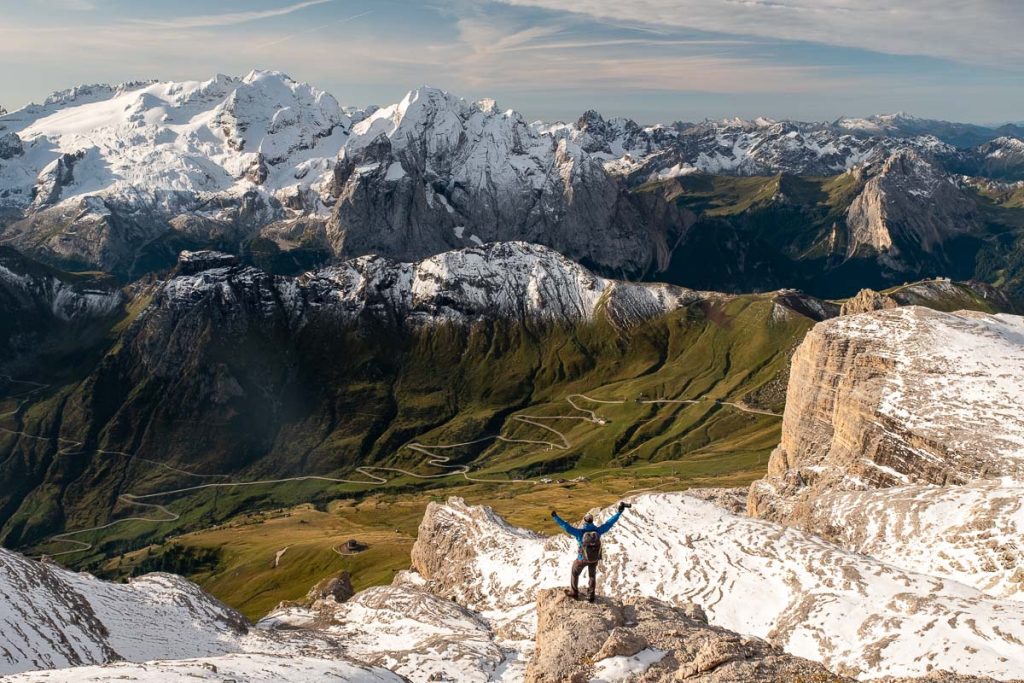
At 3152 meters, Piz Boè is the highest mountain in the Sella group. The Sella massif is a plateau-shaped massif surrounded by 4 Dolomiti valleys: Val Gardena, Val Di Fassa, Val Badia, and Val Fodom.
The Sella massif is mainly known to ski enthusiasts. During the wintertime, you can ski around it using the chain of lifts forming what’s known as Sella Ronda.
There are at least half a dozen different routes to the summit of Piz Boè, and you can study them all with the help of the Tabacco Map no. 05. However, today I will cover the quickest and easiest route, which starts at the top of the Pordoi Cable Car station.
Read more: 28 Best Day Hikes In the Italian Dolomites Rated From Easy To Difficult.
Accommodation in Val Di Fassa
The Fassa Valley is one of the most famous Dolomiti summer destinations, offering access to countless trails and via ferratas in the nearby Rosengarten Nature Park, Marmolada, Sassolungo, and Sella groups.
Canazei and Campitello di Fassa are two popular towns among tourists visiting the area. If you would like to be close to the action, I highly recommend booking at least a couple of nights around here.
Below are some of my hotel recommendations for the area. If you would like to support my site, please use the links below to book your stay (even if you choose hotels other than the ones I recommended).
Best time of the year to hike to the summit of Piz Boé
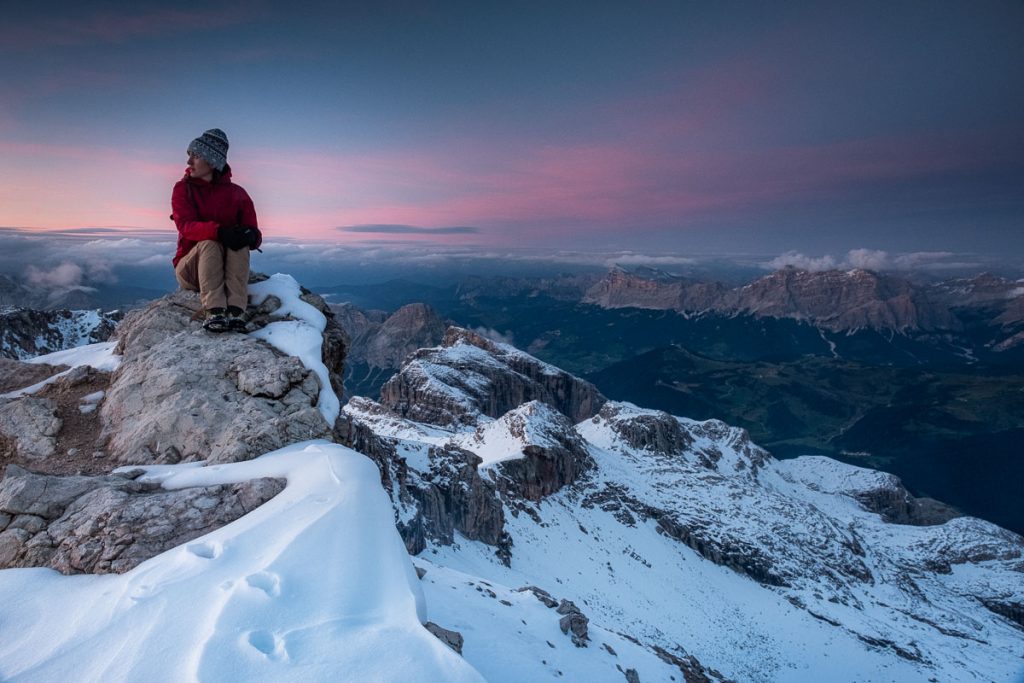
Because of the high altitude, the hiking window for the Piz Boè summit is even shorter than the regular hiking season in the Dolomites, which lasts from June until October.
If you plan to hike to the summit of Piz Boè, you must plan your trip between the end of June and September. I hiked it in mid-September, and as you can see from the pictures, the top was already covered in a fresh blanket of snow, sometimes knee-deep.
If you go within two weeks on either side of these months, you risk encountering icy and possibly dangerous conditions. If there is one thing I have learned from the many years I spent in the mountains, it is never to underestimate the power of nature.
Getting to the Piz Boé summit trailhead
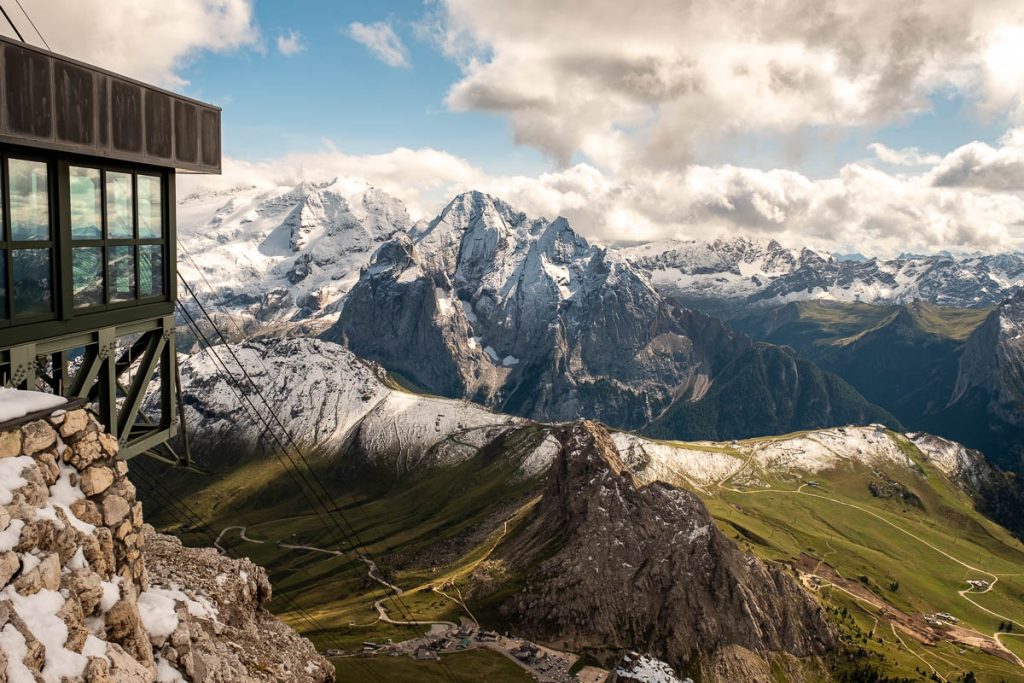
The quickest way to the summit is to start your hike at the top of the Sass Pordoi Cable car station.
The cable car leaves from Passo Pordoi, one of the Dolomites’ most scenic drivable mountain passes. There is a big parking lot near the cable car station where you can park your car free of charge. When travelling during peak season (July and August), arrive early as the area does get bustling.
The current opening times and prices for the Sass Pordoi cable car are on Val di Fassa’s official tourism website.
TIP: To avoid the cable car cost, you can hike directly from Passo Pordoi to Forcella Pordoi, where the route connects. I marked it in yellow on the map. Remember that this will significantly add to elevation gain (an extra 600 meters / 2000 ft), distance, and the required time to do the hike.
Piz Boé summit route description
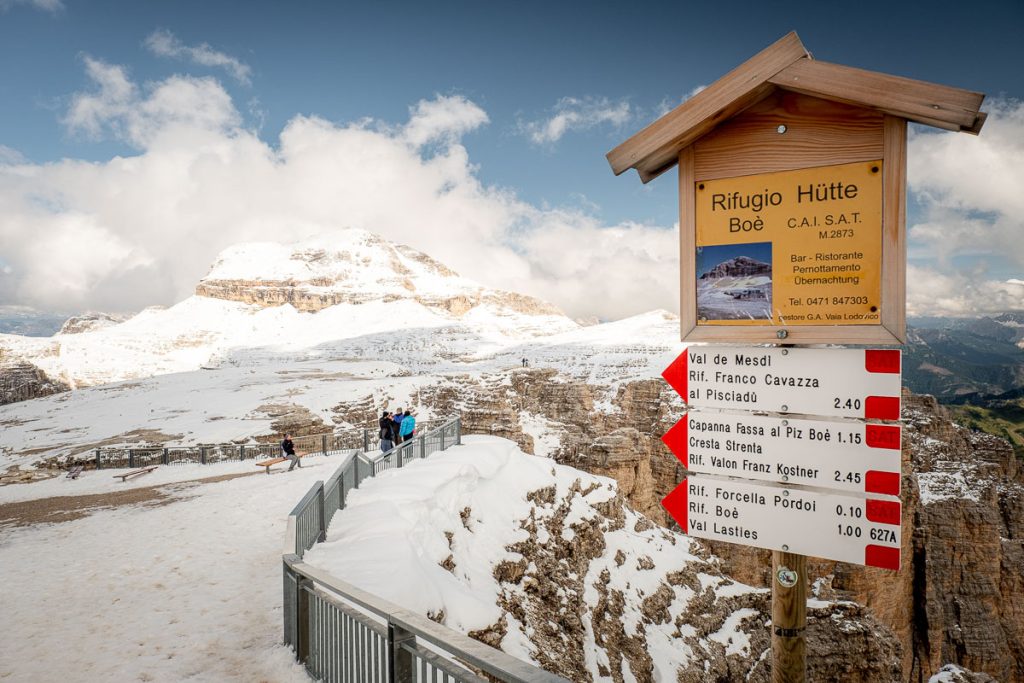
Although at times demanding, the route is relatively straightforward. The summit and the Capanna Fassa refuge can be seen in favourable weather conditions from the top of the cable car station.
Starting at Sass de Pordoi (2936 m.a.s.l), the route first follows path no. 627a, which drops a hundred meters in elevation to rifugio Forcella del Pordoi, is built right on the saddle.
From the saddle, continue on path 627 for 15 minutes before reaching a fork and starting the ascent on route no. 638 to the summit following the standard red and white marks painted on rocks.
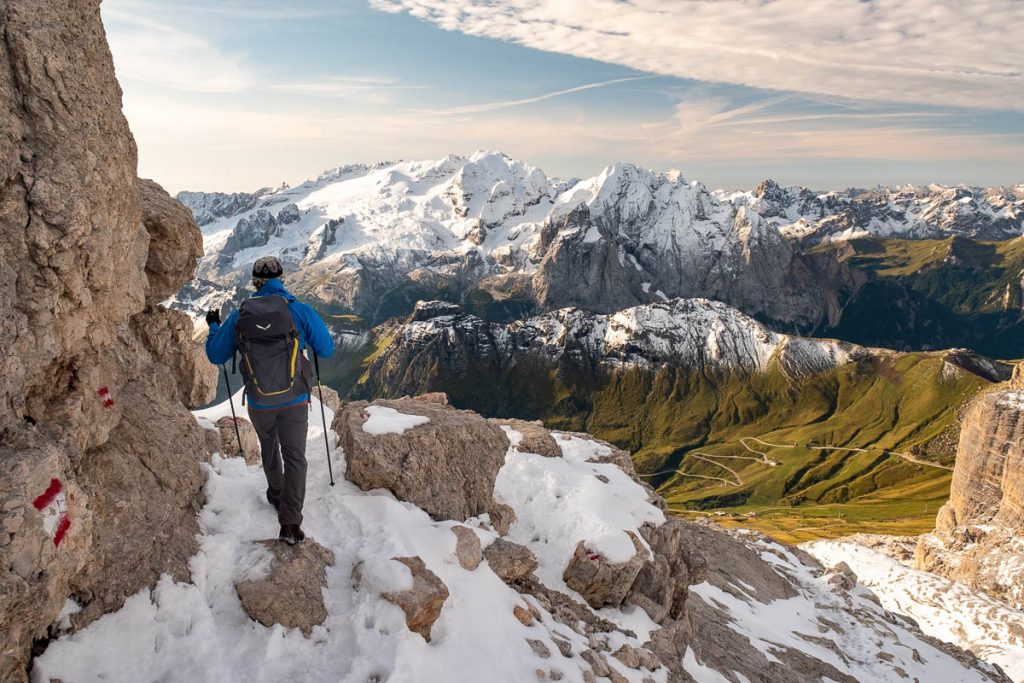
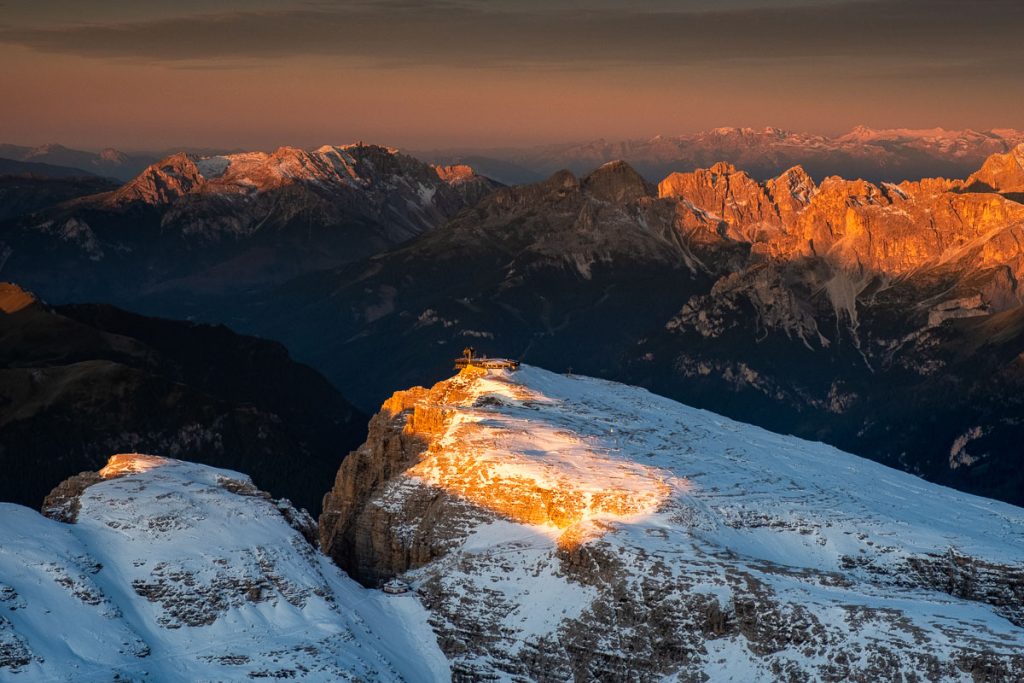
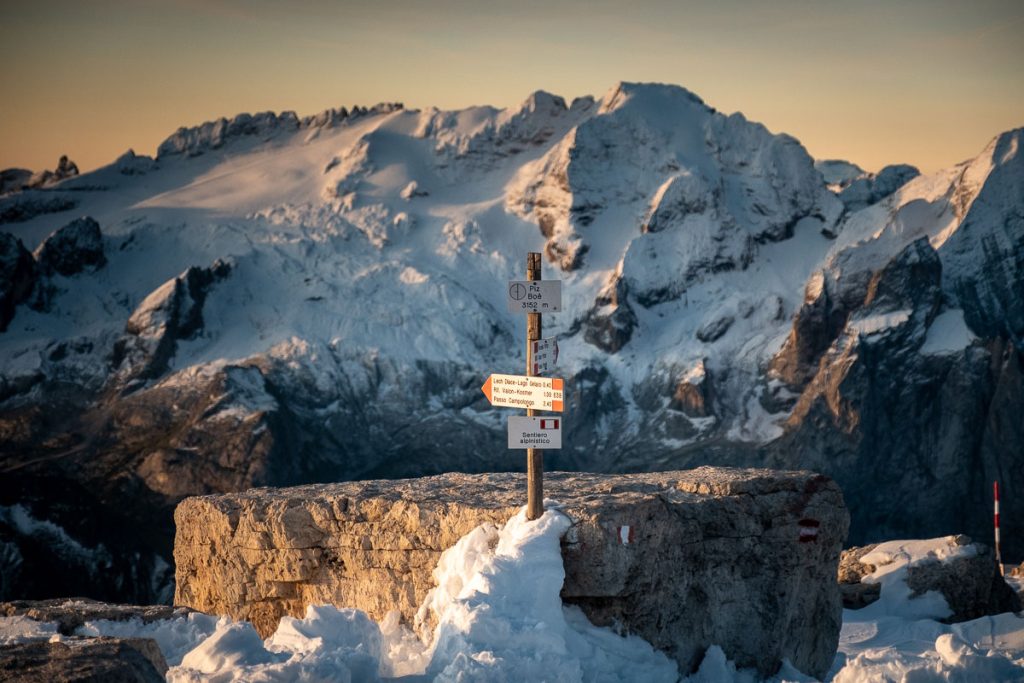
There are a few cable-protected sections on the steepest parts of the path, but they are not challenging enough to classify as via ferrata.
If you are fit, you can reach the summit within 1 hour of leaving the cable car, but there is no need to rush! Make sure to allocate at least 90 minutes to two hours to take photos on the ascent.
The descent is the same as the ascent, or you can hike down path 638 to Rifugio Boè, located 300 vertical meters below the summit, and then take path 627 back to the cable car.
Rifugio Capanna Piz Fassa: brief info
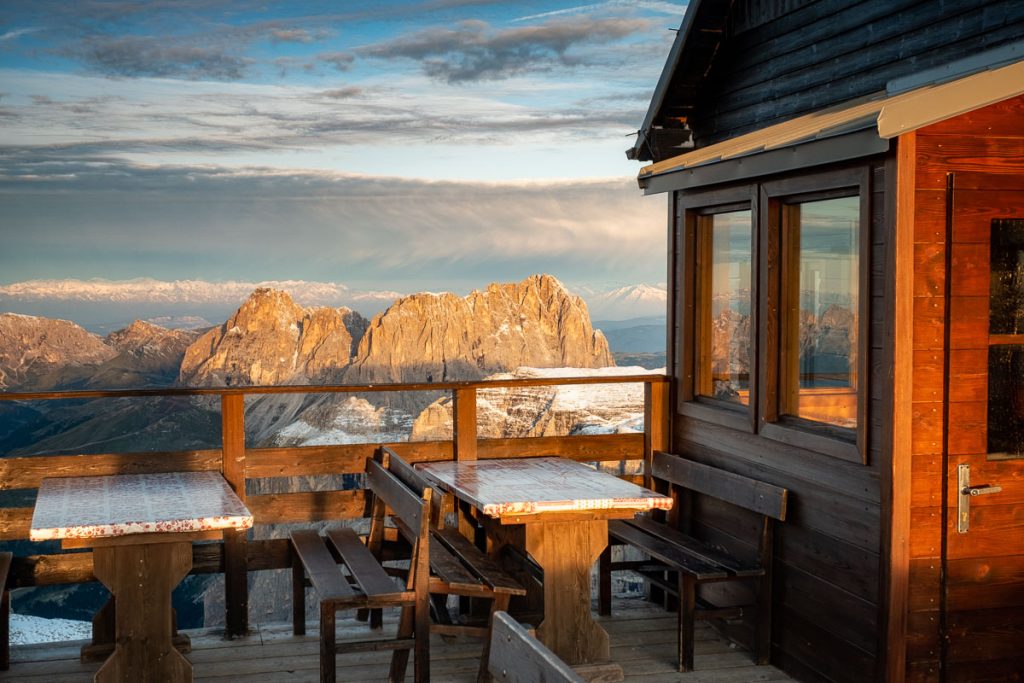
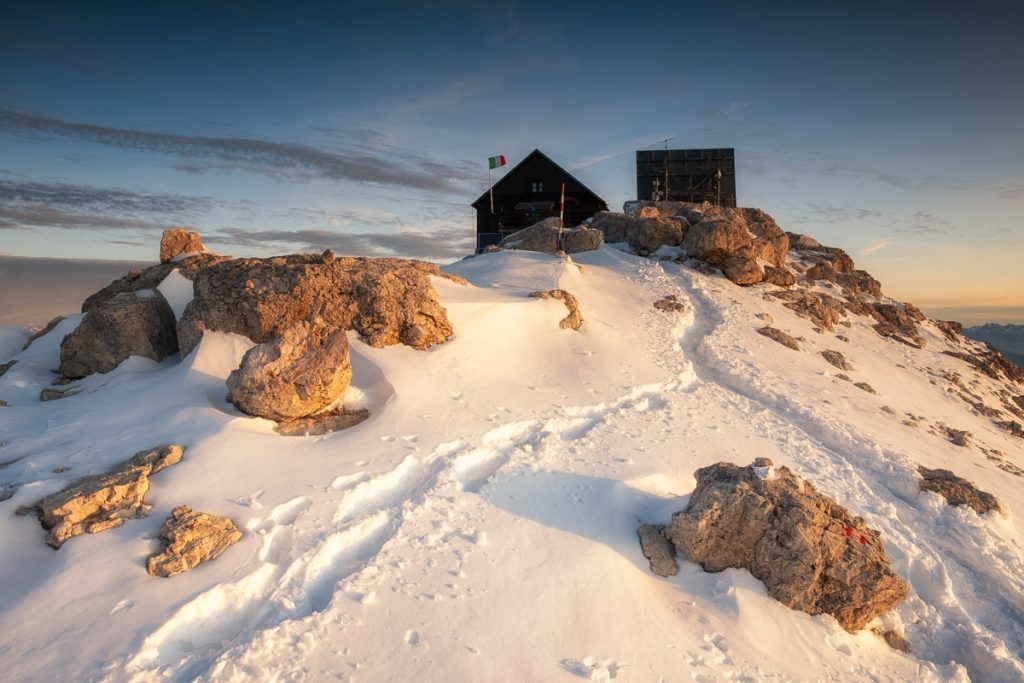
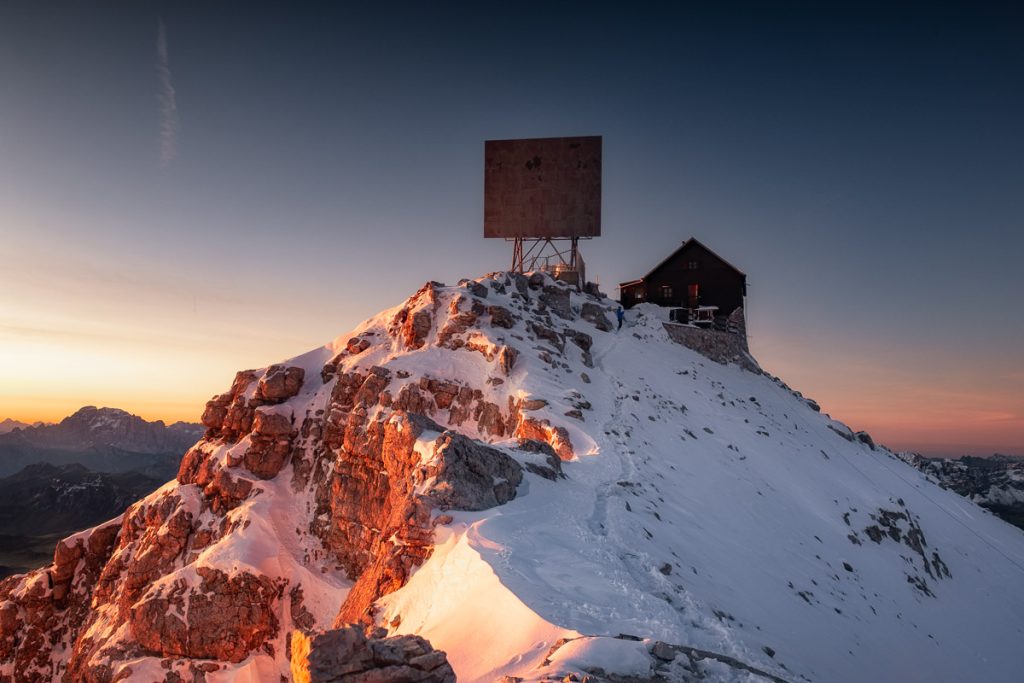
Staying in a cosy hut without dragging a few kilos of gear to the top and sipping wine on the terrace with 360-degree views of the Dolomites is hard to say no to. Millions of stars above your head for a fraction of the price of any hotel in the valleys below.
The Capanna Piz Fassa hut is unique thanks to the location where it was built. The only higher refuge in the Dolomites is the Capanna Punta Penia, which is on the Dolomites’ highest peak, Marmolada. Still, the latter lacks facilities and charm compared to the first one.
Construction of the Capanna Piz Fassa hut began in 1963, but it wasn’t until 1980 that it was expanded and became what it is today. Nowadays, it offers 22 beds and stays open from the third week of June until the last week of September.
How to make a reservation at the Rifugio Capanna Piz Fassa
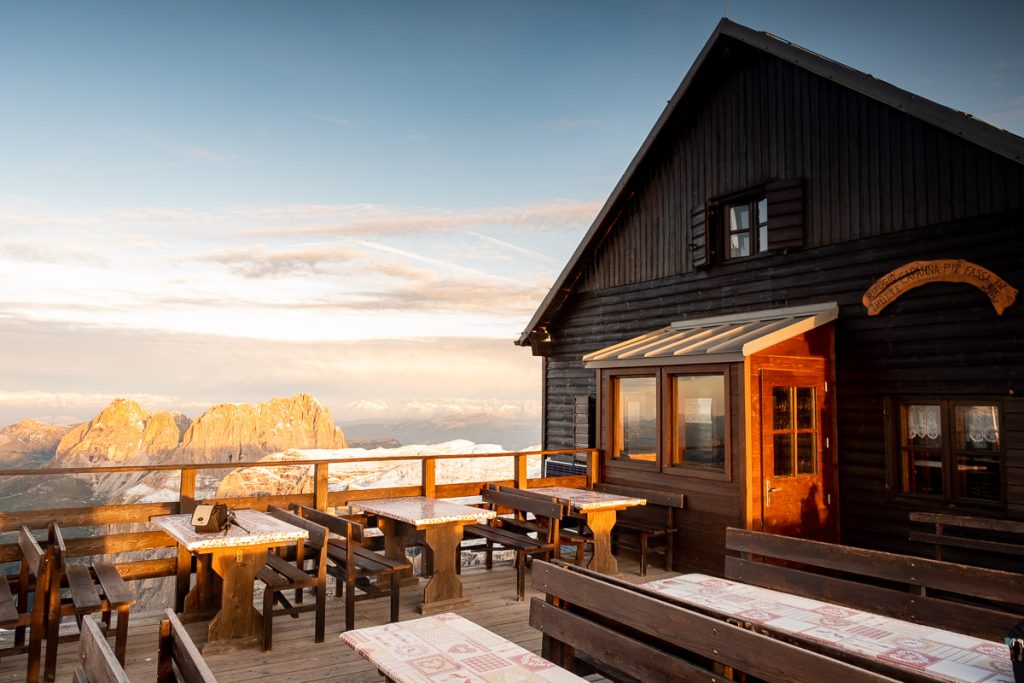
Reservations can be made year-round by either sending an email or calling. There is usually at least one staff member who speaks English and can assist international tourists. You can find current prices and contact details on their website.
If you would like to know more about the ins and outs of staying in a hut in the Dolomites, including the meaning of half board, visit the link to my other article.
Even though you can reach the summit of Piz Boè and get back down within 2-3 hours, I highly recommend staying overnight at the Capanna Piz Fassa hut. While there, I captured some of my best pictures of the Dolomites.
Other hikes and via ferratas nearby
- Via ferrata Brigata Tridentina
- Sassolungo Circuit Hike
- Vallunga Hike
- Via ferrata Oskar Schuster
- Via ferrata Mesules/Pössnecker
- Seceda Ridgeline
- Via ferrata Gran Cir
- Alta Via 2 hut-to-hut traverse
More travel and hiking resources in the Dolomites
- Photography spots in the Italian Dolomites
- Regions in the Italian Dolomites
- Itineraries for the Italian Dolomites
- Via ferratas in the Italian Dolomites
- Day hikes in the Italian Dolomites
- Hut-to-hut treks in the Italian Dolomites
Support my website!
Hi Reader! If you found any of my articles about the Dolomites useful please consider using the affiliate links below (at no extra cost) when booking your holiday. Thank you
- Reserve your hotel with Booking.com
- Book your rental car with Discover Cars
- Buy your outdoor gear with Backcountry.com (US readers)
If you have any questions, leave them in the comments below!
Hi there! Thanks so much for the advice—it’s really helping us plan our trip more easily!
I have a question about the hiking section from Passo Pordoi without taking the cable car. How difficult is this part of the hike? Is it technically more challenging than the trails at the top of the mountain?
Hi Vytautas. It’s not technical (no chains etc.), but it is a tight gully, with a lot of zig zags and a rocky scree path, which requires shoes with a really good grip. In regards to the rest of the trail it is however easier.
Hi, I see dog in you posts. Is this hike suitable for dog? I read some other blog and it was mentioned that the final climb is the toughest, with rock scrambling, metal rungs, and chains to make your way safer.
Hi Nika. It depends on a dog. I have done some light scrambles with mine (for example Durrenstein), and he was fine, however yes going up Piz Boe, there are short scrambling sections along the way. If you have an agile dog and not too heavy so you can help him out, you might be able to get away with it, but it is definitely a risk.
Hi! We’ve got a spot at rifugio capanna piz fassa. What is the best way to combine piz boe hike and sasso lingo circuit?
Hi Michelle. You can hike to Capanna Fassa on day 1, starting at Passo Gardena then hike to Rifugio Piscadiu, onwards to Rifugio Boe then Capanna Fassa (there are some short via ferrata sections along the way so you will need the equipment. On day two you can hike to the top of the Sass Pordoi cable car and take it down to Passo Pordoi. From Passo Pordoi catch a bus to Passo Sella and do the Sassolungo Circuit. There is also a hiking route from Rifugio Boe to Passo Sella but it will take a lot longer. I would recommend that you get the map of the area.
Hi Marta,
Thanks a lot for your reviews, they indeed helped me a lot to plan my Alta Via 1 and 2 trips. I am fascinated by the lunar landscape of the Sella massif, therefore I plan to take an additional day on AV2 staying in rif. Boe, and I would very appreciate you suggestion.
I plan to start the day in rif. Pisciadu, stay in rif. Boe, and hike extensions around it – Piz Pisciadu (on a way to Boe) and Piz Boe. It seems quite doable, and I thought to do also a loop, starting from rif. Boe, going on Piz Boe, then to Forcella Pordoi and then I have a question: do you know if is there a path down from Forcella Pordoi, that could bring me back to rif. Boe through what I see on the map as Val Lasties? Komoot app allows to build a route, but you never know if it is really passable and how difficult it might be. Do you know if this route exist, is it well marked, and how difficult it is? Any suggestions on alternative paths around rif. Boe, just to explore this plateau in the best way possible?
Thanks in advance.
Hi Sergei. Thanks for visiting. Yes there is a path from Forcella Pordoi back to rifugio Boe. It’s the regular Alta Via 2 route which you can view on my Alta Via 2 guide map. As for other routes there are also via ferrata Mesules and via ferrata Brigata Tridentina which run in the Sella Massif.
Awesome thorough write-up, and *spectacular* photos!
Thanks David!
Hello! do you know if the cable car sass pordoi will be open in 11/11/22 ? thanks!
Hi Leonardo. Thanks for stopping by. No, the lift is already closed and it will reopen for the winter season in December. At the moment the hike to Piz Boe is not possible because there is already snow up there. The refuge is already closed too. I hope that helps!
Hi Marta
It sounds like there is not a lot of elevation gain on this hike since the cable car gets you a good portion of the distance even though you initially drop 100 m. If I am figuring it correct it sounds like about 170 m of gain. Am I understanding that correctly? In your article you said, “a few cable protected sections on the steepest parts of the path,” Are those fairly exposed and not very wide paths where someone with a fear of heights would struggle? Thanks so much and I love your articles they are so helpful. Best Regards, Jerry
Hi Jerry. Thanks for visiting. Once you take the cable car to Sass Pordoi and start hiking you first drop the elevation (around 100 meters) to rifugio Forcella Pordoi which lies at ca. 2850 meters a.s.l. Piz Boe reaches 3150 which means you will need to gain 300 meters of elevation. As for your other question, the exposure on the cabled sections can be intimidating to those with a fear of heights. What you can do is to bring via ferrata gear with you to secure youself to the cables. It can’t hurt. I hope that helps! Let me know if you have any more questions.