
Via Ferrata Pössnecker, also known by its Italian name—Mesules—is one of the oldest via ferratas in the Italian Dolomites (112 years old as of 2024). The route scales the feature-rich western face of the Sella Massif. Modern cables and iron rods have long replaced the original wooden ladders and steps, but this doesn’t change the fact that this is a long, demanding and advanced route.
Total roundtrip distance (incl. approach)
18 kilometres / 11.2 miles
Elevation gain
890 meters / 2920 feet
Difficulty
Advanced (C/D)
Time required
6-8 hours
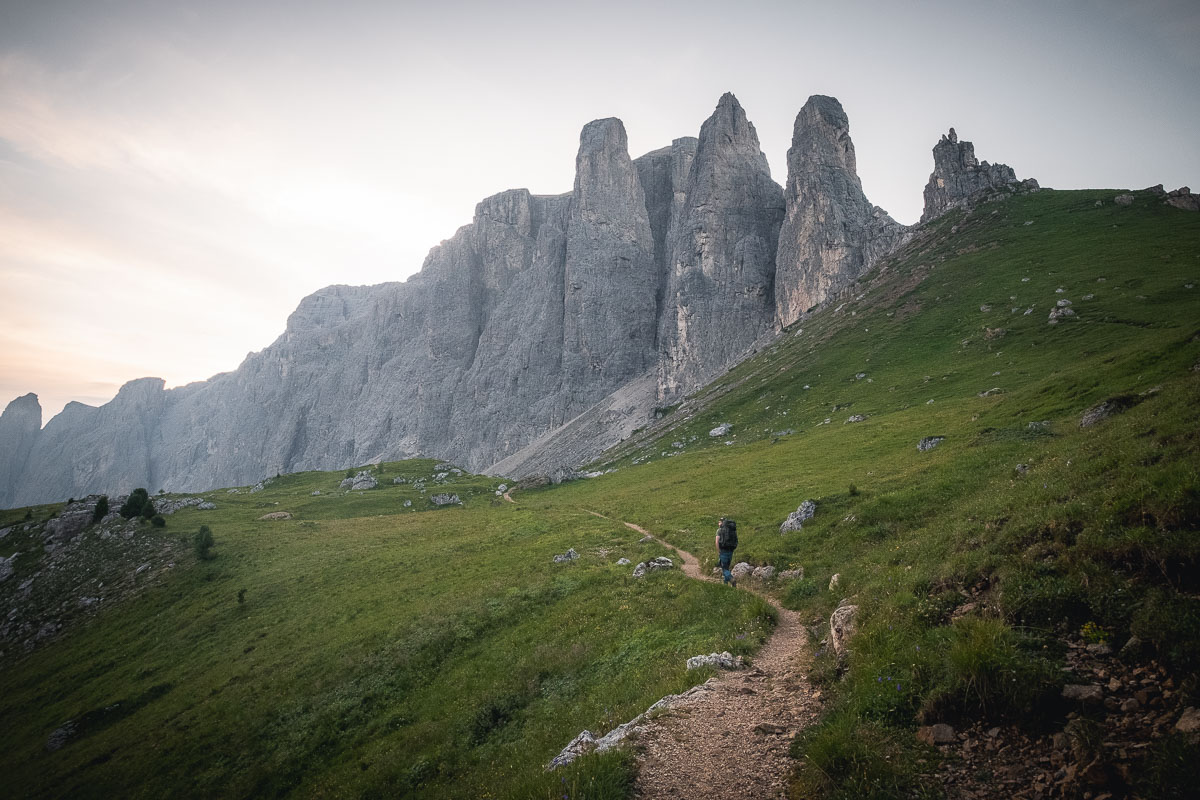
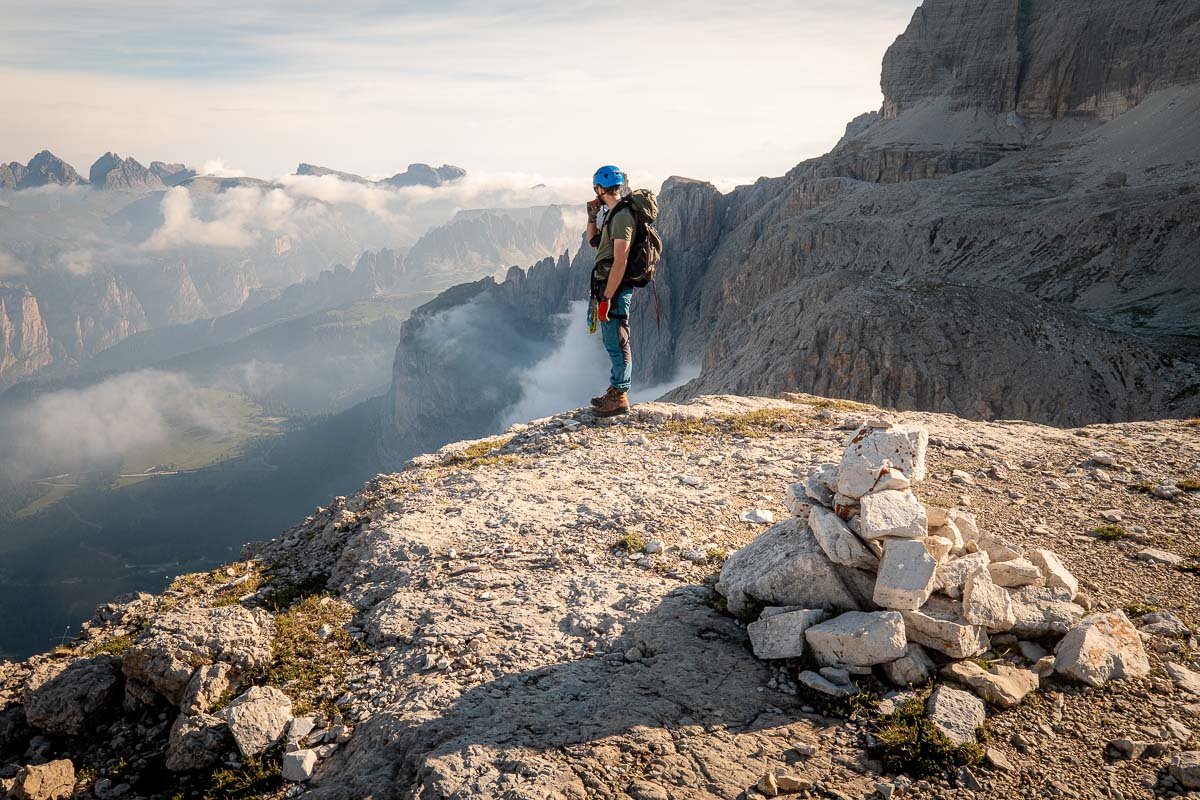
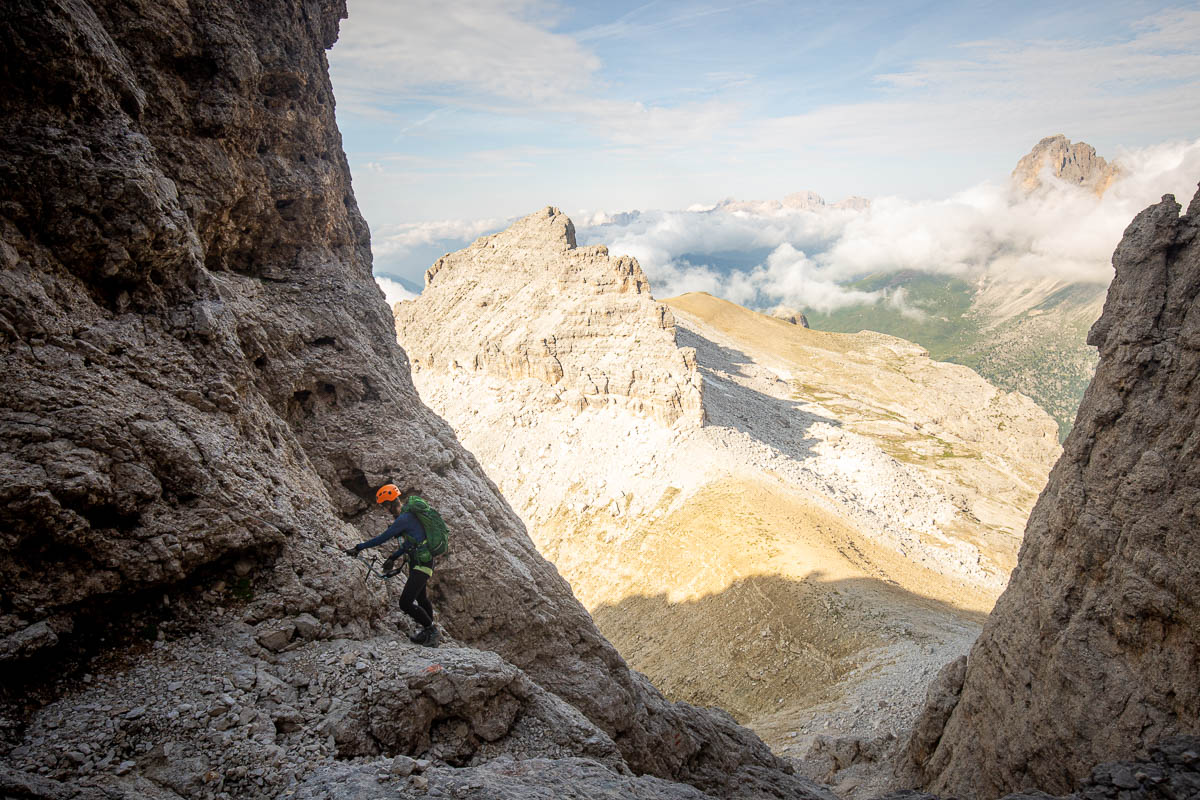
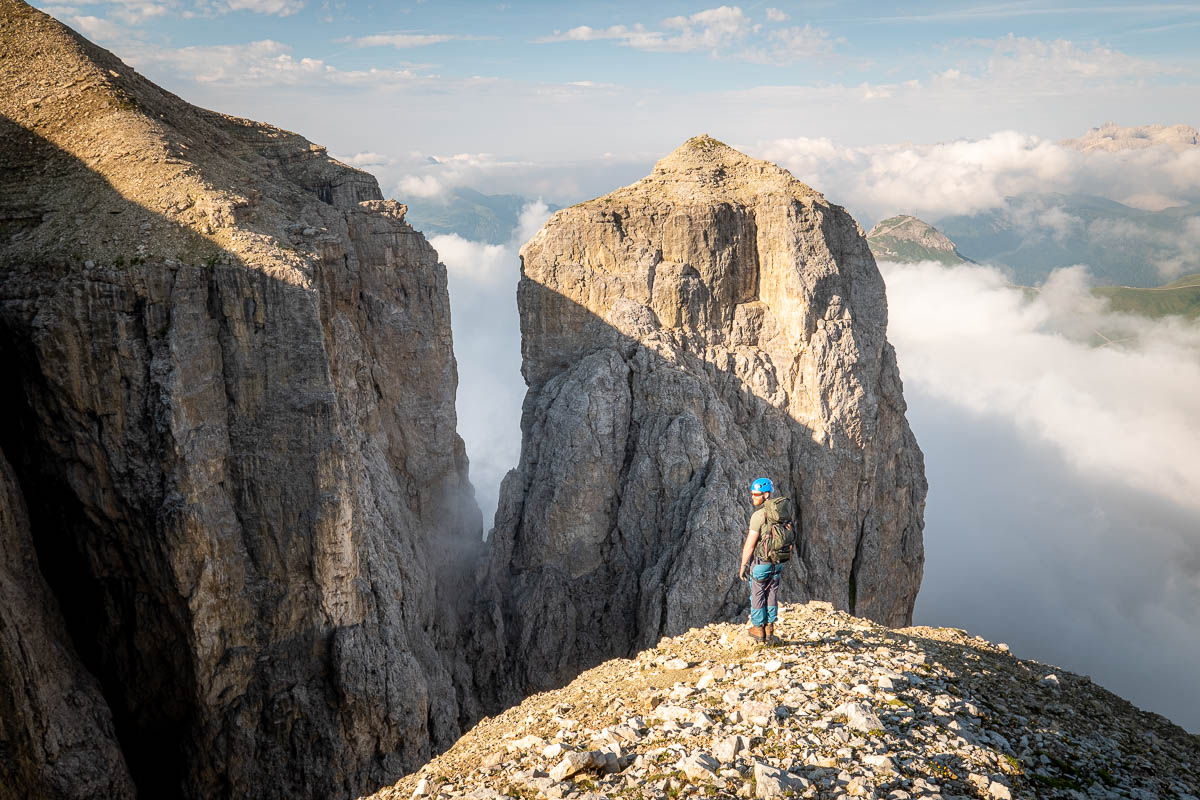
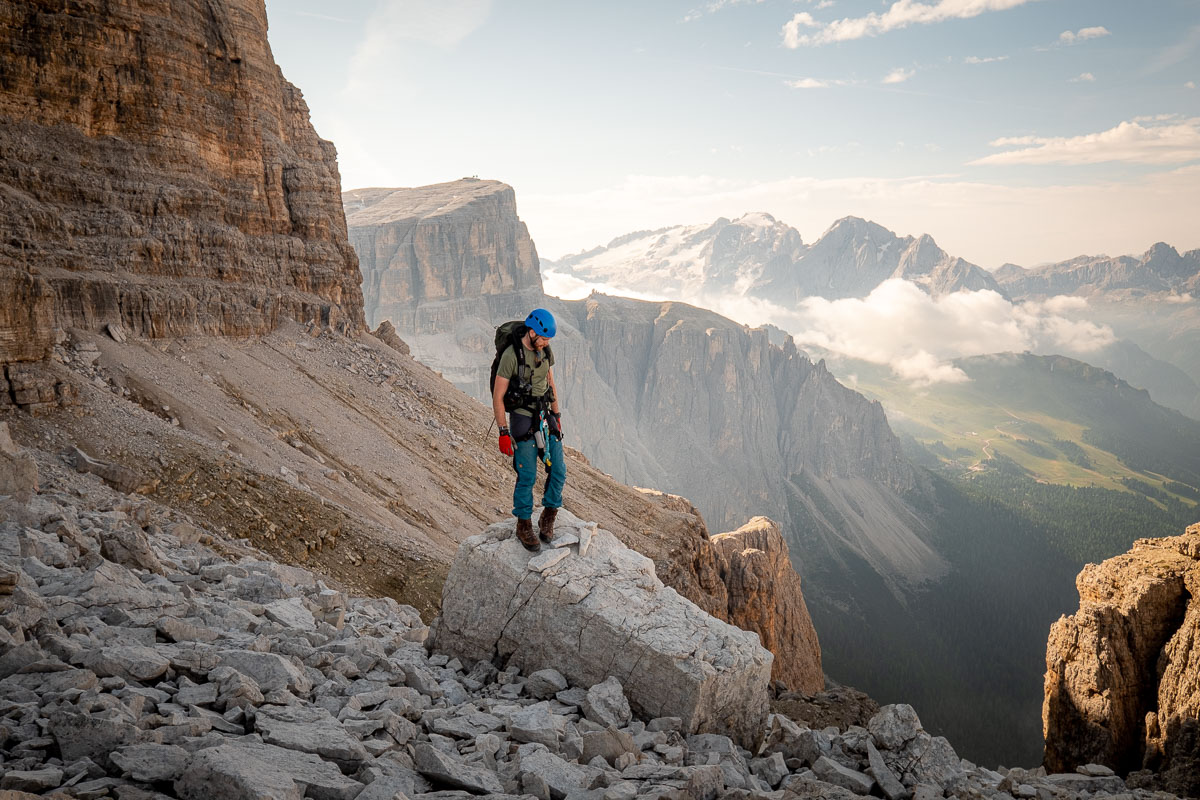
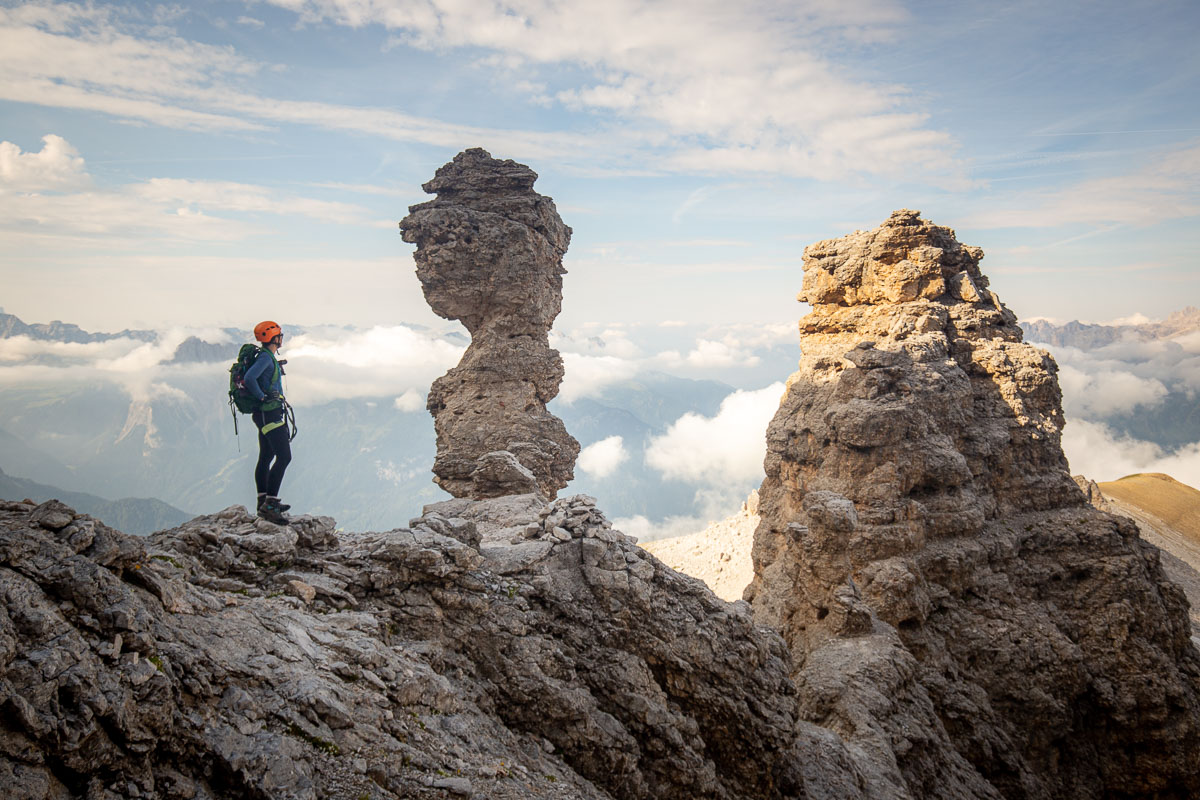
Overview of the via ferrata Pössnecker
Before you dive deeper into this article, you need to know that it contains sections of unprotected scrambling. For any climber, grade 4 is nothing but a walk in the park. However, if you have never experienced exposure to a rock wall, this via ferrata can give you some severe vertigo. Make sure to spend a few days tackling some beginner or intermediate via ferratas before moving on to harder ones.
The map of the via ferrata
Important info about the via ferrata
If you were wondering when to go, where to park and what the trail numbers for via ferrata Pössnecker are, all information is below
When to go: July – September
Trail numbers: 649, 647
Highest point: 2941 meters / 9649 feet
Parking:
46.50794, 11.7683
Trailhead:
46.50863, 11.76685
Nearest towns: Canazei, Campitello Di Fassa, Selva
Getting there
Via ferrata Pössnecker starts at Passo Sella, one of the most photogenic mountain passes in the Dolomites. The pass connects two famous Dolomiti valleys: Gardena and Fassa. just a few meters away from Hotel Maria Flora on route SS242.
By bus
Buses run regularly during summer between Fassa and Gardena Valley over the Sella Pass bus stop.
By car
There is a free parking area right near the start of the path, but it fills up quickly during the day, so make sure to arrive early.
Route description
The approach
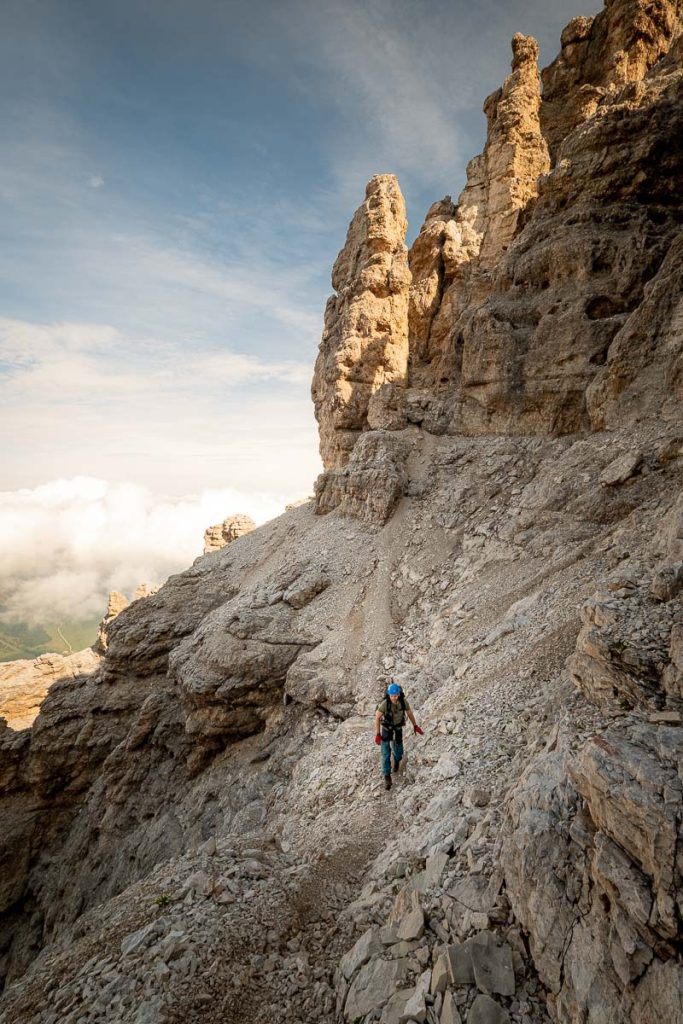
The approach takes about 30 minutes and follows path no. 649 across undulating fields, often sprinkled with wildflowers in the early summer months. Right ahead stretches the dramatic view of the Sella towers. The path then navigates through a small boulder field before a short uphill burst takes you to the start of the cables, where you can gear up.
The klettersteig (via ferrata in German) plaque stands boldly against the light rock. It was constructed in 1912, making it one of the oldest via ferratas in the Dolomites.
Via ferrata section
The scrambling on via ferrata Pössnecker is immediately off grade D and rises quickly, offering fantastic views toward Sassolungo, where another one of my favourite via ferratas runs – Oskar Schuster.
Yellow stains from over 100 years of leather climbing gloves and rubber-soled mountain boots indicate most hand/foot positions.
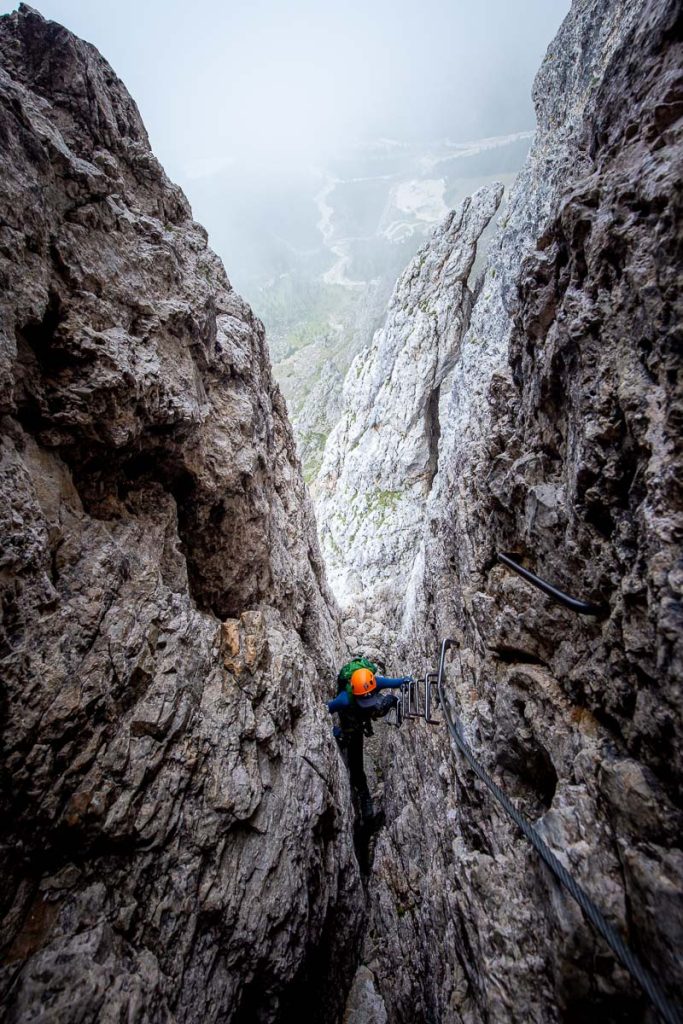
Not before long, you enter an unassuming gully and start to ascend unprotected. It’s the trickiest part of the route, and a rope could be helpful for extra security.
Then, through a series of unprotected staples with significant exposure, the route re-joins the cables, and you can continue feeling much safer. A couple hundred meters later, it changes to a shallower pitch and continues on scree switchbacks.
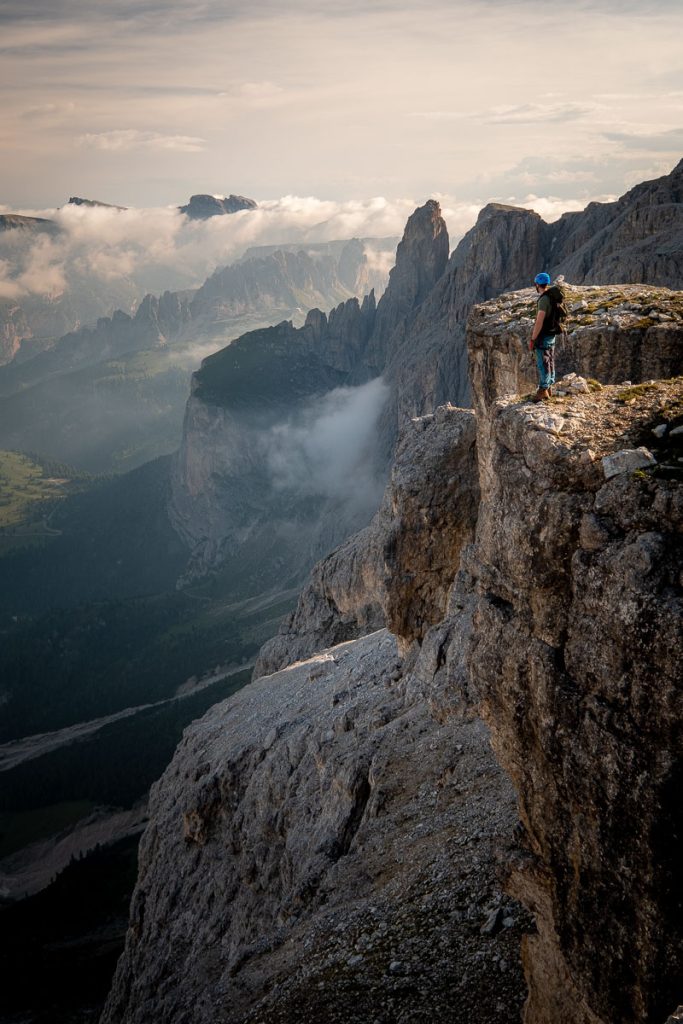
The most scenic part of the route is on the first plateau on the Sella Massif, which marks most of the ascent. You will reach it after the first couple of hours. It’s a great place to snap incredible photos of the largest of the Sella Towers, Sassolungo, Sassopiatto, and over Val Gardena to Furchetta, Sass Rigais, and the rest of the Puez-Odle Range.
From the plateau, the path continues east-northeastward to a scenic col. If you are wondering how you will ever be able to follow all these directions, don’t worry. Routes in the Dolomites are always marked with white and red markers. All you have to do is pay attention and follow them!
After the col comes the next climbing section; it is far simpler (and shorter) than the first one and ends at the summit of Piz Selva (2941 meters / 9649 feet).
The broad, open summit offers 360-degree vistas of the top plateau of the Sella Massif, which feels like a completely different topography. The disparity between the rich, green Passo Sella and the arid, grey rock on top of the Sella Massif is impressive.
The descent
That’s it for scrambling! Now it’s time to get back to Passo Sella where you started. There is a long descent ahead, but the views will compensate for it. Take off your via ferrata gear and store it in your backpack, as you won’t need it on the descent.
From the summit, continue on path 649 for around 45 minutes. For a couple of hundred meters, the descent follows the same route as Alta Via 2, one of the multiday traverses across the Dolomites. In this section, paths 649 and 666 run concurrently for a while, so don’t be alarmed when you see a sign saying you’re on path 666.
Eventually, the path splits and loops around back southward on path 647. Remembering all these numbers might be overwhelming, so I highly recommend purchasing the Tabacco map no. 05 to visualize the route better.
Once you turn onto pathway 647, it runs across a large plateau and is marked with large yellow poles for the numerous high alpine races. The track loses elevation quickly down Plan de Roces in Val Lasties and surrounds you with vertical walls on both sides.
The final intersection gives you a choice of heading quickly to road SS242 (the same one that runs through Passo Sella) on path number 656, which emerges at an indistinct hairpin turn.
The downside of this route is that it drops to 2050 meters, and you will have to hike back up to Passo Sella. This might be a bit too tiring after an already long day.
The more logical descent, albeit taking you further away from Passo Sella, continues down path 647 and emerges a short walk from two restaurants, Pian Schiavaneis and Monti Pallidi. A bus stop outside the two establishments will take you back to your vehicle at the pass.
The bus runs every 30 minutes in summer. Alternatively, hitchhiking is a great option, as every car going uphill is heading over Passo Sella.
Overnight stay & dining possibilities
There are no alpine huts directly on via ferrata Pössnecker. However, before you start your descent, you can make a slight detour to Rifugio Boè. It will add 30 minutes to your day.
At the trail’s end, there are two restaurants: Pian Schiavaneis and Monti Pallidi. I marked all of them on the map.
Where to stay nearby
Fassa Valley stretches for approximately 20 kilometres and is dotted with little towns. Where one ends, another one begins. Below are my recommendations for accommodation in Val Di Fassa.
Best Value
Hotel Ladina in Campitello Di Fassa
Top Rated
Golden Park Resort in Campitello Di Fassa
Other activities nearby
Travel resources for the Dolomites
Shop my via ferrata gear essentials
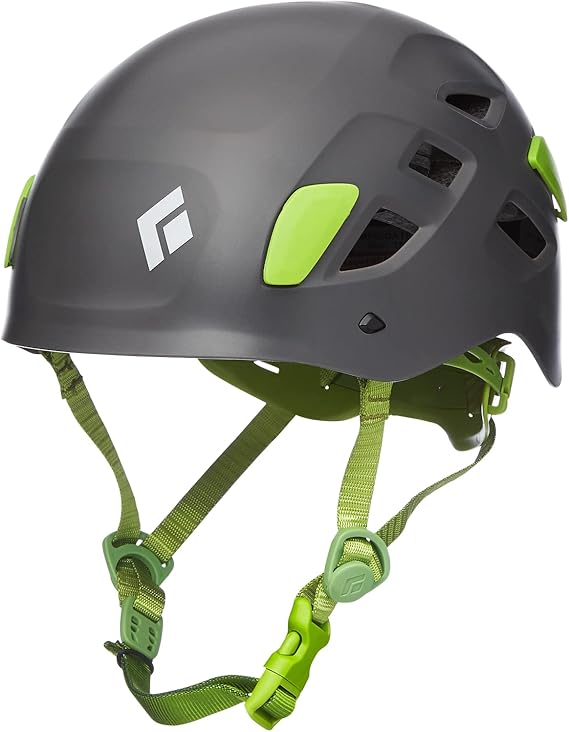
Black Diamond Helmet
Rockfall is a significant concern on via ferrata routes. Unbeknownst to you, other climbing groups above you may accidentally dislodge a small rock and send it down the mountain. If it hits you on the head, it could have serious consequences. A helmet on your head (not inside your backpack) is necessary.
Shop on: Amazon (Worldwide) / Backcountry (US)
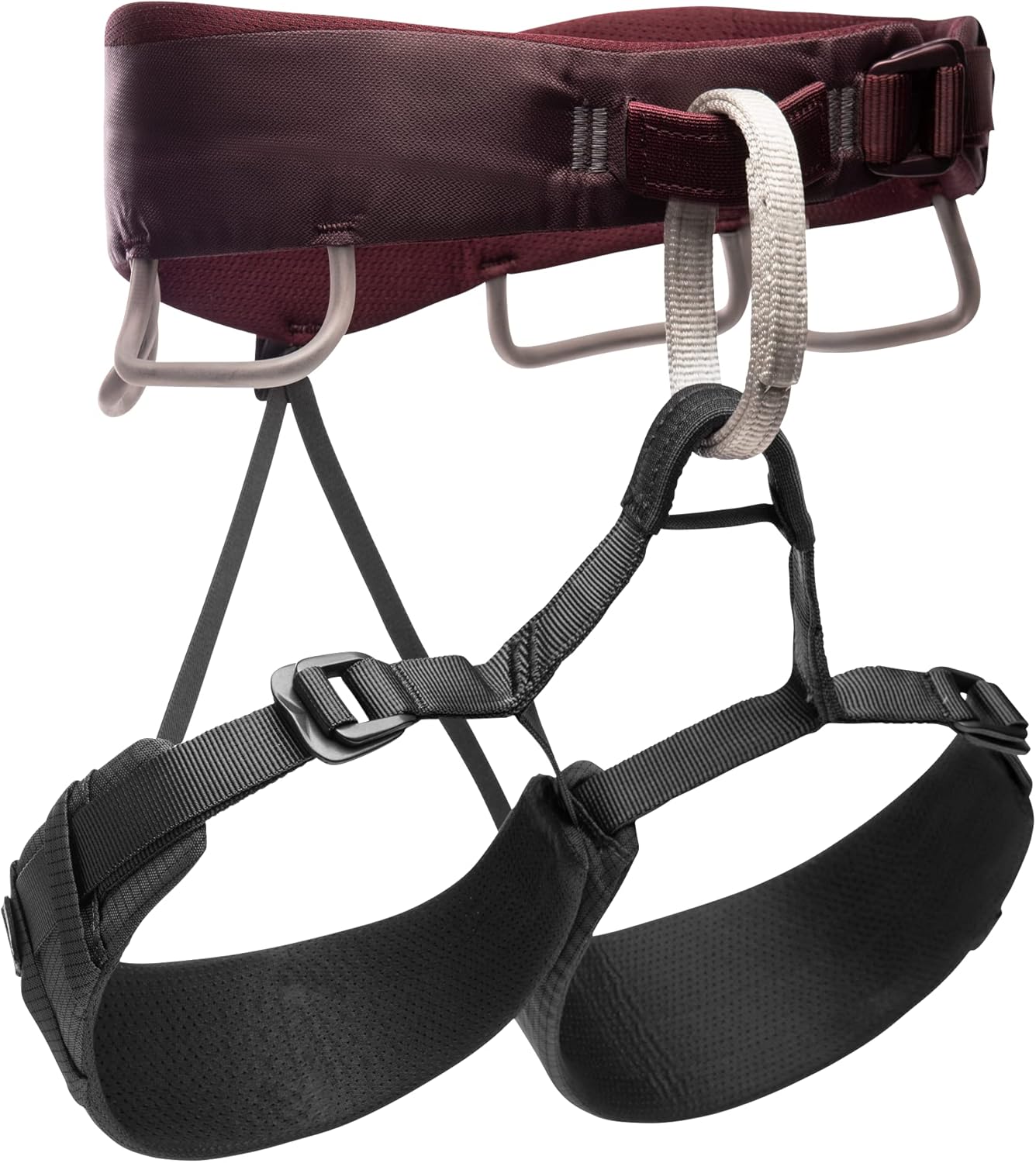
Black Diamond Momentum Harness
Another must-have on a via ferrata route is a climbing harness. A harness works as an anchor point for your via ferrata lanyard. Try it before your trip to ensure it fits snugly without limiting your movements. Aim for a lightweight harness that will be comfortable to wear between the cable-protected sections when hiking.
- Shop Women’s on Amazon (Worldwide) / Backcountry (US)
- Shop Men’s on Amazon (Worldwide) / Backcountry (US)
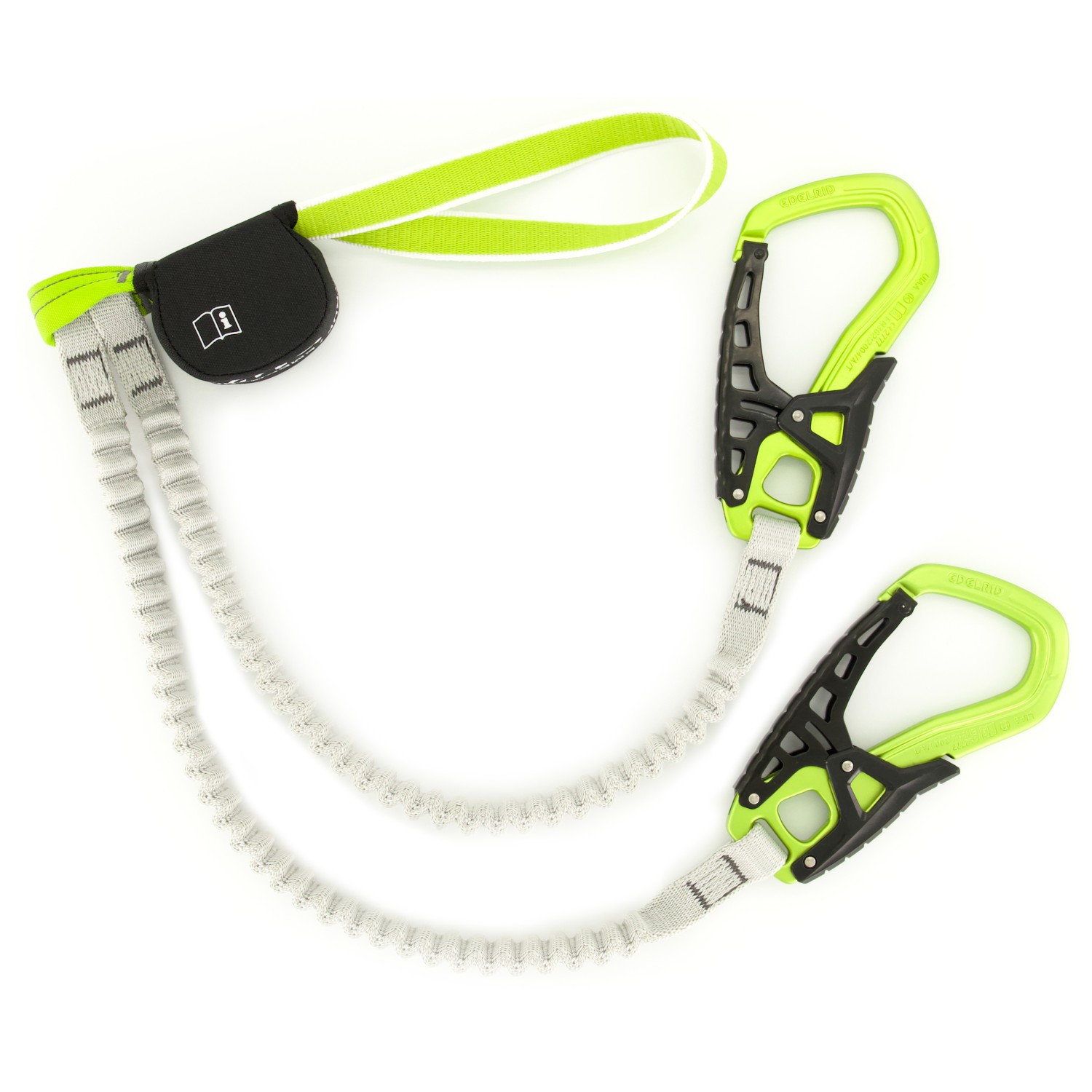
Edelrid, Camp or Black Diamond Via Ferrata Lanyard
A via ferrata lanyard connects the climber and their harness to the cables along the route. Its two arms and a hidden extra coil work as an energy absorption system in case of a fall. The two carabiners at the end of the lanyard clip into the cable. Make sure the carabiners are equipped with the palm squeeze mechanism. It’s the safest and most comfortable.
Shop on Amazon (Worldwide) / Backcountry (US)
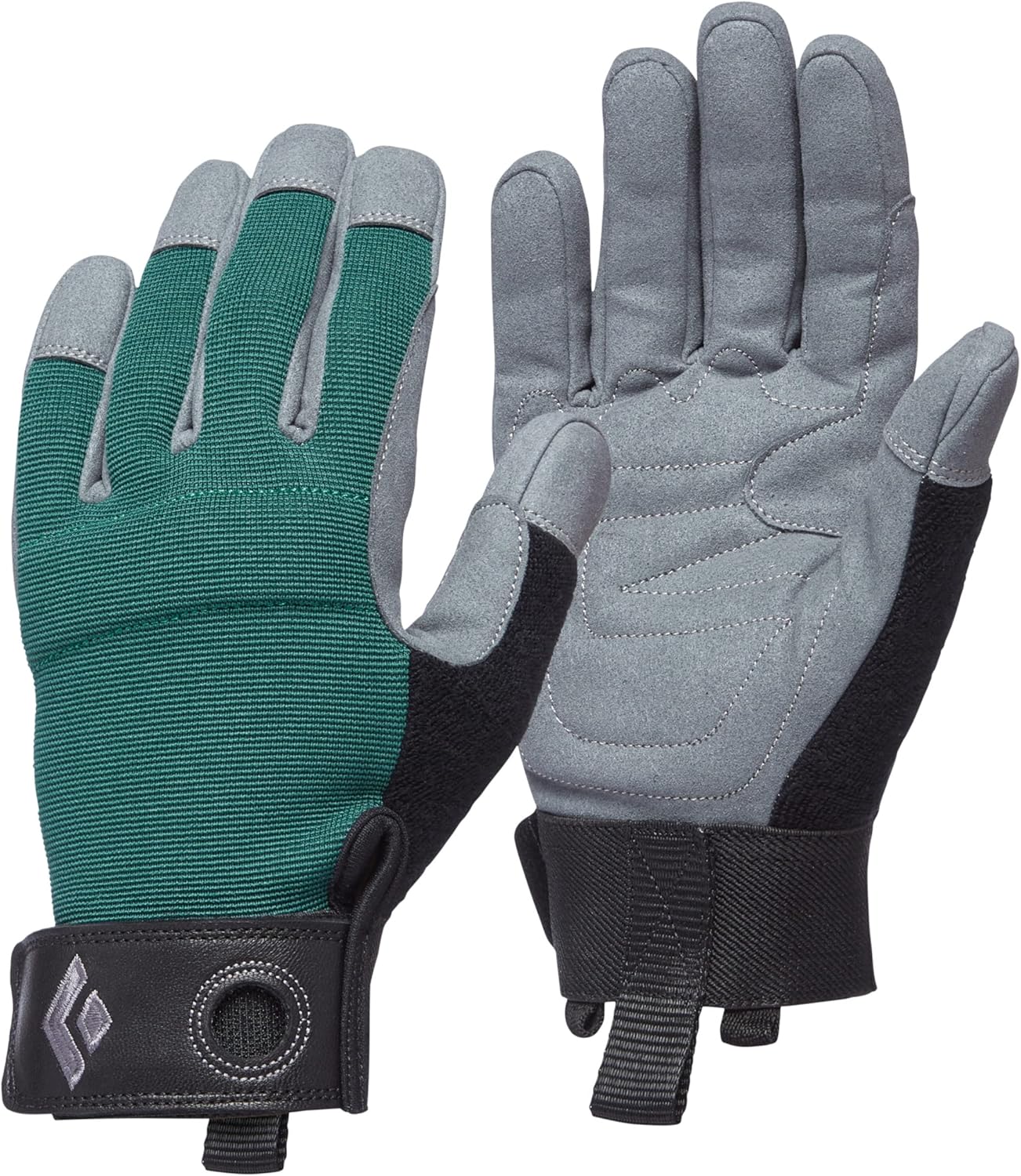
Black Diamond Crag Gloves
The gloves protect your hands from cuts and scratches you may otherwise get if you haul yourself on the cable without them. I prefer full-finger gloves for extra protection against blisters. If your hands sweat quickly, go for the fingerless version.
Shop on: Amazon (Worldwide) / Backcountry (US)
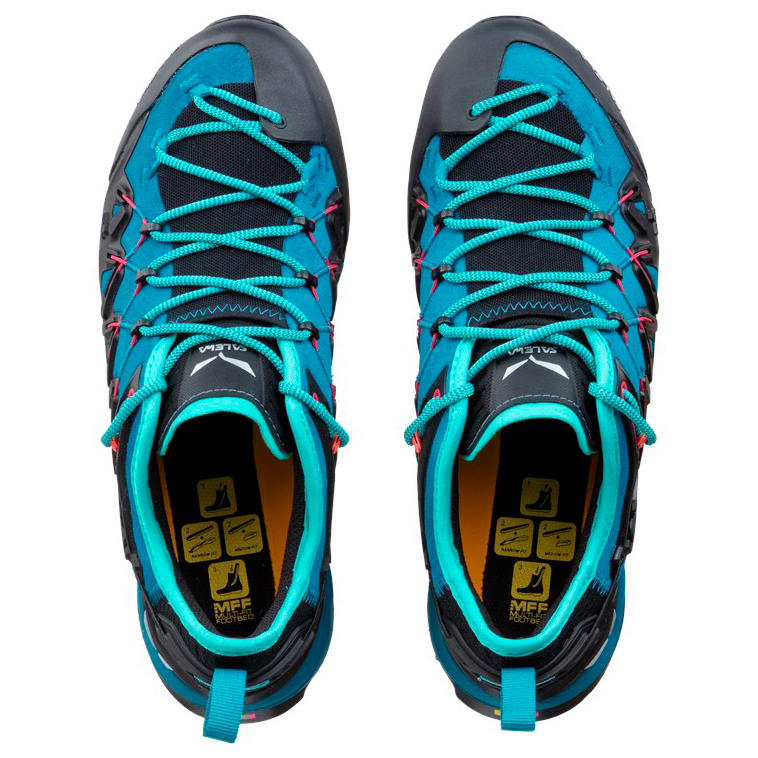
Salewa Wildfire Edge Approach Shoes
This is my go-to pair of hiking shoes for more accessible trails or via ferrata, where I don’t need extra ankle support. They provide excellent grip on the rock and are very durable.
Shop on: Amazon (Worldwide) / Backcountry (US)
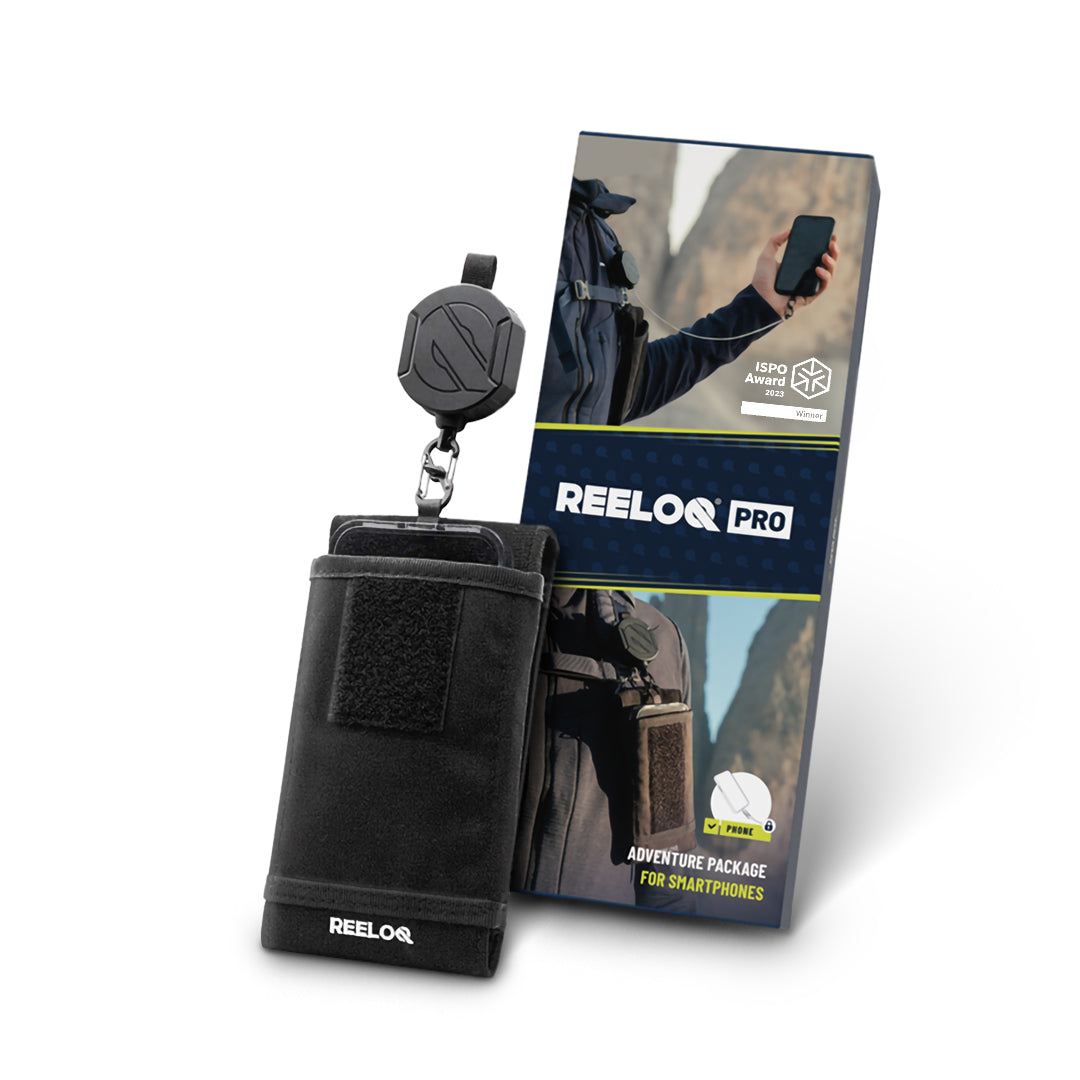
Reeloq Smartphone Securing System
If you want to take great photos on a via ferrata without worrying about losing your phone, Reeloq is the best tool for it. It’s a smartphone-securing system that allows you to use your phone on any adventure. This has been a great addition to my tool arsenal.
Shop on: REELOQ