
The Dolomites are the birthplace of the via ferratas, and Cortina d’Ampezzo, being the adventure capital of the Dolomites, offers access to many routes with varying lengths and difficulties. From the toughest Punta Anna to the shortest Ra Bujela. In this article, I will bring you closer to the many via ferrata possibilities available in Cortina.
Beginner Via Ferratas Around Cortina D’Ampezzo
Before I tell you which via ferratas around Cortina are great for beginners, I would like to touch briefly on the topic of what a beginner via ferrata really entails.
A beginner via ferrata is a scramble that can be done without any prior experience. However, steady feet and a head for heights are a must!
The cable-protected section on a beginner route is usually very short (100 meters or less). Many people often don’t even bother taking ferrata equipment on this type of route.
Not taking equipment is something I am strongly against. Do not underestimate the exposure you will encounter. Even though the steep sections on the beginner routes are short, it only takes a few seconds for a tragedy to happen.
Fatalities often happen on the easiest of routes (there are plenty of memorial plaques to prove it), and remember, if you come unprepared and get into trouble, your insurance might not cover the cost of a possible mountain rescue if you didn’t have the right equipment. Not to mention that someone might also have to risk their life to save yours.
I have written an article about the ins and outs of via ferrata climbing in the Italian Dolomites, which covers all the necessary information to tackle your first route.
1. Via Ferrata Ra Gusela
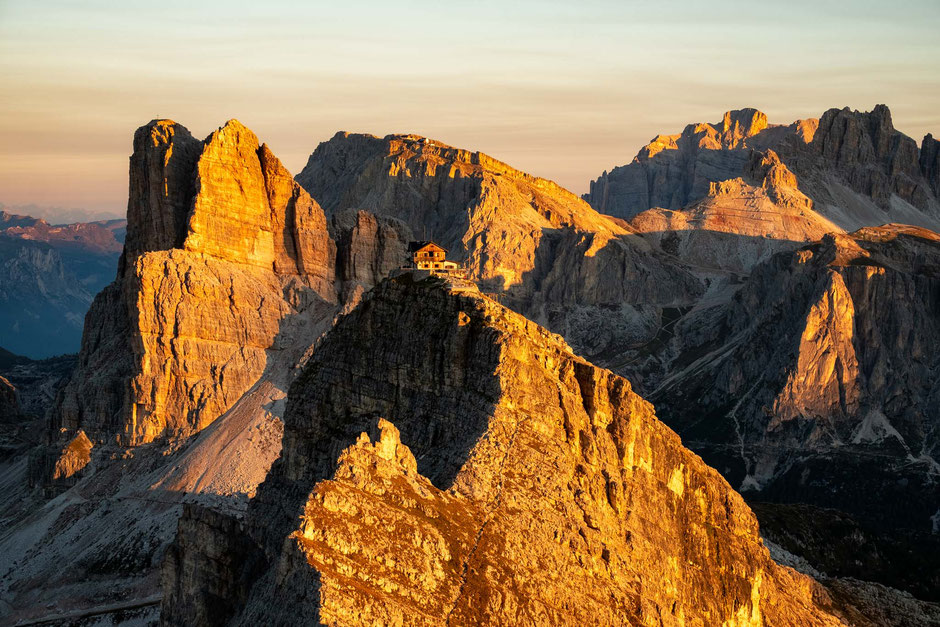
Technically quite simple yet one of the most rewarding iron paths you can find in the Cortina area. Via ferrata Ra Gusela starts at Passo Giau and summits Mount Ra Gusela, the most prominent mountain seen from the pass.
It then traverses across to Rifugio Nuvolau, one of the oldest and, in my opinion, most photogenic huts in the Dolomites, before descending to Forcella Nuvolau.
This ferrata can be connected with via ferrata Averau (number 3 on the list), making for a great day in the mountains!
2. Via Ferrata Scala Del Meninghel
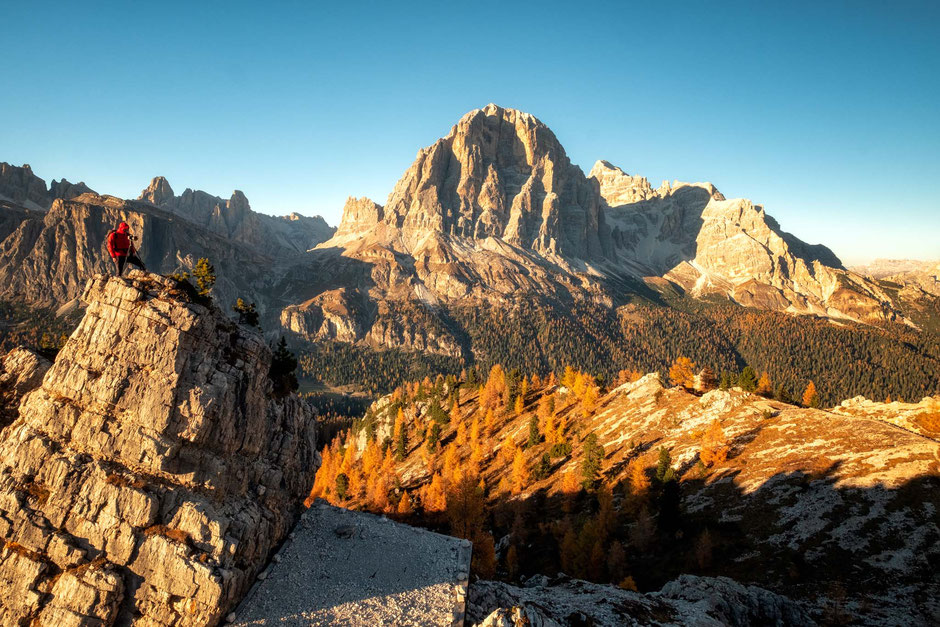
Via ferrata Scala Del Meninghel circumnavigates Tofana di Rozes, one of the distinct 3000m+ peaks surrounding Cortina. It starts and finishes at Rifugio Dibona, a ca. 20-minute drive from the town’s centre.
It’s a long day (roughly 6 hours) and although it only includes a very short 10-minute section of stemples, there is no shortage of great views along the way. This is a great and lesser-known route that will help you avoid the bulk of the summer crowds.
One of the highlights of this ferrata is the view from Forcella (saddle) Fortananegra towards the jagged peaks of Croda da Lago. Make sure to grab a beer at the rustic Rifugio Giusanni (built right on the saddle), to celebrate a great day in the mountains.
3. Via Ferrata Lamon and Formenton
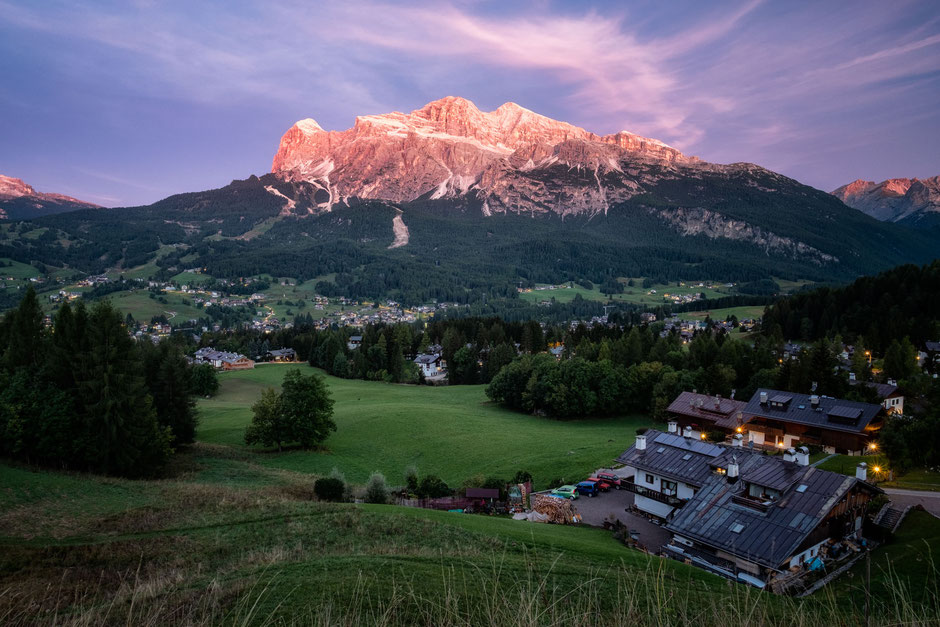
This climb takes you to the dizzying height of 3244m atop Tofana di Mezzo. The route begins at the mid-gondola station on the eastern side of Tofana, which is accessible via the Frecia Nel Cielo cable car, departing from Cortina.
The route heads over the Tofana plateau before an uphill burst gets you to the Bivuoac Barraca Degli Alpini. From there, you’ll follow a ridgeline southward to the summit of Tofana di Dentro before heading over to the higher summit of Tofana di Mezzo. Jaw-dropping vistas are guaranteed.
This ferrata still remains high on my to-do list. Both times I tried to squeeze it into my busy schedule, while researching for my Italian Dolomites Guide, bad weather stood in the way. Because of the exposure, you want to ensure you choose a perfect day for it.
4. Via Ferrata Averau
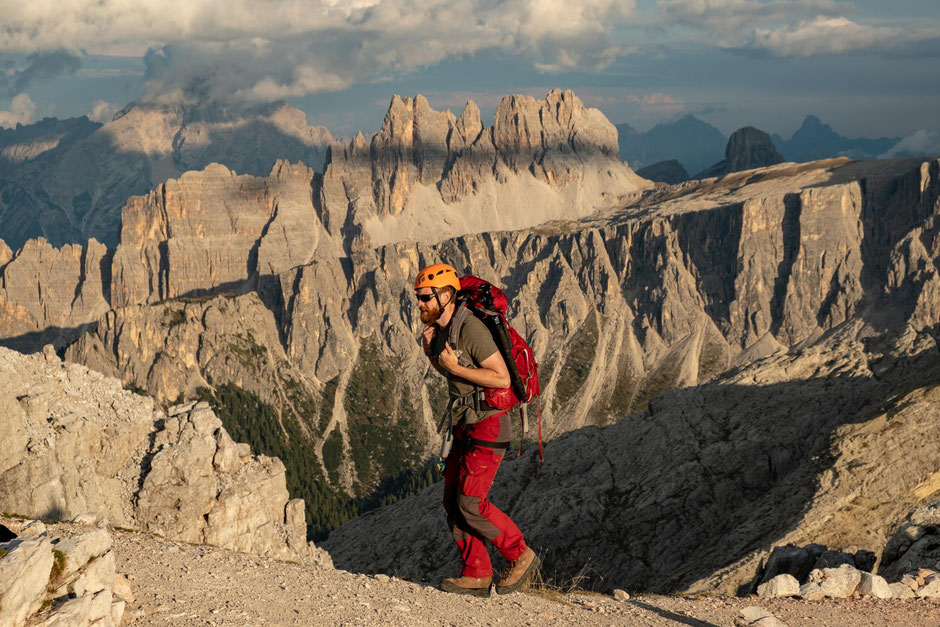
Via Ferrata Averau is approached from either Passo Falzarego or Passo Giau, and it’s one of the most rewarding iron paths in the immediate vicinity of Cortina. It’s the combination of length, difficulty, and views that makes it so special.
Via ferrata Averau is a fairly straightforward route, with a very short cable section. It will be over before you know it. The rest is just a hike to the summit, from where you get amazing views of Rifugio Nuvalou, Monte Pelmo, and the jagged Croda da Lago.
Be sure to jump to my other article, where I published numerous photographs from a sunset shoot on the summit of Mount Averau, the pinnacle of this via ferrata.
Intermediate Via Ferratas Around Cortina D’Ampezzo
You may first wonder how an intermediate via ferrata differs from a beginner one. The cable time significantly extends on the intermediate routes, often stretching for dozens of meters at a time, with potentially several hundred meters of total wire length.
You can also find that exposure in some places along the intermediate routes becomes more serious, with some sections stretching directly above steep cliffs.
With that said, there are always great footholds and excellent protection on these routes, so as long as you use your equipment properly, you will be safe.
1. Via Ferrata Ra Bujela
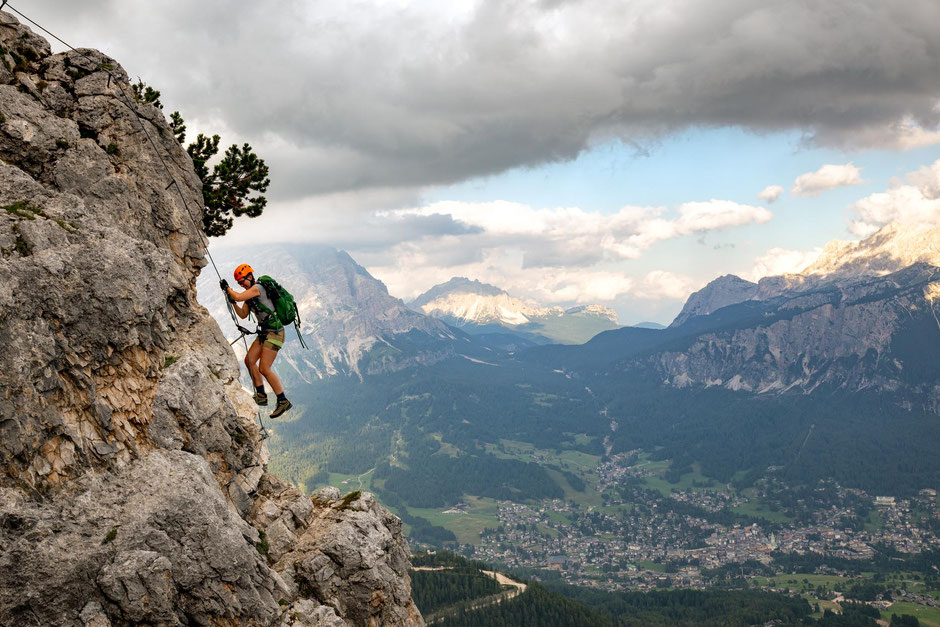
A quick and experienced climber, who uses the luxury of the nearby chairlift, can do this route in less than an hour. But why would they want to?
Lounging around at either Rifugio Pomedes afterwards or Rifugio Duca d’Aosta beforehand, having your photo taken on the two suspension bridges along the way, or enjoying a cereal bar at the summit will drastically add to the time. Especially if you plan on hiking up instead of taking the chairlift.
The route via ferrata Ra Bujela is of a decent grade, but it’s impeccably thought out and positioned. The trailhead is only about a 10-minute drive from the centre of Cortina.
2. Via Ferrata Ivano Dibona
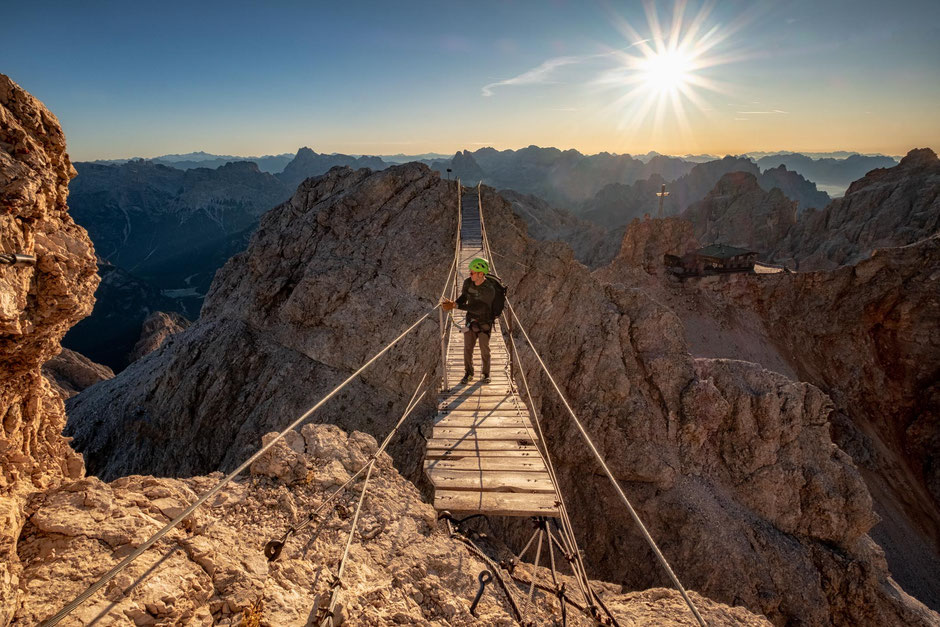
The first of the via ferratas in this list that I truly consider to be of intermediate difficulty. Via Ferrata Dibona gained fame through the 1993 thriller Cliffhanger, starring Sylvester Stallone.
Although it received a nomination for an Academy Award for Best Visual Effects, the famous suspension bridge used in the production actually exists, and it’s accessible via this via ferrata.
At roughly 8-10 hours long, it’s not an easy day out, but it does offer a fantastic combination of rewarding climbing, awesome views, and a wealth of WWI history.
3. Via Ferrata Michielli Strobel
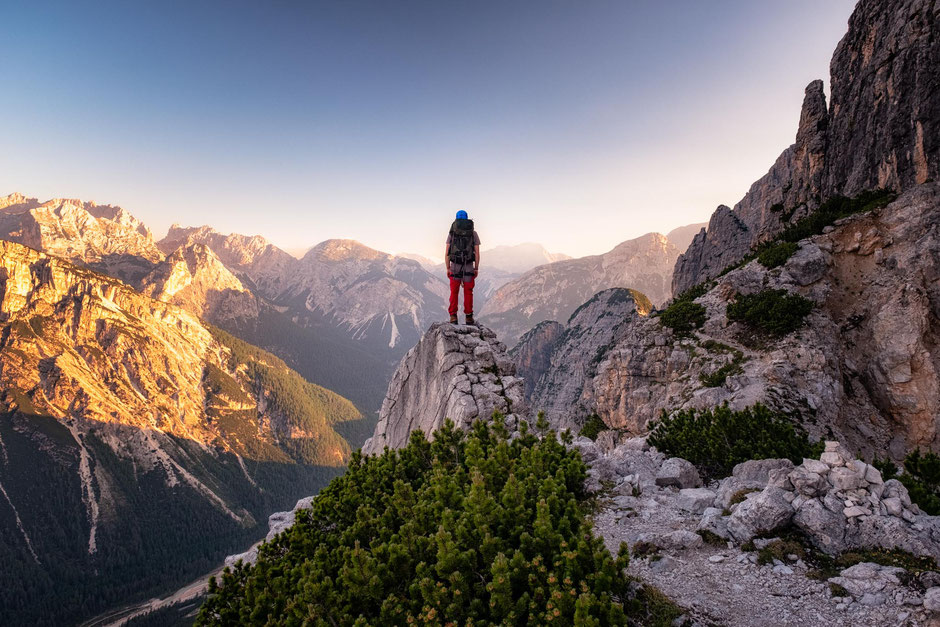
The trailhead of the via ferrata Michielli Strobel is only around a 5-minute drive outside of Cortina. The route heads up the western side of the Pomagagnon range to Punta Fiames.
The climbing is very enjoyable, and the splendour of the views keeps increasing the higher you get. Including an awesome panoramic view of Cortina d’Ampezzo.
At regular intervals throughout the climb, there are rocky outcrops, perfect for admiring the township far below.
4. Via Ferrata Marino Bianchi
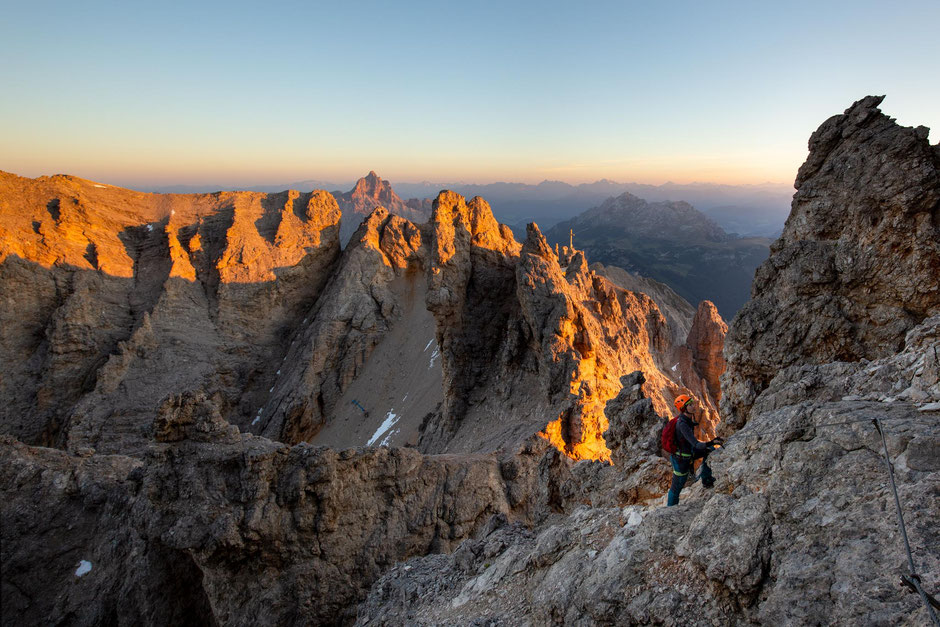
Starting with the same tiring scree gully up to Forcella Staunies, where the previously mentioned via ferrata Ivano Dibona begins, via ferrata Marino Bianchi heads up to the summit of Cristallo di Mezzo.
Prepare for jaw-dropping views of Lago di Landro, Monte Sorapiss, and Tre Cime, along with some heart-stoppingly exposed sections.
This ferrata is one of my personal favourites thanks to the combination of the views, difficulty, and remoteness.
5. Via Ferrata Alfonso Vandelli
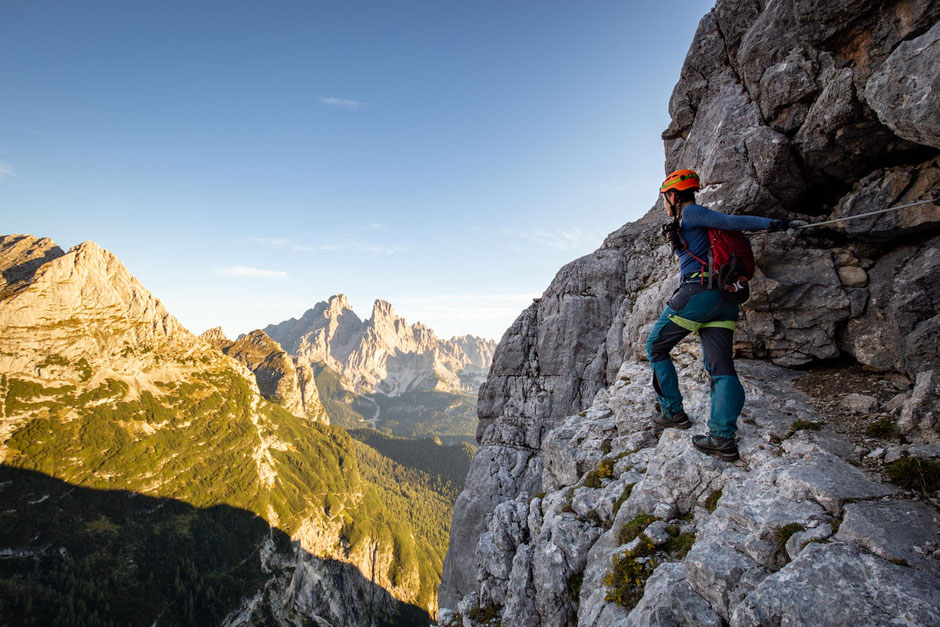
The intermediate via ferrata Alfonso Vandelli starts with the hike to the famous Lake Sorapiss.
It’s also a part of the complete Sorapiss circuit, known as the Giro Del Sorapiss in Italian. The ferrata can, however, be done on its own, taking the same way up and down.
This route offers a great choice for viewing the turquoise Sorapiss Lake from a completely different vantage point, while being attached to the rocky cliffs hundreds of meters above the lake.
You will enjoy amazing views of Monte Cristallo, where the previously mentioned via ferrata, Marino Bianchi, is located.
6. Via Ferrata Degli Alpini Al Col Dei Bos
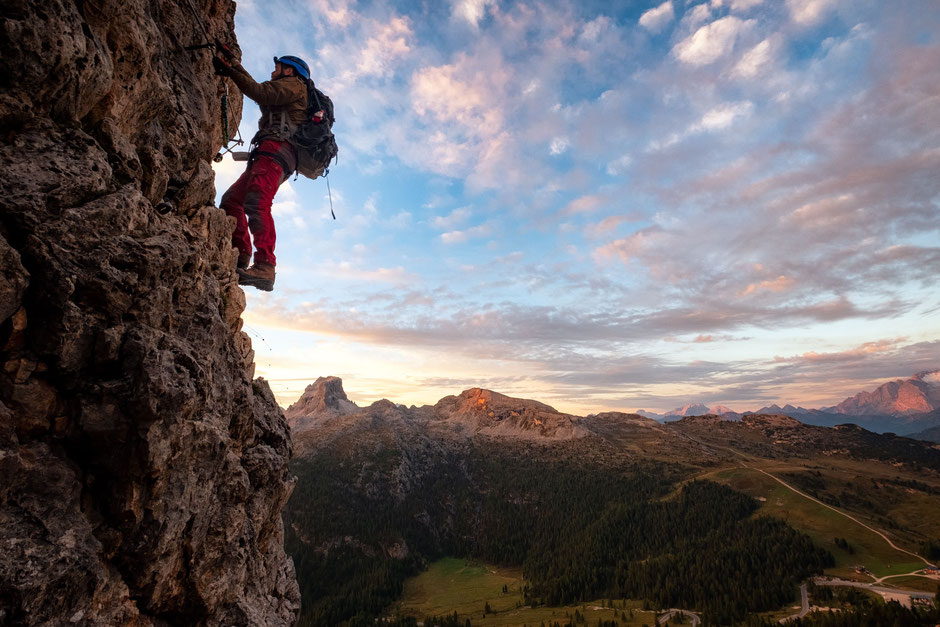
This is a popular choice for guided tours leaving Cortina d’Ampezzo. If you would like to try a via ferrata accompanied by an experienced guide, chances are you’ll be offered the opportunity to tackle Via Ferrata Degli Alpini Al Col Dei Bos.
There is plenty of history behind this route, which is why it’s chosen for tour groups. It begins near Passo Falzarego, a strategically important point during World War I at the start of the 20th century.
Famous peaks such as Antelao and Marmolada, two of the highest mountains in the Dolomites, can be seen along this ferrata. What’s also great about it is the short approach; within half an hour from the parking lot, you’ll already find yourself attached to a cable, scrambling towards the summit.
Advanced Via Ferratas Around Cortina D’Ampezzo
Below, you can find the toughest routes available around Cortina d’Ampezzo, with long exposed sections, some unprotected scrambling, and vertical cliff drops. Expect full-day outings and numerous adrenaline spikes throughout your body on any of these routes.
If you have never done a via ferrata and have no experience, then start with the beginner and intermediate levels before attempting this one.
So far, I have only done one of the three advanced via ferratas on this list, but I am definitely returning to tackle the other two.
1. Via Ferrata Giovanni Lipella
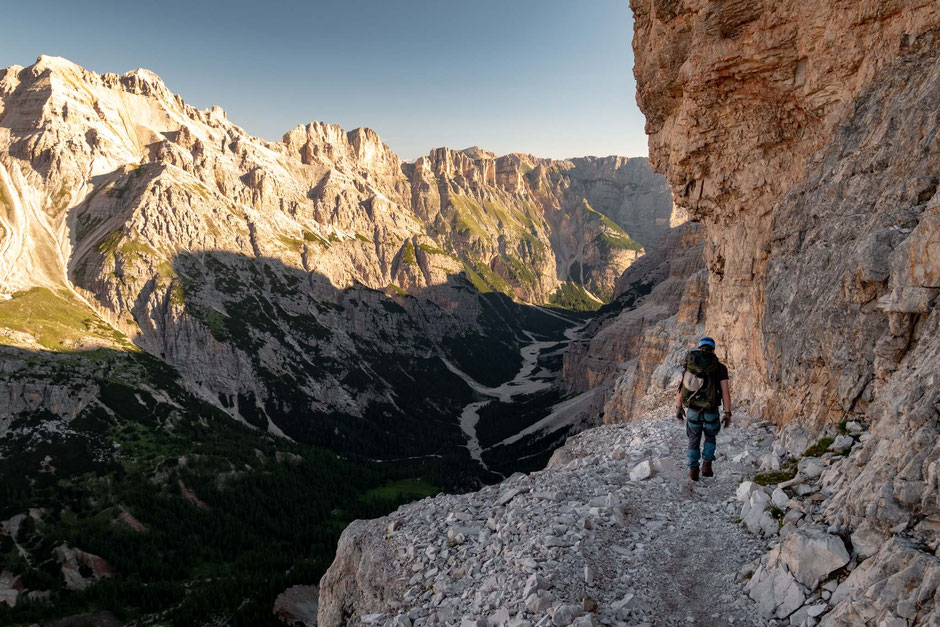
The first advanced via ferrata on this list, via ferrata Giovanni Lipella, like via ferrata Scala Del Meninghel, circumnavigates Tofana di Rozes.
Instead of staying in the shallower valleys, however, this ferrata tackles the steep western slopes of this 3000m+ peak. It’s a long day, but the combination of subterranean tunnels, steep rock amphitheatres, and the allure of the Tofana di Rozes summit keeps it exciting.
2. Via Ferrata Cesco Tomaselli
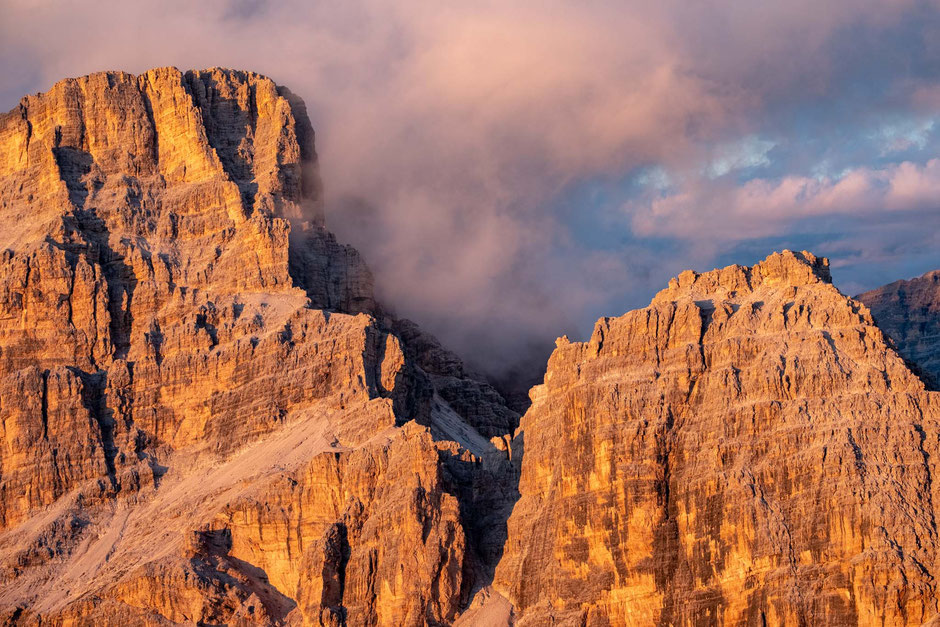
Via Ferrata Cesco Tomaselli starts at Rifugio Lagazuoi, accessible by either cable car from Passo Falzarego, a 25-minute drive from the centre of Cortina d’Ampezzo, or by hiking via the Lagazuoi Tunnels.
The main objective of the route is Cima Fanis South (pictured above left) at just under 3000m. It’s a tough ascent, on a Fletcher/Smith via ferrata rating of 5C, the hardest, most serious of all routes.
Both physically and mentally demanding, this route epitomises an introduction to serious scrambling in the Dolomites.
3. Via Ferrata Punta Ana
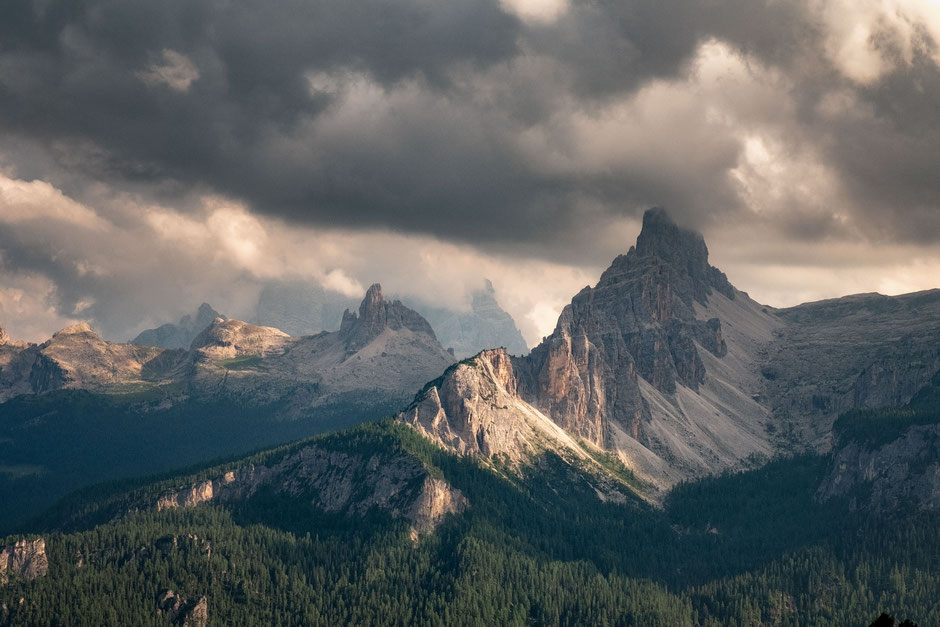
Another via ferrata on this list with a Smith/Fletcher grade of 5C. Via Ferrata Punta Anna closes this list as the toughest one, mainly due to its length. It will take an entire day of scrambling with extreme exposure in places, so make sure you get an early start and come with plenty of experience.
I personally haven’t built up the courage yet for this ferrata, but it’s my objective for my next visit to the area. Just thinking about it raises my blood pressure.
The route up, which starts at Rifugio Pomedes (reached via the two-tiered chairlift from restaurant Piè Tofana), heads steeply up to Punta Anna and then further to the summit of Tofana di Mezzo.
To descend, you can take the famous Frecia Nel Cielo (arrow in the sky) cable car down to Col Drusciè, then walk over to Ristorante Piè Tofana.
You can also kill two birds with one stone and connect the via ferrata Punta Anna with the previously mentioned via ferratas Lamon and Formenton for a roughly 10-12 hour outing.
Accommodation Around Cortina D’Ampezzo
With so many options to choose from, Cortina should definitely be one of your longer stops during your road trip around the Dolomites. Below you will find some of my personal recommendations for hotels in Cortina.
These are affiliate links, which means I receive a small commission when you book something using them. If you found this article useful, please consider supporting my website!
Shop my via ferrata gear essentials
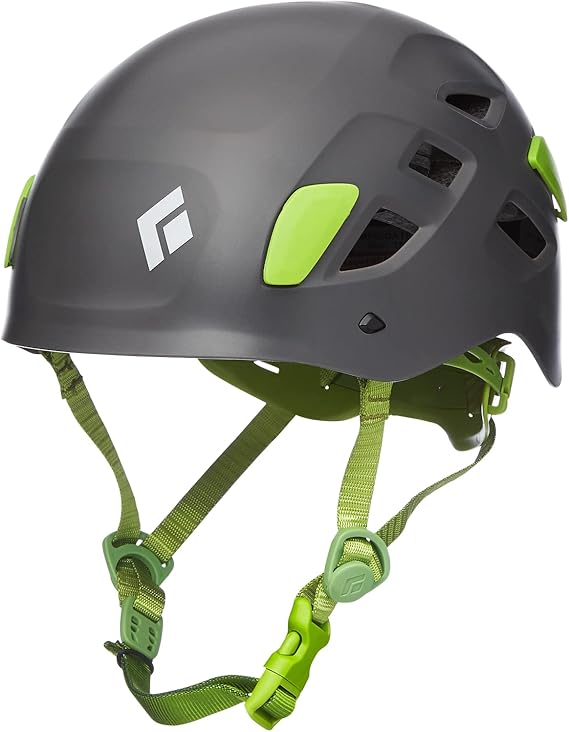
Black Diamond Helmet
Rockfall is a significant concern on via ferrata routes. Unbeknownst to you, other climbing groups above you may accidentally dislodge a small rock and send it down the mountain. If it hits you on the head, it could have serious consequences. A helmet on your head (not inside your backpack) is necessary.
Shop on: Amazon (Worldwide) / Backcountry (US)
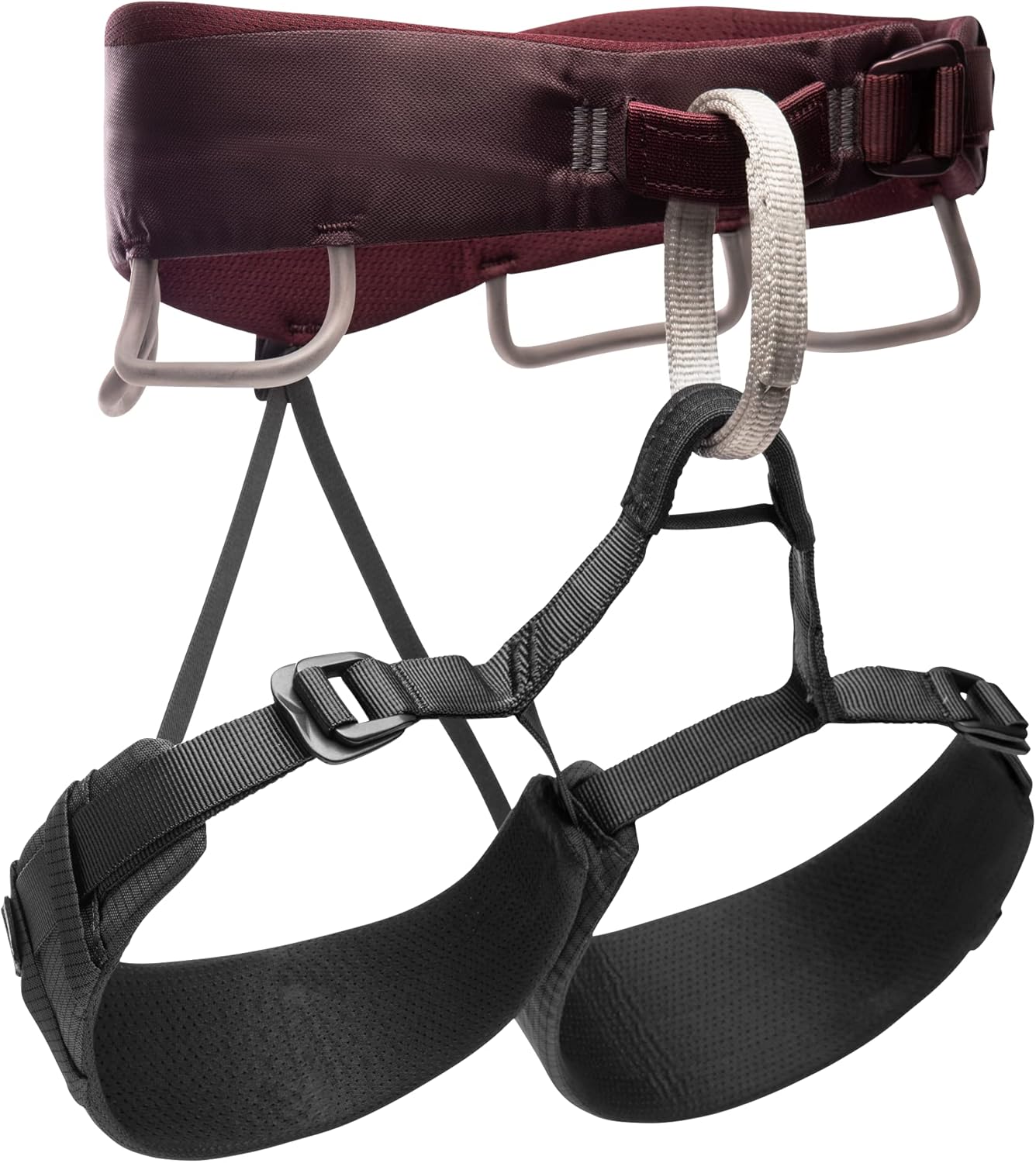
Black Diamond Momentum Harness
Another must-have on a via ferrata route is a climbing harness. A harness works as an anchor point for your via ferrata lanyard. Try it before your trip to ensure it fits snugly without limiting your movements. Aim for a lightweight harness that will be comfortable to wear between the cable-protected sections when hiking.
- Shop Women’s on Amazon (Worldwide) / Backcountry (US)
- Shop Men’s on Amazon (Worldwide) / Backcountry (US)
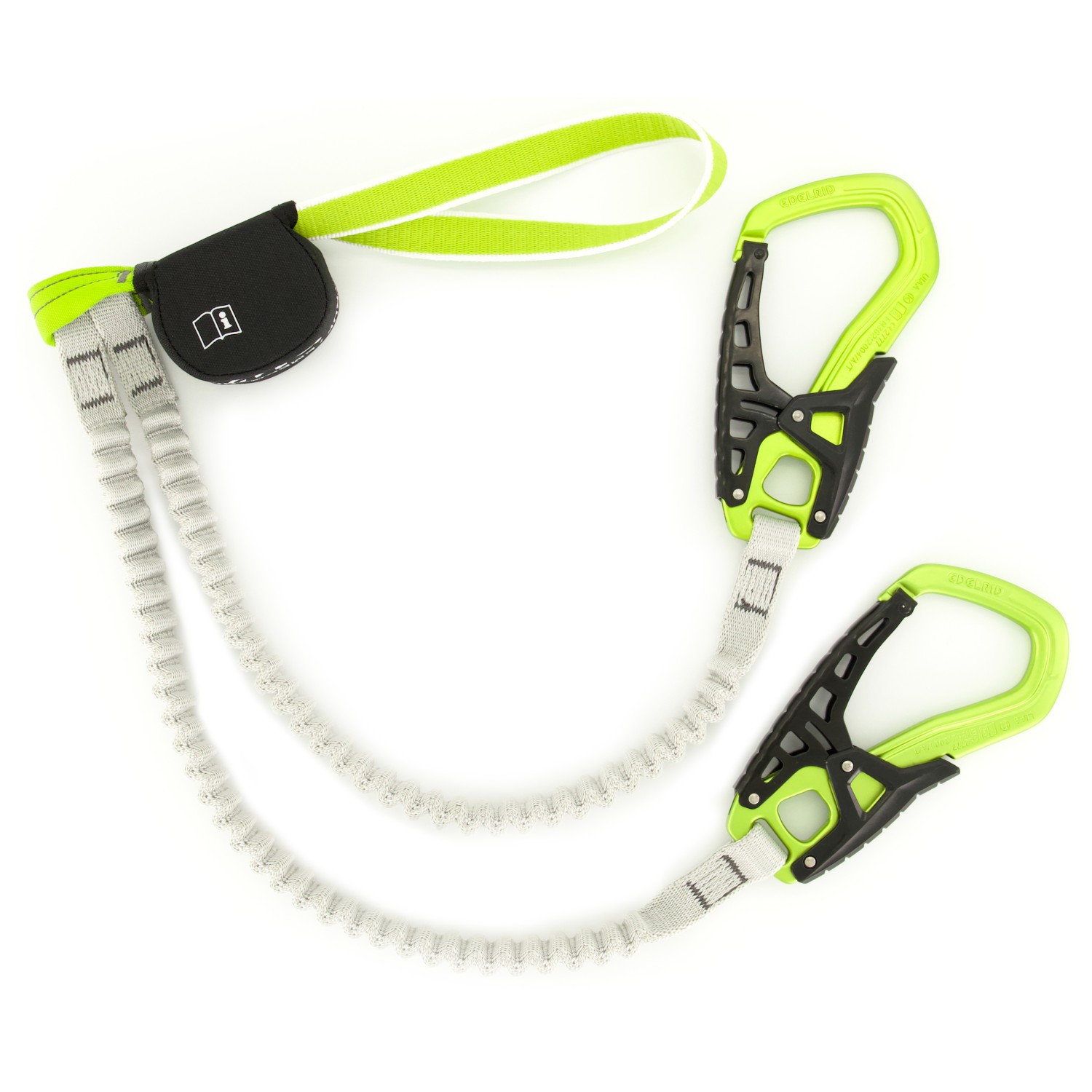
Edelrid, Camp or Black Diamond Via Ferrata Lanyard
A via ferrata lanyard connects the climber and their harness to the cables along the route. Its two arms and a hidden extra coil work as an energy absorption system in case of a fall. The two carabiners at the end of the lanyard clip into the cable. Make sure the carabiners are equipped with the palm squeeze mechanism. It’s the safest and most comfortable.
Shop on Amazon (Worldwide) / Backcountry (US)
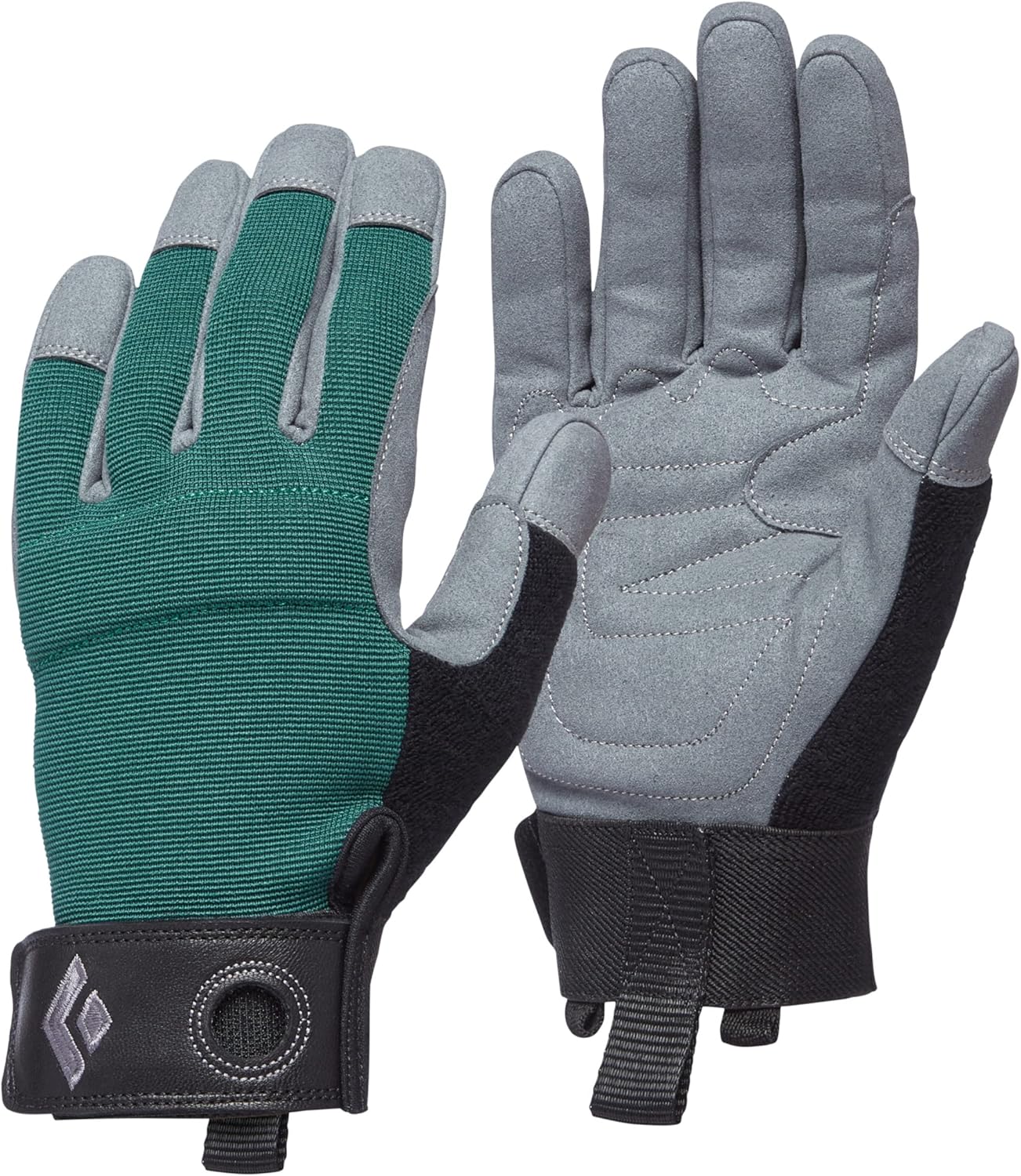
Black Diamond Crag Gloves
The gloves protect your hands from cuts and scratches you may otherwise get if you haul yourself on the cable without them. I prefer full-finger gloves for extra protection against blisters. If your hands sweat quickly, go for the fingerless version.
Shop on: Amazon (Worldwide) / Backcountry (US)
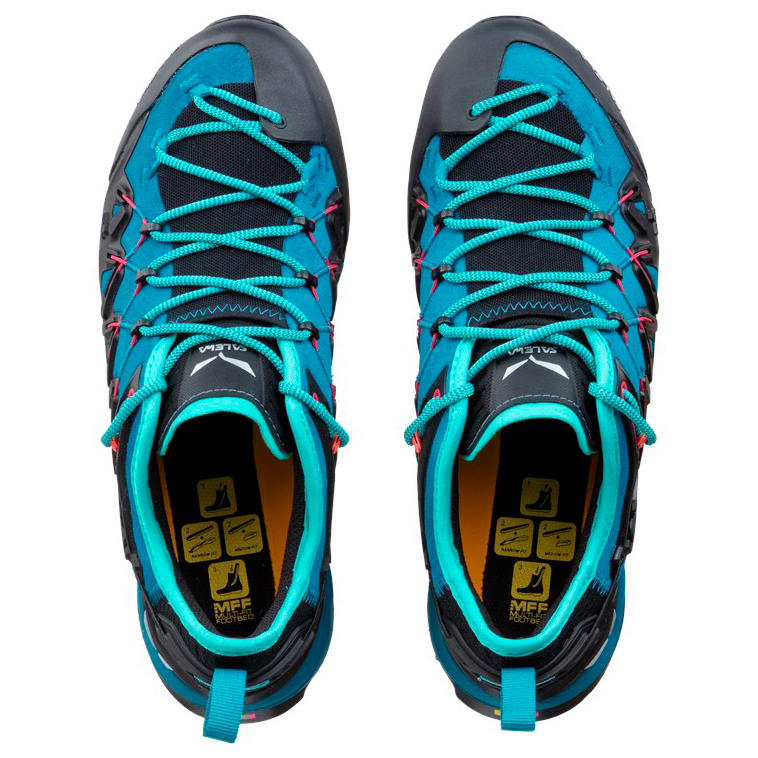
Salewa Wildfire Edge Approach Shoes
This is my go-to pair of hiking shoes for more accessible trails or via ferrata, where I don’t need extra ankle support. They provide excellent grip on the rock and are very durable.
Shop on: Amazon (Worldwide) / Backcountry (US)
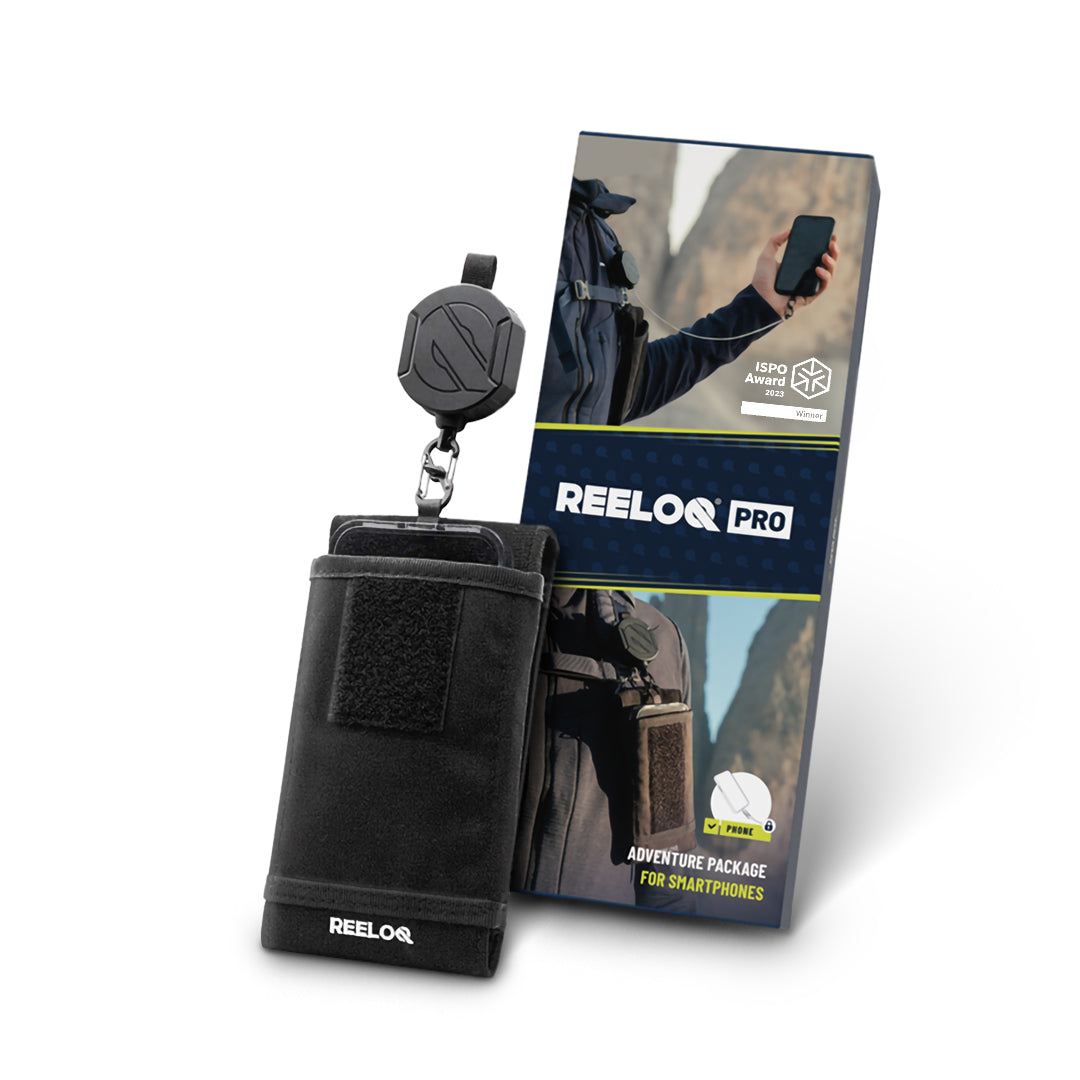
Reeloq Smartphone Securing System
If you want to take great photos on a via ferrata without worrying about losing your phone, Reeloq is the best tool for it. It’s a smartphone-securing system that allows you to use your phone on any adventure. This has been a great addition to my tool arsenal.
Shop on: REELOQ
Support my website!
Hi Reader! If you found any of my articles about the Dolomites useful please consider using the affiliate links below (at no extra cost) when booking your holiday. Thank you
- Reserve your hotel with Booking.com
- Book your rental car with Discover Cars
- Buy your outdoor gear with Backcountry.com (US readers)
If you have any questions, leave them in the comments below!
Hi Marta,
First of all, I want to congratulate you on your incredibly detailed and helpful blog! It has been a fantastic resource as I plan my trip to the Dolomites.
I noticed that you didn’t mention Via Ferrata Giovanni Barbara and Sentiero Kaiserjäger in your post. My friends and I are considering these two via ferratas for our upcoming trip because we are staying at Domegge di Cadore but we’re quite new to this and would love some expert advice. Are there any particular reasons they aren’t included in your recommendations? Would you suggest other routes over these for beginners?
Thank you so much for your insights and for all the work you put into your blog!
Hi Ivan. Thanks for visiting my blog. There are approx. 700 via ferrata routes in the Dolomites. I couldn’t do them all even if I tried. They are all fun and interesting in their own way. I have never even heard of the once you mentioned but I hope you have fun 😊