
After completing many beginner via ferratas in the Italian Dolomites, it was only natural for me to challenge myself with more complex routes. Today, I will share with you my favourite via ferratas in the Italian Dolomites, all of which I have personally done and which are suitable for intermediate-level adventurers.
14 Intermediate Via Ferratas In The Dolomites For Adventure Seekers
Before I get to it, though, just a quick reminder to you all, plan well in advance and always carry proper equipment if you are going to tackle an iron path. If you’ve never done one before, then jump to my beginner’s guide.
Although undertaking a via ferrata requires no prior climbing experience, don’t underestimate the exposure you will face along these routes. On almost every via ferrata, there is always at least one memorial plaque with the names of the victims who have fallen to their deaths. Too often have I seen daredevils with nothing but running shoes on their feet, no harness, and no helmet. Please do not be one of them.
TIP: Consider hiring a certified mountain guide on your first via ferrata. He can teach you how to use the gear correctly and scramble efficiently.
Map of the intermediate via ferratas
I created a map to help you better visualise where each via ferrata is located. Click on individual icons, and a window will pop up with the name, photo and a link to an article describing each intermediate via ferrata.
1. Via ferrata Marino Bianchi
Roundtrip Distance: 6 kilometres / 3.7 miles
Elevation Gain: 920 metres / 3020 feet
Time Required: 6-7 hours
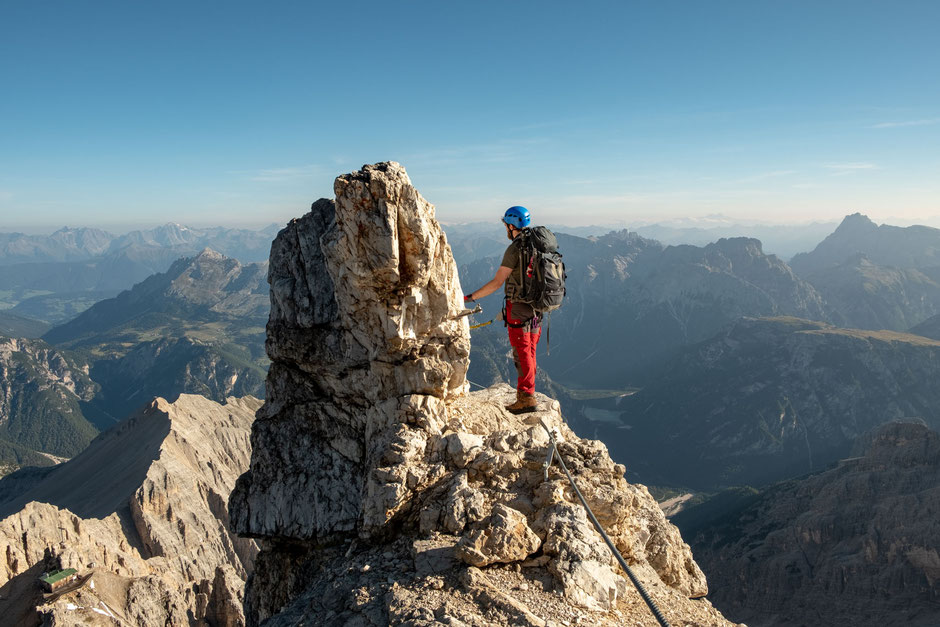
From the start, all the way to the summit, via ferrata Marino Bianchi is an extravaganza of jaw-dropping vistas. It’s one of my personal favourites. The route takes you to the top of Monte Cristallo di Mezzo, one of the Dolomiti summits reaching over 3000 meters.
Via Ferrata Marino Bianchi used to be a hectic iron path, thanks to the lift system that ran to the saddle. Since the lift closed in 2016, which significantly prolonged the approach time, the traffic has lessened considerably.
Via ferrata Ivano Dibona is located nearby (and is slightly easier than via ferrata Marino Bianchi). It’s certainly more popular than its bigger brother, and they can both be done in conjunction with one another, but believe me when I say this: Marino Bianchi should not be missed!
2. Via ferrata Ivano Dibona
Roundtrip Distance: 8 kilometres / 5 miles
Elevation Gain: 1200 m / 3940 ft
Time Required: 8 hours
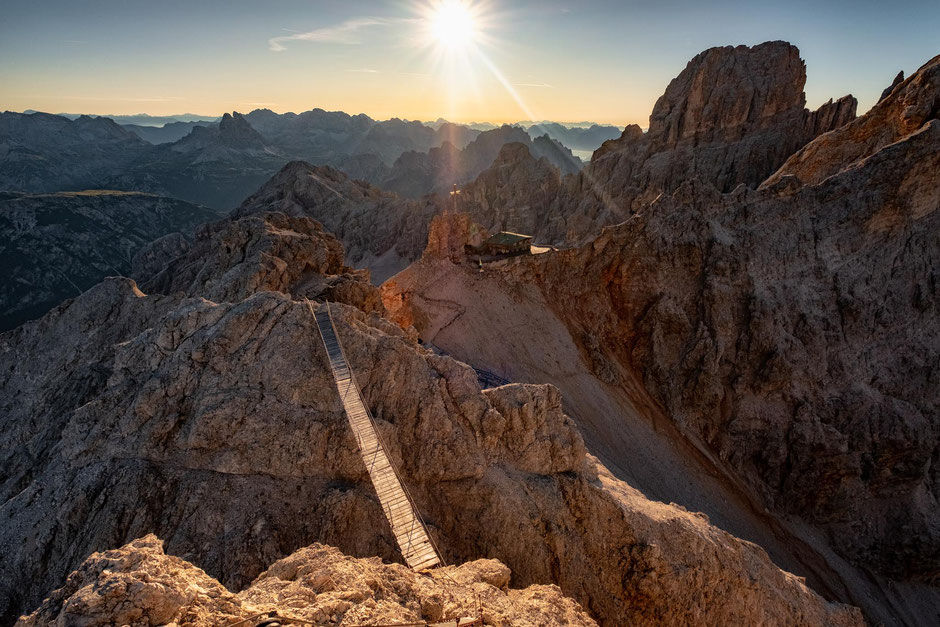
Speaking of via ferrata, Ivano Dibona. If it wasn’t for the action-packed Hollywood flick Cliffhanger starring Sylvester Stallone, which, by the way, I still haven’t seen (and I’m not sure if I want to), this route might have been a lot lesser known.
Via ferrata Ivano Dibona shares the same approach as the previously mentioned Marino Bianchi. They split at Forcella Staunies, which marks the location of the slowly decaying yet still incredibly photogenic Rifugio Lorenzi (now closed to the public).
It’s not an easy undertaking. To complete the whole route, you will need to reserve a full day. The distance is 25 kilometres in total and includes a lot of elevation change. Along the way, there are many World War I relics, including a few small army bunkers worth exploring.
The route’s highlight is the 30-meter-long suspension bridge (pictured above) perched at almost 3000 meters and hanging above a gully. Stepping onto it guarantees an adrenaline rush.
3. Via ferrata Giro Del Sorapiss
Roundtrip Distance: 26 kilometres / 16.2 miles
Elevation Gain: 1910 meters / 6266 feet
Time Required: 13-16 hours
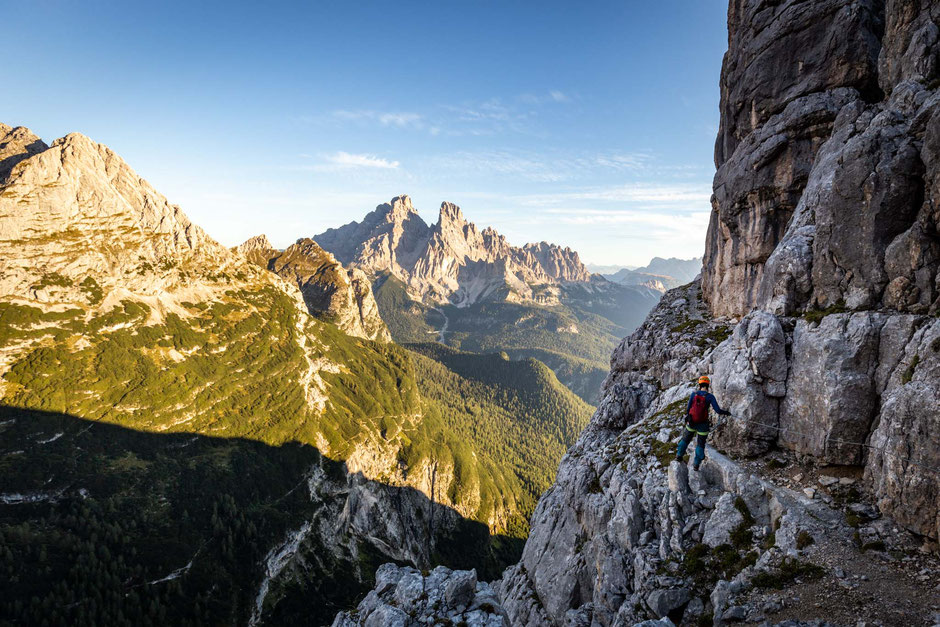
Giro in Italian means loop, and as the name suggests, via ferrata Giro Del Sorapiss circuits around the Sorapiss mountain range. It’s a true endurance test, both physically and mentally.
Proper preparation, decent map-reading skills, and an adventurous spirit are necessary if you want to tackle this route. Expect a long day, likely 12 hours. The best thing to do is plan an overnight stay in the Vandelli mountain refuge, from where the circuit begins, ideally before and after you complete the route.
The whole loop consists of three separate via ferratas. If you are not up for the challenge, you can only choose to do the first one along the route – via ferrata Alfonso Vandelli (pictured above).
For more details and photos from the via ferrata Giro del Sorapiss, click the link.
4. Via ferrata Delle Scalette (Torre di Toblin)
Distance: 1.8 kilometres / 1.2 miles*
Elevation Gain: ca. 200 metres / 656 feet*
Time Required: 1.5 – 2 hours*
* Counting from Rifugio Locatelli
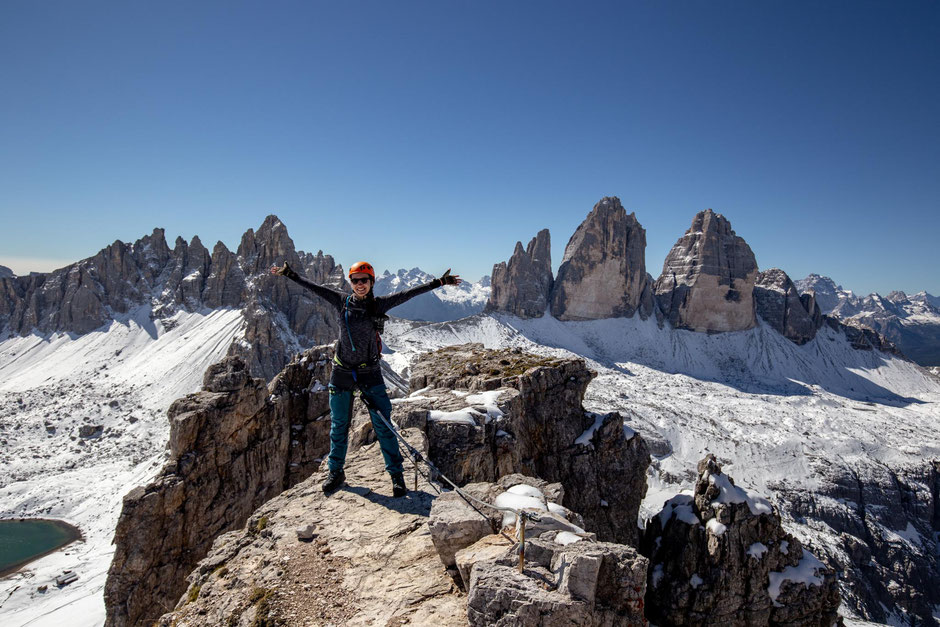
My ambition put me at the trailhead of this via ferrata within my first week in the Dolomites. Full of enthusiasm and a little bit too flippantly, I decided to put myself against the challenge and chose via ferrata Torre Di Toblin as my first ever via ferrata.
I can tell you now that my enthusiasm was quickly curbed, even though you probably don’t know this from my happy look in the photo above. That victorious smile came after I got to the top in one piece.
For anyone who climbs, this wouldn’t have been scary, but it was a real challenge for me, who has never spent a day of her life in a climbing gym. Although the climbing experience isn’t required to scramble along via ferratas, in this case, it would have been helpful.
Funnily enough, I repeated this route the following year with my friend and found it a lot easier. After gaining experience tackling numerous other ferratas, it was perhaps expected. For my friend, however, it was her first time, and she panicked a few times, just as I had the year before.
5. Via ferrata Merlone
Roundtrip Distance: 8 kilometres / 5 miles
Elevation Gain: 884 meters / 2900 feet
Time Required: 5-6 hours
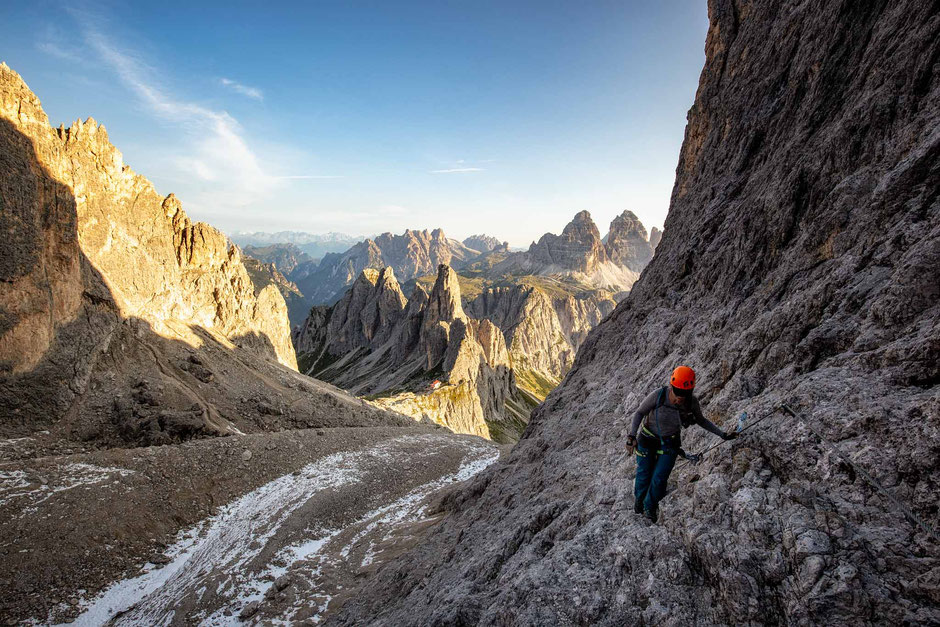
Located on the border of the famous Tre Cime National Park, this via ferrata takes you to the summit of Cima Cadin NE, where you can glimpse the southern faces of Tre Cime (Three Peaks).
The route can be done as a day trip starting at a parking lot near Lake Antorno or as an extension to the popular Alta Via 4, a 6-day hut-to-hut traverse across the Italian Dolomites.
You will need a good head for heights and experience with ladder climbing. Perched on a rung of a ladder, mounted to a cliff face a few hundred meters above a gully, should sound as appealing as sitting in your pyjamas watching Netflix.
I have a whole article dedicated to the via ferrata Merlone. If you are interested in tackling it, check it out.
6. Via ferrata Degli Alpini Al Col Dei Bos
Roundtrip Distance: 3.7 kilometres / 2.3 miles
Elevation Gain: 470 meters / 1540 feet
Time Required: 3-4 hours
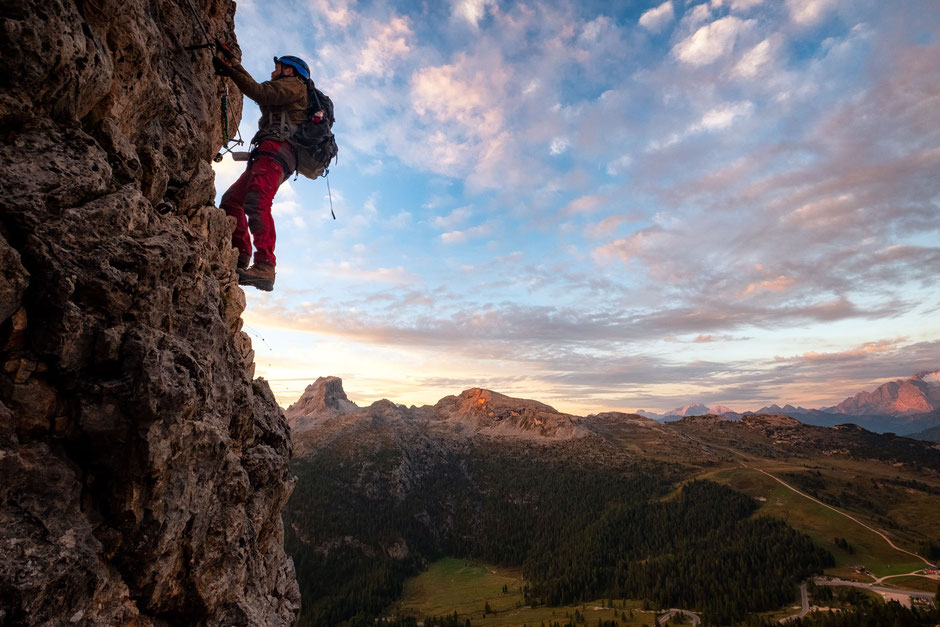
This is great via ferrata if you want to get straight to business. The initial approach to the beginning of the cable section is very short (around 20 minutes). It’s nothing compared to the other via ferratas mentioned in this article.
However, this via ferrata is probably one of the busiest in the Dolomites. Many guided tour companies take their clients here. However, there is an easy way to avoid those crowds. Just start early, and by early, I mean right after sunrise. You will be treated to some incredible views when the first rays of the sun hit the surrounding peaks.
For more information and photos from my sunrise excursion along this via ferrata, go to my other article.
7. Via ferrata Oskar Schuster
Roundtrip Distance: 12 kilometres / 7.5 miles
Elevation Gain: 850 meters / 2790 feet
Time Required: 6-8 hours
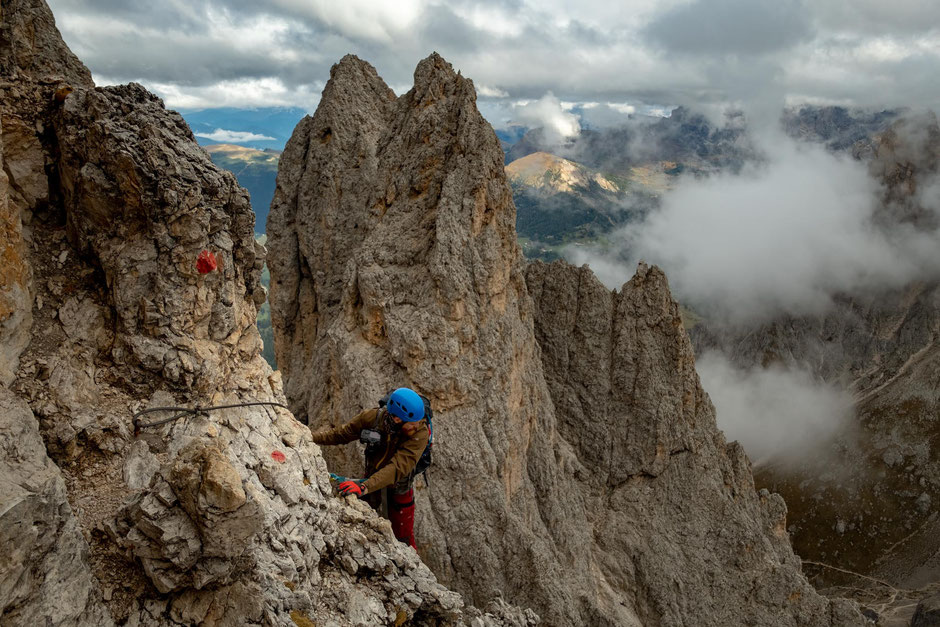
Via ferrata Oskar Schuster takes you through the heart of Sassolungo and Sassopiato, two prominent peaks you can photograph from Alpi di Siusi – one of the most iconic photography spots in the Dolomites.
This is an enjoyable and exciting route. The views along the way are adorned with copious spires, which are typical for this entire range. They are very dramatic indeed.
You can skip part of the initial approach by taking the Sassolungo gondola from the Sella mountain pass, where the route begins. Once you reach the summit of Sassopiato, where the cable section ends, and descend the other side, you can pop into rifugio Sassopiato for some well-deserved beer!
For more details, check out my article dedicated to the via ferrata Oskar Schuster.
8. Via ferrata Sentiero Massimiliano
Distance: 4.4 kilometres / 2.7 miles*
Elevation Gain: 389 m / 1276 ft*
Time Required: 3-4 hours*
* Counting from the Alpe Di Tires hut
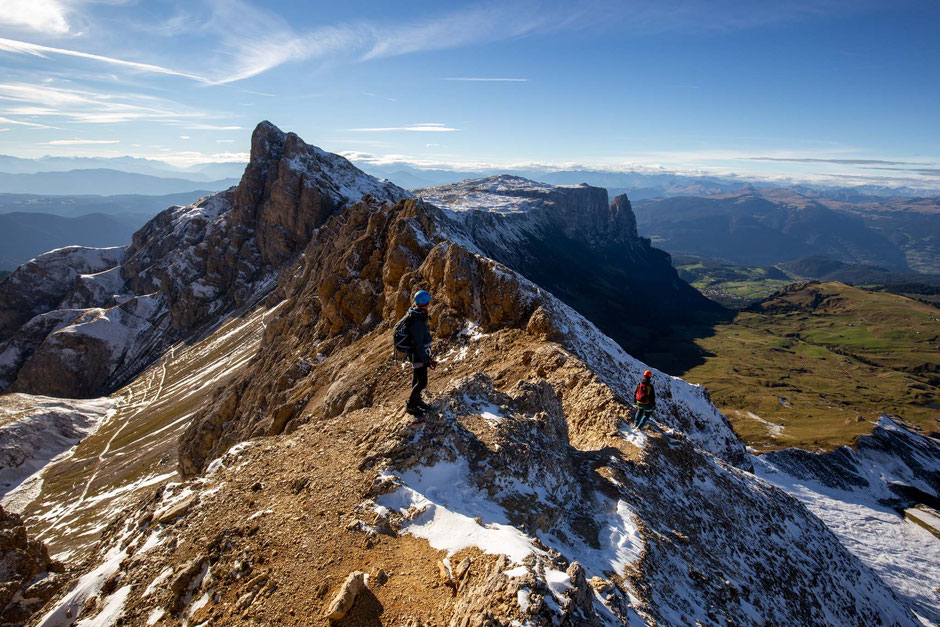
If, like me, you’re a sucker for beautiful views, you’ll love this via ferrata! The majority of it traverses along the ridgeline between two peaks: Dente Grande di Terrarossa and Cima di Terrarossa.
This is also one of the easier iron paths on this list. Its only downside is the long initial approach. The best way to tackle this via ferrata is to plan an overnight hut stay in the nearby rifugio Alpe di Tires.
Quite recently, the hut went through renovations, and today it’s one of the nicer-looking huts with the cleanest facilities.
I have a whole article dedicated to the via ferrata Sentiero Massimiliano. Make sure to check it out along with the many photos I took. I guarantee that it will make you want to include this via ferrata in your Dolomiti itinerary!
9. Via ferratas Masarè and Roda de Vaèl
Distance: 5.2 kilometres / 3.23 miles
Elevation Gain: 405 meters / 1329 feet*
Time Required: 3-4 hours*
* Counting from Rifugio Roda de Vaèl
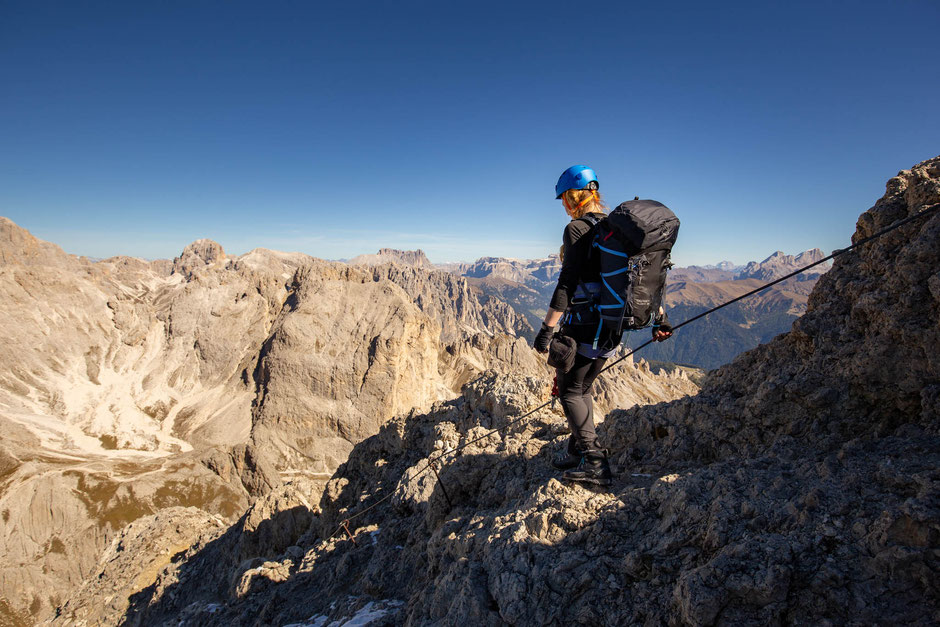
Those two separate via ferratas can easily be done together: via ferratas Masarè and Roda de Vaèl.
Just like the previously mentioned via ferrata Sentiero Massimiliano, these two routes are located in the lesser-known Rosengarten Nature Park in the western part of the Italian Dolomites, but whilst Sentiero Massimiliano is at the northern end, these two lie at its southern end.
The path takes you to the summit of Roda de Vaèl, where you get an excellent view of the heart of the Rosengarten group to the North.
For the most part, these via ferratas are suitable for beginners. Still, there are a couple of sections, one of which includes scaling a vertical wall equipped with iron rods, that put this route on par with other intermediate via ferratas on this list. Check out the link above for more photos and a detailed route description.
10. Via Ferrata Michielli Strobel
Roundtrip Distance: 10 kilometres / 6.2 miles
Elevation Gain: 950 meters / 3100 feet
Time Required: 4-5 hours
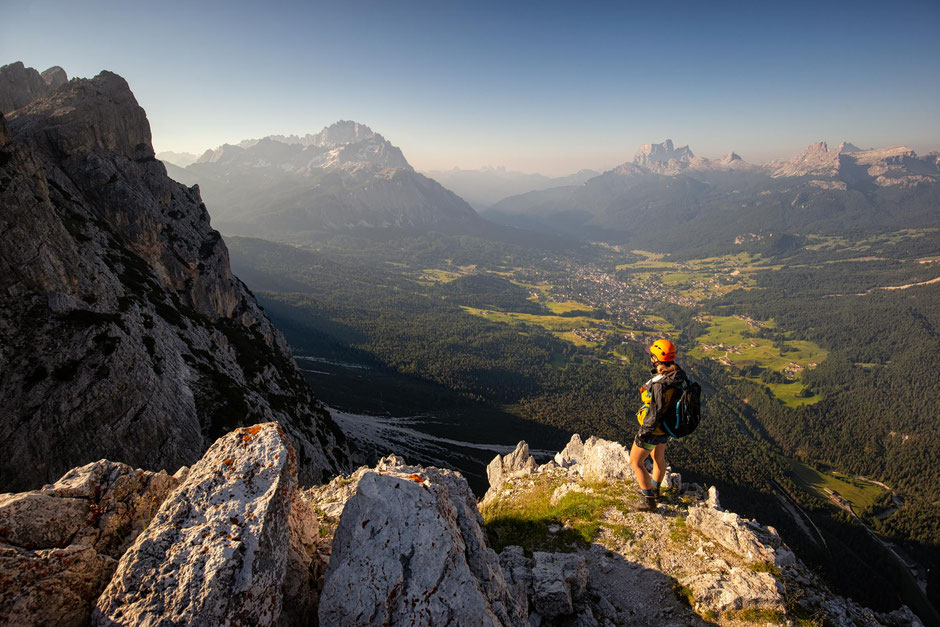
Via ferrata Michielli Strobel takes you to one of the summits in the Pomagagnon ridgeline, where you get an elevated view of Cortina d’Ampezzo, right in the heart of the Dolomites.
This is one of the easier via ferratas on this list, so if you think the beginner-level routes are too easy for you but are unsure whether you’re ready to try something harder, then this route is your answer.
It’s also a good ferrata for hotter days as a lot of it stays in shade, providing you start early in the morning. With that said, you should always plan your excursions as early as possible to guarantee the best views. By mid-afternoon, the summits are often covered in clouds.
11. Via ferrata delle Bocchette Centrali
Distance: 3.5 kilometres / 2.2 miles*
Elevation Gain: 260 meters / 853 feet*
Time Required: 2.5-3 hours*
* Between Rifugio Alimonta and Pedrotti
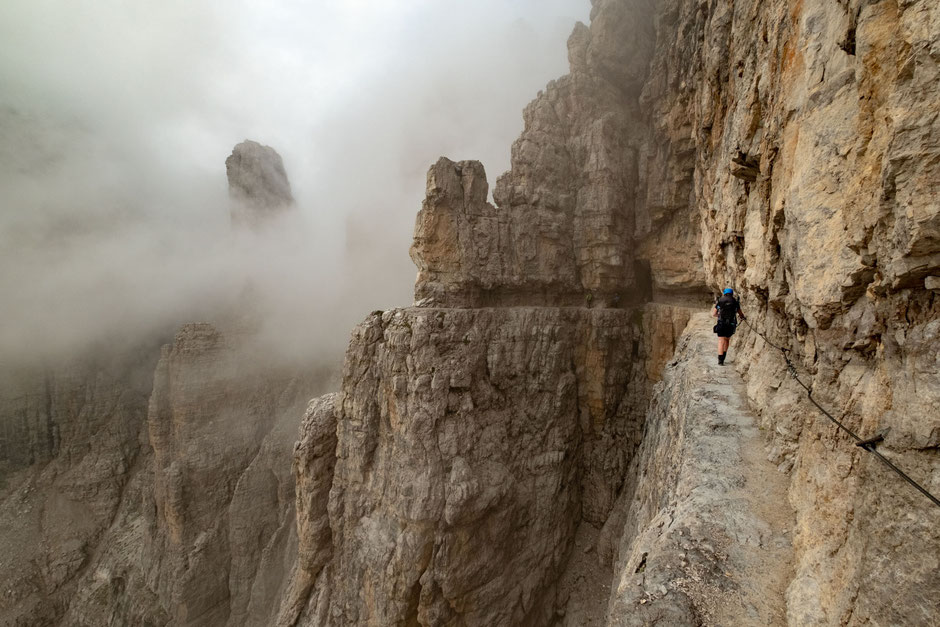
Via Ferrata Bochette Centrali can be found in the lesser-known Adamello Brenta Group of the Italian Dolomites.
I have completed this ferrata as part of the multiday traverse of the Brenta group, and it quickly became one of my favourites. The steep ledges, coupled with the low-rising clouds and early morning mist, have added to the mystery of this place.
The route runs between two mountain huts: Alimonta and Pedrotti, and takes around 3 hours to complete. It’s best to do it in conjunction with other ferratas in the Brenta group over a few days.
12. Via ferrata Brigata Tridentina
Roundtrip Distance: 6 kilometres / 3.72 miles
Elevation Gain: 730 meters / 2400 feet
Time Required: 3-4 hours
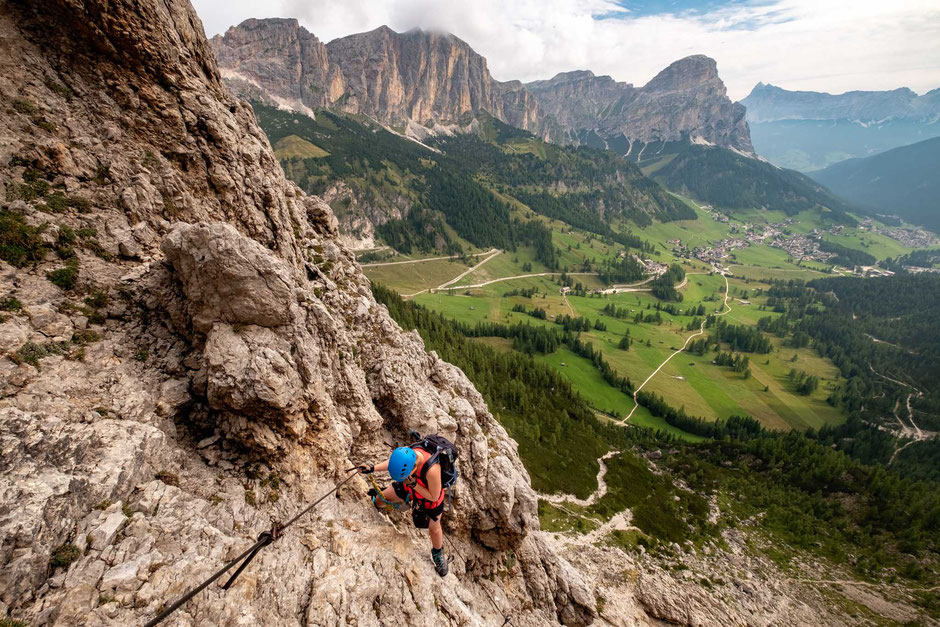
A true classic of the area, via ferrata Brigata Tridentina attracts a lot of adventurers daily.
The starting point of this route is just a few kilometres away from Passo Gardena – one of the most photogenic mountain passes in the Dolomites.
The loop takes only 3 hours to complete, but the climbing is quite steep and exposed. 80% of the way up, you will get to a very cool suspension bridge, but the main objective is to reach Rifugio Pisciadu, where you can stop for lunch before the descent back to the parking lot.
For those craving more adventure, you can extend the route and go to the top of Cima Pisciadu. This will add another 2 hours, but the views will more than make up for the effort.
13. Via Ferrata Croda Rossa & Zandonella
Roundtrip Distance: 11.5 kilometres / 7.1 miles
Elevation Gain: 1080 meters / 3534 feet
Time Required: 5-7 hours
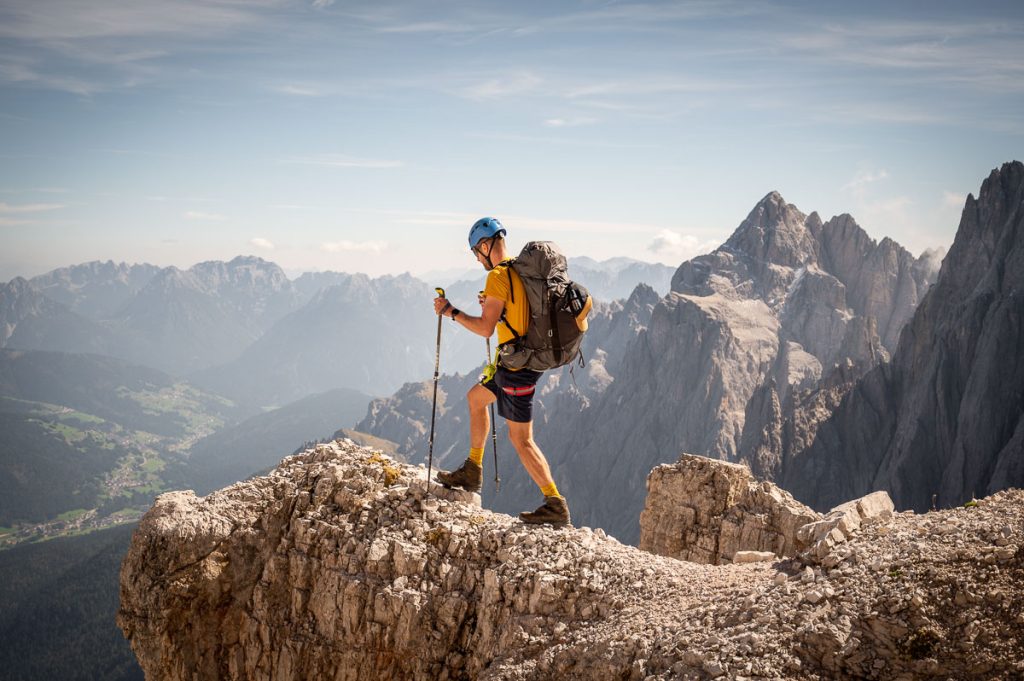
The Croda Rossa/Zandonella via ferrata combo is located in the Sexten Dolomites. They both go to the same spot – the summit of Croda Rossa. You can use one to go up to the summit and the other as the descent route.
As with many other routes in the Dolomites, you first start by taking a gondola to reach a higher elevation, then you begin the hike.
On a clear day, with good visibility, it is possible to see Mount Triglav, the highest peak of Slovenia, from the top of Croda Rossa. But don’t worry, even if you don’t spot it, there are plenty of other peaks to look at.
14. Via Ferrata Severino Casara (Zwölferkofel)
Roundtrip Distance: 21 kilometres / 13 miles
Elevation Gain: 1585 meters / 5200 feet
Time Required: 8-10 hours
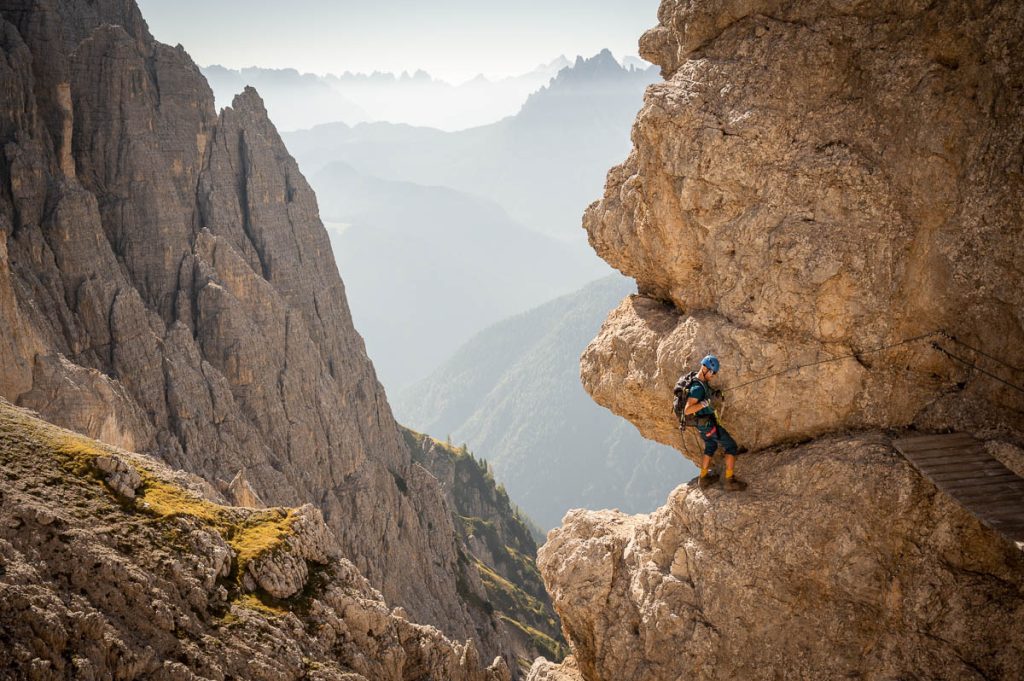
Via ferrata Severino Casara circles Croda Dei Toni (In German Zwölferkofel) – a prominent peak in the Tre Cime Nature Park. Because of (or thanks to) its long approach, this via ferrata is not as busy as other routes in the park.
Tackling via ferrata Severino Casara in one day is no easy feat. With almost 1600 meters of elevation gain, it’s best to consider an overnight stay in either Zsigmondy or Carducci huts.
Scrambling on this route is very intermittent and intertwined with hiking sections. This makes the route versatile. The views are great too, including the turquoise waters of Auronzo Lake and the Tre Cime peaks.
Shop my via ferrata gear essentials
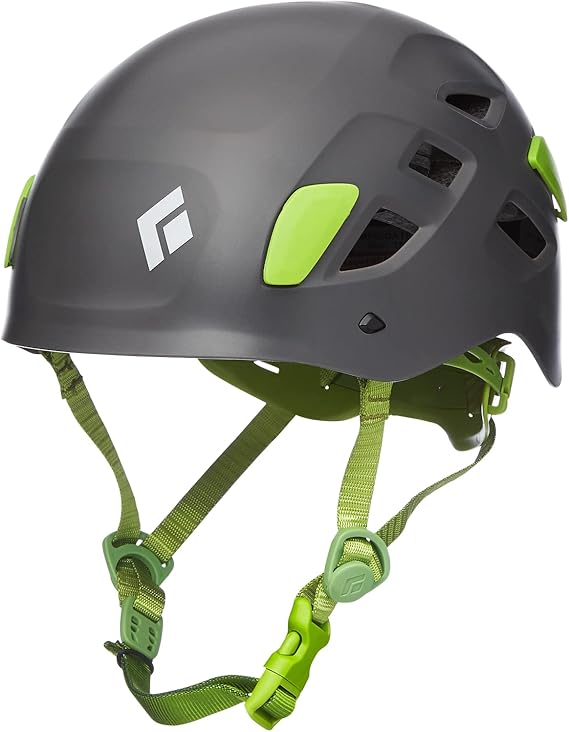
Black Diamond Helmet
Rockfall is a significant concern on via ferrata routes. Unbeknownst to you, other climbing groups above you may accidentally dislodge a small rock and send it down the mountain. If it hits you on the head, it could have serious consequences. A helmet on your head (not inside your backpack) is necessary.
Shop on: Amazon (Worldwide) / Backcountry (US)
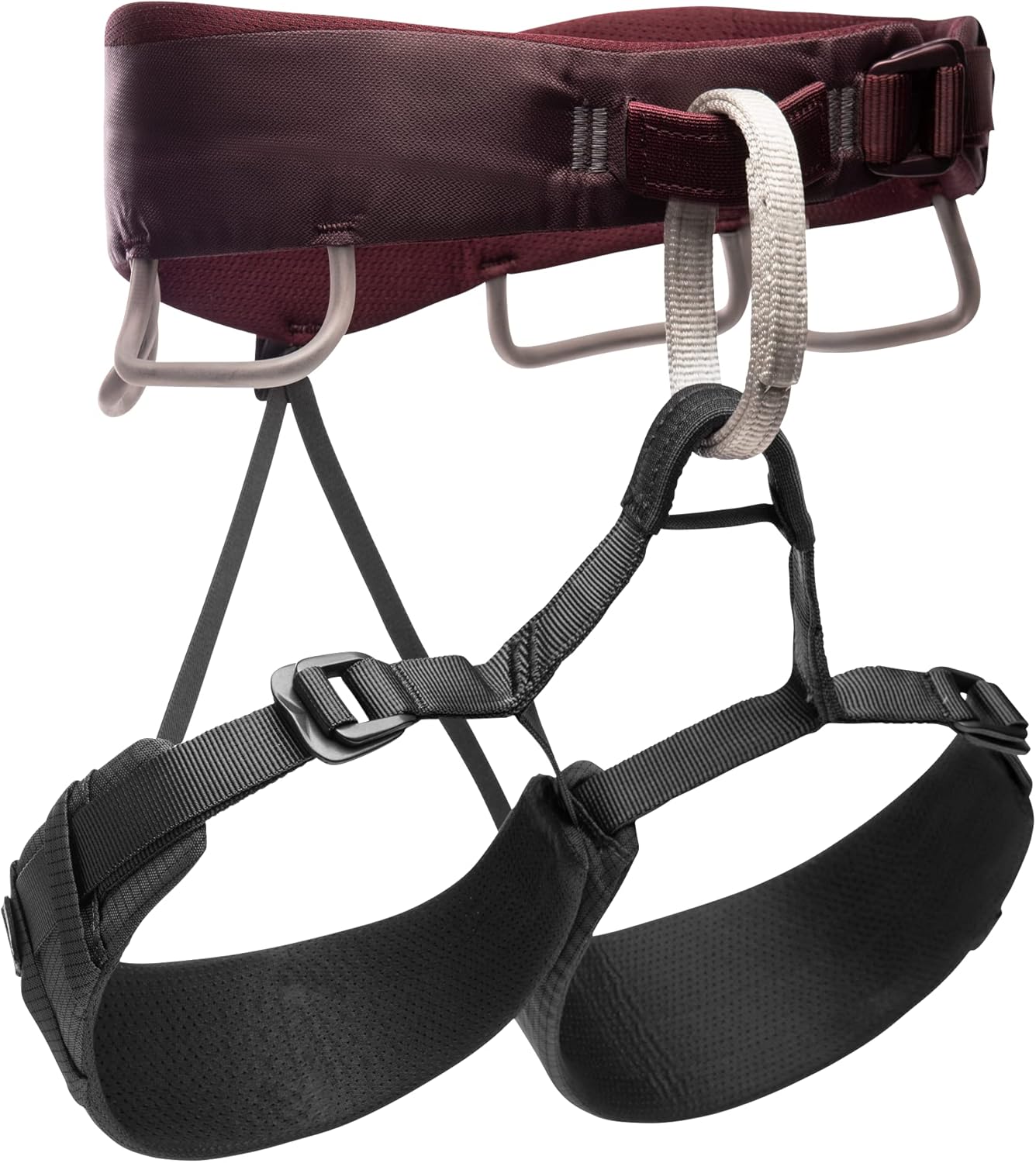
Black Diamond Momentum Harness
Another must-have on a via ferrata route is a climbing harness. A harness works as an anchor point for your via ferrata lanyard. Try it before your trip to ensure it fits snugly without limiting your movements. Aim for a lightweight harness that will be comfortable to wear between the cable-protected sections when hiking.
- Shop Women’s on Amazon (Worldwide) / Backcountry (US)
- Shop Men’s on Amazon (Worldwide) / Backcountry (US)
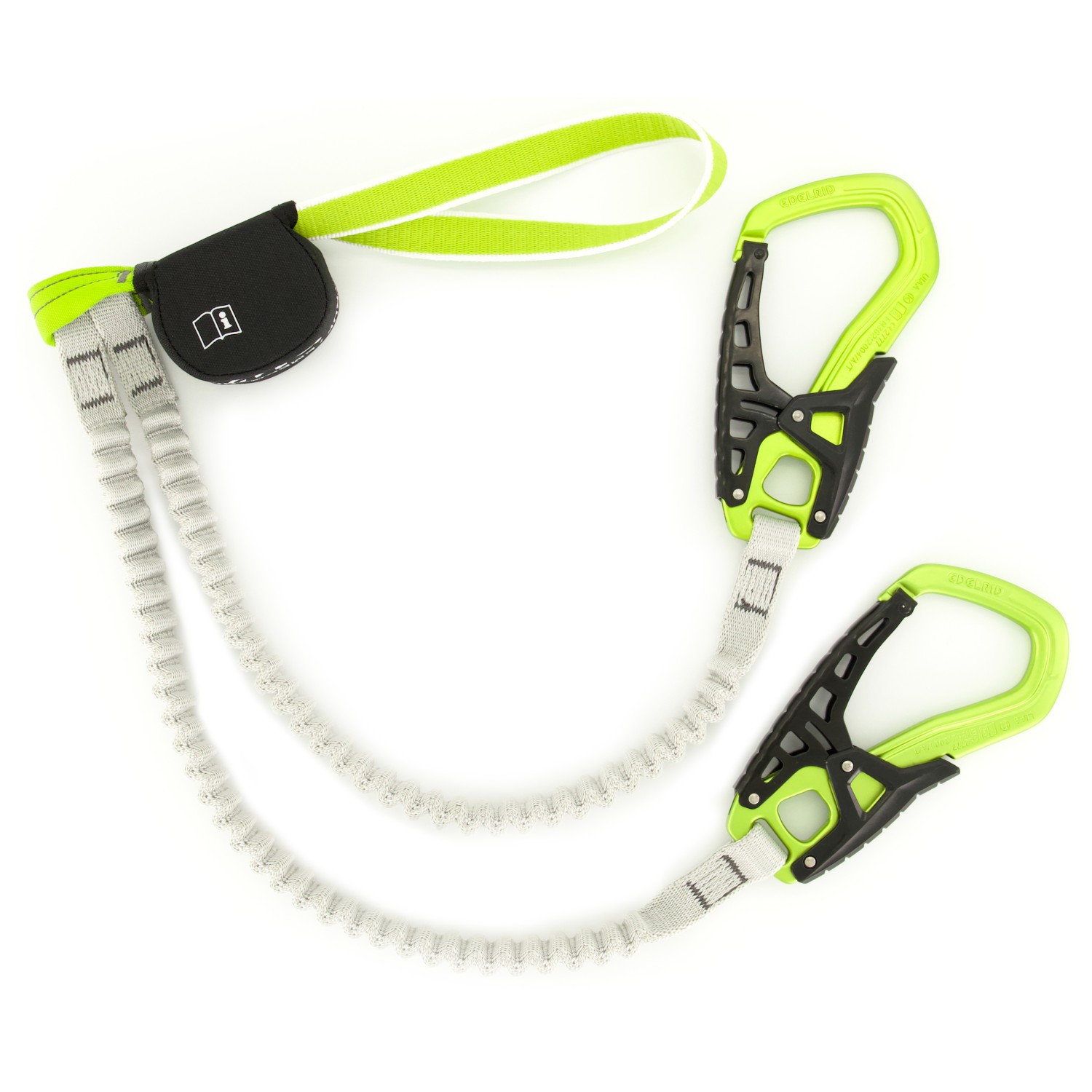
Edelrid, Camp or Black Diamond Via Ferrata Lanyard
A via ferrata lanyard connects the climber and their harness to the cables along the route. Its two arms and a hidden extra coil work as an energy absorption system in case of a fall. The two carabiners at the end of the lanyard clip into the cable. Make sure the carabiners are equipped with the palm squeeze mechanism. It’s the safest and most comfortable.
Shop on Amazon (Worldwide) / Backcountry (US)
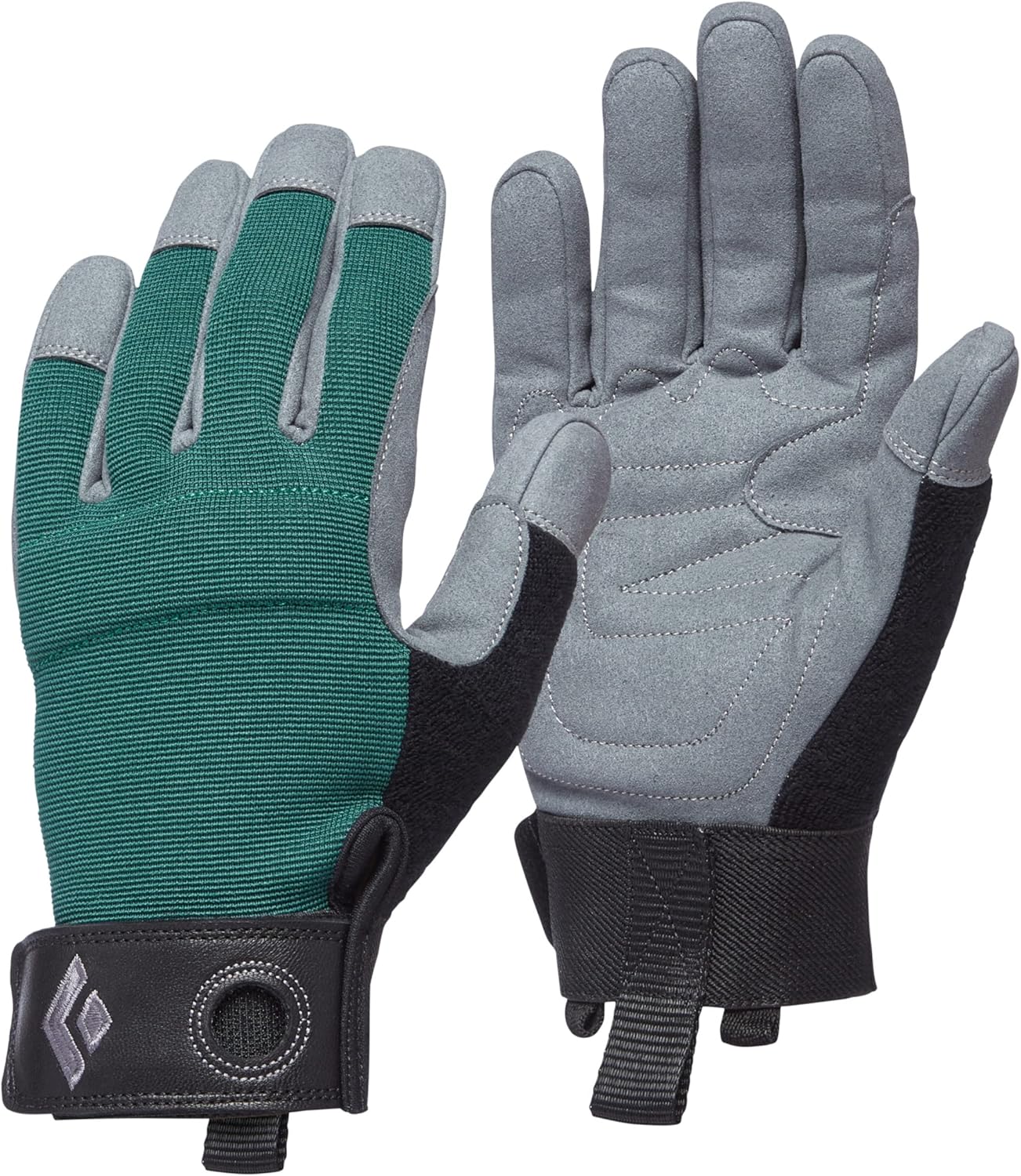
Black Diamond Crag Gloves
The gloves protect your hands from cuts and scratches you may otherwise get if you haul yourself on the cable without them. I prefer full-finger gloves for extra protection against blisters. If your hands sweat quickly, go for the fingerless version.
Shop on: Amazon (Worldwide) / Backcountry (US)
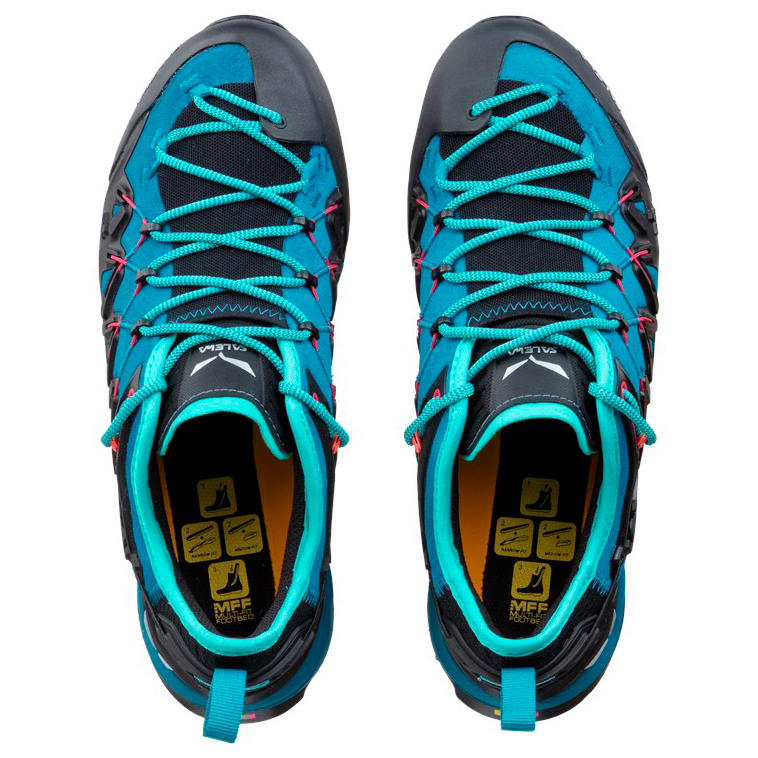
Salewa Wildfire Edge Approach Shoes
This is my go-to pair of hiking shoes for more accessible trails or via ferrata, where I don’t need extra ankle support. They provide excellent grip on the rock and are very durable.
Shop on: Amazon (Worldwide) / Backcountry (US)
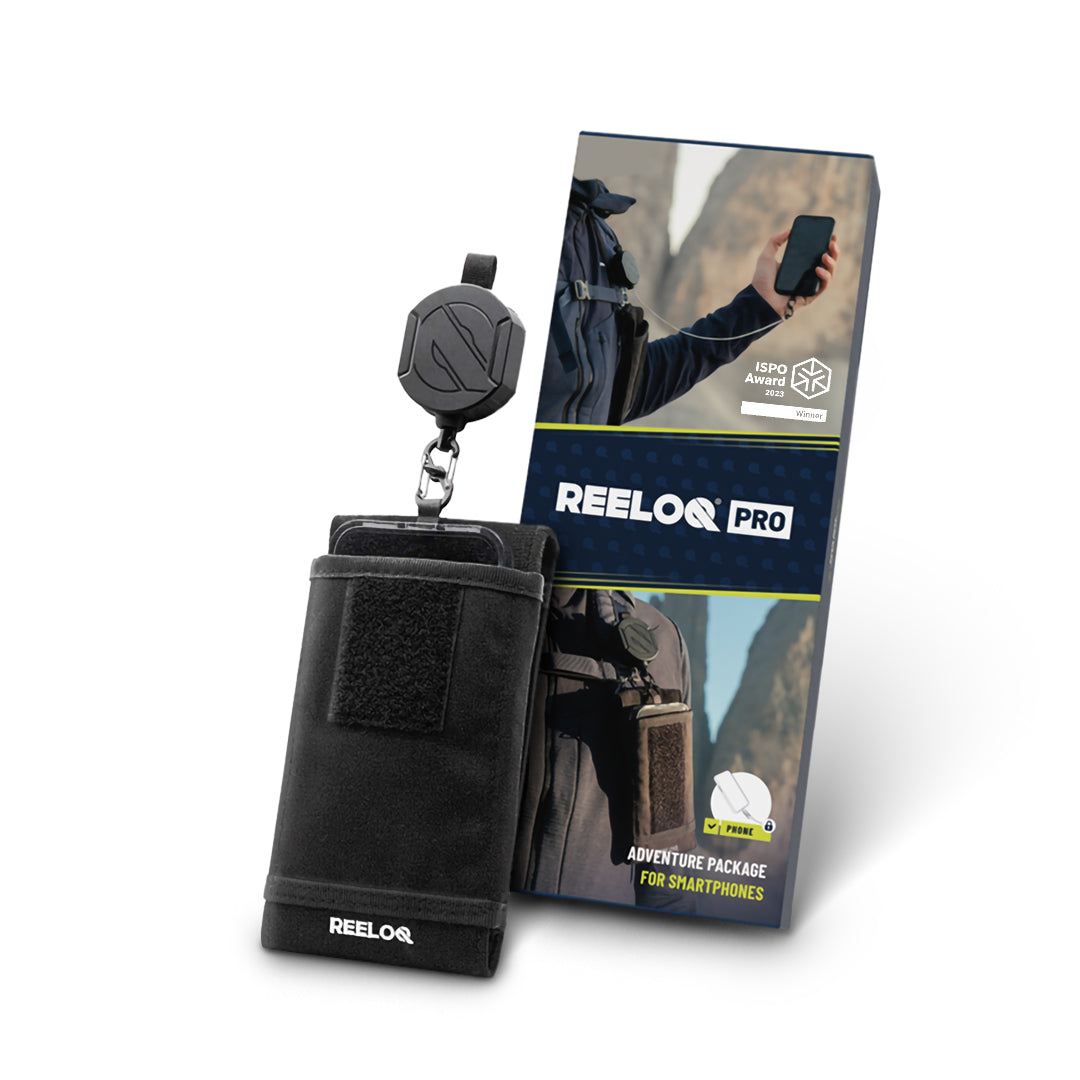
Reeloq Smartphone Securing System
If you want to take great photos on a via ferrata without worrying about losing your phone, Reeloq is the best tool for it. It’s a smartphone-securing system that allows you to use your phone on any adventure. This has been a great addition to my tool arsenal.
Shop on: REELOQ
Support my website!
Hi Reader! If you found any of my articles about the Dolomites useful please consider using the affiliate links below (at no extra cost) when booking your holiday. Thank you
- Reserve your hotel with Booking.com
- Book your rental car with Discover Cars
- Buy your outdoor gear with Backcountry.com (US readers)
If you have any questions, leave them in the comments below!
We just love your content!
Thank you for the thoughtful & complete content you provide!
For Via ferrata delle
Bocchette Centrali: can you tell me more of what to expect on day 3?
We are coming from the USA and you inspired us to complete this 5 day trek!
Hi Stacy. Thank you for your lovely feedback. Could you please be more specific with your question? I did include a description of VF Bochette Centrali in the text. Is there anything in particular that you are concerned about? It’s an intermediate level via ferrata. The protection on all of the ferratas in the Brenta group was excellent.
Thank you for an excellent overview of Dolomite’s Ferratas. Just wondered if there is a location you’d recommend to use as a base to cover all or most of your ferrata paths?? Many thanks Radka
Hi Radka. Thanks for visiting my site. Unfortunately it’s not possible to stay in just one location to cover all of the ferratas, but you can for example base yourself in Val Pusteria or somewhere near Tre Cime Park and cover the via ferratas there. Follow the links for my new articles which cover both areas and tell you what ferratas are doable in those areas. I hope that helps!
Hi Marta,
First of all: I really love your writings about the Dolomites. They inspired me to do the Alta Via 2 last year! It was such an amazing experience that I will go again in a couple of weeks. The first five days I will do the alta via 4 but then want to spend 3 days doing some via ferrata’s.
I am really impressed by Marino Bianchi and Ivano Dibona and would love to do them back-to-back. However, I saw that rifugio Lorenzi is closed. In the description of via ferrata Marino Bianchi you said that you’ve spent the night there. Is it possible? Is it accessible or how did you manage to stay there?
Thank you!
Hi Jan. Thanks for visiting and your lovely comment. Yes I carried my camping equipment and my plan was to camp on the Staunies Pass however when I made it up there we discovered a tiny winter room which was a part of the refuge. That was already 4 years ago! You have to bear in mind that with each passing season the refuge decays more and more. There is going to come a time when it will either have to be dismantled or it will be swept away. Already 4 years ago its terrace was quite sketchy in a few places. Whilst the winter room might still be ok you need to come prepared it won’t be.
What you can do is stay in rifugio Son Forca the night before then head out to do via ferrata Marino Bianchi come down and head to the other side of Forcella Staunies to do a part of VF Ivano Dibna (most people go to the bridge and back) then head back down the same way you came. I will be honest with you. I thought Marino Bianchi ferrata was better than ID. Then was you are down you can stay another night in rifugio Son Forca or just take the chairlift down to the parking lot. Let me know if that helps and if you have more questions!
Brilliant inspiring VF’s – which I shall tackle over the next year or so.
Thanks for stopping by. Good luck with your via ferrata endeavour Bob!